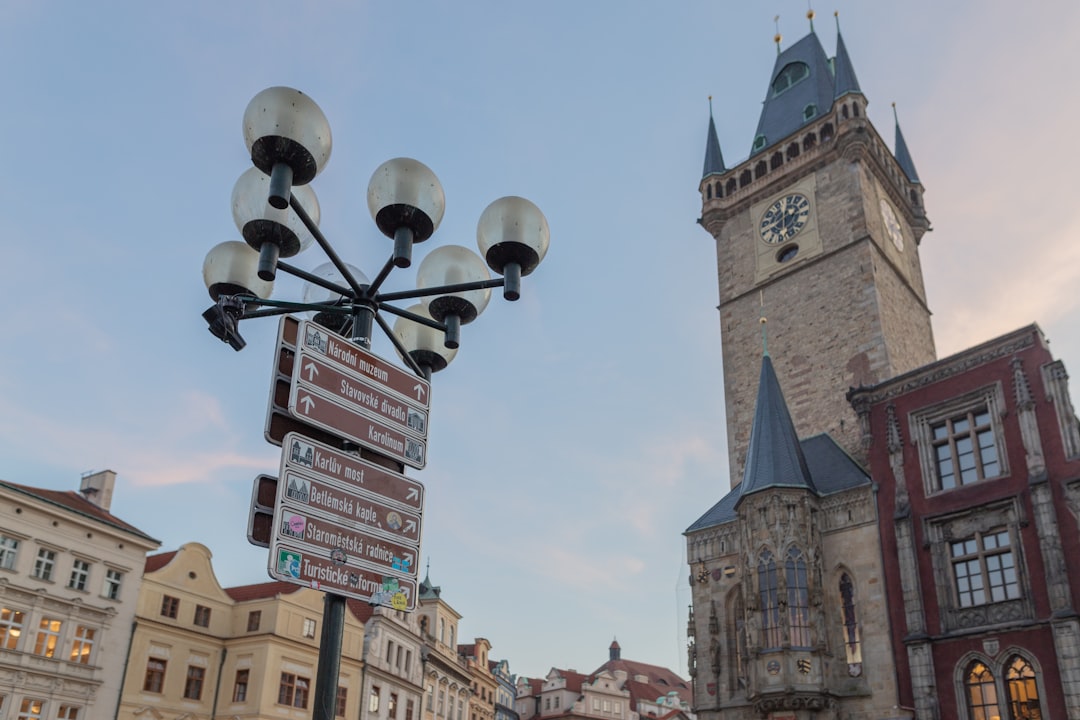
Prague has a unique distinction in the history of political protest: it’s the only city in the world where throwing someone out of a window has happened twice with such dramatic consequences that both incidents triggered continental wars. The word “defenestration”—the act of throwing someone out a window—comes from the Latin de fenestra, literally “from the window.” But it might as well come from Prague, because this city has made the act into something approaching a political tradition.
What’s remarkable about Prague’s defenestrations isn’t the violence itself—medieval Europe was plenty violent. What’s remarkable is that both incidents emerged from genuine popular uprisings, represented real conflicts about power and belief, and each one launched consequences that reverberated across Europe for decades. When Praguers threw people out windows, they weren’t being theatrical for effect. They were making theological and political statements that the rest of Europe couldn’t ignore.
The First Defenestration: 1419
The year is 1419. Prague is a cauldron of religious and political tension. Jan Hus had been burned at the stake four years earlier for his heretical ideas about the Church, and instead of silencing the reform movement, his death had turned him into a martyr. The memory of his execution created waves of anger that spread through Prague’s population—the poor, the students, the lesser nobility who resented the power of the Catholic Church and its wealth.
The immediate spark was spiritual but the underlying conflict was about power. The Catholic establishment was determined to suppress the Hussite movement before it metastasized. Hussite priests were preaching in Prague’s chapels, distributing communion bread and wine to laypeople (a radical act—the Church reserved the chalice for priests). The new archbishop, Konrad of Vechta, was cracking down hard, arresting preachers and confiscating Church property.
On July 30, 1419, a Hussite procession marched toward the New Town Hall in the Prague district of Nové Město. They were unarmed pilgrims demanding the release of imprisoned priests. The town council, dominated by Catholic conservatives, decided to stop them. As the procession reached the town hall, the council threw open the windows of the building and its guards began throwing stones and other objects at the crowd below.
What happened next was less calculated assassination and more spontaneous rage. The crowd surged into the town hall. In the chaos that followed, they grabbed several Catholic councilors—the records differ on the exact number, but sources suggest at least three, possibly seven—and threw them out the windows. Those thrown out fell about 50 feet to the stone street below. Some were killed in the fall. Those who survived the impact were beaten to death by the crowd.
One account claims that the crowd’s leader, Jan Žižka (a military commander and Hussite leader who was already legendary for his tactical genius), caught someone on a pike as they fell from the window. Whether true or not, the image captured the brutality and decisiveness of the moment.
The Prague authorities were horrified and furious. This wasn’t a small riot—this was an attack on the town government itself, a act of open defiance against the social order. They demanded that the Hussite leader, Jan Želivský (a radical priest), be executed. But instead of suppressing the movement, the act of violence crystallized it.
The Hussite Wars: Consequence and Transformation
The First Defenestration lit the fuse on a conflict that would consume Central Europe for fifteen years. The Hussite Wars (1419-1434) weren’t merely religious—they were revolutionary. The Hussites weren’t just protesting Church corruption; they were reimagining how society should be organized. They challenged feudal hierarchy, demanded that the Bible be available in Czech rather than Latin, insisted that ordinary people deserved a voice in their own religious practice.
The wars were brutally effective. Under leaders like Jan Žižka, the Hussites developed new military tactics—wagon forts, coordinated infantry movements—that devastated the traditional cavalry charges of the Catholic nobility. For a decade and a half, Hussite armies swept across Bohemia and beyond, winning victories that seemed to suggest the entire old order might collapse.
But the conflict eventually fragmented. The radical Taborites (the most extreme faction) were defeated in 1434 at the Battle of Lipany. A compromise was reached: the Hussites would accept Catholic authority in exchange for certain reforms, including communion in both kinds (the bread and wine both available to laypeople). It wasn’t the total victory that radicals wanted, but it was enough to transform Czech society permanently.
The First Defenestration didn’t just start a war—it signaled that Prague, and Czech society more broadly, wouldn’t passively accept what Rome dictated. The consequences echoed through the entire 15th century. When you stand in New Town Square today, looking up at the town hall windows, you’re standing at a precise location where political revolution began, where ordinary people decided they’d had enough.
The Second Defenestration: 1618
Now fast-forward nearly two centuries. The year is 1618. The Thirty Years’ War hasn’t started yet, but the conditions for it are perfectly arranged, like explosives waiting for a spark.
Czech Protestants are increasingly nervous. The previous century of relative stability under the Hussite settlement is beginning to feel fragile. The Habsburgs, now ruling Bohemia as part of their empire, have been steadily consolidating power and pushing Counter-Reformation Catholicism. They’ve appointed a new governor—a Habsburg loyalist named Jaroslav Borsita—and his heavy-handed Catholic policies are provoking outrage among Protestant nobility.
The specific trigger comes from the emperor’s order to suppress Protestant churches. Czech nobles, led by the “Defenestrators”—a group of Protestant lords who had organized to resist Habsburg authority—demanded that the emperor’s representatives appear at Prague Castle and explain themselves. On May 23, 1618, they got their answer.
A group of angry nobles, including Count Thurn, entered Prague Castle’s chancellery (you can still visit this room today). They confronted the two Imperial regents who represented the Habsburg emperor’s authority: Vilém Slavata and Jaroslav Borsita. The argument escalated. In the chaos, the nobles grabbed the regents and threw them out the window—a 70-foot drop to the castle’s moat below.
But there’s a curious coda to this story. Both men survived. Slavata was badly injured; Borsita had minor injuries. Later accounts from the regents claimed they were saved by divine intervention—that angels caught them as they fell. More practical historians note that the moat was partially dried up and contained rubble and manure that would have broken their fall. Either way, they lived.
The Second Defenestration became the opening act for the Thirty Years’ War (1618-1648), one of Europe’s most devastating conflicts. The Czech resistance that began with throwing governors out windows turned into a continental conflict that killed roughly eight million people and redrew the map of Europe. When you stand on the castle ramparts and look down to where they fell, you’re standing at another pivot point where Prague’s politics changed the course of European history.
Why Prague? Why Windows?
The question lingers: why did this city develop such a distinctive form of political protest? Why windows specifically?
Part of the answer is geography and architecture. Medieval Prague was built with high windows in its public buildings, and there was something theatrical about defenestration—it was public, visible, and impossible to ignore. It made a statement that couldn’t be hidden or soft-pedaled. You couldn’t quietly assassinate someone out of a window. Everyone watching would know what had happened.
But deeper than that, defenestration represented something profoundly Czech about the culture: a willingness to take extreme action when convinced of injustice. Both defenestrations came from movements of genuine popular outrage—not calculated assassinations by ambitious individuals, but spontaneous acts of collective violence that represented thousands of people who felt unheard. The defenestrations weren’t plans made in shadowy rooms; they were expressions of genuine popular will.
There’s also something in the Czech tradition of dramatic protest that persists today. This is the country that would experience the Velvet Revolution in 1989—a peaceful uprising that was nonetheless theatrical in its refusal to cooperate with authority. The “jangling of keys” in Wenceslas Square, the coordinated strikes, the poetic language of Václav Havel—it’s as if Prague has always understood that political change requires not just force but symbolism, not just violence but meaning.
Where to Stand, What to Understand
When you visit Old Town Square, locate the New Town Hall on its eastern side. The facade shows repairs from later centuries, but this is the building where the First Defenestration occurred. Stand at the windows and imagine the chaos: councilors surprised by a surging crowd, nobles making split-second decisions, bodies falling to stone below.
The symbolism matters when you look at it. This wasn’t some hidden murder. This was an act committed in broad daylight, visible from the whole square, unmistakable in its political meaning. The crowd wasn’t trying to hide. They were making a statement that the old authorities no longer had automatic power over Prague’s population.
Then make your way to Prague Castle, specifically to the Chancellery (accessible through the castle’s upper courtyard). The windows where the regents were thrown still exist. The drop is considerable. The survival of both men, whether through divine intervention or simple luck, couldn’t have seemed anything but providential to observers at the time.
Visit the Hus monument in Old Town Square, dominating the center of the plaza. Hus towers above the fountain, carved with determination and suffering—it was his death that lit the fuse for the First Defenestration. His statue reminds visitors that defenestration wasn’t meaningless violence but a response to something deeper: the execution of a man for his beliefs.
The Defenestration Legacy
Neither defenestration was an isolated incident. Both emerged from populations who felt their voices weren’t being heard through normal channels. Both led to wars, both had consequences that extended far beyond Prague. And both have become embedded in how Praguers understand their own history—as a people willing to resort to dramatic action when they feel their freedoms are threatened.
It’s easy to dismiss defenestration as medieval barbarism, as evidence that our ancestors were more violent than we are. But that misses the point. The defenestrations were symptoms of something deeper: political communities that weren’t willing to accept being governed without consent. The First Defenestration helped spark a religious revolution that would anticipate the Protestant Reformation by a century. The Second triggered the Thirty Years’ War, which would ultimately establish the principle that states have sovereign rights and religious minorities deserve some protection.
When you walk through Prague’s medieval streets, you’re walking through a city that has, twice, through defenestration, announced to Europe: We will not be silent. We will not be governed by those who ignore us. That willingness to express political disagreement through dramatic, even violent, means is as much a part of Prague’s identity as its architecture or its beer.
The windows remain. The story remains. And Prague remains a city where, once you understand the history, even ordinary window panes carry the weight of political meaning.




Leave a Reply