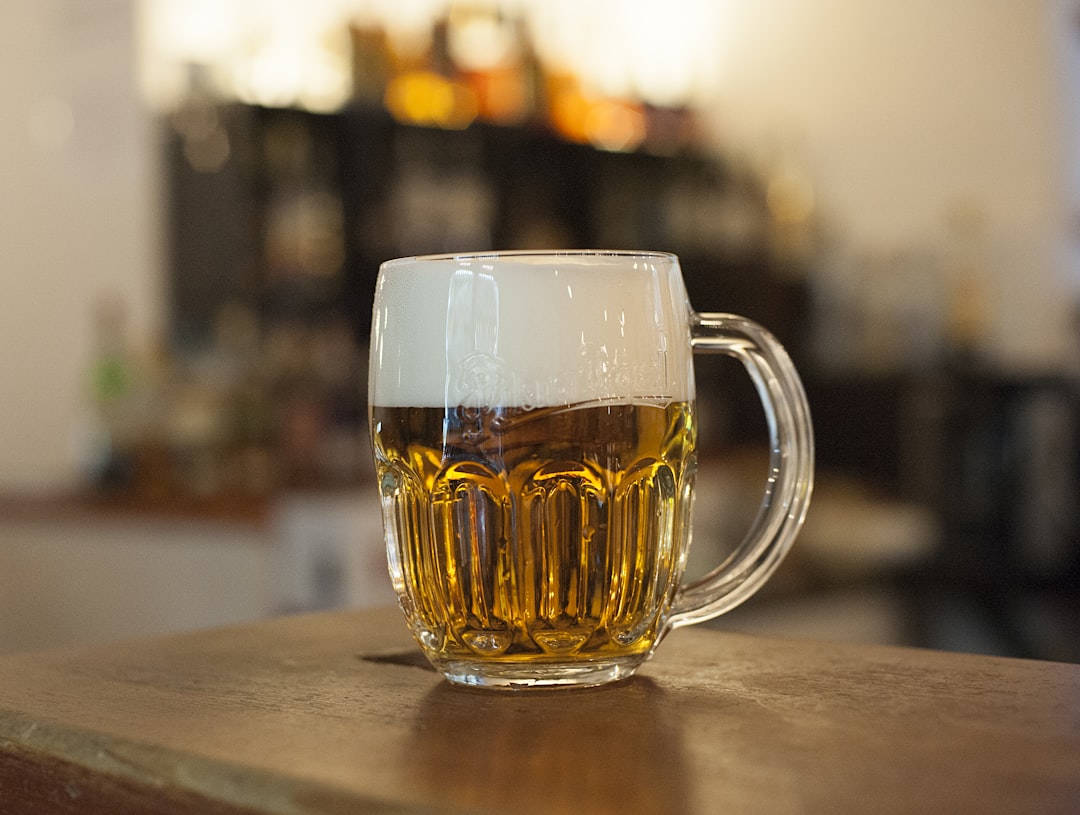
There’s a statistic that gets repeated so often in Czech beer culture that it’s reached the status of a kind of national boast: Czechs drink more beer per capita than anyone else in the world. As of recent years, the average Czech consumes roughly 150 liters of beer annually—nearly 40 gallons per person per year. To put that in perspective, Americans drink about 80 liters per capita annually. Germans, beer-drinking stereotypes that they are, drink about 100 liters. Czechs drink beer like other nations drink water, and this isn’t a modern phenomenon—it’s a tradition that stretches back a thousand years, to the earliest days of the Bohemian kingdom.
Beer is woven into Czech culture so thoroughly that to understand Czech history is, in some way, to understand Czech beer. It’s connected to religious identity, to national identity, to economic power, to gastronomy and science. The Czechs didn’t invent beer—that honor belongs to various ancient cultures, probably Mesopotamia. But they did something perhaps more impressive: they perfected beer, developed the styles that would become the template for modern brewing, and created a culture where beer isn’t just a beverage but a pillar of civilization.
The Monastic Origins: A Thousand Years of Brewing
The history of Czech beer begins, like so much medieval history, with monks. In the year 993, the Břevnov Monastery, on the outskirts of Prague, established what’s believed to be the oldest brewery in the world still in operation. The monks didn’t invent beer—they inherited brewing techniques from earlier medieval Europe—but they elevated it to an art form.
Monasteries across medieval Europe brewed beer, often in massive quantities. Beer was essential to monastic life for several reasons. First, the fermentation and boiling process made water potable—the process killed pathogens that made untreated water dangerous. In a world without safe water supplies, beer was a literal necessity for survival. Second, beer provided calories and nutrition. In an era of limited food supplies, beer was sustenance. Third, beer was valuable as trade goods. Monasteries could produce surplus beer and sell it, generating income.
The monks of Břevnov weren’t merely making beer for survival. They were innovating. They experimented with ingredients. They developed brewing techniques. They created recipes that emphasized quality and consistency. Over centuries, the monks of Břevnov perfected their craft. The brewery they established continued to operate through the Middle Ages, through the Hussite Wars, through the Counter-Reformation, through the communist period, and into modern times. Today, Břevnov still produces beer—it’s a working monastery brewery, continuous operation for over a thousand years.
As medieval Bohemia developed, brewing became increasingly important to the kingdom. In 1088, the Church granted brewing rights to various Czech towns. These weren’t trivial rights—they were valuable economic privileges. A town granted brewing rights could establish breweries, could produce and sell beer, could tax brewing. Over time, Czech towns became major brewing centers.
The medieval Czech brewing industry was sophisticated. Brewers organized into guilds. They developed quality standards. They guarded their recipes carefully. Brewing wasn’t a casual enterprise—it was a regulated profession with apprenticeships, with standards, with economic power.
The Birth of Pilsner
The story of Czech beer reaches its apex in the nineteenth century, with the invention of pilsner. To understand pilsner is to understand not just Czech beer but modern beer globally, because pilsner is the style of beer that dominates the world today. The pale lager beers that fill grocery stores and bars across the planet—from Budweiser to Heineken to Corona—are all pilsners or pilsner-inspired.
The city of Plzeň (Pilsen in German), about ninety kilometers west of Prague, was already famous for its beer by the 1800s. But in the early 1840s, the brewers of Plzeň were facing a crisis. Their traditional dark, top-fermented beers were being outcompeted by pale lagers being brewed in Bavaria, particularly Bavarian Munich lagers. The Bavarian beers were cleaner, crisper, more consistent—and they were taking market share from Bohemian brewers.
In 1842, the Plzeň brewers made a fateful decision. They hired a Bavarian brewer named Josef Groll to create a new style of beer that would combine the best of Bavarian lager-brewing techniques with Czech hops and malts. Groll worked with the local brewers to develop something entirely new: a pale, golden lager—lighter in color than anything the Czech brewers had produced before, but with more flavor and body than the Bavarian imports. They added soft water from Plzeň’s natural springs. They used local hops—the famous Saaz hops, known for their distinctive floral, spicy flavor.
The result was pilsner—Pilsner Urquell (which translates to “Pilsner Original”). When it was released, it was revolutionary. It was golden, clear, crisp, flavorful, drinkable, consistent. It became the most popular beer in Bohemia within a few years, and it rapidly spread throughout Europe and eventually the world.
The significance of pilsner’s invention can’t be overstated. Before pilsner, beer was regional—different styles predominated in different regions, with no single style dominating. After pilsner, a template had been created. Brewers everywhere, trying to compete with Czech pilsners, began copying the style. Today, pilsner is the most-brewed style of beer globally. Budweiser (the Czech Budweiser, not the American Anheuser-Busch product, though that company’s beers are also pilsner-style) is a pilsner. Corona is a pilsner. Most light beers are pilsners. The Czech beer style came to dominate the world.
The Breweries That Changed Beer
The story of Czech beer in the 19th and 20th centuries is told partly through its great breweries. Pilsner Urquell in Plzeň is the most famous, but there are others equally important.
Budweiser isn’t an American beer—not originally. The original Budweiser comes from the Czech city of České Budějovice (Budweis in German). This city received its brewing rights in 1531, and by the 1800s it had become one of the major brewing centers of Central Europe. The original Czech Budweiser is a pale lager, brewed with noble hops, with a smooth, crisp character. It’s been exported to America since the 1800s, but the “Budweiser” we know today—the Anheuser-Busch product—is a different beer, a simplified American version created in the late 1800s using different techniques and ingredients.
This remains a point of some contention. The American Budweiser company and the Czech Budweiser brewery have fought legal battles for trademark rights. In Europe, the original Czech Budweiser is referred to as Budweiser Budvar to distinguish it from the American product. Both are pale lagers. Both are popular. But they’re different beers, and beer enthusiasts universally acknowledge that the original Czech Budweiser (the Budvar) is the superior product.
Pilsner Urquell remains the iconic Czech brewery. Based in Plzeň, it has been operating since 1842. You can still visit the brewery today, tour the cellars, see the brewing process. The original underground tunnels where beer was aged in the natural cold of the ground before refrigeration existed are still there. Walking through them, you’re walking through the physical history of beer innovation.
Beer Under Communism
When communism took over Czechoslovakia in 1948, the brewing industry was nationalized. Private breweries were eliminated. The great breweries—Pilsner Urquell, Budweiser Budvar—became state enterprises. Some excellent breweries were closed because they were considered “inefficient” by communist planning. The quality of Czech beer declined during much of the communist period, as centralized planning optimized for quantity over quality.
But beer culture itself proved resilient. The pivnice—the traditional Czech beer hall—remained the center of social life. Despite the mediocrity of much communist-era beer, the cultural practice of gathering to drink beer together persisted. When you visit a Prague pivnice today, you’re experiencing something that survived communism, that’s been continuous since medieval times: the gathering of people, the consumption of beer, the social function of the drinking hall.
The most famous Prague beer hall is probably U Flecku, in the Old Town. U Flecku has been operating as a brewery and beer hall since 1499—over 500 years. It survived the Hussite Wars, the Counter-Reformation, the Nazi occupation, communism, and now thrives as a tourist attraction. Walking into U Flecku, with its wooden beer hall, its brewery visible behind the bar, you’re experiencing a continuity of more than five centuries.
The Post-1989 Beer Renaissance
When communism fell in 1989, Czech beer culture underwent a renaissance. Private breweries were re-established. Imported beers became available. But something remarkable happened: instead of being overwhelmed by foreign competition, Czech beer proved to be superior. Czech brewers, working with traditional recipes and techniques, produced beers that outcompeted imports. Pilsner Urquell, once dismissed during communism as a mediocre product of a planned economy, reasserted itself as a world-class beer.
Moreover, the craft beer movement, which exploded in the 1990s in America, didn’t really take hold in Czech Republic with the same intensity. This is because Czech beer was already “craft.” The connection between Czech beer and quality was so strong, and the tradition of locally brewed, high-quality beer was so embedded, that the need for a “craft beer rebellion” against mass-produced beer simply didn’t exist in the same way it did in America.
Today, Pilsner Urquell remains one of the most respected pilsners in the world. Czech beer, overall, maintains an exceptional reputation. The Czechs haven’t just survived the modern era—they’ve thrived, proving that their approach to beer—traditional recipes, quality ingredients, respect for the product—remains more valuable than industrial mass production or fashionable trends.
The Science and Art of Czech Brewing
To understand Czech beer’s supremacy is to understand something about Czech scientific and engineering culture. The development of pilsner required combining brewing knowledge with scientific innovation—the understanding of fermentation, of temperature control, of the chemistry of hops and malt. Josef Groll, who invented pilsner, wasn’t just a brewer; he was someone who understood chemistry and physics and applied that knowledge to brewing.
This connection between science and beer-making runs through Czech history. The Czechs developed lager yeast fermentation to high art. They understood temperature control before refrigeration existed. They developed techniques for creating consistent, high-quality beer in an era when most brewing was erratic and inconsistent. This is the same culture that produced astronomers like Tycho Brahe and Kepler—a culture that values precision, observation, and systematic experimentation.
Where to Experience Czech Beer Culture
If you’re interested in experiencing Czech beer culture, there are several essential sites.
Visit Pilsner Urquell brewery in Plzeň. The brewery still operates, and tours are available. You can see the historic cellars where beer was aged, understand the brewing process, and taste pilsner at the source.
Visit U Flecku in Prague’s Old Town. It’s a tourist destination, certainly, but a legitimate one—a beer hall that’s been operating for over 500 years, that still brews its own beer on-site, that represents an unbroken tradition of drinking culture.
Visit local pivnice throughout Prague. These aren’t tourist attractions—they’re neighborhood beer halls where locals drink cheap, excellent Czech beer and eat traditional Czech food. The atmosphere is far more authentic than U Flecku, and the beer is often better and always cheaper.
Visit the Czech Beer Museum in Prague, which documents the history of Czech beer from the monastic period to the present.
Take a beer tour if you want guided education. Several companies offer tours that explain Czech beer culture, visit breweries, and provide tastings.
Why This Matters
Czech beer matters because it’s a remarkable 1,000-year-old tradition of craftsmanship, of quality, of cultural identity. When you drink a Czech beer, you’re consuming something that connects you to medieval monks perfecting their craft in monasteries, to nineteenth-century innovators creating pilsner, to twentieth-century communities maintaining brewing traditions through communism.
Czech beer is also important because it demonstrates something about cultural persistence and pride. The Czechs have been conquered, have been suppressed, have been told their language and identity don’t matter. But their beer—their tradition of brewing excellence—has remained consistent, has remained superior, has remained Czech through all these changes. In some ways, Czech beer is more essentially Czech than anything else—it’s been continuously produced in Czech territory for a millennium, it’s an art form that developed in Czech culture, it’s something the Czechs can point to as undeniably their own achievement.
The statistic about Czechs drinking more beer per capita than anyone else isn’t just about quantity. It’s about the centrality of beer to Czech culture, to Czech social life, to Czech identity. To understand Czech beer is to understand something fundamental about Czech people: they take pride in doing something well, they value tradition and quality, they understand that some of the greatest things in life are simple—good bread, good food, good beer, good company.
When you’re in a Prague beer hall, sitting with strangers who become friends over the course of an evening, drinking Czech beer that tastes better than you expected it could taste, you’re participating in a tradition that’s a thousand years old. You’re experiencing something that has survived every attempt to suppress or change it. You’re understanding the Czechs not as a historical abstraction, but as a people with a living culture, a continuous tradition, a remarkable commitment to doing one thing—making beer—better than anyone else on Earth.




Leave a Reply