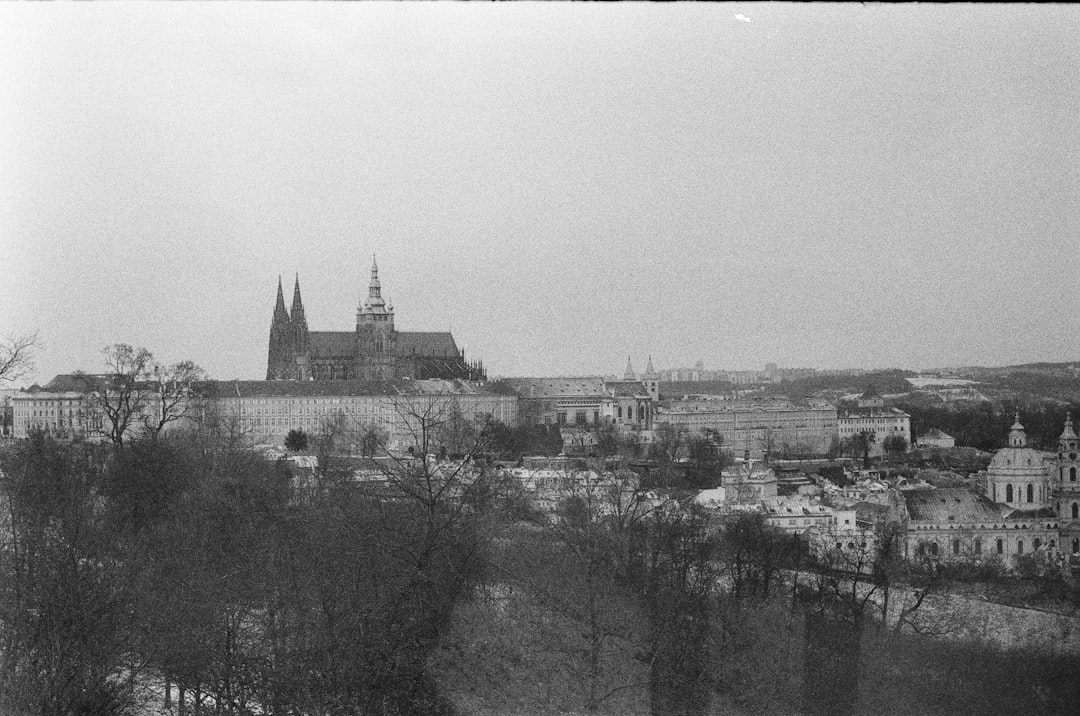
August 21, 1968. Prague wakes to the sound of Soviet tanks rumbling through its streets. Within hours, an estimated 500,000 soldiers from the Soviet Union, East Germany, Poland, Hungary, and Bulgaria have invaded Czechoslovakia. Thousands of tanks and armored vehicles are positioned throughout the country. Fighter jets patrol overhead. One of the most significant moments of the Cold War has arrived—not with a nuclear exchange or a confrontation between superpowers, but with the brutal suppression of an experiment in freedom that had seemed, just months earlier, to promise a new future for communist-ruled Eastern Europe.
The Prague Spring represents one of the most tragic moments in post-war European history. It’s the story of a nation daring to dream that communism could be reformed, that freedom was possible within a socialist system, that a different path existed between capitalism and totalitarianism. And it’s the story of those dreams being literally crushed under the treads of Soviet tanks. But it’s also a story of courage, of nonviolent resistance, of a nation’s refusal to accept oppression, and of how that resistance ultimately helped create the conditions for the 1989 Velvet Revolution that would, two decades later, finally bring freedom to Czechoslovakia.
The Man Who Dared to Dream
The Prague Spring didn’t emerge from nowhere. It came from a man named Alexander Dubček, a Slovak communist who became the First Secretary of the Communist Party of Czechoslovakia in January 1968. Dubček wasn’t an anti-communist or a Western agent. He was a genuine communist, someone who believed in socialism. But he believed that socialism had become distorted, that the Soviet model had created a system of oppression that contradicted socialism’s liberating ideals.
Dubček’s vision was what he called “socialism with a human face”—the idea that you could maintain socialist economics and the Communist Party’s political monopoly while allowing more freedom of speech, more press freedom, more individual liberty. It was, in hindsight, a naive vision. The party apparatus depends on totalitarian control—you can’t loosen that control without threatening the party’s fundamental power. But in early 1968, it didn’t seem impossible. Dubček seemed to believe that with goodwill and proper management, reform was possible.
In April 1968, Dubček’s government announced what became known as the “Action Program”—a set of reforms designed to implement his vision. The reforms included:
Increased freedom of speech and press. Censorship would be reduced. Journalists could report on government activities more freely. Writers could publish without approval from party censors.
Economic reforms that would give managers more autonomy and allow some market mechanisms to operate within the socialist economy.
Democratic reforms within the Communist Party itself—allowing party members to debate and discuss policy rather than simply accepting decisions from above.
Rehabilitation of people who had been persecuted during the Stalinist period of the 1950s. Many Czechs had been imprisoned, tortured, and executed in purges. Dubček promised these victims would be acknowledged and their families compensated.
The idea wasn’t to overturn communism. Dubček wanted the Soviet Union to remain Czechoslovakia’s ally. The Communist Party would remain the ruling party. But there would be more freedom, more openness, more respect for individual dignity.
The Thaw Begins
In the spring and early summer of 1968, Czechoslovakia experienced what seemed like a genuine opening. Censorship was lifted. Newspapers that had been under party control began to publish stories critical of the government. Writers published works that had been suppressed. Ordinary Czechs and Slovaks began to speak more openly about their lives, their grievances, their hopes.
The response from the population was overwhelming. For decades, Czechs had lived in fear, unable to speak freely, unable to trust their neighbors or even their families. Suddenly, there seemed to be a possibility of change. Young people became engaged in the political process. Older people, who remembered the pre-communist period, began to hope for some kind of restoration of freedom.
A youth movement called “KAN” (Club of Engaged Non-party Members) emerged, advocating for even more radical reforms. Students became politically active. The intellectual and cultural life of the country seemed to be awakening from a long sleep.
But as the reforms deepened, Moscow became increasingly alarmed. The Soviet leadership, particularly the hardline Leonid Brezhnev and his allies, saw what was happening in Czechoslovakia as a threat. If Czechoslovakia was allowed to move toward more freedom, it might inspire reform in other Soviet client states. Poland might demand reforms. Hungary might push for more autonomy. The entire Soviet bloc might begin to fracture.
More importantly, the Soviet leadership believed—probably correctly—that once you allow freedom of speech and press, the Communist Party’s monopoly on power becomes impossible to maintain. If people can speak freely and read free newspapers, they’ll eventually demand the right to vote in real elections, to choose their government. The party’s control depends on controlling information. Once that control is loosened, the entire system becomes vulnerable.
The Soviet Response: Intimidation and Preparation
Throughout the summer of 1968, the Soviet Union increased pressure on Czechoslovakia. There were military exercises along the Czech border. Soviet officials made it clear that they were concerned about Dubček’s reforms. But Dubček continued to believe that he could negotiate with Moscow, that he could convince them that Czechoslovakia remained loyal to the Soviet Union even as it liberalized internally.
In early August, Soviet leader Brezhnev met with Dubček. The meeting was tense. Brezhnev accused the Czechoslovak leadership of allowing counterrevolution. He warned that unless the reforms stopped, Soviet intervention might become necessary. Dubček tried to reassure him. He promised that the situation was under control, that the Communist Party remained in power, that the Soviet Union had nothing to fear.
It was a tragic miscalculation. Brezhnev had already decided that intervention was necessary. The meeting was essentially a formality—an attempt to get Dubček to back down voluntarily. When Dubček didn’t, the decision was already made.
The Invasion
On the evening of August 20, 1968, Soviet, East German, Polish, Hungarian, and Bulgarian troops were ordered to move toward Czechoslovakia. The operation, codenamed Operation Danube, was one of the largest military mobilizations since the end of World War II.
The invasion occurred at night, without warning, without declaration, without any military engagement. The Czechoslovak military had been ordered not to resist. There was no battle—instead, there was simply the overwhelming presence of 500,000 foreign soldiers occupying the country.
By morning, Soviet tanks were positioned throughout Prague. Soviet soldiers occupied government buildings. Radio and television stations were seized. The country, which had seemed to be on the verge of genuine reform, was suddenly occupied by a foreign military force.
What happened next was extraordinary: the population of Czechoslovakia responded with nonviolent resistance. There was no armed uprising, no guerrilla warfare. Instead, there was what historians call “passive resistance.” Czechs and Slovaks refused to cooperate with the occupation. They removed street signs so Soviet soldiers couldn’t navigate the city. They changed names of streets on signs so the occupiers would be confused. They blocked intersections and refused to allow tanks to pass. When tanks arrived, young people stood in front of them. They sang songs. They jeered at the soldiers. They maintained their dignity and their refusal to accept the occupation.
The famous photograph from the invasion shows a young Czech man standing in front of a Soviet tank, arms crossed, refusing to move. That image became iconic—it represented the courage of ordinary people in the face of overwhelming military power.
The Brutality and the Aftermath
Despite the nonviolent nature of Czech resistance, the Soviet occupation was brutal. Soviet troops fired on civilians. In the initial days of the occupation, dozens of people were killed. Soviet soldiers, young men themselves, many of whom had been told they were liberating Czechoslovakia from a fascist counterrevolution, found themselves firing on unarmed civilians. The occupation was supposed to be quick and bloodless—it turned out to be neither.
By August 23, the Soviet military had largely suppressed the resistance. The streets of Prague were controlled by Soviet troops. Dubček and other Czechoslovak leaders were arrested and taken to Moscow. The occupation was complete.
At first, it seemed possible that Dubček might resist, that he might cling to his reforms. But Moscow made it clear: either Dubček would reverse his reforms and recentralize the Communist Party’s control, or he would be replaced by someone who would. Dubček, realizing the hopelessness of his position, capitulated. By mid-August, he had agreed to reverse the major reforms. Censorship was reimposed. Freedom of speech was curtailed. The brief opening that had seemed so full of promise was closed.
But Dubček remained as First Secretary for another year, a figurehead authority while real power was exercised by Soviet-loyal hardliners. He was gradually sidelined, then removed, then exiled. He spent the rest of his life as a broken man, the symbol of a dream deferred.
Jan Palach and Self-Immolation as Protest
The crushing of the Prague Spring created a moment of absolute despair. The nation’s hopes for reform had been shattered. The Soviet Union had demonstrated that it would use overwhelming military force to suppress any deviation from its preferred model of communist rule.
In this moment of despair, a young philosophy student named Jan Palach made an extraordinary decision. On January 16, 1969, five months after the invasion, Palach walked through Prague’s Old Town Square, poured gasoline on himself, and set himself on fire. He burned to death as a form of political protest—his self-immolation was meant to demonstrate the depth of Czech outrage at the invasion and the Soviet occupation.
Palach’s death shocked the world. Here was a young man, with his whole life ahead of him, who had chosen to end it as a political statement. It suggested the depth of Czech opposition to the occupation, the sense that freedom was worth dying for, the refusal to accept Soviet domination.
Palach’s death became iconic in Czech culture. His name became synonymous with resistance, with sacrifice, with the refusal to compromise with oppression. In Wenceslas Square today, there’s a memorial to Jan Palach. Every year on the anniversary of his death, people gather to remember him, to commemorate his sacrifice, to remember that the struggle for freedom had a cost.
Normalization: Two Decades of Repression
The period after the Prague Spring invasion became known as the period of “normalization”—the process of restoring party orthodoxy and suppressing any remaining resistance to Soviet rule. But “normalization” was a euphemism. What actually happened was systematic repression.
The new leader installed by Moscow, Gustav Husák, consolidated control. Dissidents were imprisoned. The secret police, the StB, expanded its operations. People who had been active in the Prague Spring reforms were removed from their jobs, their careers destroyed. In some cases, intellectuals and activists were imprisoned. In other cases, they were simply expelled from the Communist Party and unable to work in their professions—they were reduced to jobs like window cleaning or heating maintenance, a form of social death for educated people.
Václav Havel, then a young playwright, was one of those whose career was destroyed. Because he had been involved in the Prague Spring activities, he was no longer allowed to publish or produce plays. He spent the 1970s and 1980s working various menial jobs, writing plays that couldn’t be published, gradually becoming the intellectual leader of the dissident movement.
During this “normalization” period, which lasted from 1969 until 1989—twenty years—Czechoslovakia stagnated. The economy declined. Innovation stopped. The country fell further and further behind Western Europe. Poland and Hungary at least attempted some economic reforms; Czechoslovakia merely ground to a halt, ruled by hardline communists who were determined to prevent any repetition of the Prague Spring.
The Legacy and the Path to 1989
The Prague Spring was, in one sense, a complete failure. The reforms were reversed. Dubček’s dream of “socialism with a human face” was crushed. Twenty years of repression followed. Those who had hoped for freedom had to wait another two decades.
But in another sense, the Prague Spring’s legacy was crucial to the eventual fall of communism. The Prague Spring had shown that reform was possible, that many communists themselves believed change was necessary. Dubček’s Action Program had outlined specific reforms—freedom of speech, press freedom, democratic procedures—that would eventually become the demands of the 1989 Velvet Revolution.
Moreover, the Prague Spring had created a generation of dissidents who would never accept the new repression. Václav Havel, pushed into the dissident movement by the normalization period, would eventually become the intellectual leader of the resistance. Others who had tasted freedom during the Prague Spring would never fully accept the restoration of totalitarian control.
When the Velvet Revolution finally came in 1989, it was partly because two decades of normalization had become unbearable, but it was also because the memory of the Prague Spring had never died. The hope that had been stirred in 1968 had been suppressed, but not eliminated. It had gone underground, and when conditions finally changed—when the Soviet Union itself began to liberalize—that suppressed hope exploded into action.
Where to Remember the Prague Spring
When you visit Prague, the traces of the Prague Spring and its aftermath are visible.
Visit Wenceslas Square, where much of the resistance to the invasion concentrated. You can see the bullet holes in the facade of the National Museum at the top of the square—evidence of the Soviet security forces firing on crowds.
Visit the Jan Palach memorial in Old Town Square, where the young student’s sacrifice is remembered.
Walk through the Prague areas where tanks were stationed in August 1968. Visitors familiar with the city can still find buildings marked by bullet holes from the occupation.
Visit the museum dedicated to the Prague Spring, which documents the reforms and the invasion.
Read Václav Havel’s essays and plays, which express the spiritual and philosophical resistance to totalitarianism that would eventually overcome it.
A Crushed Dream That Wouldn’t Disappear
The Prague Spring represents one of the Cold War’s most tragic moments—the crushing of a genuine attempt to create a more humane form of socialism. Dubček’s dream of combining socialism with freedom was naive, probably impossible. But the brutality with which that dream was suppressed—the invasion by half a million troops, the restoration of totalitarian control, the twenty years of normalization—only demonstrated that true reform within the Soviet system was impossible.
Yet the Prague Spring also demonstrated something that the Soviet leadership probably didn’t intend: that even overwhelming military force can’t permanently suppress the human desire for freedom. For twenty years, the Prague Spring’s memory remained alive. The young people born during normalization heard stories of the Prague Spring. They learned about the tanks, about the resistance, about the hopes that had been crushed. And when conditions changed, when the Soviet Union itself began to show signs of weakness, that memory of 1968 and the hope it had inspired came rushing back.
On November 17, 1989, exactly 21 years after the invasion, students marched in Prague. This time, the march wasn’t immediately suppressed. Instead, it grew. It became the Velvet Revolution. It became the uprising that finally, after two decades, delivered the freedom that the Prague Spring had promised but failed to achieve.
The Prague Spring failed. But its failure was productive—it created the conditions for the 1989 revolution that would actually succeed. That’s why August 21, 1968, is remembered not just as the date of an invasion, but as a moment when the Soviet system revealed its true nature: as a force that could only maintain itself through violence, through suppression, through the denial of human freedom. And that revelation, crushing as it was in the moment, ultimately contributed to the system’s eventual collapse twenty years later.




Leave a Reply