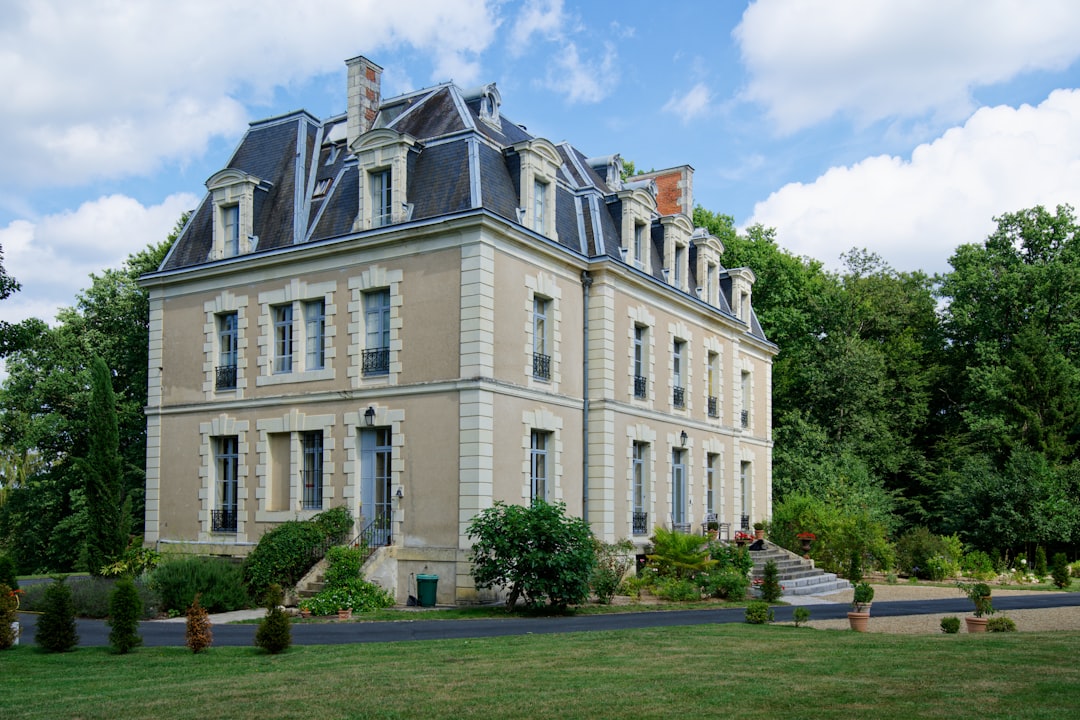
If you’ve ever wondered why the Loire Valley looks like someone spilled a bottle of fairy-tale kingdoms across the French countryside, the answer is surprisingly human: the French aristocracy, when confronted with a beautiful river valley and unlimited money, decided to compete with each other by building the most ostentatiously magnificent homes possible. The result is a landscape dotted with Renaissance castles so stunning that it’s hard to believe they’re real and not Photoshopped.
The Loire Valley isn’t just the most concentrated collection of beautiful châteaux in the world—it’s a visual representation of how European history actually happened: not in grand, abstract ways, but through the personal ambitions, rivalries, and whims of people with power and resources. To understand the Loire Valley châteaux is to understand Renaissance Europe, the transition from medieval to early modern architecture, the rise and fall of royal favor, and the strange ways that history gets crystallized in stone.
From Fortress to Palace: The Great Architectural Shift
In the Middle Ages, castles were practical. They were fortified, defensible, designed to resist siege. Thick walls, narrow windows, keeps towering above the landscape—these were military buildings first and homes second. Beauty was secondary to function.
But something changed in the 15th and 16th centuries, particularly as the power of the French monarchy consolidated and feudalism weakened. Nobles no longer needed their castles to be fortresses. Kings were strong enough to prevent them from waging war on each other. So what did nobles do with their castles? They started making them beautiful.
The Italian Renaissance was the primary influence—that explosion of art, architecture, and classical learning that had swept through Italy in the 14th and 15th centuries. As French kings made contact with Italy (through wars, diplomacy, and cultural exchange), they brought back Italian ideas. Symmetry, proportion, classical orders, linear perspective, gardens designed as much as buildings—these Italian principles began transforming French architecture.
The Loire Valley became the testing ground for this new architectural vision, and it became the royal playground specifically because the king spent time there. A river valley with good hunting, mild climate, and reasonable distance from Paris, the Loire offered an escape. And where the king went, the nobility wanted to follow.
François I: The King Who Made the Loire Royal
If any one person made the Loire Valley what it is, it’s King François I (ruled 1515-1547). Young, charismatic, ambitious, and obsessed with Italian culture, François I became enchanted with Renaissance ideas and brought them—and the best architects—back to France. He spent his resources lavishly on art, architecture, and learning. He even allegedly invited Leonardo da Vinci to live in France (da Vinci died here in 1519).
François I didn’t just commission one château. He commissioned multiple palaces and transformed existing ones. He made the Loire Valley the center of royal power and culture. The message was clear: this is where civilization happens, where beauty matters, where power and taste are demonstrated through architecture.
But here’s the crucial thing: noble families also wanted to build. If the king had a magnificent château, shouldn’t they have one too? This sparked an architectural arms race. Lords who had the means began constructing new châteaux or dramatically improving old ones. The valley filled with these buildings, each trying to outdo the last in beauty, size, or innovation.
Chambord: The Ambitious Dream
The quintessential Loire Valley château is Chambord, begun in 1519 and continuing under construction for decades. It’s enormous—250 rooms, 426 fireplaces, a hunting lodge that consumed so many resources that it nearly bankrupted the crown. The symmetry is perfect, the architectural detail is obsessive. It’s more than a home—it’s a statement of power and vision.
When you walk into Chambord, you understand it was designed to impress, to make visitors feel small, to demonstrate that the king could command such resources and vision. The double helix staircase in the center is a marvel—two spiral staircases that intertwine but never meet, allowing people to ascend and descend without crossing paths. It’s practical, yes, but it’s also a metaphor for power and control and mathematical perfection.
Chambord was never exactly a comfortable home for daily living. It was a spectacular stage set for power. François I used it for hunting parties and to entertain visiting dignitaries. The message was: I am powerful enough to build this, to maintain this, to use this for pleasure.
Chenonceau: The Castle Built on a Bridge
If Chambord is masculine power, Chenonceau is something more elegant and complex. Built directly on the River Cher (one of the Loire’s tributaries), Chenonceau looks like it’s floating on water. A gallery extends across the river itself, creating a surreal effect—you’re inside a building, but you’re also above flowing water.
Chenonceau’s history is also one of female influence, which is unusual for the period. The original castle was modified and expanded significantly by Diane de Poitiers, the mistress of King Henry II (and a genuinely powerful political figure). She added gardens and expanded the structure. Later, after Henry II’s death, his widow Catherine de Medici (a fascinating Florentine princess who became Queen of France) took over the castle and made further changes, including the gallery that crosses the river.
Standing on that gallery at Chenonceau, you’re standing at the intersection of water, architecture, and the subtle exercise of female power in a male-dominated world. Both Diane and Catherine used this castle to exercise influence and demonstrate their taste and authority. It’s one of the few châteaux in the region where women’s agency is so clearly written into the architecture.
Amboise: Where Kings Actually Lived
While Chambord was magnificent but impractical, Amboise was different. Built on a hill overlooking the Loire River, Amboise was a genuine royal residence where kings actually spent time. It’s more intimate than Chambord, less overwhelming, but still stunning. The Renaissance façade, the towers, the views over the valley—it’s a place that feels livable, which Chambord never quite does.
Amboise has darker history too. During the Wars of Religion (the violent conflicts between Catholics and Protestants that tore France apart in the late 16th century), Protestant rebels were captured and hung from the battlements of Amboise as a warning. The castle you see today is beautiful, but it’s a beauty that exists alongside memory of violence.
Villandry: The Gardens Are the Point
Most châteaux have gardens, but at Villandry, the gardens are the main event. Built in the early 16th century and modified repeatedly, Villandry is famous for its elaborate, geometric gardens designed in Renaissance style. These aren’t wild gardens—they’re mathematical gardens, planned as precisely as the architectural plans of the buildings themselves.
Walking through Villandry’s gardens, you see formal vegetable plots, ornamental hedges arranged in patterns, water features, and Renaissance aesthetic principles executed across acres of land. It’s a museum of garden design and a practical demonstration of how wealth translated into the ability to reshape nature itself.
For travelers interested in how the Renaissance mind approached nature and order, Villandry is essential. It shows that Renaissance ambition didn’t stop at buildings—it extended to controlling and organizing the natural landscape.
The Broader Château Network
Beyond these famous châteaux, the Loire Valley contains dozens more. Azay-le-Rideau, a romantic castle reflected in water. Cheverny, still partly inhabited by its original family. Montsoreau, perched on the Loire itself. Langeais, with its medieval keep but Renaissance additions. Saumur, which looks like a storybook castle. Usse, which inspired legends of Sleeping Beauty.
Each tells a story. Each represents architectural evolution, personal taste, family ambitions, and the flow of power through French history. Spending days touring châteaux, you’re essentially reading a material history of Renaissance Europe and the transition from medieval to early modern culture.
Why the Loire Specifically?
You might wonder: why did this particular valley become the center of French Renaissance château culture? Several reasons converge:
First, geography. The Loire River made transportation easy in an age when roads were terrible. The valley’s climate was pleasant, not too cold, not too hot. Good for hunting. Good for vineyards (the Loire produces excellent wines today for the same reasons it did in the 16th century).
Second, distance from Paris. Paris was the political center, but it wasn’t always where you wanted to be. The Loire Valley was far enough away to feel like an escape but close enough to remain relevant to power. It was the perfect place for a royal retreat.
Third, political history. As the medieval period ended and feudal lords’ power diminished, the Loire Valley became less important militarily and more important aesthetically. The transition happened to occur when the Renaissance was already reshaping European culture. The timing was perfect.
Fourth, competition. Once the king built here, nobles wanted to follow. Once nobles started building, the architectural arms race began. Success built on success.
What Happened to Them?
The châteaux weren’t always cherished. During the French Revolution, many were ransacked or destroyed. During World War II, some were damaged or used by occupying forces. Over time, some fell into disrepair, their owners unable to afford maintenance.
What saved many of them was tourism and historical preservation. Starting in the 19th century, the châteaux began to be recognized as cultural treasures. Restoration projects were undertaken. Today, most of the major châteaux are maintained as museums or sites open to the public.
For travelers, this means you can actually visit these places, walk through the rooms where kings hunted and nobles plotted, see the architecture that transformed how Europeans thought about power, beauty, and the relationship between humans and their built environment.
Visiting the Châteaux
A typical Loire Valley trip might include 3-5 major châteaux. Chambord and Chenonceau are essential—they’re the most famous and most architecturally significant. Villandry is crucial if you care about gardens. Amboise if you want something more residential and historical. Beyond these, it depends on your interests.
The towns themselves—Tours, Blois, Angers—are charming medieval cities that serve as good bases for château exploration. The landscape between châteaux is beautiful, rolling, and filled with small villages and vineyards. You’re not just visiting buildings; you’re experiencing a region that shaped European culture.
The Larger Story
The Loire Valley châteaux tell a story about the Renaissance transition from medieval to modern Europe. They show how power was exercised, displayed, and legitimized through architecture. They demonstrate the shift from fortification to aesthetics, from practical to ornamental, from military to diplomatic functions.
They also tell a story about wealth and inequality. These enormous, costly buildings existed because nobles and kings had resources that commoners couldn’t dream of. The inequality that built these châteaux was staggering, though the architecture itself is so beautiful that it’s easy to forget the brutal economic system that made it possible.
For modern travelers, the Loire Valley châteaux offer something rare: a landscape that hasn’t fundamentally changed architecturally in 400 years. You’re seeing essentially the same view that a 16th-century noble saw, walking through the same rooms, standing in the same gardens. It’s a direct connection to a world that’s intellectually far away but spatially and temporally near.
That’s why people keep coming back. The châteaux are beautiful, yes. But they’re also portals into a moment when Europe was being redrawn, redesigned, and reimagined. And there’s no better place to stand in that moment than in the Loire Valley, surrounded by these monuments to Renaissance ambition.




Leave a Reply