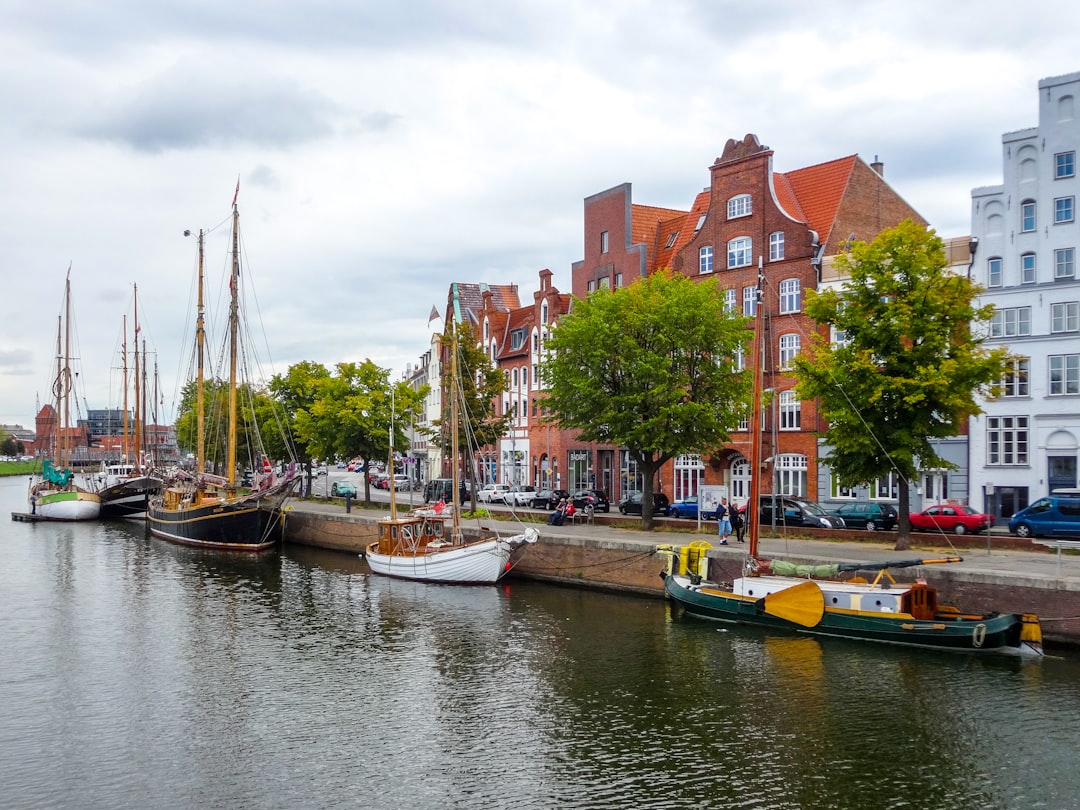
Before Germany was unified by Prussian iron and blood, before the Age of Nationalism, there was another kind of German power: merchant power. Between the 13th and 16th centuries, a network of German merchant cities formed an economic confederacy called the Hanseatic League. These cities, linked by trade routes, similar business practices, and shared commercial interests, dominated northern European commerce for centuries. Their decline was almost as rapid as their rise, but the cities they left behind are among Europe’s most beautiful and historically rich.
The Hanseatic League was never a nation-state. It had no government, no capital, no armies. It was something more modern, in a way: a trade federation held together by economic interest and mutual benefit. Its power was economic rather than military. Yet its influence shaped northern Europe as profoundly as any empire.
The Origins: Lübeck’s Rise
The story begins in Lübeck, a city in northern Germany on the Baltic coast. In the 12th century, Lübeck was a backwater settlement. Then, in 1226, it received a charter of independence from the Holy Roman Emperor. This charter, seemingly routine, had enormous consequences: Lübeck was granted the right to govern itself and to regulate commerce in its region.
Lübeck’s location was crucial. It sat on the Baltic coast where major river routes came together. To the west, the rivers connected to the North Sea and Atlantic. To the east, they connected to Russia and beyond. More importantly, Lübeck became the natural port for trade from Scandinavia, Russia, and eastern Europe.
Trade in the medieval world was dangerous and expensive. Merchants traveled in convoys for protection. Sea travel was perilous. Bandits haunted trade routes. The medieval merchant needed security, legal protections, and storage facilities. Lübeck, with its charter rights and its strategic location, could provide these things.
The city developed sophisticated commercial practices. Lübeck merchants established merchant guilds that controlled who could trade in the city. They developed legal structures for contracts and dispute resolution. They built wharves and warehouses. They created weights and measures standards. They essentially invented the infrastructure of modern commerce.
As Lübeck prospered, other Baltic cities watched and copied. Gdansk (then called Danzig), Tallinn, Riga, Hamburg, and dozens of other cities joined the network. These weren’t cities that conquered territory or built empires. They were cities that became wealthy through trade.
The Hanseatic Monopoly: A Network of Trading Posts
By the 14th century, the Hanseatic League had transformed into something approaching an actual confederation. Cities that adhered to Hanseatic standards and practices could call themselves Hanseatic. At its peak, the League included over 160 cities, though about 80 were major members.
The League’s power came from standardization and mutual recognition. If a merchant was licensed by one Hanseatic city, he could trade in any other. If a merchant from a non-Hanseatic city tried to trade in Hanseatic territory, he faced tariffs and restrictions. The League essentially created a free trade zone among its members while protecting itself from outside competition.
But the League’s real power lay in its foreign trading posts. The Hanseatic merchants established Kontore—fortified trading houses—in key cities throughout Europe. The most famous was the Steelyard (Stalhof) in London, where German merchants had a virtual monopoly on commerce. There was a Kontor in Bruges, the financial capital of medieval Europe. In Novgorod, far to the east in Russia, the Hanseatic merchants controlled the lucrative fur and grain trade.
These Kontore were more than warehouses. They were self-governing enclaves where Hanseatic merchants could live and work under their own laws, protected from the local authorities. They were essentially extraterritorial—comparable to the foreign trading posts that European merchants would later establish in colonial Asia. The cities that hosted Kontore had to accept this because Hanseatic merchants were too profitable to antagonize.
What They Traded: The Medieval Supply Chain
What was being traded across the Hanseatic network? The most important commodity was grain. Russia and eastern Europe produced vast quantities of grain. Northern European cities needed this grain, especially coastal cities that couldn’t rely on local agriculture. Baltic grain literally fed northern Europe. Merchants who controlled this trade became immensely wealthy.
Salt was equally important. Salt was used to preserve fish and meat in an era before refrigeration. Salted fish, particularly herring, was a staple protein for medieval people. Hanseatic merchants controlled salt mines and traded salt throughout the network. A merchant who controlled salt and herring could become rich.
Fur was another major commodity. Russian furs—beaver, mink, sable—were luxury items in western Europe. The wealthy wanted fur-lined coats and furs for hats and collars. Hanseatic merchants monopolized the fur trade, selling Russian furs throughout Europe at enormous markups.
Timber from the Baltic region was crucial for shipbuilding and construction. Amber, found on Baltic beaches, was luxury material for jewelry and decoration. Wine flowed northward from the Rhine. Cloth and wool came from Flanders. Spices from Asia were transported through various routes. Iron and copper from Swedish mines moved along the Baltic network.
This was a complex, interdependent system. Cities specialized in different products. Lübeck handled grain and fish. Novgorod supplied furs and raw materials. Bruges was the financial hub. London was the western terminus. The network functioned because each city had something unique to contribute and all cities profited from the system.
Hanseatic Architecture: Brick Gothic
Walk through Lübeck, Hamburg, Gdansk, or Tallinn today, and the first thing you notice is the architecture. These cities are covered in magnificent brick buildings—churches, warehouses, town halls, merchant houses. The style, called Brick Gothic, is distinctive and beautiful: soaring, precise, built of dark red brick with decorative patterns.
Why brick? Because these cities were in areas without much stone. Brick was local, abundant, and could be produced cheaply. Medieval builders turned this limitation into an advantage, developing an architectural style of extraordinary sophistication. Brick Gothic became a status symbol—proof that a city was wealthy enough to build with quality materials, even if they weren’t stone.
The Marienkirche (Church of St. Mary) in Lübeck is the classic example: soaring brick cathedral with intricate details and magnificent windows. The town halls of Hanseatic cities were built to impress—massive brick structures proclaiming civic pride and merchant wealth. The merchant houses, built by wealthy traders, demonstrate how prosperous these communities were.
This architecture still dominates these cities. When you walk Lübeck’s medieval streets, you’re walking among buildings that have stood for 500 years. The city’s appearance in the 21st century isn’t so different from its appearance in the 15th century. It’s a physical time capsule of medieval merchant power.
The Decline: When Trade Routes Changed
The Hanseatic League’s dominance lasted roughly 300 years—from the 14th to the 16th centuries. Then, suddenly, it began to decline. Several factors contributed.
First, the Age of Exploration changed trade routes. When Portuguese and Spanish sailors found sea routes to Asia, and later when European explorers reached the Americas, the old trade routes through the Baltic became less important. New commercial routes opened. Atlantic ports like Lisbon, Seville, and Amsterdam became more valuable than Baltic ports.
Second, individual nation-states became more powerful. The kings of England, Denmark, and Sweden increasingly asserted control over their own trade. They didn’t appreciate foreign merchant enclaves operating under their own laws. They expelled Hanseatic merchants and established their own trading monopolies. By the 16th century, the Steelyard in London was under constant pressure. By the 17th century, it was gone.
Third, the rise of stronger merchant republics—particularly Venice and Genoa in the south, and Amsterdam in the north—challenged the Hanseatic monopoly. These cities had stronger naval power and were better positioned for the new global trade routes.
By the 17th century, the Hanseatic League was dissolving. The Kontore closed. Cities withdrew from the League. By the 18th century, it was essentially gone, remembered as a historical artifact rather than a living economic force. The last formal meeting of the League took place in 1669.
From Merchant Network to Cultural Heritage
Yet the cities that made up the League didn’t disappear. They remained important trading centers, now under stronger state control. They continued to prosper, at least for a while. Hamburg became one of Europe’s great ports (and remains so). Lübeck, though it declined, remained a significant Baltic city. Gdansk, Tallinn, and Riga evolved into important urban centers.
The architectural heritage of the League survived remarkably well. The brick churches and merchant houses, though often damaged in wars (particularly World War II), were often restored. The cities became museums of medieval and Renaissance architecture. Walking their streets is like stepping back into the 15th century.
In modern times, these cities have become one of northern Europe’s major tourist attractions. The Hanseatic League has transformed from an economic power into a cultural and historical brand. Tour operators market the “Hanseatic Circle,” taking visitors to the most significant League cities. UNESCO has designated several Hanseatic city centers as World Heritage Sites.
Visiting the Hanseatic Cities
Lübeck remains the heart of the Hanseatic world. The city’s medieval center is almost completely preserved. The Rathaus (town hall) is a masterpiece of brick Gothic. The Holstentor, the city’s most famous gate, is the symbol of Lübeck and appears on the city’s coat of arms. Walking Lübeck’s narrow streets, you’re walking the richest merchant routes of medieval Europe. The Hanseatic Museum (Hanseatic League Museum) tells the League’s story.
Hamburg is the Hanseatic city most connected to the modern world. It’s a major contemporary port and urban center, so it doesn’t feel like a medieval time capsule. Yet its Speicherstadt (warehouse district) preserves the Hanseatic trading tradition. The red-brick warehouses that once stored Hanseatic goods now house museums and shops. The contrast between the medieval district and the modern city is striking.
Gdansk is Poland’s great Hanseatic city. The merchant houses lining the Long Market are brilliant examples of Brick Gothic. The city was heavily damaged in World War II but was meticulously rebuilt after the war, preserving the medieval architecture. Walking the riverfront where Hanseatic merchants once negotiated, the history feels alive.
Tallinn in Estonia is perhaps the best-preserved Hanseatic city. The Old Town has city walls, medieval streets, and brick churches that seem virtually unchanged from the 15th century. The city’s Hanseatic heritage is central to Estonian identity.
Rostock and Stralsund, on the German coast, are smaller but equally beautiful Hanseatic cities. They’re less crowded than Lübeck or Gdansk but equally impressive architecturally.
The Hanseatic Legacy: Medieval Globalization
What’s fascinating about the Hanseatic League to modern observers is how it resembles modern globalization. It was a network of cities sharing standards, trusting each other, trading across borders, and using legal frameworks to resolve disputes. It was early capitalism, operating across political boundaries, creating wealth through efficiency and specialization.
The League showed that medieval Europe wasn’t as dark and isolated as we sometimes imagine. There was a sophisticated, international trading system. There were networks that spanned continents. There was cultural exchange and commercial integration.
The League also shows what can happen when those networks break down. The League didn’t disappear because its cities were destroyed or conquered. It dissolved because economic power shifted and nation-states reasserted control. The cities survived, but the network that made them powerful was destroyed. It’s a reminder that economic power is fragile and depends on maintained relationships and favorable conditions.
The Hanseatic cities remain as physical monuments to a moment when merchants’ pragmatism and mutual interest created something approaching international free trade. They’re proof that before nationalism, before industrial capitalism, before the modern world, there was already a form of economic globalization—less powerful, less comprehensive, but recognizable in its basic principles.
When you visit these cities, you’re standing in the remains of the medieval world economy. The magnificent architecture isn’t just beautiful; it’s evidence of the wealth created by trade and mercantile networks. The narrow streets, the brick churches, the merchant houses—they all tell the story of cities that became powerful not through conquest but through commerce. It’s a story worth understanding, because the cities that rule the modern world often share similar characteristics: strategic location, efficient commerce, sophisticated financial systems, and the willingness to adapt to changing conditions.




Leave a Reply