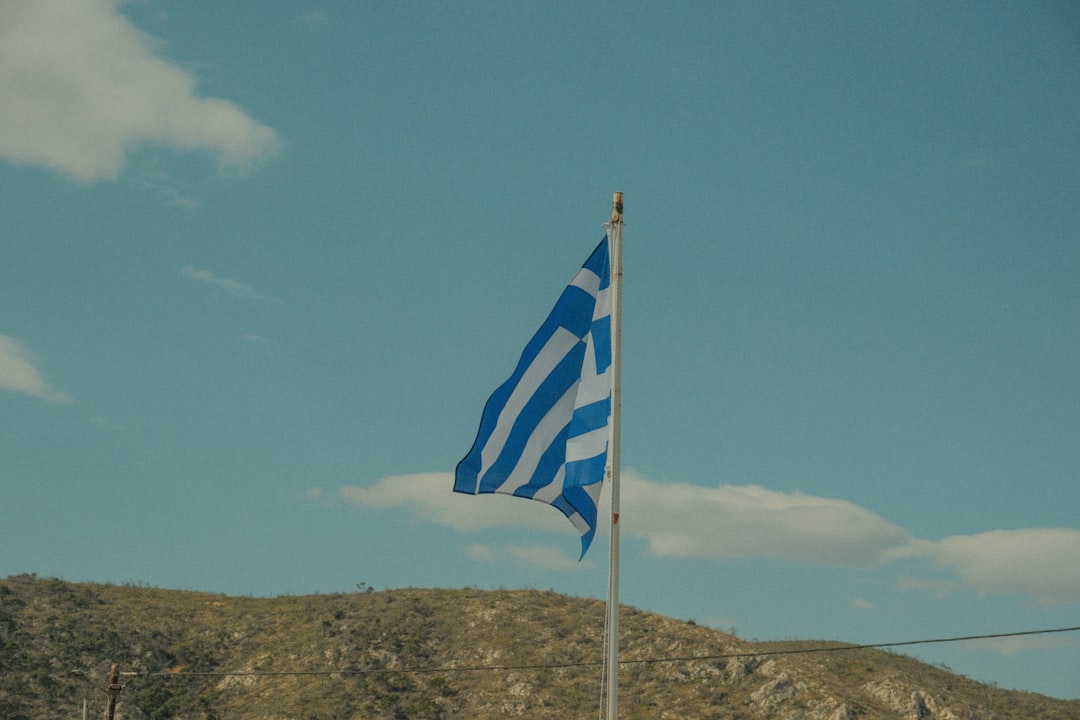
Imagine a nation that had been under foreign rule for nearly 400 years. Imagine that the occupying power—the Ottoman Empire—controlled not just military and politics, but also religious institutions and cultural practice. Imagine being told that your history, your language, your Orthodox Christianity, and your very identity as a people were somehow less legitimate than those of the occupiers. Then imagine that one day, ordinary people—farmers, monks, merchants, and idealists—decided enough was enough and rose up to fight for freedom. This is the story of Greek independence, one of the most romantic yet brutal chapters in European history.
The Long Sleep: Greece Under Ottoman Rule
Before 1821, Greece hadn’t been independent for over two thousand years. After Alexander’s empire fragmented and the Romans conquered the Mediterranean world, Greece became a Roman province. When Rome split into Eastern and Western empires, Greece was part of the Eastern Empire, which became known as Byzantium. When Constantinople fell to Ottoman forces in 1453, Greece fell under Ottoman rule, and there it remained for 368 years.
This wasn’t the most oppressive of colonial regimes, but it was absolute. The Ottoman Empire used a system called the millet system, which organized subject populations by religion. Greeks, being Orthodox Christians, had limited autonomy under their religious leaders. They couldn’t serve in government. They paid higher taxes than Muslims. They couldn’t ride horses (a symbol of power) or carry weapons. But they could practice their religion, maintain their language, and preserve their culture.
Over four centuries, something remarkable happened: Greek identity didn’t disappear. It transformed. The Orthodox Church became the keeper of Greekness. The monks in monasteries like those at Meteora preserved Greek language and learning. Folk traditions, folk music, folk dances—these became sacred expressions of Greek identity. The language evolved, but it remained recognizably Greek. When Greeks would eventually rebel, they would rebel not as subjects seeking reform, but as a people seeking to resurrect a nation that had been sleeping, not dead.
The Spark: Secret Societies and Romantic Ideals
The early nineteenth century was a time of national awakening across Europe. Italian nationalists dreamed of unifying Italy. Spanish and Latin American colonists rebelled against Spanish rule. This was the age of Romanticism, when poets celebrated the noble savage and ancient history, when nationalism was seen as a progressive force. For educated Greeks, particularly those living in diaspora communities in Western Europe or Russia, the idea of resurrecting ancient Greece became intoxicating.
In 1814, a secret society called the Filiki Eteria (Society of Friends) was founded, likely in Odessa, Russia, where many Greeks lived as merchants and refugees. The society had a grandiose plan: to liberate Greece from Ottoman rule. It recruited members across the Greek world—in Constantinople, in the islands, on the mainland, in the diaspora. Members swore oaths of secrecy and loyalty. The society had a hierarchical structure reminiscent of Freemasonry. By 1821, it claimed thousands of members.
The society’s leaders believed that an uprising would trigger a cascade of liberation across the Ottoman Empire. The Romantics of Western Europe would see an ancient people rising against an Oriental despotism, and they would support Greece with money and volunteers. Russia, the great Orthodox power, might even intervene militarily. It was a beautiful dream, and it was partly true, though the reality would be far messier and bloodier than imagined.
The Uprising: February 1821
The Peloponnesian War of independence began in February 1821 when several Greek leaders simultaneously raised the flag of rebellion in the Peloponnese (southern Greece). On March 25, 1821, the bishop of Patras blessed the Greek flag in a monastery, and the rebellion began in earnest. It was Easter season, a sacred time in the Orthodox calendar. The symbolism was intentional: the resurrection of the nation coinciding with the resurrection of Christ.
The rebels had some advantages: the Ottoman military was stretched thin across a vast empire. Turkish troops were concentrated in major cities and fortresses. The Peloponnese, mountainous and rural, was difficult terrain to control. The Greeks had a navy, though modest—ships commanded by figures like the legendary admiral Kanaris, who became famous for fireships (boats set on fire and sent into Ottoman harbor vessels, used as floating bombs).
But the rebels also faced enormous difficulties. The Ottoman army was experienced and disciplined. The rebels had no unified command structure—various local leaders pursued different strategies. They had no regular supply of weapons, ammunition, or money. What they had was passion, commitment, and—increasingly—international support.
The Romantic Intervention: Philhellenism and Lord Byron
The Greek cause captured the imagination of Western Europe like few political movements before or since. This phenomenon was called Philhellenism—the love of Greece and things Greek. Educated Europeans who had studied ancient Greek literature, history, and philosophy saw the Greek rising as an attempt to resurrect that ancient glory. The Romantic movement, which celebrated emotion and nationalism and the noble aspirations of peoples, made the Greek cause into a symbol of progress and human freedom.
Money flowed from Philhellenic societies in Britain, France, Germany, and the United States. Idealistic volunteers came to fight—French officers, Swiss mercenaries, British engineers, Italian patriots. Many died of disease or in combat. Their sacrifice became legendary.
And then there was Lord Byron, the most famous British Romantic poet, a man whose personal life was as dramatic as his poetry. Byron had visited Greece and fallen in love with it. He was also a man looking for a cause, a way to transform his life from scandalous self-indulgence into noble action. In 1823, he sailed to Greece to join the rebel cause. He arrived in the Ionian Islands with money, supplies, and his celebrity. He intended to command a force and achieve military glory.
Instead, he died in the Greek port city of Missolonghi on April 19, 1824, probably of a fever, though the cause was never entirely clear. He was thirty-six. His death shocked the world. European Romantic sentiment exploded. Byron had become a martyr for Greek freedom. He was mourned across Europe as a hero who had given his life for liberty. The Greeks knew his poetry and understood his sacrifice. His death became a turning point in mobilizing Western support.
The Massacres: Chios and the Horror of War
But the war wasn’t romantic at all. It was brutal and savage. In 1821-1822, Greek rebels massacred Turkish civilians in the Peloponnese. Turkish authorities responded with horrifying violence. In 1822, the Ottoman forces attacked the island of Chios, which had rebelled. The massacre was extraordinary in its savagery: tens of thousands of Greeks were killed. Women and children were enslaved. The island was left almost empty. European Philhellenes were shocked and galvanized. The massacre at Chios became a rallying cry, a reason to intensify support for Greek independence.
Eugène Delacroix, the great French Romantic painter, created a masterpiece called “Greece Expiring on the Ruins of Missolonghi” (1827), showing the spirit of Greece as a woman in white, dying amid ruins and corpses. The painting toured Europe, raising money for Greek relief.
The Naval War and the Turning Point
The crucial turning point came in 1827. The Great Powers—Britain, France, and Russia—had been watching the war with interest. They were officially neutral, but increasingly they saw the Ottoman Empire as a backward despotism and independent Greece as a progressive development. On October 20, 1827, Greek and allied naval forces fought the Ottoman navy at the Battle of Navarino. The Greeks and their international allies completely destroyed the Ottoman fleet. It was a decisive naval victory that effectively guaranteed Greek independence, because the Ottomans could no longer supply or reinforce their armies in Greece.
Russia, which had long wanted to expand into Ottoman territory, seized the opportunity and declared war on the Ottoman Empire in 1828. The Russo-Turkish War (1828-1829) further crippled Ottoman power.
The Birth of Modern Greece
In 1829, the Ottoman Empire formally recognized Greek independence through the Treaty of Adrianople. Greece was now a free nation, though not yet with its final borders. A new Greek state was established, initially with the island of Hydra as its capital, then Nafplio on the mainland as the first real capital of modern Greece.
The first president of Greece was Ioannis Kapodistrias, a Corfiot of aristocratic background who had served as a diplomat. He faced enormous challenges: the country was devastated by eight years of war. Infrastructure was destroyed. The treasury was empty. Armed bands roamed the countryside. Kapodistrias worked to centralize authority and rebuild institutions, but his authoritarian methods made him enemies. In 1831, he was assassinated by members of a rival family.
In 1832, the Great Powers (now including Germany and Austria) held a conference in London and decided to install a monarchy in Greece. They offered the throne to Otto, the seventeen-year-old son of the King of Bavaria. Otto arrived in 1833 and established his capital in Athens. He and his Bavarian regents ruled Greece with an autocratic hand, ignoring the nascent democracy. But they also rebuilt Athens, making it a capital worthy of the heir to ancient Greece.
Visiting the Sites of Independence
Nafplio, the first capital, is a beautiful waterfront town filled with Venetian fortifications and Ottoman architecture. The Old Parliament building, though not the original (which no longer stands), marks the site of Greece’s first government. You can walk the streets where the first Greek government was established, see the fortress of Palamidi rising above the town, and feel the weight of history.
In Athens, the National Historical Museum houses artifacts from the War of Independence—weapons, flags, personal belongings of heroes. The tomb of Kapodistrias is in the Church of St. Spyridon in Corfu. Islands like Hydra, Spetses, and Psara were centers of the naval war; you can visit them today and find memorials and small museums dedicated to the independence heroes.
The Legacy: Resurrection and Reinvention
The Greek War of Independence wasn’t like other European nationalist movements. It was explicitly framed as the resurrection of an ancient nation. Modern Greeks saw themselves as the direct descendants of Pericles, Socrates, and Alexander. This created a powerful identity but also created complications that persist today: the burden of living up to an ancient legacy, the tension between modern Greek reality and the idealized ancient past.
The war also showed the power of international Philhellenism—the idea that educated Europeans felt connected to Greece because of shared intellectual heritage and Romantic ideals. This gave Greece a kind of cultural legitimacy that helped secure its independence in ways that purely military factors couldn’t have achieved.
When you visit Greece today, you’re visiting a nation born from this act of resurrection. The Greek flag—the cross of Christianity and the blue and white of the Aegean—was raised in 1821. The Greek national anthem celebrates the resurrection of the nation. The very fact that modern Greeks were able to maintain their identity through nearly 400 years of Ottoman rule, and then resurrect their nation, speaks to the depth of Greek cultural identity.
It’s a story of courage, sacrifice, international solidarity, and the power of connecting present struggles to ancient glories. It’s messy, romantic, and profoundly human.




Leave a Reply