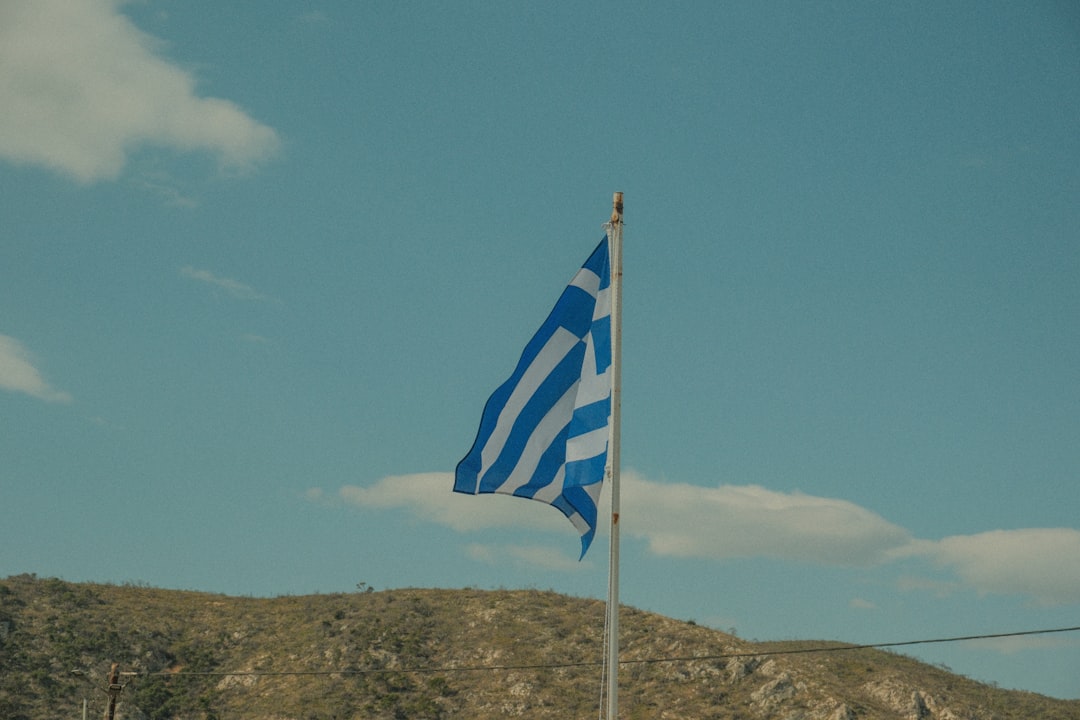
The city that gave democracy to the world woke up on April 21, 1967, to discover it had lost it. Military tanks rolled through the streets of Athens. Radio broadcasts announced that the military had taken control to save Greece from communism and national dissolution. Parliament was dissolved. The Constitution was suspended. A constitutional court justice who tried to resist was arrested. Prime Minister Stephanos Stephanopoulos, one of the last civilian leaders, was placed under house arrest.
Over the next seven years, Greece would experience its darkest period since the Ottoman occupation. A military junta of colonels would rule with an iron fist, implementing martial law, censoring the media, torture became a systematic instrument of state policy, and fundamental human rights were suspended—all in the name of saving the nation from communism. This is the story of how democracy died in its birthplace, and how ordinary Greeks resisted, survived, and eventually overthrew their oppressors.
The Background: Political Instability and Cold War Anxiety
To understand how the Colonels’ coup happened, you need to understand Greece’s political situation in the 1960s. Greece had barely recovered from the civil war. Though that conflict ended in 1949, its scars remained. The right wing, which had won the civil war, maintained tight control over politics, society, and culture. But Greece was also changing.
In the 1950s and 1960s, Greece industrialized and urbanized. Young people moved to cities. Education expanded. Greek intellectuals were exposed to European and American ideas—including ideas about freedom, individual rights, and questioning authority. A student movement emerged, particularly at the University of Athens. Workers organized, despite restrictions. The left, though officially suppressed, was finding new ways to organize and express itself.
King Constantine II, who had ascended the throne in 1964, was seen by many as too liberal, too sympathetic to democratic change. The right-wing establishment worried that if elections were truly free, the left might actually win seats in parliament. There were rumors of communist plotting. There were rumors of American support for a right-wing coup. There was talk of eliminating democracy “temporarily” to prevent a communist takeover.
Politics was fractious. Elections in May 1967 were approaching, and polls suggested they might be competitive. The conservative right-wing party was worried about losing power. Against this background of anxiety, the military coup seemed to come almost as a relief to conservatives—it would ensure that the left never came to power.
The Coup and the Early Days: Tanks and Terror
In the predawn hours of April 21, 1967, military units moved throughout Athens. They arrested key political figures, intellectuals, journalists, and suspected leftists. By dawn, the coup was complete. The military leaders, headed by Colonel Georgios Papadopoulos (who became Prime Minister) and Colonel Ioannis Ioannidis, announced that they were taking power to save the nation.
What followed was a systematic consolidation of power. The Constitution was suspended. Parliament was dissolved. Political parties were banned. A martial law regime was established. Newspapers were censored. Books were banned. Films were censored. Teachers and professors suspected of liberal or leftist sympathies were removed from schools and universities.
Most significantly, a secret police organization called the ESA (Special Security Police) was established, with headquarters at 47-49 Bouboulinas Street in central Athens. This became the most feared address in Greece. Suspected political opponents—communists, socialists, liberals, intellectuals, students, priests who spoke out against the regime—were arrested and brought to Bouboulinas Street for interrogation. What happened there became infamous: systematic torture.
Torture at Bouboulinas Street: The Regime’s Weapon
The junta didn’t just imprison its opponents. It tortured them. This wasn’t accidental or occasional. It was systematic. Prisoners were subjected to electric shocks, suspension from ceilings, sleep deprivation, beatings, sexual torture, and psychological humiliation. The regime created an atmosphere of terror through torture—not to extract information (though that was sometimes the pretext), but to break the will of anyone who might challenge the regime.
Hundreds of people were tortured at Bouboulinas. Some were eventually released. Some were held indefinitely. Some died. The torture chambers operated for seven years with the tacit approval of the regime and with the active support of security forces.
In 1968, Amnesty International published a report documenting torture in Greece. The junta denied it but also made clear that it didn’t care what international organizations said. Greece had withdrawn from the Council of Europe (the European community of democracies) partly to avoid international pressure about human rights.
The Regime’s Ideology: Traditionalism and Anti-communism
The junta claimed to be saving Greece, but saving it for what? The regime’s ideology was a mixture of extreme nationalism, Orthodox Christian traditionalism, and anti-communism. The motto was “Greece for the Greek Christians”—a phrase with ominous overtones (it echoed themes of fascism).
The regime promoted a view of Greek identity rooted in Orthodox Christianity and ancient Greek civilization. It suppressed modern Greek culture that it deemed “un-Greek.” Rock music was censored. Books considered “un-Greek” (which meant anything the regime disliked) were banned. The regime promoted traditional Greek values—family, religion, nationalism. Women were supposed to be submissive wives and mothers. Students were supposed to obey teachers and the state. Questioning authority was not allowed.
The regime’s anti-communism was virulent. It wasn’t just that communists were seen as a political threat. They were seen as anti-Greek, as foreign agents of the Soviet Union, as enemies of traditional culture. The regime saw itself as defending Greece’s Christian civilization against communist barbarism.
This ideology appealed to conservatives, the military, and the Church. It also had resonance among ordinary people who feared communism (a fear rooted in the recent civil war) and who valued traditional culture. The regime wasn’t entirely without support, especially in the early years. Many Greeks believed that strong military rule was necessary to prevent communist takeover.
Life Under the Junta: Surveillance and Suppression
For ordinary Greeks, the junta years were constraining but not constantly terrifying (unless you were involved in political activity or suspected of communist sympathies). There were curfews and restrictions on movement. There was censorship of media, books, and films. Universities were closed intermittently. Political discussion was dangerous.
But life went on. People worked, had families, went to church, celebrated holidays. Markets operated. There was no systematic starvation or massive state violence like in totalitarian regimes. But there was pervasive surveillance. Informants reported on neighbors and colleagues. People suspected each other. Trust eroded.
The regime created a security state with informants and secret police everywhere. People learned not to speak openly about politics. They learned to self-censor. They learned to smile in public while harboring doubts in private. The regime didn’t need to arrest everyone; it just needed to create an atmosphere where people were afraid to speak.
Resistance and Repression: The Junta’s Opponents
Despite the repression, there was resistance. University students organized clandestine meetings. Workers, despite restrictions on organizing, engaged in strikes. Intellectuals wrote and distributed samizdat (self-published underground) publications. The Orthodox Church, while officially cooperating with the regime, had some bishops who spoke against the dictatorship.
There were also resistance groups abroad. Greeks living in exile—in Western Europe, America, and elsewhere—organized opposition to the junta. The actress Melina Mercouri became an international symbol of anti-junta resistance, using her fame to publicize the regime’s crimes.
The regime responded with arrests, torture, and imprisonment. Political prisoners were held in camps on Greek islands—Makronissos, Gorgona, and others. These camps were grim places where political prisoners were subjected to harsh treatment, hard labor, and ideological pressure to renounce their beliefs.
The Cyprus Crisis: The Junta’s Fatal Mistake
The junta’s grip on power might have lasted longer if not for the Cyprus crisis. Cyprus was a former British colony with a Greek Cypriot majority and a Turkish Cypriot minority. The island had been independent since 1960 but was divided and unstable.
In 1974, a right-wing Greek military officer staging an armed coup in Cyprus (with support from the Greek junta) tried to overthrow the Cypriot government. The coup alarmed Turkey, which saw a Greek takeover of Cyprus as a threat. Turkey invaded Cyprus militarily, ostensibly to protect Turkish Cypriots but really to establish Turkish control of a portion of the island.
The invasion was a shock to Greece. The military, far from protecting Greek interests, had triggered a Turkish invasion that resulted in the occupation of Turkish troops on Cyprus. The junta had precipitated a military disaster. The invasion exposed the junta’s incompetence and weakness.
Moreover, the invasion triggered mass mobilization in Athens. Large crowds gathered demanding that the government respond to the Turkish threat. Students at the National Polytechnic in Athens occupied their campus, creating a center of resistance. On November 17, 1973, tanks rolled in and crushed the student occupation, killing an estimated 25 students (the exact number was never confirmed).
But the student uprising showed that even brutal repression couldn’t suppress discontent. And the Cyprus disaster had destroyed the junta’s legitimacy. It was supposed to be protecting Greece; instead, it had allowed Turkey to invade.
The Fall: Democracy Returns
By 1974, the junta was crumbling. Its foreign policy had failed. Its military power was exposed as ineffective. Economic problems were mounting. Opposition was growing. In July 1974, the regime collapsed.
The military leadership, recognizing that their position had become untenable, handed power to Constantine Karamanlis, a veteran conservative politician who had been living in exile in Paris. Karamanlis immediately called for free elections, promising to restore democracy.
The elections were held on November 18, 1974, and they were truly free—the first free elections in Greece since 1964. Karamanlis’ conservative party won, but that wasn’t the point. The point was that power was transferred through an election, not through military force. Democracy had returned to Athens.
The Aftermath: Reckoning and Reconciliation
The return to democracy didn’t immediately bring justice. Many of those responsible for torture and repression were never tried. Some military officers retired with pensions. Some secret police agents disappeared or were quietly transferred.
However, there was some reckoning. Some officers were tried, though sentences were often lenient. In 1975, the colonels (Papadopoulos, Ioannidis, and others) were tried and convicted. Papadopoulos was sentenced to life in prison, though he was eventually freed and lived until 1999. The trials acknowledged that crimes had been committed, but the punishments were relatively mild.
Over time, Greek society slowly processed the trauma of the junta years. Victims’ groups organized. Survivors of torture told their stories. The Polytechnic occupation became an annual commemoration on November 17. Memorials were erected. Museums documented the period.
In 1982, after the restoration of democracy, a new law granted amnesty to many political prisoners from the civil war and junta eras. Some Greeks felt this was necessary for national reconciliation. Others felt it was a betrayal of justice. The tensions between the desire for reconciliation and the demand for justice persisted for decades.
Understanding the Junta’s Legacy
The junta period lasted only seven years—brief compared to many dictatorships. But it left scars that lasted far longer. Greeks who lived through the junta never forgot the fear, the censorship, the torture chambers, the surveillance state. They passed those memories on to their children. The distrust of authority, the sensitivity to threats to democracy, the wariness about military power—these are junta-era legacies.
The Cyprus occupation, triggered by the junta’s failed coup attempt, also lasted. The island remains divided to this day. The Turkish military still occupies the northern part of Cyprus. The junta didn’t just threaten Greek democracy; it triggered a geopolitical disaster that persists fifty years later.
Visiting Sites of the Junta Period
Bouboulinas Street in Athens: The building where torture occurred is still standing, though now it houses government offices. A plaque commemorates those who were tortured there. Walking past it, you can feel the weight of history.
The National Polytechnic: The occupied campus where students died in 1973. The main gate is preserved as a memorial, and each November 17, the anniversary is commemorated with large gatherings.
The Museum of Cycladic Art and the War Museum in Athens: Both have exhibits related to the junta period.
Island prison camps: Makronissos and other islands have museums and memorials documenting the political prisoners who were held there.
The National Historical Museum: Has exhibits on recent Greek history, including the junta period.
Parting Thoughts
The Greek Junta represents one of history’s ironies: the nation that invented democracy fell under military dictatorship. But it also represents something else: the resilience of people who value freedom. Even under systematic repression, Greeks resisted. Even with torture chambers and secret police, they maintained their commitment to freedom.
The junta’s collapse shows that dictatorships, even militarily powerful ones, are fragile. They depend on fear and control. But when external circumstances change (the Cyprus disaster), when the population begins to resist visibly (the student uprising), when the regime loses its legitimacy, they can fall relatively quickly. The junta lasted seven years—a terrible seven years, but brief in the arc of history.
For visitors to Greece, understanding the junta period is crucial. It’s recent history—many Greeks alive today lived through it. It’s visible in memorials and museums. It shaped modern Greek democracy and Greek attitudes toward authority. It reminds us that democracy isn’t guaranteed, that it must be actively defended, and that the threat of authoritarianism never entirely disappears.
The story of the junta is a Greek story, but it’s also a universal story about the fragility of freedom and the power of ordinary people to resist oppression and rebuild their nation in the image of their values.




Leave a Reply