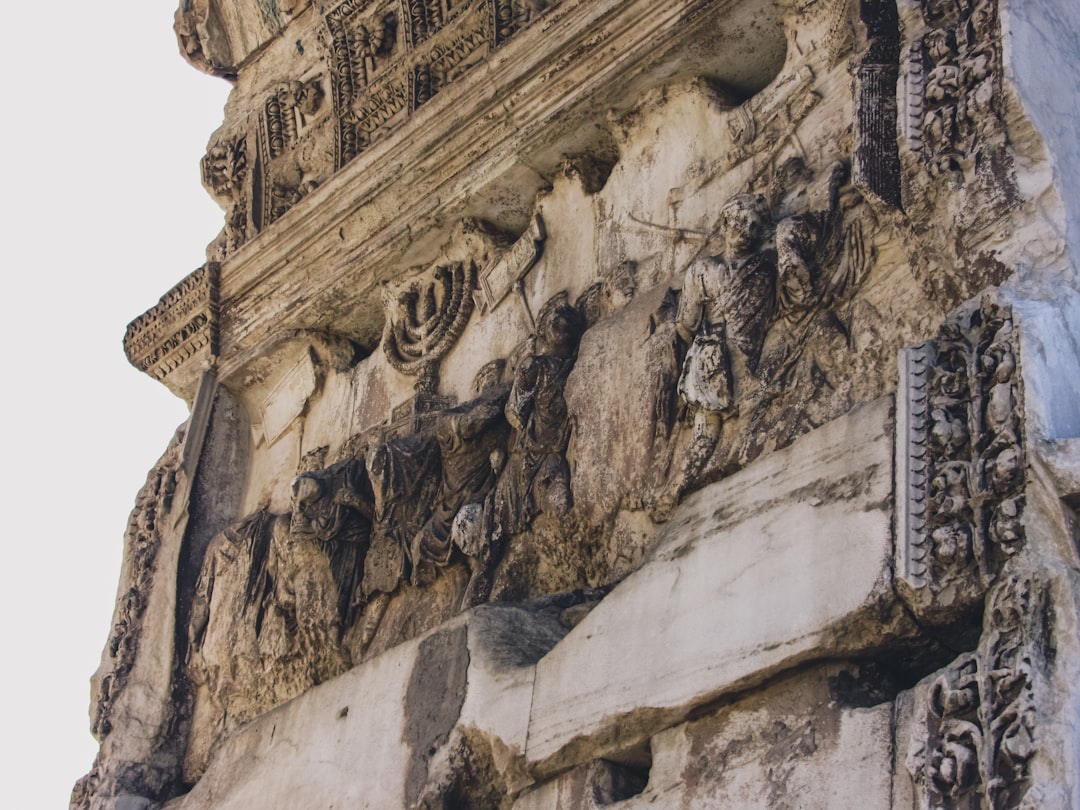
You’re standing in the Roman Forum, sweating in the afternoon heat, looking at a collection of columns that might be a temple or might be somebody’s storage shed. Your guidebook says this was “the center of Roman life for 1,000 years,” but all you can see is rubble. Here’s the thing: you’re looking at one of the most important places in human history, and it’s practically invisible unless you know what you’re seeing. That’s what this guide is for.
The Republic vs. The Empire: Two Completely Different Romes
Let’s start with a fundamental confusion that trips up most visitors. When people say “Ancient Rome,” they often picture the Colosseum, gladiators, Caesar, and emperors. But Rome wasn’t always an empire. For about 500 years—from 510 BC until Caesar’s nephew Octavian took power in 27 BC—Rome was a republic. This matters because it shaped everything you’ll see.
The Roman Republic was chaotic, brilliant, and brutal. Power was shared (theoretically) among elected officials: two consuls, the Senate of aristocrats, and various assemblies of citizens. This wasn’t democracy as we know it—women, slaves, and non-landowners had no say—but for an ancient state, the Republic’s system of checks and balances was genuinely innovative. It produced some of history’s greatest orators (Cicero), strategists (Scipio), and writers (Livy).
The problem was that the Republic’s institutions were designed for a small city-state, not for an empire spanning three continents. As Rome conquered more territory, the political system buckled. Wars in Gaul, Egypt, and Spain made individual generals too powerful. Wealthy landowners kept buying up farms, creating massive estates worked by slaves. The middle class—the small farmers and craftspeople who’d formed the backbone of the Republic—vanished. By the 1st century BC, Rome was tearing itself apart with civil wars.
Then came Augustus (the name Octavian gave himself after taking power). Augustus didn’t abolish the Republic officially—he was too clever for that. Instead, he kept the old institutions (consuls, Senate, assemblies) but drained them of real power. He made himself “Princeps”—the “First Citizen,” which sounds quaint until you realize he commanded the armies, controlled the money, and could have anyone executed. The Roman Empire had begun.
When you visit Rome, you’re seeing the ruins of both periods. The Forum—which you’ll actually visit—contains temples and monuments from the Republic era. The Colosseum, built by the Flavian emperors in the 70s-80s AD, is pure empire. Understanding the difference helps these places make sense.
The Forum: Where Rome Actually Worked
The Roman Forum is underwhelming if you don’t know what it was. Today, it’s a hodgepodge of broken columns, scattered stones, and dirt paths. But for 1,000 years, this was the commercial, religious, and political heartbeat of the Mediterranean world.
Picture it in its heyday—say, the 2nd century AD. The Forum wasn’t a park; it was a plaza surrounded by important buildings, and it was crowded. Merchants sold everything from grain to fish to fine pottery. Senators hurried to the Senate House. Priests performed sacrifices at temples. Lawyers argued cases in basilicas (courthouse-style buildings). Ordinary Romans came to do business, hear speeches, witness trials, or just to see and be seen. It was like a combination of a stock exchange, a courthouse, a marketplace, a cathedral, and a Twitter feed—the place where the empire’s business actually happened.
The structures you’ll see today give you fragments of this world. The Temple of Saturn, with its imposing columns, was Rome’s treasury. The Temple of Vesta, that little round ruin, was where the Vestal Virgins kept the sacred flame that represented the safety of Rome itself (letting it go out was considered catastrophic). The Basilica of Maxentius was a courthouse and commercial space. The Column of Phocas, oddly placed in the middle of the Forum, is one of the last monuments erected before the Forum fell into ruin during the Christian era and the empire’s decline.
Pro tip for visiting: get a map that actually labels the individual buildings. Standing in the Forum without labels feels like staring at an archaeological cryptogram. With labels, your brain can start to reconstruct what was here, and the place comes alive.
The Colosseum: Spectacle, Power, and the Romans’ Dark Side
The Colosseum is probably the first thing you picture when you imagine Rome. It’s massive, it’s impressive, and it’s a remarkably well-preserved chunk of imperial architecture. But here’s what you need to understand: it was a killing machine, and the Romans were honest about that.
Built between 72-80 AD by the emperors Vespasian and Titus, the Colosseum (technically the Flavian Amphitheatre) could hold about 50,000 people. It wasn’t built for theater or athletics in the way we’d understand them today. It was built for staged combat: gladiators fighting each other, condemned criminals fighting wild animals, actual naval battles performed in the arena (the floor used to be wooden, and they could flood the space).
Gladiatorial combat was not entertainment in the modern sense. It was political theater. Emperors paid for these games out of their own pockets to please the crowds, and that pleased plebs meant political power. It was also a way to dispose of people the state didn’t want around—condemned criminals, prisoners of war, rebels. Watching people you didn’t like get eaten by lions was probably satisfying in a way modern entertainment rarely is.
The Romans didn’t pretend this was anything other than what it was. Ancient writers describe the games with a kind of frank appreciation for the violence. The moral opposition to the games came primarily from Christians, who saw the killing as barbaric (a position that’s now universal, but which was genuinely counterculture in Rome).
Visiting the Colosseum today is genuinely moving—not because it’s a cool building (though it is), but because of what it represents. You’re standing in the place where thousands of people died for entertainment. The broken walls and exposed underground areas let you see the mechanics: the trap doors, the pulleys, the cages where animals were kept. It forces you to reckon with the fact that Rome was powerful and beautiful, but also brutal and unjust.
Roads, Aqueducts, and the Engineering Marvel
One of Rome’s most enduring achievements was infrastructure. The Romans understood that you can’t hold an empire together with just military force—you need to be able to move goods, information, and troops quickly.
Roman roads are famous, and deservedly so. They were engineered with such precision that some are still used today. They built them in layers: large stones at the base, smaller stones, then gravel, then a top surface. They built them straight, which looks inefficient until you realize it saves time and money over distances that can be hundreds of miles. The Appian Way, which you can still walk on today just south of Rome, is one of the oldest and most famous. Built in 312 BC, it connected Rome to the southern port of Brindisi. You can still see the massive stone blocks fitted perfectly together, worn smooth by 2,000 years of traffic.
Roads enabled trade networks, which meant wealth flowed into Rome from across three continents. They also enabled the empire to move armies rapidly—a general could march troops from Britain to Syria in just a few months. This was a crucial part of Roman power.
Aqueducts are equally impressive, and they solved a problem that seems quaint to modern people: getting fresh water to a city of over a million inhabitants. Rome’s aqueducts brought water from mountains tens of miles away into the city. The engineering was so good that the water flowed through gravity alone—no pumps, just precise calculation of angles and materials. By the 2nd century AD, Rome had 11 major aqueducts bringing in about 300 gallons of water per person per day (that’s actually more than modern Americans use). Some of this was for drinking and bathing, but much went to public fountains, public baths, and—significantly—the public toilets that the Romans considered a sign of civilization.
The remains of these aqueducts are scattered around the landscape outside Rome. The most famous is the Pont du Gard in southern France, but you can see impressive ruins of Roman aqueducts near Rome itself.
Daily Life in Ancient Rome: Bread, Wine, and Slavery
When you visit Ostia Antica—Rome’s port city about 30 km from the center—you get a better sense of what daily life was actually like for ordinary Romans. Ostia was buried by silt and forgotten for centuries, so it wasn’t picked over for building stone the way Rome was. You can see apartment buildings (called insulae), taverns, bathhouses, and shops. This is where regular people lived.
Ordinary Romans ate simply: bread (sometimes made from grain that came from Egypt), olive oil, cheese, and occasionally meat or fish. Wine was mixed with water in ratios of 1:3 or even 1:2—drinking unmixed wine was considered barbaric and a sign of alcoholism. Most Romans worked in the trades: there were blacksmiths, carpenters, fullers (cloth cleaners), butchers, bakers, tavern keepers. The wealthy lived much better—with multiple slaves, fine wine, meat regularly, and leisure time. But they were a minority.
Most crucially, Rome was built on slavery. It’s estimated that about a third of Rome’s population was enslaved. Slavery wasn’t racial—enslaved people could be any color or ethnicity—but it was absolutely fundamental to the economy. Slaves worked in mines, on plantations, in houses, in shops, and as gladiators. They could be freed by their masters (which created a new social class, freedmen), and freed slaves could become quite wealthy and powerful. But slavery itself was universal and unquestioned.
This is something worth sitting with when you visit. The beautiful mosaics you’ll see, the sophisticated bathhouses, the leisure that allowed people to write philosophy—much of it was built on the backs of enslaved people who had zero rights and could be killed on a whim.
The Fall and the Ruins You’ll See
Rome didn’t fall in a day. It was a long decline over centuries. There was no single moment where the “Roman Empire” ended—instead, the western empire gradually lost control of its territories as local warlords took over, as the economy contracted, and as the constant military pressure from Germanic peoples to the north became unsustainable. The Eastern Roman Empire (usually called the Byzantine Empire) continued for another thousand years and didn’t fall until 1453.
In the west, the last emperor was deposed in 476 AD. What happened then? The cities were abandoned. Rome, once a city of a million people, shrank to about 30,000. The Colosseum stopped being a place of gladiatorial games and became a fortress. The Forum fell into disuse. Without the Roman state to maintain them, the aqueducts broke and stopped functioning. The population couldn’t get enough food, and everyone who could afford to left. The great buildings were slowly dismantled by locals for building stone.
This is why Rome’s ruins look the way they do. They’re not destroyed by some catastrophic event—they’re slowly worn down by time, stripped by people looking for materials, buried by centuries of accumulated sediment. The fact that anything is left at all is somewhat remarkable.
When you visit these ruins, you’re seeing the literal bones of history. The Colosseum’s broken walls, the Forum’s scattered columns, the fragments of aqueducts—these aren’t quaint tourist attractions. They’re evidence of one of humanity’s greatest achievements and a reminder of how fragile even the mightiest civilizations are.
What to Actually Visit
- The Colosseum: Yes, it’s touristy. Yes, there are crowds. But it’s worth seeing at least once. Try to go early in the morning or late in the afternoon for smaller crowds.
- The Roman Forum: Essential but confusing. Seriously, get a map and identify individual buildings. It transforms the experience from “rubble” to “oh, I see what this was.”
- The Pantheon: This building survived better than most because it was converted into a church. It’s the best-preserved Roman building and its interior is genuinely stunning.
- Ostia Antica: Less crowded than Rome, easier to understand, and gives you a better sense of daily Roman life.
- The Appian Way: If you’re willing to get a bit outside the city, walking on 2,000-year-old stone is unforgettable.
Rome doesn’t reveal itself to passive tourists. You have to actively work to understand what you’re looking at. But if you do, the city becomes a three-dimensional history book that lets you touch history with your hands.




Leave a Reply