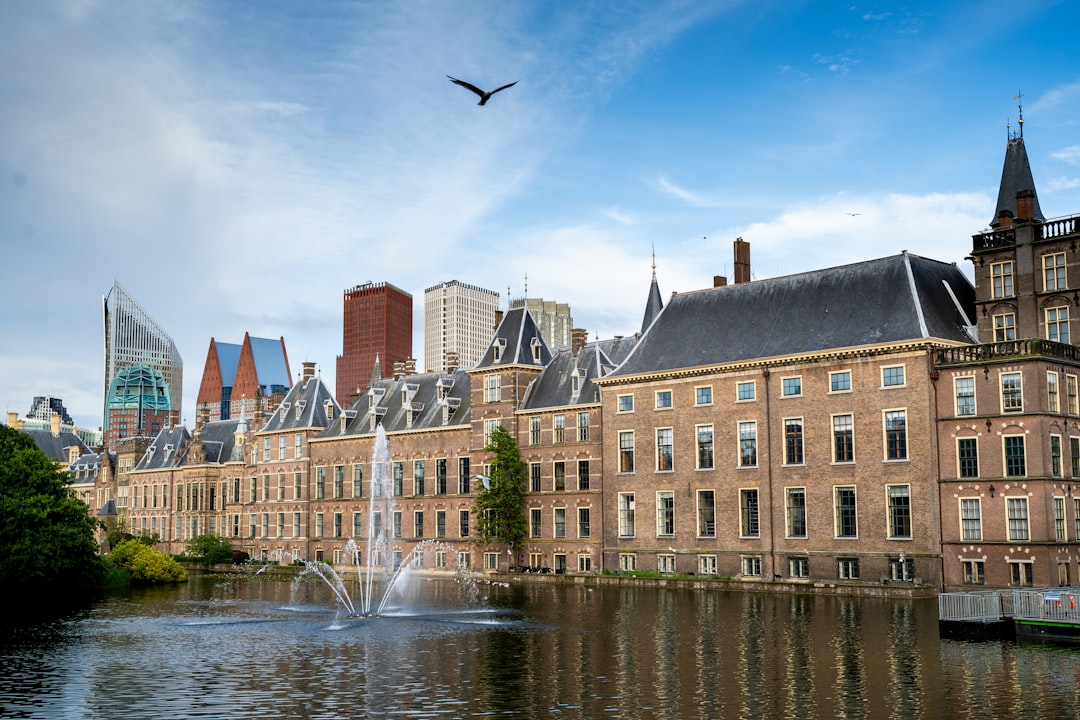
The Pragmatic Sanctuary
In 1620, a group of English religious dissenters who had fled England to escape persecution found themselves in the Dutch city of Leiden. They were Separatists—Protestants who believed the Church of England was beyond reform and needed to be separated from entirely. England considered them seditious heretics. They had already fled to the Netherlands once before, were now preparing to leave again—eventually arriving in Massachusetts, where they would become known as the Pilgrims. But their time in Leiden is instructive: the Netherlands tolerated them, let them worship as they pleased, and asked little in return except that they obey local laws and respect the rights of others.
This wasn’t enlightened progressivism. It was pragmatism. The Dutch Republic, newly independent and engaged in a bitter war with Spain, didn’t have the luxury of religious conformity. It needed merchants, needed capital, needed skilled workers. If a Jew from Portugal, a Huguenot from France, or an English religious radical wanted to live in Amsterdam and make a living, the Dutch were happy to have them. Religious toleration became a competitive advantage—a way to attract talent and capital from across Europe.
But something interesting happened. The pragmatic toleration that began as calculation evolved into something more—an actual culture of religious and intellectual openness that made the Netherlands in the 1600s and 1700s unlike anywhere else in Europe. Amsterdam became a refuge not just for religious minorities but for philosophers and scientists whose ideas were dangerous elsewhere. It’s a reminder that practical tolerance, pursued long enough, can evolve into something approaching genuine pluralism.
The Legal Framework
The Dutch Republic’s tolerance was codified in law. When the Union of Utrecht was established in 1579 (the founding moment of the Dutch Republic), it included remarkable language about religious toleration. Article 13 stated that “no one shall be persecuted or questioned on the subject of divine worship.” This wasn’t an absolute statement—the Catholic Church was still marginalized, and dissident Protestants could face restrictions—but it established a legal principle that was radically different from the rest of Europe.
In most of Europe, the question of which religion the ruler practiced determined which religion the ruled were required to practice. The principle was cuius regio, eius religio (whose realm, his religion). You followed the religion of your ruler, or you left. The Dutch Republic rejected this entirely. You could be a subject of the republic and believe whatever you wanted about God—provided you didn’t challenge the secular authority of the state.
This distinction—between political obedience and religious belief—was the key to Dutch tolerance. It wasn’t that the Dutch were uniquely enlightened (though some were). It was that they separated the questions successfully. “Do you pay your taxes and obey the laws?” That was the relevant question. “Do you believe in transubstantiation or predestination?” That was treated as a private matter.
The Sephardic Jews
The most visible group that benefited from Dutch tolerance were the Sephardic Jews. In the 1590s, small groups of Portuguese Jews, many of whom had secretly practiced Judaism while officially Catholic in Spain and Portugal, began arriving in the Netherlands. They were welcomed. Soon there was a significant Sephardic Jewish community in Amsterdam—perhaps 5,000 by the 1630s. They established synagogues, schools, and charitable organizations. They became merchants and traders, playing a significant role in Amsterdam’s commercial life.
The Sephardic synagogue, the Esnoga (Portuguese Synagogue), is still standing in Amsterdam, still serving its original purpose nearly 400 years after its completion in 1675. Walking into it, you see a building designed to accommodate the large community that had developed. The main hall can hold over 1,000 people. The architecture is modest—wooden columns, plain walls, no grandiose decoration—reflecting both Sephardic aesthetic preferences and the careful restraint of minority worship in a majority Protestant society. But the scale speaks to the significance of the community.
What’s particularly interesting about the Sephardic Jews in Amsterdam is that they brought capital, skills, and commercial networks. Many had been successful merchants in Spain and Portugal; they brought those networks and that expertise to the Netherlands. They became involved in trade, finance, printing, and commerce. Some became extremely wealthy. But they also maintained their own community institutions—schools, synagogues, burial societies, charitable organizations.
The Dutch allowed this in part because the Sephardic Jews were seen as respectable merchants, not as religious radicals. They were organized, law-abiding, and economically valuable. The combination made them acceptable. But it’s still worth noticing: in the same period that the Spanish Inquisition was still operating, in the period of religious wars in France, in the period of religious conflict in England, a significant Jewish community was thriving openly in the Netherlands.
The French Huguenots
French Protestants called Huguenots faced fierce persecution in France, culminating in the St. Bartholomew’s Day Massacre of 1572, when thousands of Huguenots were killed. Many fled France, and significant numbers ended up in the Netherlands. By the mid-1600s, there were perhaps 50,000 Huguenots in the Dutch Republic. They established their own churches, their own schools, and their own community institutions.
The Huguenots brought skills and capital. Many were skilled craftspeople, traders, and merchants. They contributed significantly to the Dutch economy. But they also remained culturally distinct, speaking French, maintaining French traditions, and worshipping in their own churches. The Dutch allowed this—the Walloon Church in Amsterdam, a Huguenot congregation, is still standing.
Hidden Churches: Catholics and Radical Protestants
Tolerance had limits. Catholics were not openly persecuted, but they weren’t granted official recognition. Radical Protestants—those who believed that true reformation hadn’t gone far enough in the official Dutch Reformed Church—also faced restrictions. Yet both communities developed creative solutions.
The most remarkable was the schuilkerk—the hidden church. These were churches hidden in the upper floors of houses or in concealed spaces within buildings. From the street, they looked like ordinary Amsterdam townhouses. But inside, they contained spaces for worship, complete with altars, pulpits, and seating for hundreds. Over 30 such churches were established in Amsterdam, serving both Catholic and radical Protestant congregations.
One particularly famous one, built in 1663, is now preserved as the Museum Ons’ Lieve Heer op Solder (Museum of Our Dear Lord in the Attic). Walking up the narrow wooden stairs to the top of a 17th-century Amsterdam house, you emerge into an astonishingly spacious church, complete with ornate altars, a pulpit, and seating for 150 people. That this could exist—hidden in plain sight in the heart of the city—speaks to a kind of tacit understanding between authorities and the religious minorities. As long as the worship remained discreet, as long as it didn’t challenge public order, it was tolerated.
The Philosopher’s Haven
The practical tolerance that the Netherlands offered attracted not just religious refugees but intellectual refugees. Some of the most important thinkers of the 17th and 18th centuries found their way to the Netherlands because their ideas were dangerous elsewhere.
René Descartes, the French philosopher, spent 20 years in the Netherlands (1629-1649), working on his philosophy in relative peace. He later wrote that no other country offered as much freedom for his thinking. Baruch Spinoza, one of the most original thinkers in Western philosophy, was born in Amsterdam to a Sephardic Jewish family. Though he was later excommunicated by the Jewish community for his unorthodox theology, he was able to continue his work in Amsterdam. His philosophy, which presented a vision of a unified universe and argued against traditional theology, would have been far more dangerous to express elsewhere. But in Amsterdam, he could publish his work and carry on philosophical correspondence with thinkers across Europe.
These weren’t the only ones. Pierre Bayle, a French Protestant, edited a journal of scholarly critique in the Netherlands, publishing articles that challenged the consensus of European intellectual life. John Locke, the English philosopher, fled England and spent time in the Netherlands during his own exile. The Dutch embraced the possibility of being a refuge for dangerous ideas.
The Economic Logic
Why were the Dutch so tolerant? Part of the answer is ideological. Some Dutch leaders, influenced by Erasmus and Renaissance humanism, believed in the value of toleration. But part of the answer is brutally practical: commerce. Merchants and traders often came from religious minorities. They brought capital and expertise. In a competitive commercial world, the republic that welcomed them would prosper; the republic that persecuted them would lose them.
The Netherlands was also in a peculiar position. Its independence from Spain was recent and contested. The Eighty Years’ War meant constant military expenses. The republic needed to maximize its economic resources. Persecuting productive minority groups made no economic sense. Better to tax them, regulate them carefully, and let them profit and contribute to the republic’s wealth.
This suggests something profound about toleration: it often emerges not from moral superiority but from self-interest. The most tolerant societies, historically, have been commercial societies where tolerance has a practical payoff. The most persecuting societies have been those where religious conformity seemed necessary for political or military unity.
Visiting the Tolerance
To experience Dutch religious tolerance, visit the Esnoga, still serving as a functioning synagogue. Respectful visitors can enter and see where Sephardic Jews have worshipped for centuries. Visit the Museum Ons’ Lieve Heer op Solder to see the hidden church. Visit the Walloon Church, also still functioning as a church. Walk through the Jewish Quarter in Amsterdam and see where Sephardic and Ashkenazi Jewish communities lived side by side.
The Anne Frank House, while primarily a Holocaust memorial, is also a reminder of how far the Nazis reversed the tradition of tolerance. Anne’s family, hiding in a Golden Age townhouse on a canal where tolerance had made Jews welcome, were hunted by Nazis who wanted to eliminate them entirely. The contrast between the 1600s and 1940s is stark.
The Spinoza House Museum in The Hague, located in the building where the philosopher lived, documents his life and work. It’s a modest place, reflecting his modest income as a lens-grinder. But it’s a monument to the kind of intellectual freedom that the Netherlands enabled.
The Limits and Contradictions
It’s important to note that Dutch tolerance had limits and was not universal. The Dutch Reformed Church was the official church, and its ministers held social prestige. Catholics were marginalized. Jews were restricted from certain professions and had to live in designated areas. Radical religious movements were suppressed. Women had no rights to speak in public worship. Tolerance was real but bounded.
Also, the same commercial pragmatism that created tolerance elsewhere created brutal colonialism in the East Indies. The VOC, which operated under the same Dutch government that protected religious minorities at home, became one of history’s most ruthless corporations, colonizing Indonesia and enslaving millions. You could be tolerated for your religious beliefs in Amsterdam while the company you invested in enslaved people in the Indies. The contradiction is stark.
But still, the Netherlands in this period stands out. For a crucial moment in European history—the 1600s and 1700s—it offered something unique: a place where you could believe what you wanted, worship as you pleased, and pursue your livelihood without persecution. That created an intellectual and commercial flourishing that transformed Europe. The cosmopolitanism of modern Europe has deeper roots in the Dutch republic than in most places.
When you visit Amsterdam and see the canals lined with townhouses, churches and synagogues interspersed with secular buildings, neighborhoods where different religions and ethnicities lived in proximity, you’re seeing the physical legacy of this toleration. Not perfect, not universal, but real. It’s one of the Dutch Republic’s greatest achievements—not because of moral enlightenment alone, but because tolerance was built into the pragmatic foundations of the society. It proved, for a moment, that you could organize a prosperous society on principles of religious freedom and intellectual liberty. That’s a lesson that resonates across centuries.




Leave a Reply