When Norsemen Changed the World
On June 8, 793, monks in the monastery of Lindisfarne—a peaceful island off the coast of Northumberland in northeastern England—were going about their daily prayers when the peaceful morning shattered. Pagan raiders emerged from the mist aboard sleek wooden vessels, their dragon-headed prows cutting through the North Sea like hungry beasts. These were Norwegian Vikings, and the raid that followed would mark the beginning of an era that would reshape medieval Europe.
For nearly three centuries, Norwegian seafarers would dominate the northern seas, establishing trade routes, founding settlements, and becoming the stuff of legend. Yet these Vikings were far more than the bloodthirsty barbarians of popular imagination. They were master navigators, skilled craftsmen, ambitious traders, and bold explorers who would eventually reach the shores of North America—nearly 500 years before Columbus.
Master Navigators Without Instruments
What made the Vikings such formidable sailors? The answer lies in a combination of technological innovation and audacious courage. Norwegian shipbuilders developed the longship—a vessel so revolutionary that it remained unmatched in Northern Europe for centuries. Built with shallow drafts that could navigate both open ocean and inland rivers, these ships were light enough to carry overland when necessary, allowing Vikings to penetrate deep into continental Europe via river systems like the Dnieper and Volga.
The longship design reflected both necessity and genius. With typical dimensions of 60 to 80 feet long but only 15 feet wide, they were remarkably maneuverable. The overlapping wooden planks (clinker construction) made them flexible and resilient—perfect for the unpredictable North Atlantic. A single square sail supplemented the oars when wind permitted, but these vessels were fundamentally human-powered, giving Vikings the ability to raid swiftly and retreat before defenders could organize.
But how did these sailors navigate without compasses, GPS, or even proper charts? The Vikings employed a sophisticated understanding of natural phenomena. They read the position of the sun at specific times of day using a clever device called a sunstone—likely a crystal of Iceland spar (calcite) that could locate the sun even on cloudy days. They observed bird flight patterns, water color, wave formations, and the stars. Most remarkably, they maintained oral traditions of routes and landmarks, passed down through generations with remarkable accuracy.
The saga texts that survive describe these voyages with poetic detail: “From the north, where Hrafnista lies, the way goes to Hernar, and from there to Shetland so that you sight the latter island by looking to the southwest. From Shetland to the Orkneys, looking to the southwest, and from the Orkneys to the Irish coast, looking south-southwest.” This was practical navigation expressed as poetry.
The Westward Expansion
The story of Norwegian Viking expansion westward is one of audacious discovery and relentless determination. By the late 9th century, Norwegian Vikings had settled in the Shetland and Orkney Islands, using them as staging grounds for further expansion. Around 874 AD, Norse settlers reached Iceland—a volcanic island so remote that no one had previously established a permanent presence there. Within 60 years, thousands of Icelanders (many of them Norwegian settlers) were calling the island home.
Iceland represented something profoundly important in Viking culture: a place to escape. Many fleeing the tyranny of the newly centralized Norwegian state under King Harald Fairhair chose Iceland’s harsh independence over Norwegian control. These were the Vikings who valued freedom enough to endure Arctic winters and volcanic landscapes.
From Iceland, the next leap came in 985 when Erik the Red, fleeing Iceland after committing murder, sailed westward and discovered another land. He named it Greenland—a strategic choice, as he believed a friendly name would attract settlers. His marketing worked. Within two years, a fleet of 25 ships carried Norwegian colonists to Greenland’s western coast. These settlements would last for five centuries, representing one of medieval Europe’s most remote frontier societies.
The saga tells us that Erik’s son Leif Erikson would undertake the voyage that captured the Norse imagination and eventually reached the shores of what we now know as North America around the year 1000. Archaeological evidence from L’Anse aux Meadows in Newfoundland confirms that Norsemen did indeed establish a settlement there. Leif called it Vinland—”the land of wine”—because of the wild grapes he found growing there. This was nearly 500 years before Columbus, a testament to Norwegian courage and navigation skill.
The Ships as Time Capsules
To truly understand the Vikings, you must see their ships. The Viking Ship Museum in Oslo houses two extraordinary vessels that have provided modern archaeologists with an almost complete understanding of Viking shipbuilding and daily life.
The Oseberg ship, discovered in a burial mound in 1904 near the town of Oseberg in Vestfold County, dates to around 820 AD. This ship was buried as the grave of a wealthy Viking woman—likely a princess or queen—along with horses, a wooden cart, and dozens of remarkable artifacts. The ship itself is 72 feet long and made of oak, its planks fastened together with spruce root and wooden pegs. What makes it truly extraordinary is the decorative carving: animal-head posts, serpentine designs, and elaborate patterns that speak to a sophisticated artistic tradition. The Oseberg discovery revealed that Vikings were not crude barbarians but skilled artisans with refined aesthetic sensibilities.
The Gokstad ship, discovered in 1880 and dating to around 850 AD, reveals a more utilitarian design. Slightly larger than the Oseberg ship at 79 feet long, this vessel clearly served as a working ship rather than a royal barge. Its construction demonstrates the engineering principles that made Viking ships so effective: strong cross-beams, flexible joints, and a keel designed to handle both ocean swells and shallow river waters.
When you stand before these vessels in the museum, you’re seeing not just wood and nails, but the material record of a civilization that conquered the northern seas through courage, ingenuity, and relentless determination.
The Unification of Norway
The Viking Age was also an era of profound political transformation in Norway itself. When the Viking raids began in 793, Norway was not a unified nation but a collection of independent kingdoms and chieftains, each ruling their own region with relative autonomy. The western and northern regions were dominated by powerful jarls (nobles) and kings who owed no allegiance to any central authority.
This changed with Harald Fairhair (or Harald Hårfagre), who became king around 872 AD and set about the monumental task of unifying Norway under a single crown. According to the sagas, Harald’s ruthless determination to consolidate power was spurred by a love affair. A nobblewoman named Gytha rejected his romantic advances because he was merely a small king. Humiliated, Harald vowed not to cut his hair until he had unified all of Norway under his rule. Whether this legend is true or merely folklore, Harald’s actual consolidation of power was no romantic comedy—it was brutal.
Harald’s unification campaigns involved military conquest, the establishment of a royal fleet, and the imposition of royal authority over previously independent regions. By the time he died around 930 AD, most of Norway was under centralized royal control. Ironically, this centralization of power drove many ambitious Norsemen to seek opportunity overseas, further fueling the Viking expansion westward.
Visiting the Viking World Today
For travelers interested in Viking history, Norway offers several must-see destinations. The Viking Ship Museum in Oslo is essential—seeing these vessels in person, examining their construction, and understanding the objects buried with them provides insights that no book can match.
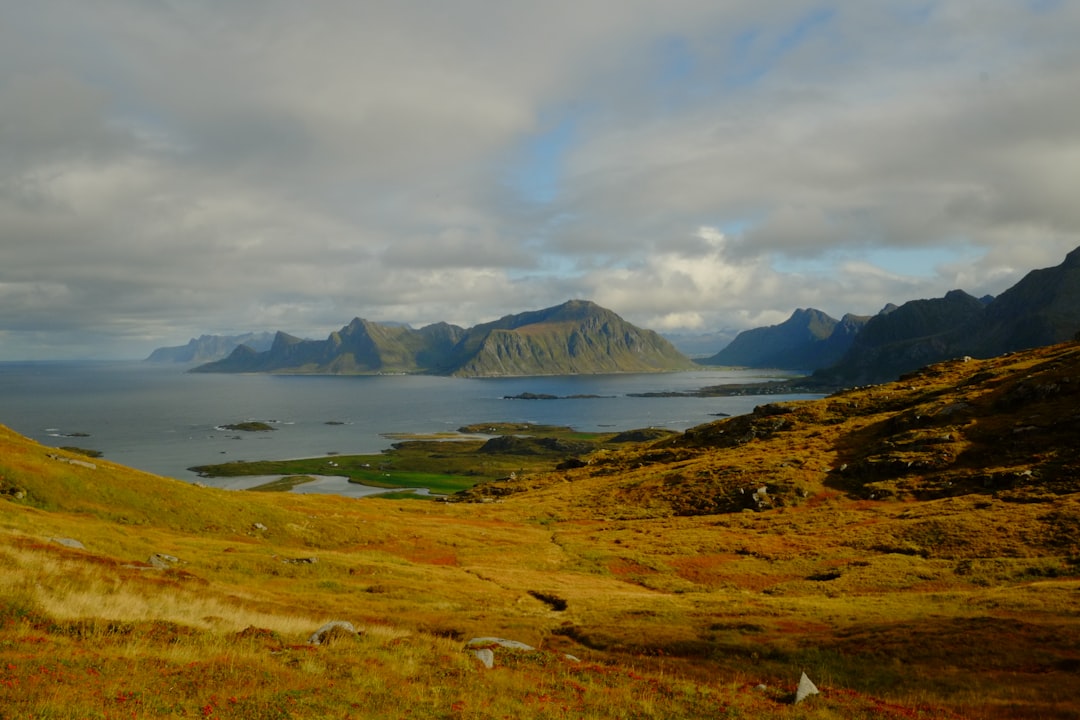
The Lofotr Viking Museum in the Lofoten Islands, located in the far north of Norway, takes a different approach. Built on the site of an actual Viking settlement, this museum recreates a Viking chieftain’s longhouse and allows visitors to experience what daily Viking life might have looked like. The location itself—in remote, beautiful islands where Vikings actually lived—adds powerful context to the exhibits.
Avaldsnes, located at the western tip of the Karmøy island in Rogaland, was the royal seat of Harald Fairhair himself. The historic sites here, combined with medieval monuments and archaeological finds, tell the story of Norway’s royal consolidation. Standing there on the windswept coast, where a Viking king once held court, brings the saga narratives to vivid life.
A Legacy That Changed History
The Norwegian Vikings’ influence extended far beyond their own era. Their trade routes connected Scandinavia to the Caspian Sea, the Mediterranean, and the Atlantic coast of North America. They founded cities (Dublin, Novgorod, Normandy), established trade networks, and introduced new technologies and cultural practices to the regions they touched.
The three centuries of Viking activity represent a remarkable chapter in Norwegian history—a time when a small population of northern seafarers wielded outsized influence on European civilization. They were warriors and traders, explorers and artists, raiders and settlers. To visit the museums and sites that preserve their memory is to connect with an era when Norwegians didn’t just live on the edge of the known world—they expanded it.
Today, as you stand before the Oseberg ship with its intricate carvings, or sail past the islands where Viking longships once launched their voyages, you’re experiencing a connection to one of history’s most transformative eras. The Vikings may have vanished into the mists of time, but their legacy—in exploration, shipbuilding, art, and ambition—remains eternally alive.




Leave a Reply