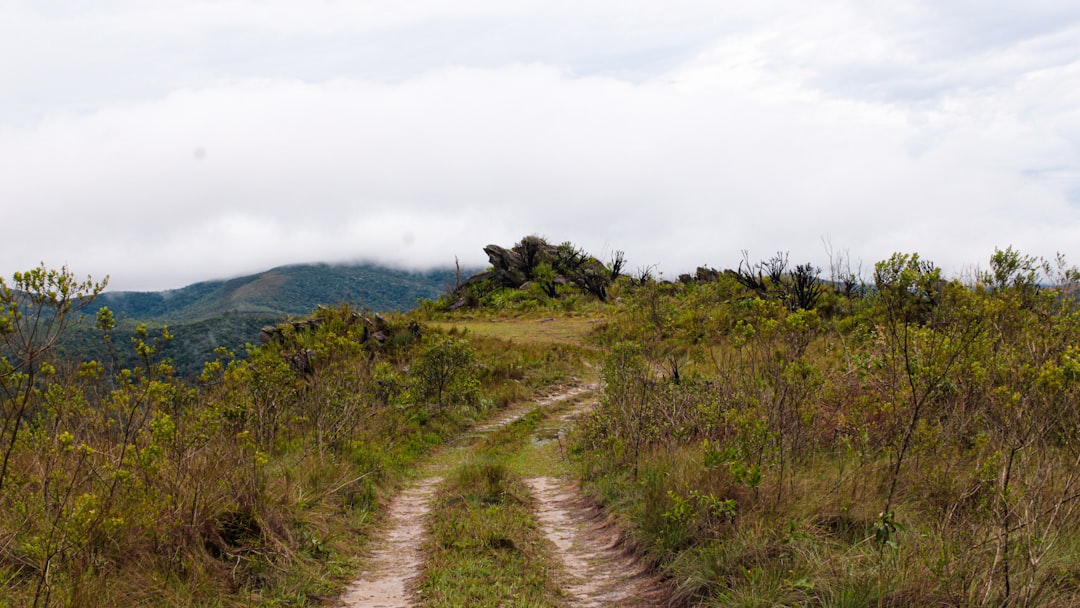
Every year, hundreds of thousands of people walk the Camino de Santiago—pilgrims, seekers, tourists, athletes, spiritual questers, people recovering from loss, people looking for themselves, people looking for God. They walk for weeks or months, covering hundreds of kilometers of Spanish countryside, to reach the Cathedral of Santiago de Compostela in Galicia.
The Camino is one of history’s most enduring human practices: a pilgrimage that has lasted over a thousand years, that has been forgotten and revived, that has shaped infrastructure and culture and spirituality across northern Spain. To understand the Camino is to understand medieval Christianity, medieval Europe, medieval infrastructure, and, oddly, how a pilgrimage route from 800 AD can still matter to modern seekers.
The Legend of Saint James and the Origins of the Route
According to legend, Saint James the Greater—one of Jesus’s apostles—traveled to Spain and preached the gospel. After being executed in Jerusalem around 44 AD, his remains were somehow transported back to Spain and buried in what is now Galicia. For centuries, this was forgotten. Then, in the 9th century, a shepherd supposedly found the tomb while being guided by a star. The location became known as Santiago (St. James) de Compostela (which probably means “field of the star”).
The legend isn’t historically plausible—there’s no evidence Saint James ever went to Spain, and the idea of his remains being transported across the Mediterranean centuries after his death is, at best, a beautiful myth. But legends don’t have to be true to be powerful. The legend of Saint James in Spain was powerful enough to create a pilgrimage site, and a pilgrimage site powerful enough to shape European history.
By the 10th century, Santiago de Compostela was becoming a pilgrimage destination. By the 11th century, it was one of the three greatest pilgrimage sites in Christian Europe, ranking with Rome and Jerusalem. Thousands of pilgrims traveled to Santiago, especially during the years designated as “Holy Years” (when the festival of Saint James, July 25, fell on a Sunday—occurring every 5, 6, or 11 years depending on the calendar).
These weren’t just religious pilgrims. Some pilgrims came for genuine spiritual reasons. Some came because they’d made vows—a vow to make the pilgrimage if they survived illness or recovered lost property. Some came because pilgrimage was considered a form of penance, a way to expiate sins. Some came because the journey itself was seen as spiritually transformative.
And some came for adventure, because the Camino was, frankly, a massive infrastructure that allowed safe travel across medieval Spain, with hospitals and hospices and way-stations established specifically for pilgrims.
Medieval Infrastructure: The First Travel Guide
This is where the Camino becomes especially interesting historically: medieval authorities, recognizing the economic and spiritual importance of the pilgrimage, invested in infrastructure. Roads were improved. Hospitals were built specifically for pilgrims. Churches were constructed along the route. Bridges were built where pilgrims needed to cross rivers.
The infrastructure was maintained by the Church and by local nobility who benefited economically from pilgrims passing through their territories. Pilgrims brought money. They needed food, lodging, services. Villages along the Camino grew because of pilgrim traffic.
To guide pilgrims, a kind of proto-guidebook was created in the 12th century: the Codex Calixtinus. Scholars sometimes call it the first tourist guide. It described the route from France into Spain, identified the stages of travel, listed hotels and hospitals, warned about dangers and difficult passages, described what pilgrims would encounter, suggested good conduct for pilgrims.
Reading the Codex Calixtinus now, it’s charming: it tells pilgrims to be humble, to respect people who help them, to not be greedy or violent. It describes the landscape, the food, the character of different regions. It could have been written yesterday, except for the medieval religious language.
The Camino was one of the first structures that allowed mass long-distance travel in medieval Europe. The infrastructure was fragile—a bridge could be destroyed, a hospital could close, political instability could make the route dangerous—but it existed. This mattered. It meant a person of modest means could attempt a thousand-kilometer journey across medieval Spain and have some expectation of finding shelter and direction.
The Route in Its Medieval Heyday
The main route pilgrims took (though there were variants) came from France, entering Spain at Roncevaux Pass in the Pyrenees. From there, pilgrims headed west across the Iberian Peninsula toward Santiago de Compostela. The journey took roughly six weeks to three months depending on fitness, weather, and how many stops you made.
The route passed through important medieval towns and cities: Pamplona, Logroño, Burgos, León, and then into Galicia toward Santiago. Each had a cathedral or major church associated with the Camino. The Cathedral of Pamplona, the Cathedral of Burgos, the Cathedral of León—these were all major pilgrimage sites on the route to Santiago.
Walking the route was arduous. Pilgrims faced bandits, harsh weather, disease, exhaustion. The journey itself was the spiritual practice. By the time you reached Santiago, you’d suffered, you’d been transformed by travel, you’d encountered human kindness from people helping you without knowing you, you’d been humbled by the vastness of the landscape and your own smallness.
Reaching Santiago was emotional. You’d walked across half of Spain. You arrived at the Cathedral, and presumably—for truly religious pilgrims—you experienced something spiritual. You saw the reliquary of Saint James. You received a certificate of completion called a compostela. You were transformed, redeemed, complete.
Then you had to get home.
The Decline and the Revival
By the 14th and 15th centuries, the Camino was still active, but declining. Travel became somewhat easier and safer through other means. The Protestant Reformation undermined Catholic pilgrimage as a spiritual practice. Wars and political instability made some sections of the route dangerous. By the 18th century, the Camino was a shadow of its former self. Pilgrimage infrastructure fell apart. Hospitals closed. Churches stopped maintaining facilities for pilgrims.
The Camino might have entirely disappeared. Then, in the late 20th century, something unexpected happened: it was revived.
In 1987, the Council of Europe designated the Camino de Santiago as the first European Cultural Route. In 1993, UNESCO made the Camino a World Heritage Site. This put it on the map (literally and figuratively) for modern travelers. A small revival began: people interested in medieval history, people interested in spirituality, people interested in long-distance walking.
Then came Paulo Coelho’s book “The Pilgrimage” (1987), a fictionalized account of the author’s journey on the Camino. It became wildly popular, especially in Spanish-speaking countries, and brought tens of thousands of new pilgrims to the route.
The revival accelerated. The Spanish government recognized the economic value of the Camino (tourism money) and made investments in the infrastructure: modern hostels were built, the route was better marked, services were established. Now, the Camino is one of the most popular long-distance walking routes in the world.
Modern Pilgrims: Who Walks and Why
Today’s Camino walkers are a mixed group. Some are deeply religious. Some are spiritual but not traditionally Christian. Some are atheists looking for perspective. Some are there because their therapist suggested it. Some are hiking enthusiasts. Some are doing it as a bucket-list item. Some are recovering from loss or grief and found the Camino suggested itself.
The modern Camino has a culture: communal dinners at hostels, shared experiences among pilgrims, a sense of collective purpose. You’re part of something larger than yourself. You’re part of a thousand-year tradition.
The practical experience is also important. Walking 500 kilometers is physically demanding. It requires simplicity—you carry everything you need, you get hot, you get tired, you experience your body in ways that modern life usually prevents. There’s something transformative about that: you slow down, you pay attention, you become aware of your own limitations and capabilities.
Whether the Camino is spiritually meaningful depends on what you bring to it. But almost everyone reports that it’s meaningful in some way: the journey itself matters, the people you meet matter, the landscape and the walking matter. Even if you’re not seeking Saint James, you’re seeking something, and the Camino provides a structure for that seeking.
The Cathedral and the Botafumeiro
The Cathedral of Santiago de Compostela is the culmination of the Camino. It’s not as massive as Chartres or Notre-Dame, but it’s impressive: Romanesque architecture, built over centuries, with a facade that’s actually from the 18th century but integrates with medieval structure underneath.
Inside, pilgrims visit the high altar where the reliquary of Saint James is supposed to be. They embrace a statue of Saint James. They attend a pilgrim mass (celebrated daily at noon during the main season). And if they’re lucky, they might witness the Botafumeiro.
The Botafumeiro is a massive incense burner—absolutely massive, the size of a person, weighing hundreds of pounds. It hangs from the ceiling. During certain occasions (usually when there are enough pilgrims to require it), it’s set swinging. As the mass proceeds, priests and assistants swing it back and forth, higher and higher, until it’s swinging the full length of the cathedral, nearly touching the ceiling at each swing.
Why? The historical reason was practical: medieval cathedrals smelled bad, and lots of pilgrims arriving after weeks of walking hadn’t bathed. The incense covered the smell. But now, the Botafumeiro is symbolic: it’s visually dramatic, it’s centuries-old tradition, it connects medieval pilgrimage to modern pilgrims.
Watching the Botafumeiro swing is genuinely moving. You’re seeing something that pilgrims have seen for centuries, in the same cathedral, using the same object. It’s a direct connection to medieval spirituality and medieval pilgrimage.
Where to Experience the Camino
You can walk the entire Camino, but you don’t have to. Most modern pilgrims walk at least one of the final stages (roughly 100 kilometers, or about 5-6 days of walking) to qualify for the compostela certificate.
The French Way (Camino Francés) is the main route, coming from France through Pamplona and across northern Spain. It’s the most developed, most popular, and best-marked route.
Other routes exist: the Camino del Norte (along the coast), the Camino Portugués (from Portugal), the Camino Primitivo (supposedly the original route).
You can stay in hostels designed for Camino pilgrims (called albergues), in hotels, or in a combination. You can walk with just the essentials or with more comfort. You can do it as a sprint (covering 30+ kilometers per day) or leisurely (15-20 kilometers per day).
The experience is individual, which is part of what makes it work. Some people find it transformative spiritually. Some find it transformative physically. Some just find it rewarding. All are valid.
Pamplona is where many pilgrims enter Spain. It’s famous for the running of the bulls, but it’s also a major Camino site. The Cathedral of Pamplona contains important artworks.
Burgos, with one of Spain’s greatest cathedrals, is a midpoint.
León and its cathedral are another major stop.
Santiago de Compostela is the destination—the cathedral, the town, the sense of arrival.
Why the Camino Persists
The Camino has lasted a thousand years because it addresses something fundamental in human experience: the need for journey, for challenge, for spiritual or psychological transformation. Medieval pilgrims and modern pilgrims differ in many ways, but they’re all walking toward something.
The infrastructure that made the medieval Camino possible—the hospitals, the hostels, the way-stations—is essentially recreated for modern pilgrims. The route itself persists, marked and maintained. The destination—Santiago de Compostela—remains psychologically powerful.
The Camino works because it’s simple. You walk. You walk until you reach your destination. You walk with others. You meet people. You experience yourself and your limitations. You arrive. Something shifts inside you.
In our modern world of complexity, digital distraction, and sedentary living, the Camino offers the opposite: physical challenge, present-moment awareness, human connection. It’s not surprising that it’s been revived. It’s surprising that it ever went away.
When you visit Spain and consider the Camino, you’re considering joining something that medieval pilgrims also did. The route they walked, you can walk. The Cathedral they reached, you can reach. The transformation they sought, you might find. History isn’t dead. Sometimes, you can walk straight into it.




Leave a Reply