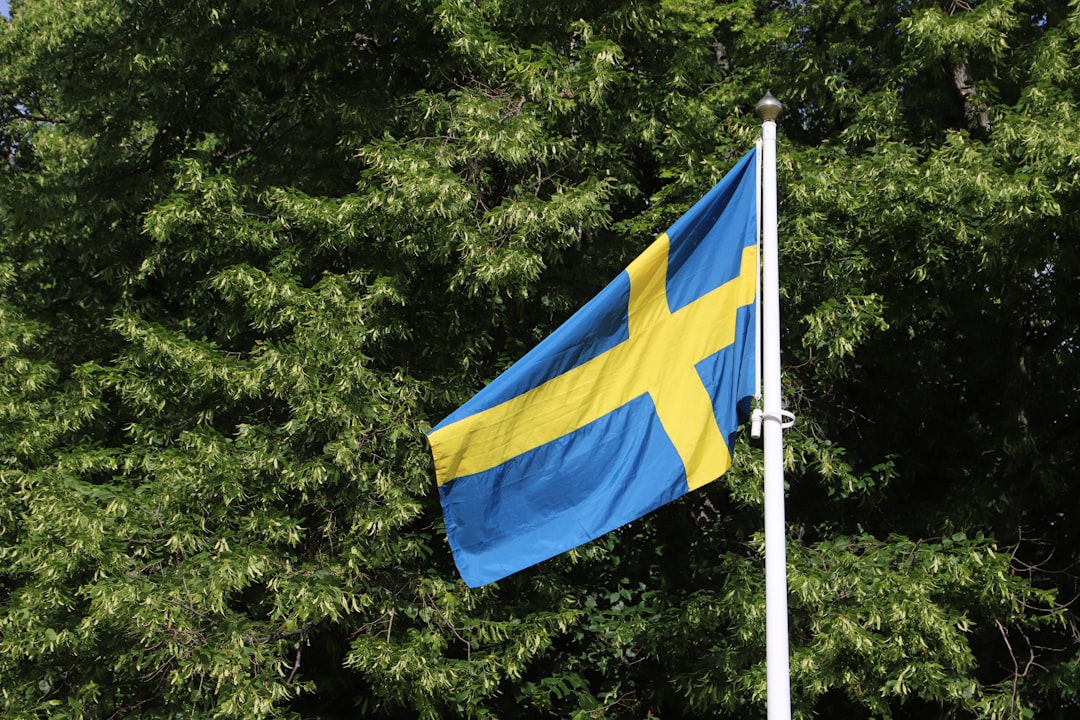
In 1809, Sweden lost the Great Northern War and was forced to cede Finland to Russia. It was a catastrophic defeat that fundamentally altered how Swedish leaders thought about their nation’s place in the world. Out of that disaster emerged a decision that would define Swedish foreign policy for the next 200 years: no more wars. Sweden would pursue a policy of armed neutrality, carefully maintaining military strength sufficient to deter attack while staying scrupulously non-aligned in the great power conflicts that periodically convulsed Europe. It was a audacious strategy, one that required diplomatic skill, military credibility, and sometimes moral compromises that Swedish society preferred not to examine too closely. For two centuries, this policy worked. But it was never as simple or as noble as the mythology suggested.
From Empire to Neutrality: The Transformation
The transition from Swedish Empire to neutral power was dramatic. Gustavus Adolphus and Charles XII had pursued aggressive military expansion and participated actively in European great-power conflicts. In 1709, at the Battle of Poltava, that era of ambition died. Sweden lost its Baltic empire in subsequent decades. The loss of Finland to Russia in 1809 was the final blow. A defeated, humbled Sweden emerged into the 19th century as a second-rank power, and Swedish leadership accepted this reality. There would be no more attempts to restore imperial greatness. Instead, Sweden would be a neutral power, armed and watchful, but committed to non-alignment.
The decision was pragmatic rather than ideological. Sweden lacked the resources to compete militarily with Russia, France, or the other great powers. Neutrality was not an ethical choice; it was a strategic necessity. Yet over time, particularly in the 20th century, Swedish society began to construct neutrality as a moral principle, a reflection of Swedish values of peace, cooperation, and enlightened rationality. This mythologized version of neutrality would shape Swedish national identity even as the reality remained far more complicated.
The 19th Century: Making It Work
Throughout the 19th century, Sweden managed to stay out of the major European conflicts. The Napoleonic Wars bypassed Sweden, though Sweden came close to involvement on several occasions. The Crimean War (1853-1856) pitted Britain and France against Russia. Sweden was tempted to join Britain and France, hoping to recover Finnish territory from Russia, but ultimately stayed neutral. It was a wrenching decision—the chance to reverse the loss of Finland was tantalizing—but Sweden’s military weakness made intervention too risky.
The Swedish navy and army were deliberately maintained at a level sufficient to make invasion costly but not so large as to provoke militaristic ambitions. This careful balance required constant adjustment. Military spending was perpetually debated, with some arguing for stronger forces and others insisting that a well-armed Sweden was inherently provocative. Sweden’s long coastline and proximity to the Russian Empire made defensive military capability essential, however.
The World Wars: Walking a Tightrope
The true test of Swedish neutrality came during the two World Wars, when the stakes were infinitely higher and the pressures from all sides immense. Here the mythology of Swedish neutrality encounters the murky reality of Sweden’s actual behavior.
During World War I, Sweden’s neutrality held, though it was strained. Sweden had significant trade relationships with both the Entente powers (Britain, France, Russia) and the Central Powers (Germany, Austria-Hungary). Swedish exports—iron ore, timber, ball bearings—were crucial to multiple belligerents. Germany depended heavily on Swedish iron ore shipped through Norwegian ports. Sweden used this leverage to extract concessions from both sides, maintaining trade and profit while remaining technically neutral. Swedish shipping was sometimes attacked, and Swedish crews died in the Atlantic, but the nation stayed out of the war. By the war’s end, Sweden had prospered while much of Europe lay devastated.
Yet this prosperity came with a cost to Swedish moral standing. Sweden had become wealthy by trading with both sides in a catastrophic war that killed millions. The Swedish business elite had profited enormously. This was the first major contradiction at the heart of Swedish neutrality: it was profitable for Swedish interests, even if it meant enriching belligerents engaged in massive human slaughter.
World War II presented an even more acute moral crisis. Sweden faced a Nazi Germany that was increasingly powerful, increasingly aggressive, and increasingly dominant in Nordic affairs. Finland, Sweden’s neighbor and ethnic kinsman, was fighting the Soviet Union. Denmark and Norway had been invaded and occupied. Sweden stood alone in Scandinavia, unoccupied but deeply anxious. How could a small nation maintain genuine independence and neutrality when a totalitarian superpower demanded submission?
The answer, frankly, was through accommodation. Sweden permitted German military transit through Swedish territory—troops being moved to and from Finland and Norway passed through Swedish railways. Swedish exports of iron ore to Germany continued, crucial to the Nazi war machine. Sweden’s Ericsson company manufactured military equipment. Swedish corporations did business with Nazi Germany. None of this was forced upon Sweden; it was Swedish choice, motivated by the desire to stay out of the war and maintain Swedish prosperity.
The moral implications are troubling. By trading with Nazi Germany, by permitting German military use of Swedish territory, by allowing Swedish resources to fuel the Nazi war effort, Sweden was complicit in Nazi aggression. The profits were real, the moral compromise was real, and Swedish society knew it. Yet neutrality was maintained. Swedish soldiers did not fight in the war. Swedish soil was not invaded. Swedish civilians did not suffer the bombing and occupation that devastated neighboring nations.
Raoul Wallenberg: A Moral Exception
If Swedish neutrality during the war was morally compromised, one remarkable Swede demonstrated what moral action was possible even within those constraints. Raoul Wallenberg was a Swedish businessman and diplomat who, during the final phase of World War II, saved the lives of tens of thousands of Hungarian Jews. As a Swedish diplomat in Budapest, Wallenberg issued Swedish protective passes—documents that granted Swedish nationality to Jews, thereby protecting them from Nazi deportation. He established Swedish safe houses, negotiated with Hungarian and German authorities, and risked his life repeatedly to save Jews from death camps. When Soviet forces captured Budapest, Wallenberg was arrested and disappeared into the Soviet gulag system. He died in captivity in 1947, his fate unknown for decades.
Wallenberg’s legacy is complicated. He was a Swedish hero, a moral exemplar who acted within the system of Swedish neutrality but transcended its moral limitations through individual courage. Yet his story also illuminates what Sweden’s neutrality cost—that it took extraordinary individual heroism to overcome the default passivity of official neutrality. For many Swedes, Wallenberg became the symbol of Swedish conscience during the war, proof that even within neutrality, moral action was possible. But his murder in Soviet captivity—and Sweden’s powerlessness to save him—also demonstrated the limitations of neutrality when facing totalitarian powers.
The Cold War: A Carefully Balanced Act
After World War II, Sweden continued its non-aligned policy, but in a new context. The Soviet Union had emerged as a superpower on Sweden’s eastern border. NATO was forming to the west. Sweden walked a careful tightrope, refusing to join NATO while carefully maintaining military strength and, tacitly, cooperating with the Western alliance.
Sweden maintained strict official neutrality throughout the Cold War. Yet the reality was more complex. Swedish intelligence services cooperated with NATO intelligence. Sweden’s military planning assumed a Soviet threat and designed defenses accordingly. Swedish industry was integrated into Western supply chains and markets. Swedish culture was deeply influenced by American models. Sweden was neutral in name, but increasingly aligned with the West in reality.
This contradiction came to a head in the 1980s with the “Submarine Incident.” Soviet submarines repeatedly violated Swedish territorial waters. In 1981, a Soviet submarine ran aground in a Swedish naval base—impossible to ignore or explain away. The incident revealed that Soviet military operations routinely disregarded Swedish neutrality and Swedish sovereignty. Sweden protested, but could do little. The incident sparked a national debate about what neutrality meant if a superpower could violate Swedish waters with impunity. Yet Sweden remained officially non-aligned.
The End of Neutrality: NATO Membership in 2024
The final chapter of Swedish neutrality came swiftly. Following Russia’s 2022 invasion of Ukraine, Swedish public opinion shifted dramatically. The Russian threat was no longer theoretical or distant; it was real, immediate, and undeniable. In 2024, after 200 years of non-alignment, Sweden applied for and was admitted to NATO. The policy of neutrality that had defined Swedish foreign policy since 1809 was formally abandoned.
The decision was momentous. It represented a fundamental shift in how Sweden understood its security and its place in the world. Yet it was also, in some ways, merely formal recognition of a reality that had been true for decades—that Sweden was, in practice, aligned with the West, and that neutrality had become increasingly difficult to justify in a world of renewed great-power conflict.
The Moral Reckoning
For travelers seeking to understand modern Sweden, the history of neutrality is essential. It explains Swedish confidence in institutions, Swedish faith in diplomatic solutions, and Swedish discomfort with military force. It also reveals the moral compromises that even small, well-intentioned nations make in pursuit of security and prosperity. Swedish neutrality was never as noble or as pure as Swedish mythology claimed. It was, instead, a pragmatic strategy that worked—but that required Swedish society to look away from uncomfortable truths about its trade with Nazi Germany, its accommodation of Soviet violations, and its complicity in systems of power that benefited Swedish interests at the expense of others.
Yet this honest reckoning with the past is also profoundly Swedish. Contemporary Sweden acknowledges these moral complications rather than hiding from them. Swedish museums detail the Swedish role in World War II, neither celebrating nor condemning, but examining the past with intellectual honesty. Swedish historians have thoroughly documented Sweden’s wartime trade with Nazi Germany. This willingness to confront uncomfortable truths about the nation’s own history is, in many ways, more admirable than the neutrality mythology itself.
The ending of Swedish neutrality with NATO membership in 2024 marks a historic turning point. After more than 200 years of non-alignment, Sweden has chosen to formally align with the West. Whether this decision will be as consequential and long-lasting as the original embrace of neutrality in 1809 remains to be seen. But for now, an era has ended, and a new chapter of Swedish foreign policy has begun. The question now is whether Sweden will become a fully integrated NATO ally, or whether elements of its non-aligned tradition will persist even within the alliance. The answer will shape not just Sweden’s future, but the future of Europe as well.




Leave a Reply