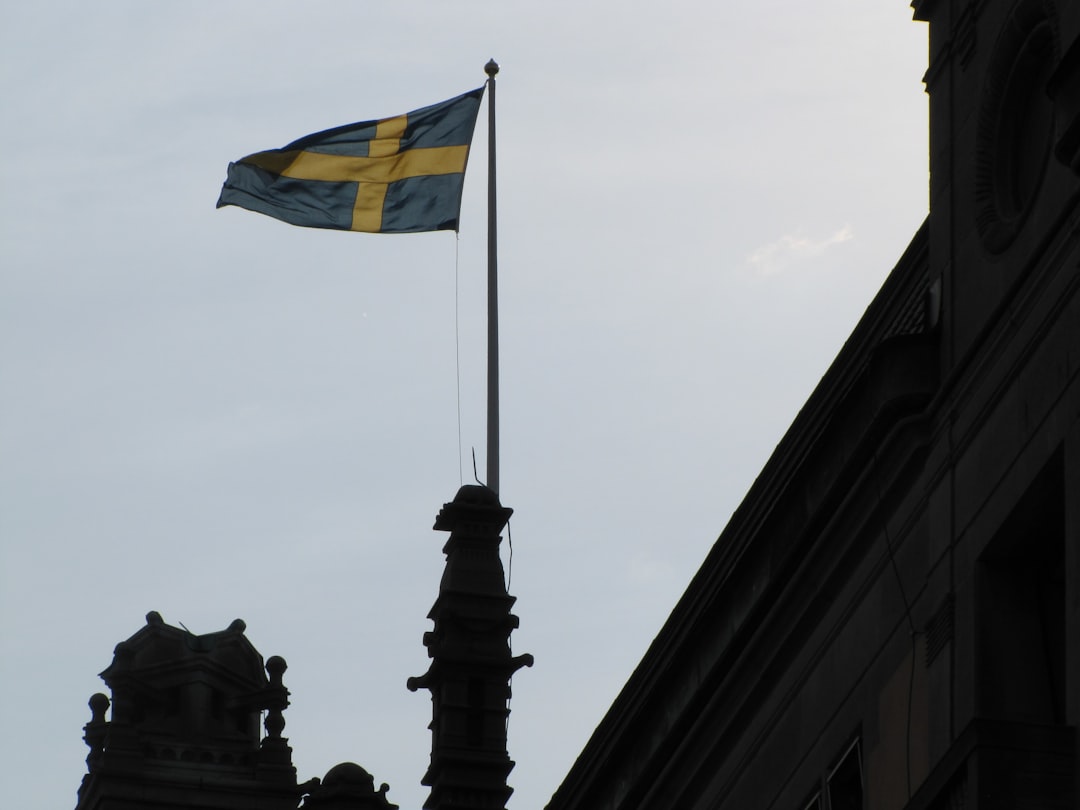
Walk through the streets of Stockholm or any Swedish city today and you’ll encounter one of the world’s highest standards of living. Childcare is subsidized. Healthcare is nearly free. University education is free. Parental leave is generous. Workers have strong protections. The gap between rich and poor is smaller than in most developed nations. The trains run on time. The public services function with remarkable efficiency. Crime is low. Corruption is negligible. Sweden, to many outsiders, looks like a socialist dream come true—a place where government has successfully created a harmonious, egalitarian society where everyone’s basic needs are met and opportunity is genuinely equal.
Yet Sweden is not actually socialist. It has a market economy. Large corporations are private. There is significant wealth inequality, though less extreme than in Anglo-American nations. Sweden is, instead, a carefully constructed mixed economy where capitalism and a comprehensive welfare state coexist. How Sweden achieved this balance, the political coalition that created it, and the challenges it now faces tells a fascinating story about what modern capitalism can be—and about the limits of even the most successful welfare systems.
The Poor Country That Became Rich
To understand the Swedish welfare state, you must first understand that Sweden was not always a wealthy nation. For much of its history, Sweden was one of the poorer regions of Northern Europe. The climate is harsh, the growing season short, the natural resources limited (except for timber and iron ore). While agriculture in Denmark and southern Germany was relatively productive, Swedish agriculture was marginal. In the 19th century, Swedish poverty was so acute that millions emigrated to America, seeking opportunity in a less constrained land.
The industrialization of Sweden in the late 19th and early 20th centuries transformed the nation. Swedish engineers and entrepreneurs applied technical innovation to timber processing, mining, and manufacturing. Volvo, founded in 1927, became a symbol of Swedish industrial capability. SKF, a ball-bearing manufacturer, exported precision-engineered products worldwide. Ericsson revolutionized telecommunications. Swedish design—minimalist, functional, beautiful—became internationally admired. Within two generations, Sweden had transformed from a poor agricultural nation into an industrial powerhouse.
Yet this industrial success created intense social conflict. Workers labored in dangerous conditions for minimal wages. The gap between wealthy factory owners and impoverished workers was vast. The 1920s and 1930s saw intense labor unrest, including violent strikes and police crackdowns. The Great Depression hit Sweden hard. Political extremism grew—fascist and communist movements competed for working-class allegiance. Sweden seemed to face the same choice that was dividing Europe: either permit fascist authoritarianism or embrace socialist revolution.
The Folkhemmet and Swedish Democracy
The resolution came through an entirely different path. In 1932, the Swedish Social Democrats won power and held it, with only brief interruptions, for the next 44 years. The leader was Per Albin Hansson, a politician of remarkable pragmatism and moderate temperament. His key innovation was ideological: he reimagined social democracy not as socialism but as a “folkhemmet”—a “People’s Home.”
The folkhemmet concept was powerful and distinctly Swedish. Rather than class conflict between workers and capitalists, Hansson imagined a society where everyone belonged to a shared home. The wealthy and the poor were members of the same household, entitled to different rooms perhaps, but members of the same family. Social policies should aim not to destroy capitalism or create socialism, but to ensure that all members of the national family had basic security—a decent home, healthcare, education, and opportunity. The state would not own the means of production; capitalist businesses would drive economic innovation. But the state would ensure that prosperity was broadly shared and that no citizen fell into destitution.
This was brilliant politics. It offered working people real improvements in their conditions without demanding a communist revolution. It reassured business interests that their property was secure and the market economy would continue. It positioned Sweden as a democratic alternative to both fascism and communism—a third way that preserved both capitalism and social justice.
The implementation was gradual but consistent. Starting in the 1930s and continuing through the postwar decades, Sweden constructed a comprehensive welfare system. Universal healthcare was established. Public education, free from primary school through university, became the norm. Generous unemployment insurance protected workers between jobs. Pensions ensured that retirees didn’t face destitution. Family benefits meant that children didn’t condemn parents to poverty. Housing allowances helped families afford decent accommodation. Parental leave, eventually among the world’s most generous, allowed both parents to spend time with young children. Childcare was subsidized to permit women to work while their children received quality education and care.
All of this required higher taxes than most nations. Swedish income tax rates, particularly at higher income levels, were among the world’s highest. Corporate taxes were substantial. But the Swedish population accepted these taxes because they received visible benefits: real medical care, real education for their children, real security against destitution. The taxes didn’t feel like punishment or theft; they felt like insurance. Everyone paid in because everyone benefited.
The Golden Age of the Swedish Model
From the 1950s through the 1970s, the Swedish model appeared to work brilliantly. Economic growth was robust. Unemployment was low. Wages were high. The gap between rich and poor narrowed. Crime was low. Social pathology diminished. Sweden became a genuine paradise in the eyes of many left-wing intellectuals around the world. American sociologists and economists came to study Sweden. Left-wing activists pointed to Sweden as proof that capitalism could be reformed into something genuinely democratic and egalitarian.
The Swedish workers’ movement was powerful but had accepted the compromise of the folkhemmet. Unions were strong, wages were good, working conditions were safe, and workers participated in management decisions through works councils. Strikes still happened, but the extreme class conflict of the 1930s had been replaced by negotiation and collective bargaining. The Saltsjöbaden Agreement of 1938 between business and labor established the principle that disputes would be resolved through negotiation rather than confrontation. This framework, adjusted and reformed over time, permitted both high wages and profitable business.
Swedish women increasingly entered the workforce, supported by subsidized childcare and generous parental leave policies. Compared to many other nations, Swedish women achieved relatively high equality with men in the workplace. Though gender inequality certainly persisted, the welfare state provided structures that made it easier for women to combine motherhood with careers.
Challenges and Reforms: The 1970s and 1980s
By the late 1970s, cracks were appearing in the Swedish model. Inflation was rising. Economic growth was slowing. The tax burden had become so high that there were signs of economic disincentive—high earners and entrepreneurs were emigrating to escape Swedish taxation. The consensus that had supported the welfare state was fraying. Conservative and liberal parties began arguing that the welfare state had grown too large, that taxes were too high, and that economic dynamism was being undermined.
The Swedish elections of 1976 saw the Social Democrats lose power for the first time in 44 years. A conservative-liberal coalition took office, promising to reduce taxes and the size of government. However, the new government discovered that dismantling the welfare state was extremely difficult. Swedes had come to depend on its benefits and did not wish to see them reduced. The conservatives found they could cut at the margins, but not at the core. After six years, the Social Democrats returned to power.
By the early 1990s, Sweden faced a genuine economic crisis. A combination of factors—including recession, real estate bubble collapse, and currency instability—created severe economic contraction. Unemployment doubled. The budget deficit ballooned. The Swedish model seemed to be in crisis. This time, reforms were genuinely necessary.
The 1990s: Crisis and Adaptation
The Swedish response to the crisis of the early 1990s was characteristically pragmatic. Rather than abandon the welfare state, Sweden reformed it. Some benefits were reduced. The retirement age was gradually increased. Some copayments for healthcare were introduced. Tax rates were moderated, though they remained high by international standards. Labor market policies were adjusted. The overall structure of the welfare state remained, but it became more sustainable.
Importantly, the reforms were negotiated across political lines. Conservatives, Social Democrats, and other parties cooperated in managing the crisis. This consensus-based approach meant that no single party could blame the other for unpopular changes; responsibility was shared. It was a characteristically Swedish way of handling difficulty—through negotiation, compromise, and shared burden-bearing.
By the late 1990s, Sweden had recovered. Economic growth returned. Unemployment fell. The welfare state had been reformed but not dismantled. The Swedish model, though adjusted, persisted.
Immigration and the New Challenges
In the 21st century, new challenges have emerged. Immigration, particularly from the Middle East, has altered Swedish demography and complicated the welfare state. The consensus that supported high taxes and generous benefits depended partly on a sense of shared national identity and mutual obligation. As Sweden became more diverse, tensions emerged about whether immigrants should receive the same benefits as native Swedes, and whether the social cohesion necessary to support the welfare state could survive greater cultural diversity.
Conservative parties have argued that welfare benefits are too generous to immigrants and that they undermine integration. Left-wing parties have argued that inequality and discrimination undermine social cohesion. The debate has become heated in ways that would have been unimaginable in the 1970s. Swedish society, long proud of its openness, now confronts genuine tensions between universalism and particularism, between welfare generosity and fiscal sustainability, between cultural cohesion and ethnic diversity.
Despite these tensions, the welfare state has adapted. Sweden still has generous public services, still has universal healthcare and free education, still maintains strong labor protections. The taxes remain high. But Swedes are increasingly questioning whether the model can continue indefinitely, or whether it must be further reformed.
Visiting a Welfare State
For travelers, the Swedish welfare state is visible everywhere. Free or subsidized museums and cultural institutions mean that cultural life is accessible to everyone. Public transportation is excellent and affordable. Parks are well-maintained and free. Libraries are exceptional—not just book repositories but community gathering spaces with computers, meeting rooms, and programs. Hospitals are clean and modern. Streets are safe. The sense of public space being valued, maintained, and open to everyone is palpable.
You’ll also notice the high prices. Swedish prices are among the highest in the world, reflecting the high wages and high taxes that support the welfare state. A cup of coffee costs $3-4. Restaurant meals are expensive. Hotels are dear. This reflects the real wealth of Swedish society, but it also reflects the cost of paying workers well and supporting extensive public services.
Conclusion: A Model, Not a Paradise
The Swedish welfare state is real and remains one of the world’s most comprehensive. It has produced genuine improvements in human welfare—lower poverty, better health outcomes, better education, greater equality. It has survived repeated predictions of its demise and has adapted to changed circumstances. It has allowed capitalism to function while constraining some of its worst effects.
Yet it is not a paradise, and Swedish society itself is increasingly aware of its limitations. It faces challenges from aging populations, from immigration and integration, from fiscal pressures and globalization, from questions about whether universal programs can survive when society is no longer culturally homogeneous. The consensus that supported the folkhemmet in Hansson’s era has fractured.
Still, for travelers seeking to understand how a wealthy, democratic society can function with high taxes, powerful unions, strong public services, and genuine opportunity for all, Sweden offers valuable lessons. It demonstrates that a third way between American-style capitalism and Soviet-style socialism is possible. It shows that higher taxes need not mean economic stagnation. It proves that capitalism can coexist with strong social protection.
Sweden is neither a socialist paradise nor an economic failure. It is, instead, an ongoing experiment in balancing capitalism with social justice, individual freedom with collective security, and market efficiency with democratic control. That experiment continues, imperfectly and uncertainly, but with remarkable success. For travelers, Sweden offers the chance to see what a society that prioritizes human welfare—not just economic growth—actually looks like.




Leave a Reply