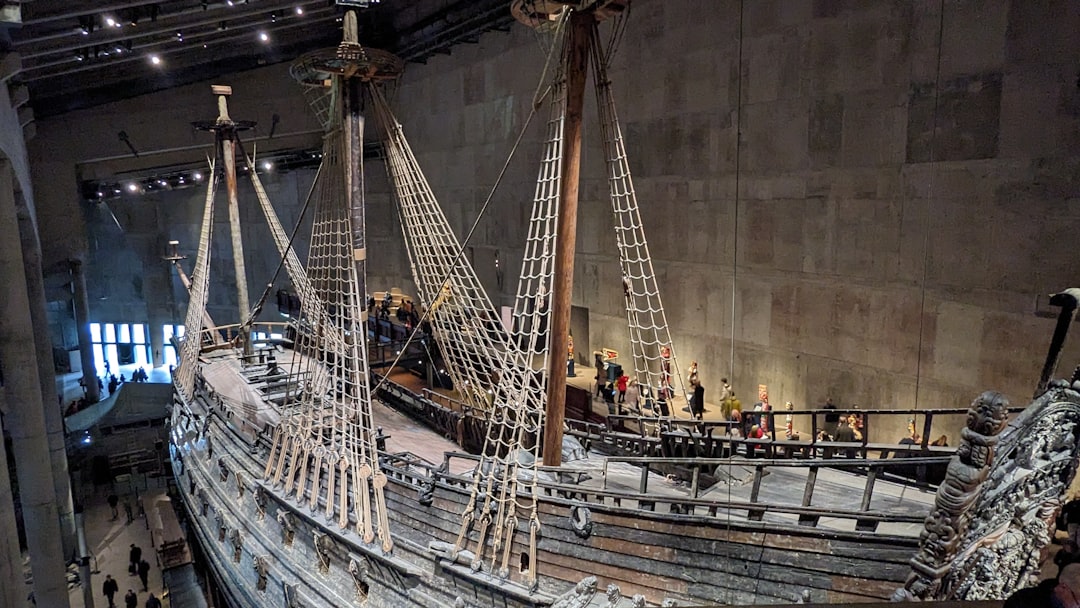
Imagine a king in the full flush of power and ambition, commissioning a warship to be the greatest in all of Christendom. Spare no expense. Arm it with the heaviest cannons. Make it tall, impressive, a floating statement of national power. Make it magnificent. Make it remember that Sweden is a great power. The king is Gustavus Adolphus, ruler of Sweden during the apex of Swedish imperial power. The year is 1625. The ship, to be named Vasa after his family dynasty, will be the flagship of the Swedish navy and the pride of Swedish achievement. What actually happened instead is one of the most spectacular maritime disasters ever recorded—and, oddly, one of the best historical reconstructions we have of seventeenth-century naval life.
The story of the Vasa is a perfect parable about the dangers of political pressure overwhelming practical engineering, about the gap between ambition and reality, and about how catastrophic failure can be recovered and transformed into profound historical knowledge. For modern visitors to Stockholm, the Vasa Museum is not just one of Scandinavia’s most visited attractions; it’s a window into how a seventeenth-century warship actually worked, how sailors lived, and what the age of Swedish imperial ambition actually felt like.
Ambition and Design: The Beginning of Disaster
King Gustavus Adolphus wanted a warship that would be larger, better-armed, and more impressive than the ships of any potential rival—Denmark, Poland, or Russia. The Swedish navy was vital to protecting Sweden’s Baltic dominance and securing the trade routes that enriched Swedish merchants. In 1625, Swedish shipbuilder Henrik Hybertsson began construction of what would be named Vasa, under the command of naval architect Claes Classensöhn.
The design was ambitious. Vasa would be 69 meters long (about 226 feet), with four gun decks and 64 cannons—an extraordinary concentration of firepower. The ship would be tall, with multiple decks towering above the waterline to accommodate officers, stores, and an enormous fighting crew. To Gustavus Adolphus and the political leadership, Vasa represented Swedish power made manifest. A floating fortress. An instrument of imperial dominance.
What neither the king nor most of the builders fully understood was that the ship was fundamentally unstable. The weight of all those guns, all that timber, all those cannons meant to intimidate enemies, had been loaded onto a hull that was too narrow to support it. The center of gravity was too high. The ship would have been a magnificent gunship if it had floated properly, but the designers had made a terrible miscalculation. The ship was, simply put, top-heavy in a way that made it unsafe.
Some builders apparently understood the problem. There are hints in historical records that concerns were raised about the ship’s stability. But these concerns were overruled or ignored. The king wanted the ship built. Political pressure from above—from the throne—overwhelmed the technical concerns from below. Construction continued. The ship was built more or less as originally designed. In retrospect, this was a catastrophic mistake.
August 10, 1628: The Maiden Voyage and Immediate Catastrophe
On August 10, 1628, the Vasa was launched and prepared for its maiden voyage. Thousands of people lined the shores to watch as Sweden’s newest and most impressive warship would sail into Stockholm Harbor. Flags were flying. The crew was aboard. Soldiers and officers stood on the decks in full ceremonial dress. This was meant to be a moment of national pride, a demonstration of Swedish power and naval might.
The voyage lasted about 1,300 meters. The ship sailed for roughly four minutes into Stockholm Harbor before it capsized and sank. It happened so quickly that many observers couldn’t comprehend what they were witnessing. Sweden’s new flagship, the embodiment of royal ambition, pride, and power, was gone. About 30 people died in the disaster, though the exact number is uncertain. They were sailors and soldiers who went down with the ship when it rolled and sank into the murky water of the harbor.
The disaster was immediately political. This was not a minor incident but an utter humiliation. The king had wanted the greatest warship in Christendom, and instead he got a ship that sank on its first voyage. The expense had been enormous—roughly 5% of the entire national budget. The waste was staggering. The symbolic failure was even worse. Enemies of Sweden mocked the disaster. Domestically, the government was embarrassed and frustrated. The Vasa simply disappeared beneath the waves, and with it the hopes Gustavus Adolphus had invested in it.
333 Years on the Harbor Floor
For over three centuries, the Vasa sat in the muddy bottom of Stockholm Harbor. The water was dark, cold, and oxygen-poor—perfect conditions for the preservation of wood. While the ship was effectively lost to the world, it was being preserved. The barnacles and organisms that destroy wooden ships in warmer waters simply couldn’t survive in Stockholm Harbor. The Vasa was being naturally mummified by the Baltic Sea.
Various attempts were made over the centuries to salvage the Vasa, but they came to nothing. The technology didn’t exist, the political will was limited, and the cost was too high. The ship remained, a ghostly presence on the harbor floor, a monument to Swedish ambition and failure, known to locals but gradually forgotten by the rest of the world.
Then, in the 1950s, a Swedish engineer and amateur historian named Anders Franzén became interested in the Vasa legend. He hypothesized that the wreck should still be down there, preserved by the cold, oxygen-poor conditions. He began research and searching. He found it. In 1956, Franzén rediscovered the Vasa, sitting upright on the harbor floor, its hull largely intact, its wooden structures preserved as if frozen in time.
The Salvage: An Engineering Triumph
The salvage of the Vasa was an extraordinary feat of engineering and coordination. Swedish engineers devised an ingenious plan. Rather than trying to raise the ship directly (which would destroy it), they would carefully excavate underneath the hull, pass cables beneath it, and then, using multiple pontoons, gently lift it in a carefully controlled manner that would protect the historic structure from stress and damage.
Between 1956 and 1961, teams of divers worked in shifts, clearing mud and debris from beneath the Vasa and passing cables under the hull. On August 9, 1961—almost exactly 333 years after it sank—the Vasa was raised from the depths. It emerged into the sunlight, covered in mud and barnacles, but structurally sound. The wood was intact. The ship was more or less whole.
The salvage was a triumph of engineering and patience. Swedish engineers had figured out how to recover a 17th-century wooden warship intact. But the challenge was far from over. Now came the preservation, which would prove even more challenging.
Preservation and Discovery
Once raised, the Vasa began drying. This was dangerous—freshly salvaged waterlogged wood can crack, warp, and deteriorate rapidly as water evaporates. The Swedish engineers carefully applied preservatives, particularly polyethylene glycol, a wax-like substance that penetrates the wood and stabilizes it as it dries. The process took years. The ship had to be kept in a carefully controlled environment. Gradually, over a decade, the Vasa transformed from a waterlogged wreck into a stable, preserved ship.
As preservation work continued, artifacts were carefully retrieved. Tools were found. Coins were discovered. Clothing, preserved in the anaerobic conditions, came to light. Skeletons of people who died in the disaster were found in the wreckage, providing insights into the crew. Every artifact was carefully catalogued and preserved. The Vasa became not just a ship but an archive of 17th-century life.
Scholars and archaeologists were astonished at what they found. The Vasa had preserved material that rarely survives—fabrics, leather, food remains, personal effects. It was as if a window into the past had been opened. Archaeological teams could understand not just how the ship was built but how people lived aboard it. They found evidence of diet, clothing, tools, personal items, and human remains. The Vasa became one of the world’s most important archaeological sites.
The Vasa Museum: A Monument to Failure and Preservation
In 1990, a purpose-built museum was constructed to house the Vasa. The ship itself is the centerpiece, displayed in a vast hall where visitors can walk around and even beneath it on different levels, seeing every detail of the vessel. Around the ship, museums display artifacts, explain the history, and contextualize the ship within the broader history of Swedish imperial ambition and the technical knowledge of the 17th century.
The Vasa Museum is one of Scandinavia’s most visited attractions, drawing hundreds of thousands of visitors annually. It’s not hard to understand why. The ship itself is magnificent—a tangible connection to a different era. It’s also deeply human. Visitors learn the names of some of the people who died when the ship sank. They see personal effects. They understand that this wasn’t just about royal ambition or naval technology; it was about real people whose lives were cut short by engineering hubris.
The museum tells the story of the disaster without euphemizing or hiding it. Gustavus Adolphus wanted an impressive ship. Engineers built a ship that was too top-heavy. The ship sank on its maiden voyage. The fact that it later became invaluable to our understanding of the 17th century doesn’t change that it was a spectacular failure. The museum honors both aspects—the disaster itself and the value of what was preserved.
What the Vasa Tells Us
The Vasa teaches several lessons. The first is about the dangers of political pressure overwhelming technical judgment. The engineers apparently knew the ship was unstable. But the king wanted it built, and so it was built. When political leadership overrides expert judgment, bad things happen. This is a lesson that remains relevant in any era, in any field.
The second lesson is about preservation. The cold, oxygen-poor conditions of Stockholm Harbor, combined with modern conservation techniques, allowed us to recover a 17th-century wooden ship almost intact. This is extraordinarily rare. Most ships deteriorate and disappear. The Vasa is exceptional.
The third lesson is about the actual material culture of an earlier era. Ships like the Vasa, built for empire and war, tell us what 17th-century military technology could achieve, what its limitations were, and what the experience of sailing aboard such a ship was like. The preserved artifacts—clothing, tools, personal effects—bring the past to life in ways that written documents cannot.
Conclusion: Spectacle and Knowledge
The Vasa was meant to be a spectacle of Swedish power and imperial ambition. In a sense, it succeeded—but not in the way Gustavus Adolphus intended. Instead of demonstrating Swedish naval prowess, it demonstrated the dangers of ambition untempered by practical reality. The spectacular failure became, through the work of modern archaeologists and engineers, a spectacular achievement of historical preservation and understanding.
For travelers to Stockholm, the Vasa Museum is essential. It’s not just the most-visited museum in Scandinavia by accident. It’s a place where history becomes tangible, where you can touch (well, look very closely at) a 17th-century warship, where you can hold coins in your hand that were on the ship’s bottom for 333 years, where you can understand what it felt like to live during the age of Swedish empire.
The Vasa reminds us that history is not just what happened according to grand narratives. History is also the details—the tools sailors used, the clothes they wore, the food they ate, the coins in their pockets. The ship that sank became the ship that teaches us most vividly what the past actually was. That’s an unexpected redemption for Sweden’s most embarrassing maritime disaster.




Leave a Reply