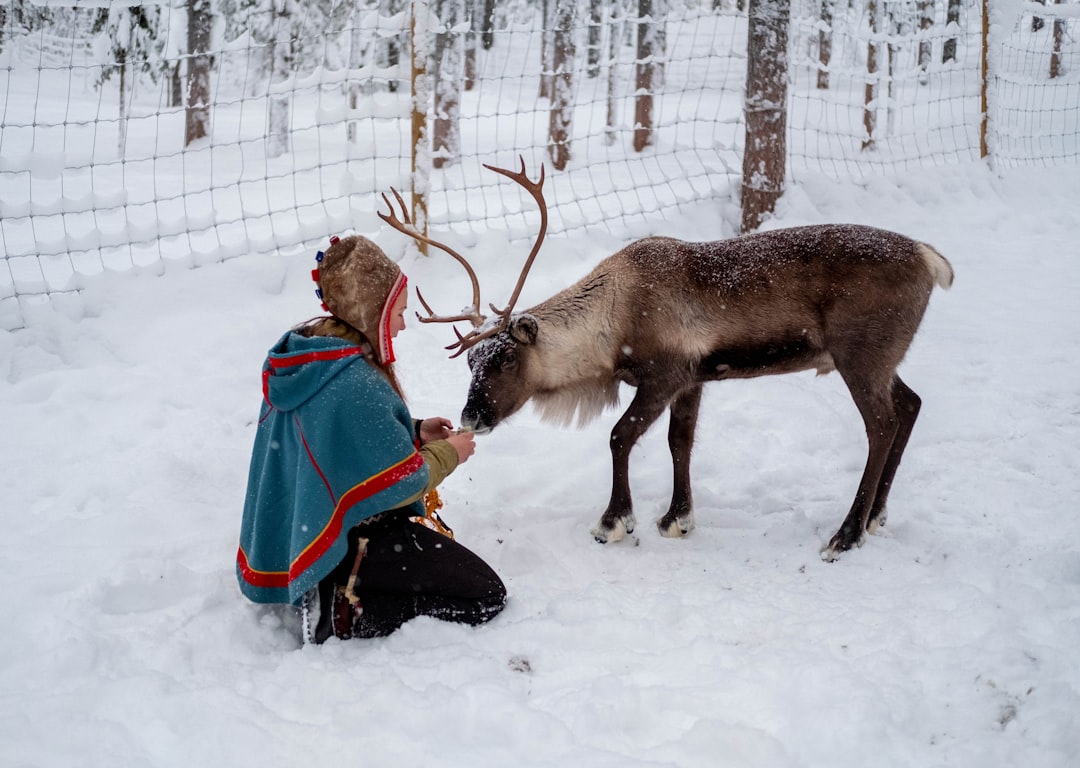
In the far north of Sweden, above the Arctic Circle, the landscape changes dramatically. Forests of birch and spruce give way to tundra. The sun doesn’t set in summer and doesn’t rise in winter. The terrain is harsh, beautiful, and unforgiving. This region, called Sápmi by the indigenous people who live there, stretches across northern Sweden, Norway, Finland, and Russia. The Sami people have inhabited this region for thousands of years, longer than Swedes or any other group. They have their own language, culture, and historical identity. Yet the Sami story in Sweden—and in all of Scandinavia—is primarily a story of marginalization, assimilation pressures, and a long struggle to maintain cultural identity against overwhelming odds. For travelers seeking to understand Sweden’s own colonial past, the history of the Sami offers difficult but essential insights.
Who Are the Sami? An Indigenous People of the Arctic
The Sami people are the indigenous inhabitants of northern Scandinavia and Russia. Archaeological evidence suggests they have lived in the region for at least 4,000 years, and possibly much longer. They speak Sami languages (there are several distinct languages within the Sami linguistic family, though many are closely related). They have developed a distinct culture adapted to the harsh Arctic and sub-Arctic environment. The Sami have genetic ancestry distinct from Scandinavian peoples, with connections to other Arctic peoples across northern Europe and Asia.
Traditionally, the Sami economy centered on reindeer herding. Herds of thousands of reindeer provided meat, hides, and bone for tools and implements. The animals were semi-domesticated, allowed to range across vast territories, following seasonal migration routes. This pastoralist lifestyle required deep knowledge of the land, the weather, and animal behavior. Sami herders were highly skilled, reading the landscape with the precision that modern ecologists require instruments to replicate. The reindeer herds and the herding lifestyle became the defining feature of Sami culture.
Not all Sami were herders, however. Some hunted wild reindeer and other game. Some fished. Some engaged in trade, exchanging valuable furs and hides for goods from Swedish, Norwegian, and Russian settlements to the south. But herding remained the cultural ideal and the economic foundation of Sami society.
First Contact and Early Colonial Period
As Scandinavian kingdoms expanded northward in the medieval period, they encountered Sami communities and sought to incorporate these territories into their domains. Sweden and Norway both claimed the northern regions and the lands where the Sami lived. Gradually, through a combination of military pressure and political expansion, Scandinavian states established dominion over Sami territory. The Sami found themselves under foreign rule, subjects of distant monarchs in Stockholm and other capitals.
The earliest period of contact was characterized by trade and some coexistence. Sami herders paid taxes to distant Scandinavian rulers, but often had some autonomy in managing their own communities. The Sami practiced a shamanic religion, worshipping natural spirits and seeking spiritual guidance from shamans who were highly respected community members. This religious tradition, developed over millennia and deeply connected to the Arctic landscape, was part of the fundamental structure of Sami culture.
Christianization and Religious Pressure
Beginning in the 16th and 17th centuries, both Sweden and the other Scandinavian kingdoms intensified efforts to Christianize the Sami population. From the perspective of Christian Scandinavia, this was a religious and civilizing mission—converting the Sami from paganism to the true faith. From the perspective of the Sami, it was cultural imperialism, an assault on their fundamental traditions and worldview.
The process was coercive. Sami shamans were suppressed and sometimes persecuted. Christian missionaries worked to persuade (or pressure) Sami communities to accept Christianity. Gradually, Christian faith spread, particularly in southern Sami territories closer to Scandinavian influence. Yet even as the Sami nominally converted to Christianity, they often retained elements of their older religious practices, blending them with Christian beliefs in a syncretic faith that was neither purely Christian nor purely shamanic.
The loss of the shamanic tradition represented a cultural trauma. Shamans had been the repositories of Sami knowledge, the spiritual guides, the healers, the advisors. When shamanic practice was suppressed, an entire system of cultural authority and knowledge transmission was damaged. The Sami remained, but something fundamental to their culture had been wounded.
Language and Assimilation Pressure
The most insidious form of colonization often operates through language. Beginning in the 19th century and intensifying in the 20th, Scandinavian authorities worked systematically to eliminate the Sami language. In Sweden, official policy discouraged Sami language use in schools. Children were taught in Swedish, sometimes punished for speaking Sami. The message was clear: Sami was the language of backward people. Swedish was the language of progress and modernity.
This linguistic assimilation had profound effects. For many Sami children, particularly those who migrated to towns and cities, Swedish became their first language. As generations passed, fluency in Sami declined. Elders spoke Sami; their children spoke Swedish; their grandchildren might barely understand Sami at all. The language, which had been spoken for thousands of years, began to fade.
The Sami nomad schools, established in the late 19th and early 20th centuries, were officially intended to provide education to the mobile herding communities. In practice, they were institutions of forced assimilation. Sami children were taken from their families and placed in boarding schools where they were taught Swedish, Christian doctrine, and Scandinavian customs. Herding was presented as backward and primitive. Sami culture was systematically denigrated. Children were punished for speaking Sami. The experience traumatized generations of Sami people, creating shame about their own heritage and disrupting the transmission of cultural knowledge.
Racial Biology and Eugenics: A Dark Chapter
In the early 20th century, Sweden and other Scandinavian countries became centers of racial science and eugenics thinking. Scientists claimed to have developed methods to measure racial characteristics and to rank races according to their supposed capacities and worth. The Sami, as a visibly distinct population with different physical characteristics and a different culture, became subjects of intense anthropological and racial “research.”
Swedish scientists conducted measurements and studies of Sami people, attempting to classify and categorize them according to racial hierarchies. These studies, now understood as deeply pseudoscientific and morally repugnant, influenced official attitudes toward the Sami. The Sami were presented as racially inferior, as primitive, as less civilized than Scandinavians. Some scientists suggested that assimilation or even eugenics (selective breeding or sterilization) might be appropriate.
It’s a historical fact that Sweden, a nation now celebrated as progressive and enlightened, engaged in serious racism and racial science in the early 20th century. The Sami were subjected to racial categorization, racial “research,” and discriminatory policies based on racial pseudoscience. This dark chapter is now acknowledged by Swedish historians and is increasingly discussed in Swedish schools. But it represents a profound moral failure that needs to be confronted directly.
Land Rights and the Herding Crisis
Beyond cultural assimilation, the Sami faced economic pressure as the traditional reindeer herding economy was threatened. As Sweden developed economically and invested in northern territories, dams were built, forests were logged, and roads were constructed. These developments disrupted reindeer migration routes, eliminated traditional grazing lands, and constrained the herding lifestyle.
More fundamentally, the Sami increasingly lost control over land. Traditional herding territories were encroached upon by settlers from the south. Mining operations removed land from herding use. Hydroelectric projects flooded vast areas. The state asserted ownership and control over lands the Sami had used for centuries. Herders found themselves prevented from accessing traditional routes, denied permission to use certain lands, and subject to regulations imposed by distant authorities who understood little about the realities of Arctic herding.
The result was economic crisis for Sami herders. As the 20th century progressed, herding declined. Young Sami increasingly left the herding lifestyle for towns and cities, seeking wage employment. The number of reindeer herders declined dramatically. The traditional Sami economy contracted, and with it, the economic foundation of Sami culture.
The Modern Sami Movement
Beginning in the 1970s, a broader indigenous rights movement emerged globally. The Sami, inspired by other indigenous peoples’ struggles, began to assert their rights and cultural identity. In Sweden and the other Scandinavian countries, Sami rights movements demanded recognition, cultural autonomy, and land rights.
In 1989, Sweden established a Sami Parliament—a body representing Sami interests and providing some formal voice in matters affecting the Sami population. While the Sami Parliament has limited authority, it represents formal recognition of Sami identity and some degree of political autonomy. The parliament has worked to promote Sami language, culture, and interests.
Language revitalization has been a particular focus. After decades of decline, there has been effort to restore Sami language teaching, create Sami-language media, and encourage younger Sami to learn or maintain the language. These efforts have had some success, though Sami languages remain endangered. Many young Sami grew up speaking Swedish and have had to deliberately learn Sami, breaking the intergenerational transmission that had been disrupted by assimilationist policies.
Land Rights and Contemporary Struggles
The struggle for Sami land rights remains ongoing and contested. Sami reindeer herders continue to fight for access to traditional grazing lands. Wind farm development in northern Sweden has become a flashpoint—environmental activists in the south support wind farms as renewable energy, but Sami reindeer herders argue that the installations damage critical herding lands and migration routes. The conflict reflects the broader tension between environmental preservation (in the form of renewable energy) and indigenous rights.
Mining represents another contested issue. Companies seek to extract mineral resources from Sami territories. Sami communities often oppose mining, seeing it as destructive to the environment and to herding. The Swedish state has sometimes supported mining development over indigenous objections, prioritizing economic development and resource extraction over Sami rights.
These contemporary conflicts demonstrate that the Sami struggle for self-determination is not historical but present. Modern Sweden, though far more enlightened and respectful of Sami rights than Sweden of the early 20th century, still confronts tensions between Sami interests and the interests of settler society.
Visiting Sami Culture: The Ájtte Museum and Jokkmokk
For travelers seeking to understand Sami culture and history, the Ájtte Museum in Jokkmokk, in Swedish Lapland, is essential. The museum presents Sami history and culture from Sami perspectives. It addresses the history of colonization, forced assimilation, and racial pseudoscience directly and honestly. It showcases Sami art, traditional crafts, clothing, and the material culture of reindeer herding. The museum makes clear that the Sami are a living people with ongoing culture and struggles, not a historical relic.
The Jokkmokk Winter Market, held annually since 1605, is another important site. Though now a broader Scandinavian cultural event, it originated in and remains centered on Sami trade and culture. It’s a place where Sami crafts, reindeer meat, and traditional goods are traded and celebrated.
Visiting these sites, travelers can gain insight into Sami culture as it exists today—a living tradition that has survived centuries of pressure to assimilate, yet has been deeply affected by those pressures. It’s not a pristine indigenous culture untouched by the modern world, but rather a culture that has adapted, survived, and continues to struggle for recognition and rights.
Conclusion: A Complicated Legacy
The history of the Sami in Sweden is not a triumphant narrative. It is a history of colonization, of cultural and linguistic suppression, of pseudoscientific racism, and of ongoing struggles for rights and recognition. It challenges the modern Swedish narrative of enlightenment and progress. Sweden did many things right in the 20th century—building a welfare state, establishing democracy, embracing neutrality. But Sweden also engaged in racism, forced assimilation, and the suppression of indigenous culture.
Modern Sweden increasingly acknowledges this history. Swedish education now includes honest discussions of Sami history and the wrongs committed against the Sami people. The Sami Parliament, though limited in power, represents formal recognition of Sami rights and identity. Sami language and culture are increasingly valued and supported.
Yet the struggle continues. Land rights remain contested. Language revitalization is ongoing. Economic pressures on traditional herding persist. The Sami story is not a story of the past, but of the present. It’s a story that travelers should engage with thoughtfully, recognizing both the remarkable resilience of Sami culture and the very real injustices and ongoing challenges that characterize the Sami experience in modern Scandinavia.




Leave a Reply