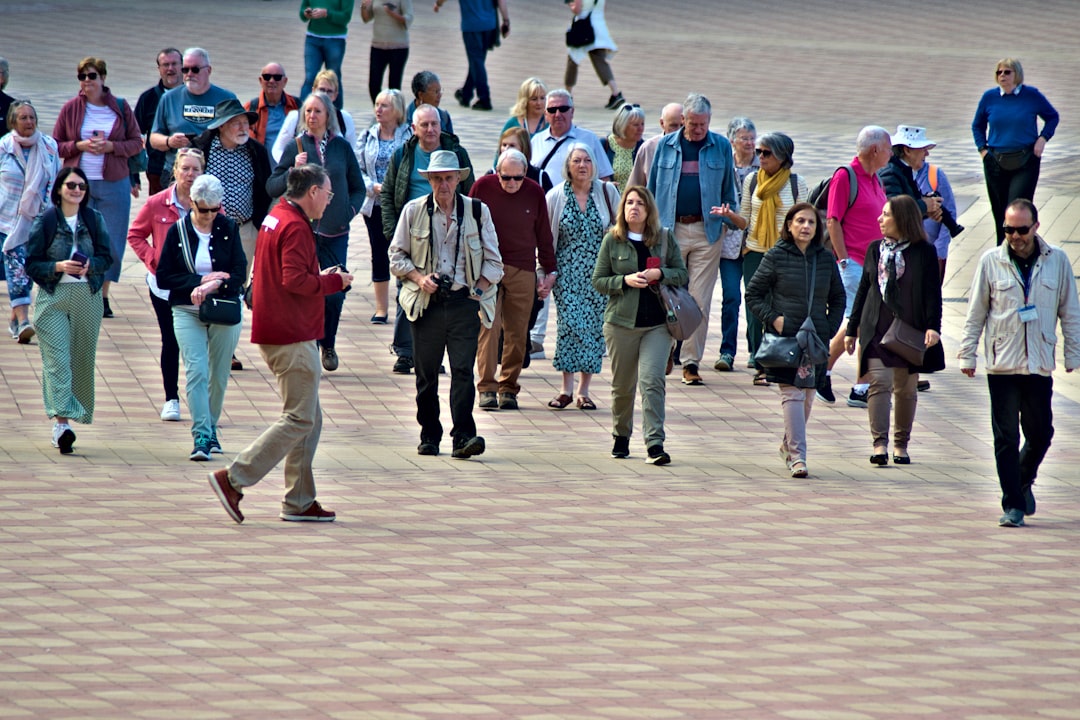
Kraków is one of those rare European cities that survived the Second World War largely intact, and walking its Old Town today feels like moving through centuries of unbroken history. Unlike Warsaw, which had to be painstakingly rebuilt from rubble, Kraków’s medieval street plan, Renaissance courtyards, and baroque churches are the originals. It is a city best explored on foot, at a pace slow enough to notice the carved stone doorways, the courtyard gardens glimpsed through archways, and the trumpet call that rings out every hour from the tallest tower of St. Mary’s Basilica.
Rynek Główny: Europe’s Largest Medieval Square
Start where everyone starts — at the Rynek Główny, the Main Market Square. At roughly 200 meters on each side, it is the largest medieval town square in Europe, and it has been the beating heart of Kraków since the city was granted its charter in 1257. The square pulses with life at all hours: horse-drawn carriages clatter over the cobblestones, flower sellers arrange their bouquets, buskers play jazz and folk music, and pigeons stage aerial maneuvers around the towers of St. Mary’s. Sit at one of the outdoor cafes along the edges to take it all in before beginning your walk.
Dominating the square’s eastern side, St. Mary’s Basilica is a Gothic masterpiece with two mismatched towers, the taller of which serves as the city’s unofficial symbol. Every hour on the hour, a trumpeter plays the hejnał mariacki from its windows — a five-note melody in each cardinal direction that cuts off abruptly mid-phrase, commemorating a 13th-century watchman who was shot through the throat by a Mongol arrow while sounding the alarm. Inside, the church houses Veit Stoss’s extraordinary carved wooden altarpiece from 1489, one of the finest Gothic sculptures in existence. The polychrome interior, with its deep blues and golds and star-vaulted ceiling, is breathtaking.
The Cloth Hall and Underground Museum
In the center of the square stands the Sukiennice, the Renaissance Cloth Hall, an elongated arcade building where merchants have traded since medieval times. The ground floor still functions as a market, though the goods have shifted from bolts of cloth to amber jewelry, hand-painted wooden boxes, and embroidered tablecloths. Upstairs, a branch of the National Museum houses an excellent collection of 19th-century Polish painting. Beneath the square itself, the Rynek Underground museum is one of Kraków’s best-kept secrets: an archaeological excavation that takes you through medieval market stalls, old trade routes, and centuries of artifacts discovered during renovation work.
Wawel Castle and Cathedral
From the square, walk south along Grodzka Street — one of the oldest streets in the city, lined with churches and townhouses — toward Wawel Hill. This limestone bluff above the Vistula River has been the seat of Polish power for a thousand years. Wawel Royal Castle is a Renaissance palace with an arcaded courtyard that could hold its own against anything in Italy. Its state rooms display Flemish tapestries collected by the Jagiellonian kings, and the Crown Treasury holds the coronation sword Szczerbiec. Next door, Wawel Cathedral is where Polish kings were crowned and buried for centuries; the crypts contain the tombs of monarchs, poets, and national heroes, including Józef Piłsudski and Lech Kaczyński.
Kazimierz: The Jewish Quarter Reborn
Walk east from Wawel along Stradomska Street and you enter Kazimierz, once a separate town and for centuries the center of Jewish life in Kraków. Before the war, some 65,000 Jews lived in and around Kazimierz. The Holocaust devastated this community, and for decades after the war the neighborhood fell into neglect. Today, Kazimierz has been reborn as one of Kraków’s most vibrant districts — a place of bohemian cafes, vintage shops, street art, and a thriving nightlife scene, while also honoring its Jewish heritage through restored synagogues and the Galicia Jewish Museum.
Visit the Old Synagogue, the oldest surviving synagogue in Poland, and the Remuh Synagogue with its Renaissance-era cemetery. Szeroka Street, the broad square at the heart of the old Jewish quarter, hosts an annual Festival of Jewish Culture each summer. The neighborhood’s dual identity — memorial and creative hub — gives it a unique character that rewards slow exploration.
Schindler’s Factory and Podgórze
Cross the river into Podgórze to visit Oskar Schindler’s enamel factory, now a museum that tells the story of Kraków under Nazi occupation with extraordinary sensitivity and detail. The exhibition goes far beyond Schindler himself, reconstructing daily life in occupied Kraków through personal accounts, photographs, and immersive installations. Nearby, the Ghetto Heroes Square features a memorial of empty bronze chairs, one for each thousand victims of the Kraków ghetto. These sites are emotionally demanding but essential for understanding the full story of this city.
The Planty and Practical Tips
Encircling the entire Old Town is the Planty, a ring of green parkland that follows the line of the medieval city walls, demolished in the early 19th century and replaced with gardens. A full loop is about four kilometers and makes for a lovely morning walk or evening stroll. Along the way, you pass the Barbican (a well-preserved Gothic fortification), fragments of the old walls, and the Collegium Maius, the oldest building of the Jagiellonian University where Copernicus once studied.
- For pierogi, try Przystanek Pierogarnia on Szewska Street or the legendary Pierogarnia Krakowiacy — both serve handmade dumplings with fillings from classic ruskie (potato and cheese) to wild mushroom.
- Buy a combined Wawel ticket early in the day, as entry slots to the State Rooms and Crown Treasury sell out by midmorning in summer.
- The best view of the Old Town is from Krakus Mound in Podgórze, especially at sunset.




Leave a Reply