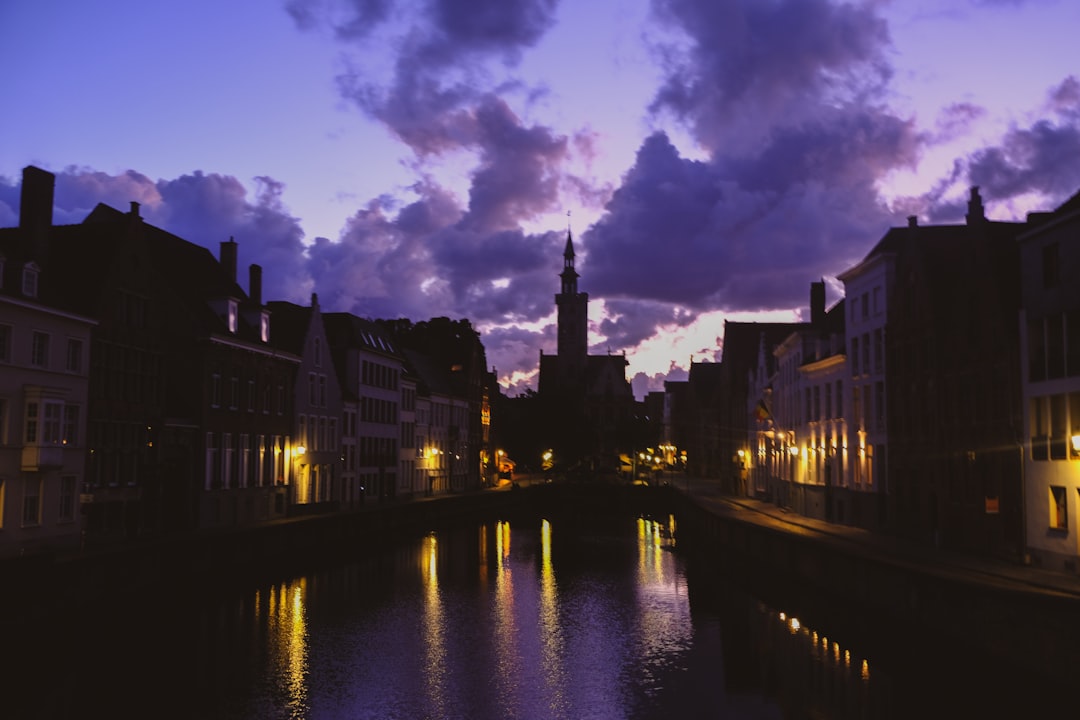
Bruges has a reputation problem. Thanks in part to the film “In Bruges”—in which Colin Farrell’s character calls it a variety of unprintable things—and in part to its own marketing, which leans heavily on chocolate, lace, and horse-drawn carriages, the city can seem like a medieval theme park, beautiful but hollow. This is unfair. Bruges is beautiful, certainly—extraordinarily so—but beneath the surface of the tourist circuit lies a living city with serious art, superb beer, and a history that once made it the richest trading port in Northern Europe. A weekend is enough to scratch that surface, if you know where to look.
Saturday Morning: The Belfry and the Burg
Start at the Markt, the central square, and look up. The Belfry of Bruges, an eighty-three-metre medieval bell tower, dominates the skyline and has done so since the thirteenth century. Climb the 366 steps—they narrow as you ascend, and the stairwell is one-way in places—for a view that justifies every gasping breath. From the top, the city spreads out in a carpet of stepped gables and red rooftops, bisected by canals that flash silver in the morning light. On a clear day you can see the coast at Zeebrugge, fifteen kilometres to the north.
A two-minute walk from the Markt, the Burg square is smaller but arguably more impressive, ringed by an architectural timeline spanning five centuries. The Basilica of the Holy Blood, a twelfth-century chapel tucked into one corner, claims to hold a relic of Christ’s blood brought back from the Holy Land during the Crusades. The lower chapel is stark Romanesque; the upper chapel, rebuilt in the nineteenth century, is a riot of colour and gilding. Entry is free, and it is far less crowded than the bigger churches.
Art That Predates the Renaissance
The Groeningemuseum, Bruges’ premier art collection, is small enough to visit in an hour and contains masterworks of Flemish Primitive painting that are worth flying to Belgium for alone. Jan van Eyck’s “Madonna with Canon van der Paele” (1436), displayed here, is a painting of almost supernatural precision—the reflection in the armour of Saint George, the texture of the carpet, the folds of the Madonna’s robe rendered with a fidelity that seems impossible for a work made six hundred years ago. Hans Memling, Gerard David, and Hieronymus Bosch are also represented. This is a museum that rewards slow looking.
If one museum whets your appetite, walk five minutes to the Sint-Janshospitaal, a medieval hospital that has been converted into a museum housing six paintings by Hans Memling, including the delicate and beautiful “Shrine of St. Ursula.” The hospital building itself—an enormous, vaulted hall where patients once lay in rows—is as impressive as the art within it.
Saturday Afternoon: Canals and Beer
Take a canal boat tour. Yes, it is touristy. Do it anyway. The thirty-minute circuit reveals perspectives of the city that you simply cannot get on foot—low bridges passing inches above your head, hidden gardens behind merchant houses, the leaning facades of medieval buildings reflected in water as still as glass. Boats depart from several points along the Dijver canal. The commentary varies from informative to charmingly eccentric depending on your pilot.
Afterwards, head to De Halve Maan, the only remaining active brewery within the old city walls. The forty-five-minute tour (about twelve euros, including a glass of their flagship Brugse Zot) takes you through the brewing process and up to the rooftop for another panoramic view. In 2016, the brewery made headlines by building a three-kilometre underground pipeline to transport beer from the old brewery to its bottling plant outside the city, avoiding the need for tanker trucks on the narrow medieval streets. You can see the pipeline’s route marked by small brass plaques embedded in the pavement.
Sunday: The Quiet Side
On Sunday morning, visit the Béguinage (Begijnhof), a walled community of small white houses around a tree-lined green, founded in 1245 as a home for beguines—pious women who lived communal religious lives without taking formal vows. It is now a Benedictine convent, and the silence inside the walls is startling after the bustle of the tourist streets. Daffodils carpet the green in spring. A small museum recreates the simple interior of a beguine’s house.
From the Béguinage, rent a bicycle and ride the flat, well-signposted path to Damme, a tiny village five kilometres northeast along the canal. The ride takes about twenty minutes through open polder landscape—pancake-flat fields, grazing sheep, windmills—and Damme itself is a single-street village with a handful of bookshops, a ruined church, and a café terrace overlooking the canal. It is the antidote to Bruges’ busiest corners.
Where Locals Actually Eat
- Avoid the restaurants on the Markt, which charge tourist prices for mediocre food. Instead, walk ten minutes to Langestraat or Sint-Jakobsstraat, where locals eat.
- For the best frites in town, seek out a frituur (chip shop) rather than a sit-down restaurant. Locals debate the merits of various frituren with the intensity that other nations reserve for religion.
- Bruges has an excellent beer scene beyond De Halve Maan. The Brugs Beertje, a small brown café on Kemelstraat, stocks over three hundred Belgian beers and the bartenders will guide you through them with patience and expertise.
- For chocolate, skip the tourist shops on the main streets and visit The Chocolate Line by Dominique Persoone or visit a smaller artisan shop in the side streets where quality is higher and prices are lower.



Leave a Reply