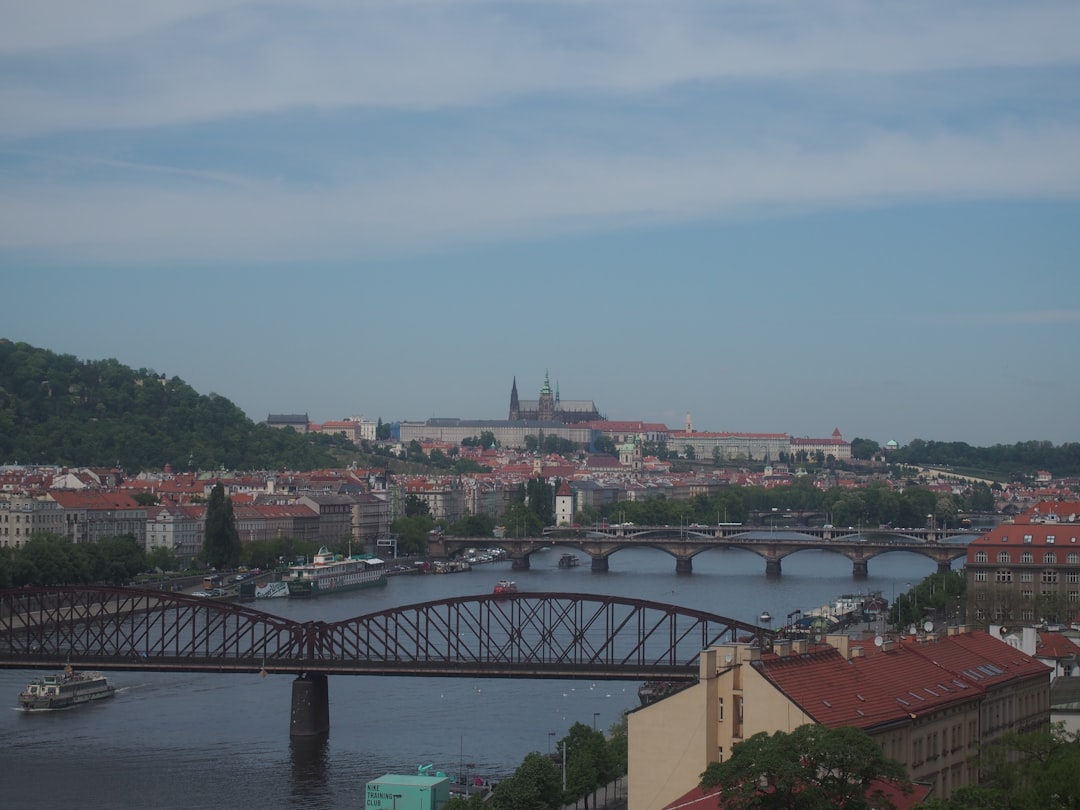
Miloš Forman’s Amadeus is a rare cinematic achievement: an epic period drama that won the Academy Award for Best Picture, a film that shaped global perceptions of Mozart and 18th-century music, and—perhaps most remarkably—a film shot largely in the actual city where crucial events of Mozart’s life unfolded. When Forman chose to film Amadeus in Prague rather than Vienna (where Mozart’s story is primarily set), he made a decision that works on both practical and profoundly poetic levels.
The central paradox of Amadeus is this: the film portrays Mozart’s triumphs and tragedies primarily in Vienna, where he struggled for patronage and recognition. Yet it was filmed in Prague, where Mozart found genuine appreciation and success. The Estates Theatre (Stavovské divadlo), where Mozart’s Don Giovanni premiered in 1787—an actual historical event—is the film’s emotional and literal centerpiece. Forman didn’t just film in Prague; he filmed in the precise location where Mozart’s greatest triumph occurred. The convergence of historical reality and cinematic recreation creates something extraordinary.
Why Prague, Not Vienna?
The practical reasons are straightforward: Prague’s Barrandov Studios provided technical facilities, the city’s architecture suited the film’s 18th-century setting, and Czech crews were experienced with large-scale historical productions. The historical reasons are more interesting: Prague was where Mozart experienced genuine success.
Mozart visited Prague multiple times. Unlike Vienna, where he faced financial difficulties and competition from established composers, Prague embraced Mozart’s music. The premiere of Don Giovanni at the Estates Theatre in October 1787 was a triumph. The Prague audience understood Mozart’s genius before Vienna fully did. In a sense, Prague was Mozart’s true beloved, even though his ambitions were centered on Vienna.
Forman’s decision to film primarily in Prague is thus historically resonant. To portray Mozart’s struggles and triumphs, Forman filmed in the city that most profoundly understood and appreciated him. It’s a choice that deepens the film’s meaning beyond pure narrative convenience.
The Estates Theatre: History and Cinema Converging
The Estates Theatre (Stavovské divadlo) is the emotional and literal center of Amadeus. This is not a reconstructed set or a location chosen for its general resemblance to 18th-century theaters. This is the actual theater where Mozart’s Don Giovanni premiered. Forman filmed extensively inside and outside the theater, using its real architecture, its genuine stage, its actual dimensions.
The theater, completed in 1783, still functions as an active performance venue. Its architecture is intact—the ornate boxes, the decorated ceiling, the orchestra pit, the stage itself are largely unchanged from Mozart’s era. When actors in Amadeus move across the stage or sit in the boxes during performance scenes, they’re moving across the actual stage where Mozart walked, the actual boxes where 18th-century Prague audiences sat.
This creates an extraordinary cinematic quality. There’s no performance, no acting required from the building itself. The Estates Theatre simply is what it is—a perfectly preserved 18th-century theater—and that authenticity radiates through the film. When we see Mozart’s triumph, we see it in the actual space where his triumph occurred.
Visiting Tip: The Estates Theatre is located in Prague’s Old Town at Ovocný trh 1, a few blocks from the Old Town Square. The theater still hosts performances, primarily of Mozart and other classical composers. Attending an evening performance—particularly Don Giovanni—offers an extraordinary experience: you’re watching the opera in the same theater where Mozart premiered it 200+ years ago. Even if you can’t attend a performance, you can often visit the theater’s interior during daytime hours when performances aren’t scheduled. The ornate decor, the intimate size of the theater (it holds about 600 people), and the sense of history are palpable.
Architectural Authenticity: Prague’s 18th-Century Fabric
Beyond the Estates Theatre, Amadeus benefits from Prague’s preservation of 18th-century architecture. The city’s Old Town, with its narrow streets, baroque facades, and period-appropriate buildings, requires minimal dressing for a film set in the late 1700s.
The Old Town Square, with its astronomical clock and surrounding Renaissance and baroque buildings, appears extensively in the film. The streets surrounding the square—Nerudova, Thunovská, and others in Malá Strana—are so thoroughly 18th century that they needed only careful production design and crowd control to function as Mozart’s Prague.
This architectural authenticity means that Amadeus works not just as cinema but as historical documentation. The buildings we see are genuinely old. The streets are genuinely cobblestone (though sometimes repaved). The spatial relationships between locations are real. You’re not watching a recreation of 18th-century Prague; you’re watching actual 18th-century Prague, with 20th-century actors moving through it.
Archbishop’s Palace: Mozart’s Professional Geography
The film depicts Mozart’s relationship with Prague’s Archbishop, the powerful church official who controlled significant artistic patronage. The Archbishop’s Palace (Arcibiskupský palác), located in Malá Strana near Prague Castle, appears in the film as a location of both possibility and frustration for Mozart. It’s where patronage might be secured, where social hierarchies are displayed, where Mozart’s talent confronts institutional power.
Visiting Tip: The Archbishop’s Palace is not generally open to the public, as it remains the residence of Prague’s Archbishop. However, you can view its exterior from the street. It’s located at Nerudova 3 in Malá Strana, on the street climbing from Charles Bridge toward Prague Castle. The palace’s baroque facade, its formal entrance, and its commanding position on the street all contribute to its cinematic significance. The surrounding neighborhood—Nerudova Street—is one of Prague’s most picturesque, with baroque houses, narrow pavements, and views of the castle above.
Kroměříž: Standing in for Vienna’s Hofburg
Some of Amadeus‘ interior scenes were filmed at the Kroměříž Palace (Kroměřížský zámek), located in Moravia (about 90 kilometers southeast of Prague). This magnificent baroque palace, with its ornate interiors and formal gardens, stands in for Vienna’s Hofburg Palace in the film. The interiors—ballrooms, hallways, formal chambers—required less dressing than exteriors because their baroque decoration was already period-appropriate.
The use of Kroměříž demonstrates how Czech locations offer variety. Prague’s exteriors provide authentic 18th-century urban fabric. Kroměříž provides palatial interiors and formal spaces. Together, they create a complete cinematic world.
Visiting Tip: Kroměříž is accessible by train from Prague (about 2 hours), or by car if you have transportation. The palace is open to visitors and is one of the Czech Republic’s most impressive baroque buildings. The interior tour includes rooms that may have been filmed for Amadeus, though distinguishing specific locations is difficult. The palace’s gardens and surrounding park are extensive and worth exploring. A visit to Kroměříž works well as a day trip from Prague, or as a stop if traveling to or from the eastern parts of the Czech Republic.
Barrandov Studios: The Constructed Interiors
While exteriors were filmed on location throughout Prague and Moravia, many interior scenes—particularly those requiring specific camera movements, lighting control, or repeated takes—were filmed at Barrandov Studios. The studio’s soundstages allowed the construction of Mozart’s Vienna apartment, concert halls, and other interior spaces that needed to function precisely as Forman’s cinematography required.
The use of both real locations and studio construction is typical of ambitious period dramas. Real locations provide authenticity and visual richness. Studio sets allow technical control and narrative flexibility. Amadeus balances both: the genuine Estates Theatre grounds its emotional power in reality, while studio construction allows the director complete control over composition and performance.
Tom Hulce as Mozart in Prague
Actor Tom Hulce’s performance as Mozart—volatile, genius, childlike, prone to crude humor—is grounded in the physical reality of Prague. Hulce walks the actual streets Mozart walked, performs on the actual stage where Mozart performed. This isn’t method acting in the psychological sense, but there’s something about performing a historical figure in the actual locations where that figure lived that deepens credibility.
The film rarely draws explicit attention to these facts—we’re not constantly reminded “here is the exact spot”—but the coincidence of historical location and cinematic recreation creates a subtle depth. We’re watching Mozart’s story told in the places where Mozart’s actual life unfolded.
The Paradox: Filming Mozart’s Vienna in Prague
Here’s the central paradox that makes Amadeus cinematically and historically interesting: the film portrays Mozart in Vienna, but films in Prague. The real Mozart struggled in Vienna, found acceptance there late in life (and often too late), and died in relative obscurity. The real Mozart found genuine appreciation in Prague much earlier.
Forman’s choice inverts this history slightly. By filming in Prague—the city where Mozart succeeded—to tell a story set in Vienna—the city where he struggled—Forman creates a subtle commentary. The film’s power comes partly from this inversion. We see Mozart’s triumph projected onto the city (Prague) that actually recognized him, while the narrative remains set in the city (Vienna) that largely didn’t.
It’s a sophisticated cinematic move, whether intentional or not. The film’s emotional truth is grounded in the right city, even though the plot claims the wrong one.
Czech Cinema’s Golden Age
Amadeus was directed by Miloš Forman, a Czech filmmaker who achieved major success in American cinema. Forman’s background in Czech cinema—he was part of the Czech New Wave of the 1960s—informed his approach to Amadeus. Czech cinema had a tradition of sophisticated historical filmmaking and visual storytelling. Forman understood how to use locations cinematically, how to blend real places with constructed sets, and how to ground narrative in physical space.
The choice of Forman to direct Amadeus was, in some sense, the choice of a Czech filmmaker to tell a Central European story. Even though the film is in English, with an American budget, directed for American audiences, it carries the sensibility of someone deeply familiar with Prague and Czech cinema.
Visiting Amadeus Locations Today
For film enthusiasts and Mozart admirers, visiting Amadeus locations in Prague offers a layered experience. You’re simultaneously visiting Mozart’s actual Prague (the city where real historical events unfolded), Forman’s cinematic Prague (the filmed version you’ve seen), and contemporary Prague (the living city today).
A walking tour might proceed as follows:
- Start at the Estates Theatre, the emotional heart of both Mozart’s Prague and Forman’s film
- Walk through the Old Town Square and surrounding streets, noting how the architecture appears in the film
- Climb to Prague Castle and the Archbishop’s Palace area for palace exteriors and broader city views
- If time permits, visit Charles Bridge and Kampa Island (also featured in the film)
- Visit Barrandov Studios for a tour of the soundstages where interior scenes were filmed
This route traces both historical and cinematic geography, grounding the film in real space.
Conclusion: Cinema and History Converging
Amadeus is a film about genius, patronage, mortality, and music. It’s also a film about place—about how a city shaped an artist, about how cinema can ground historical narrative in authentic location, about how the past haunts the present through architecture and geography.
The fact that it was filmed in Prague, where Mozart actually found success, adds a dimension that a purely fictional narrative couldn’t achieve. We’re not watching actors pretending in a constructed world; we’re watching actors in the actual world where Mozart’s story unfolded. The Estates Theatre isn’t a replica; it’s the genuine article. The streets are genuinely old. The layers of history are real.
This is what makes Amadeus remarkable not just as cinema, but as historical experience. By filming in Prague, Forman created a film that works simultaneously as narrative entertainment and as a kind of pilgrimage to the places where Mozart lived and triumphed. That convergence of fiction and history, cinema and reality, is what gives Amadeus its enduring power.




Leave a Reply