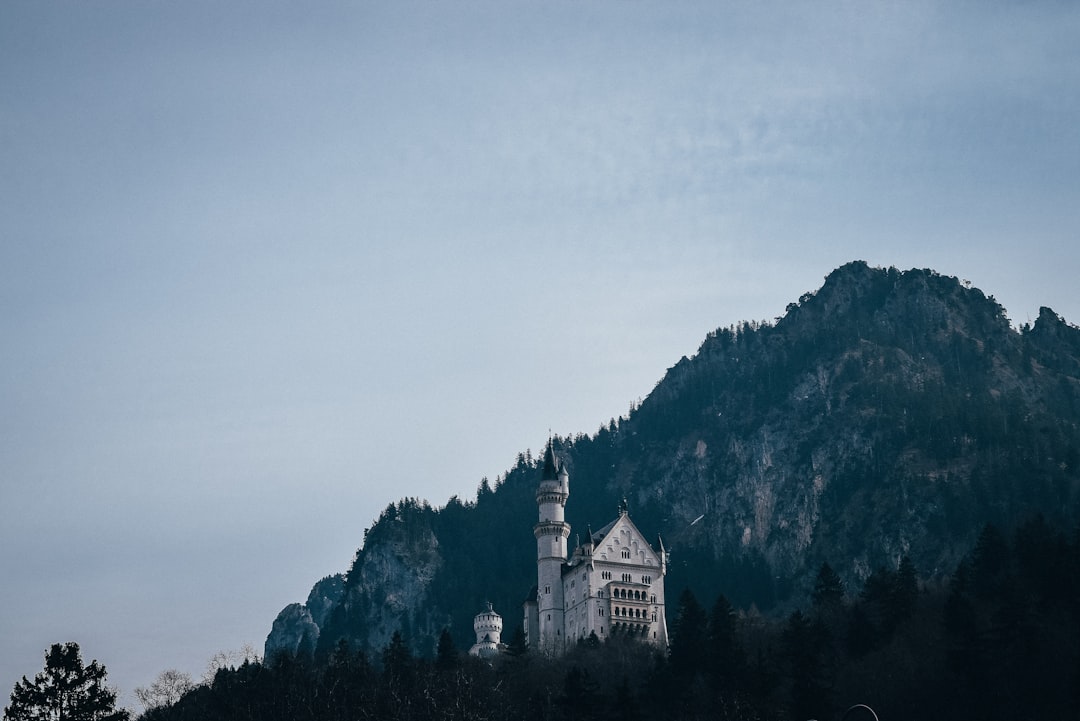
In 1886, the citizens of Bavaria witnessed something extraordinary: their king, Ludwig II, was declared insane and removed from power. Within days, he was dead, mysteriously drowned in a lake under circumstances that remain disputed to this day. His reign lasted 22 years. His castles outlasted him by 140 years and counting. Today, millions of tourists visit the stunning fairy-tale castles he built, often without knowing the tragic story of madness and loneliness that created them.
Ludwig II was an anomaly—a king more interested in art, architecture, and fantasy than in governing. In an era of realpolitik and Prussian military might, Ludwig represented something vanishing: the Romantic sensibility. His castles are among Europe’s most beautiful structures. His life story is among Europe’s saddest.
The Young King: A Tragic Beginning
Ludwig was born in 1845 to King Maximilian II and Queen Marie of Prussia. He was heir to the throne of Bavaria, a kingdom that, while traditionally rich in culture, was becoming overshadowed by rising Prussia. Bavaria was Catholic, artistic, and proud; Prussia was Protestant, militaristic, and ambitious.
Young Ludwig was raised in privilege but also in isolation. His father, though not unkind, was distant. Ludwig’s education was rigorous but cold. The young prince retreated into fantasy and art. He loved Wagner’s operas, the Arthurian legends, the Romantic ideal of beauty and transcendence.
In 1864, at only 18 years old, Ludwig became king when his father died suddenly. The timing was catastrophic. Bavaria was facing pressure from Prussia under Otto von Bismarck. The kingdom needed a strong, politically savvy ruler. Instead, it got a sensitive romantic who couldn’t cope with the messy realities of governance.
The Wagner Obsession: Art Over Politics
Ludwig’s first major act as king was to seek out Richard Wagner, the greatest living composer in Europe. Wagner was brilliant, difficult, egotistical, and perpetually bankrupt. Ludwig became Wagner’s patron and, more importantly, became infatuated with him emotionally.
Wagner’s operas created fantasy worlds that perfectly suited Ludwig’s temperament. The Ring Cycle, Lohengrin, Tristan and Isolde—these mythological dramas of doomed love and heroic striving spoke to something deep in the young king. He would attend performances repeatedly, experiencing them as almost spiritual events. Wagner’s music seemed to represent a higher reality than the mundane world of politics and governance.
Ludwig poured royal money into supporting Wagner. When Wagner’s projects ran over budget, Ludwig paid. When Wagner needed protection from creditors, Ludwig provided it. The relationship was contentious—Wagner was volatile and demanding—but Ludwig remained devoted.
This wasn’t just royal patronage. It was something closer to an obsession, perhaps even a substitute for normal human relationships. Ludwig had few friends. He didn’t marry, though he was briefly engaged. He communicated through letters rather than direct conversation. Wagner became his connection to a world of transcendent beauty that seemed to compensate for the emptiness of his actual life.
Building the Dream: Castles as Escape
By the late 1860s, Ludwig had begun to turn his attention to an even more consuming project: building castles. Not just castles, but fantasy castles that seemed to emerge from Romantic paintings and Wagner operas.
In 1868, he began Neuschwanstein Castle on a crag in Bavaria’s southern mountains. The castle was inspired by medieval German legends and by Richard Wagner’s Lohengrin. It was designed as a vision made concrete—a white limestone vision rising from the mountain, with towers and spires that seemed to defy the laws of architecture. The castle was insanely expensive and took decades to complete. Ludwig moved in for only a few nights before abandoning it, already planning the next project.
Neuschwanstein is now one of Europe’s most visited castles. Disney based the Sleeping Beauty castle on it. For most visitors, seeing it is a moment of pure enchantment—this vision of fairy-tale perfection rising from the mountains. Fewer visitors understand that Neuschwanstein was never meant to be a functional residence but rather a monument to Ludwig’s inner world.
In 1870, Ludwig began Linderhof, a smaller castle in the same region, also inspired by Baroque design but reimagined through Ludwig’s romantic sensibility. Linderhof had an artificial grotto, Italian gardens, a royal bed chamber designed like a shrine, and countless ornate rooms where Ludwig could lose himself in fantasy. Unlike Neuschwanstein, Linderhof was occasionally inhabited. Ludwig would stay there for weeks, creating a private world that bore no resemblance to the world outside.
But Ludwig wasn’t finished. In 1878, he began his most ambitious project: Herrenchiemsee, a palace on an island in a Bavarian lake. It was explicitly modeled on Versailles—Louis XIV’s masterpiece. Ludwig saw himself as a spiritual successor to the Sun King, both creating monuments to beauty and power that transcended ordinary morality.
Herrenchiemsee was vast and impossibly expensive. The Hall of Mirrors, copied from Versailles, was completed eventually. But the palace was never finished. Ludwig would visit occasionally, imagining it complete, then return to his isolation. The castle became, in a sense, a monument to a vision that could never be fully realized.
The Cost of Dreams: Bavaria’s Finances Collapse
The castles were staggeringly expensive. At a time when Bavaria’s economy was struggling and the state needed resources for practical matters—infrastructure, education, military capability in the face of Prussian pressure—the king was spending royal money on fairy-tale fantasies.
By the 1880s, Bavaria’s finances were in crisis. The debt from the castle projects was unsustainable. Ludwig’s ministers begged him to stop. He responded by shutting them out, communicating through notes, refusing to engage with governance. He was still king in title, but he had effectively abandoned the role.
The situation became untenable. Ludwig’s ministers, concerned about the state’s fiscal collapse and increasingly convinced that the king was mentally ill, began to plot his removal. In 1886, they arranged for a psychiatrist to declare Ludwig insane—officially, without ever examining him thoroughly or fairly.
The Mysterious Death
On June 10, 1886, Ludwig was arrested and removed from power. His uncle, Otto, became regent. Ludwig was taken to Berg Castle on the Starnberger See, a lake south of Munich. Guards were posted to watch him. He was considered suicidal and dangerous.
On June 13, 1886, Ludwig and his personal physician went for a walk near the lake. They were never seen alive again. Their bodies were found in the lake the next morning. The official cause was given as drowning, specifically that Ludwig had walked into the water and drowned himself, and his doctor had died trying to save him.
But the circumstances were murky. Why would a king who loved castles and beauty choose to drown? Had he been murdered to prevent him from escaping? Had the doctor tried to restrain him, leading to both of them drowning? Conspiracy theories have circulated for 140 years. The truth remains uncertain.
What is clear is that Ludwig died in obscurity, far from the castles he had built, imprisoned by those who couldn’t understand his vision. He was 40 years old.
The Castles’ Revenge: History’s Judgment
Ludwig’s enemies destroyed his reputation. They portrayed him as mad, irresponsible, and pathetic. His spending was characterized as the delusion of a disturbed mind. Bavaria seemed relieved to be rid of him.
But then something unexpected happened. As Romantic sensibility changed European culture in the early twentieth century, people began to see Ludwig differently. The castles he built weren’t evidence of madness but of authentic artistic vision. His refusal to compromise with the brutalist realities of power politics began to seem principled rather than weak. His loneliness began to appear tragic rather than pathetic.
By the time tourism became a major industry, Neuschwanstein, Linderhof, and Herrenchiemsee were recognized as masterpieces. Millions of people visit them annually. They’ve been featured in films, books, and paintings. They’ve become the iconic image of German Romanticism and medieval fantasy.
Ludwig never married, had no children, and achieved no political victories. He was a failure by every practical measure. Yet he created beauty that has outlasted his critics by over a century and will likely outlast the modern world itself. In some sense, history has vindicated his conviction that beauty and art matter more than power and politics.
Visiting Ludwig’s World
Neuschwanstein Castle is the most visited palace in Germany. It requires advance booking (tickets are hard to get in summer) and patience to navigate tour groups. But stand outside it on a clear day, looking up at those white towers against the mountain, and you grasp why Ludwig’s fantasy captivated people. The interior is less impressive than the exterior, but the sheer audacity of creating something this beautiful in that location remains stunning.
Linderhof Castle is smaller and less crowded than Neuschwanstein. It feels more lived-in, more personal. The grottos and gardens are exquisite. The ornate interior is actually more beautiful than Neuschwanstein’s in many ways. If you can visit only one Ludwig castle, and you prefer authenticity over spectacle, Linderhof is arguably the better choice.
Herrenchiemsee requires a boat ride to the island where it stands. The Hall of Mirrors is extraordinary, and the unfinished portions of the palace tell the story of a dream never completed. It’s the saddest of the castles, somehow—beautiful but clearly abandoned, a monument to ambition that exceeded reality’s ability to accommodate it.
Lake Starnberg is where Ludwig died. Standing on the shore, knowing the history, the setting becomes almost unbearably poignant. The beautiful lake suddenly seems like a tomb.
The Mystery of Madness
Was Ludwig actually insane? Modern psychiatrists have debated this for decades. He showed signs of what might have been depression, social anxiety, or just extreme introversion combined with absolute power and artistic sensibility. He was eccentric, certainly. He was isolated, definitely. But was he clinically mad in a way that required his removal?
The truth is probably more complex. Ludwig was a person with an intensely Romantic temperament living in a modernizing world that had no use for Romanticism. He was a king who didn’t want to be king. He was an artist born to administrative power. The conflict between his inner world and outer reality created genuine psychological distress.
His ministers had practical and political reasons to remove him. Characterizing him as mad was convenient. But the convenience of the diagnosis doesn’t mean it was wrong—just that we can never be entirely sure.
The Legacy: Beauty and Tragedy Intertwined
Ludwig’s castles stand as monuments to both beauty and delusion. They’re proof that one person’s vision, backed by resources and will, can create something that transcends time. They’re also proof that such vision can come at a terrible personal and political cost.
When you visit these castles, you’re not just seeing architecture. You’re seeing the interior world of a profoundly lonely man made visible. You’re seeing what happens when someone tries to escape reality through sheer determination and aesthetic force. You’re standing in the monuments of a human tragedy that somehow managed to be beautiful.
Bavaria’s “Mad King” Ludwig II created some of Europe’s most beloved structures by pursuing a dream that cost him everything. History’s final verdict: his vision mattered more than the price he paid. The castles remain. The beauty endures. Ludwig, finally, has been vindicated.




Leave a Reply