Introduction: Complex History, Welcoming Present
Belfast is the capital of Northern Ireland, a region with a complex history that many American visitors find simultaneously difficult and compelling. With 340,000 people, Belfast is smaller than Dublin but vibrant and increasingly cosmopolitan. The city has transformed dramatically over the past 20 years from a place associated with conflict to a modern city with excellent museums, restaurants, and cultural attractions.
For Americans, Northern Ireland (part of the United Kingdom) presents an opportunity to understand Irish history more completely and experience distinct landscape and culture. This guide provides context while prioritizing visitor experience.
Belfast City Center
Geography & Atmosphere
Belfast sits on the River Lagan, with city center concentrated around City Hall and the Cathedral Quarter. The city is walkable and compact. Modern development is extensive, creating a clean, contemporary feel in central areas.
Belfast’s personality is notably different from Dublin—less overtly bohemian, more industrial in heritage, but increasingly sophisticated. The city is genuine and unpretentious; locals are notably friendly and proud of recent transformation.
Essential Areas
Titanic Quarter: East of city center, this former shipyard area (where the Titanic was built) has been transformed into a cultural district with museums, restaurants, and offices.
Titanic Belfast Museum (£16): A six-story building shaped like a ship’s hull tells the story of the Titanic’s construction in Belfast’s Harland & Wolff shipyard and its tragic sinking. The museum is genuinely excellent—immersive, informative, and emotionally affecting. Plan 3-4 hours. This is Belfast’s top attraction and worth the time.
SS Nomadic: A sister ship to the Titanic, preserved as a museum ship moored nearby. Budget 1 hour.
Titanic Quarter also includes:
- Modern restaurants and cafés
- Shopping centers
- Office buildings and development
Cathedral Quarter: North of city center, this historic neighborhood has been revitalized with street art, independent shops, galleries, and restaurants. It’s increasingly bohemian and worth 2-3 hours of exploration. The quarter gets its name from St. Anne’s Cathedral.
Lagan Riverside: Walking trails along the River Lagan offer green space and water views within the city. The bridges are modern architectural achievements. A pleasant afternoon walk.
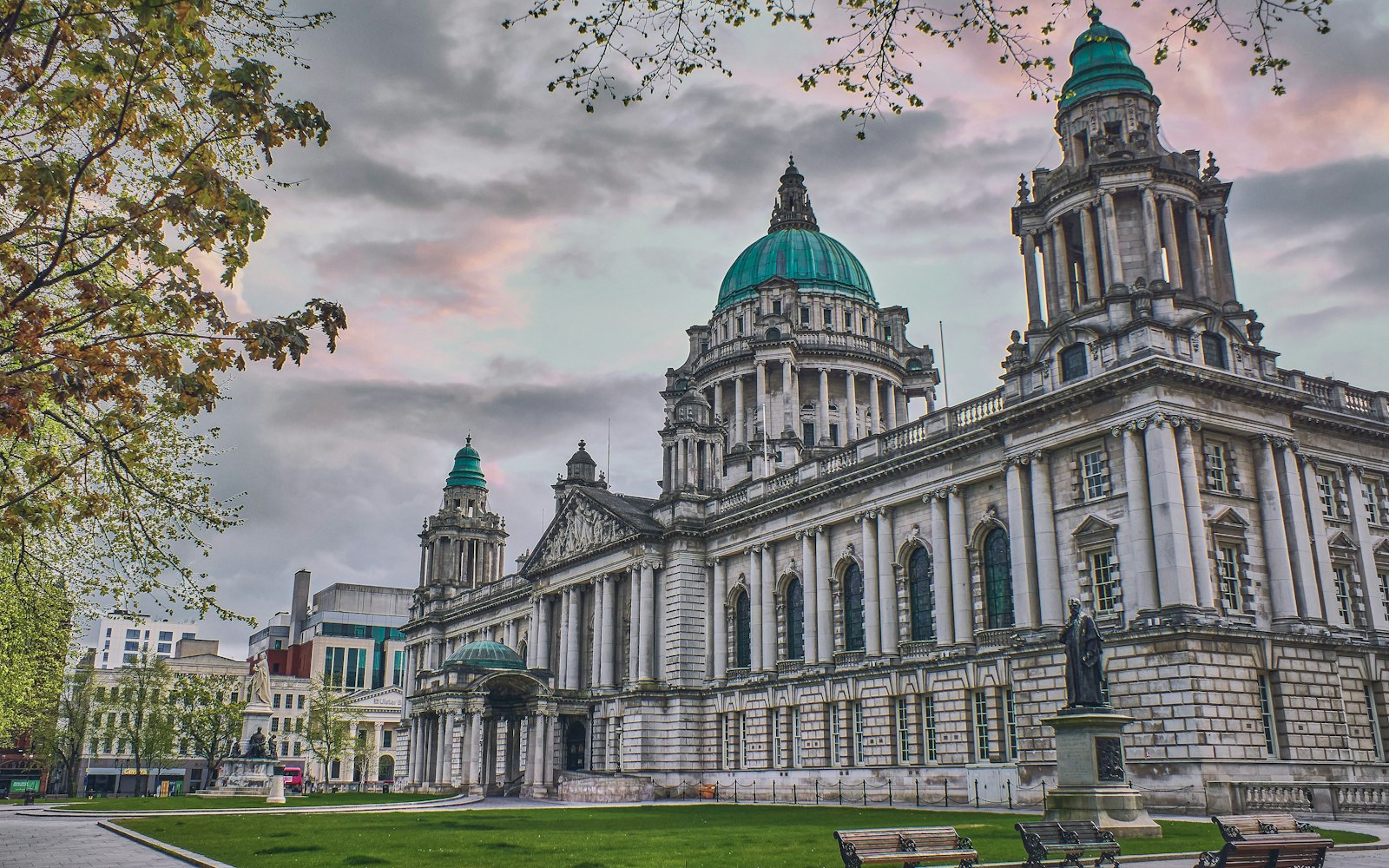
City Hall: Grand Victorian civic building in central Belfast. The grounds are impressive; interior tours are available but optional unless architecture interests you.
The Peace Walls & Murals
Belfast’s history of division is visible in “Peace Walls”—massive walls that separated communities during conflict. These walls remain, now covered with political murals and street art.
Important Context: The walls are sensitive. Don’t treat them as tourist attractions or take selfies with political imagery. The walls represent real trauma and loss.
Visiting Murals Respectfully:
Guided Tours Available:
West Belfast (where walls are concentrated) is safe to visit with guides but uncomfortable to wander independently. The neighborhoods are improving and residents are welcoming to respectful visitors, but the political history requires sensitivity.
Food & Dining
Belfast has excellent restaurants, particularly in Cathedral Quarter and city center:
Upscale:
Casual & Excellent:
Seafood:
Traditional Pubs (for atmosphere):
Markets & Casual:
Pubs & Music
Belfast has less of the nightly traditional music culture than Galway or western Ireland, but good pubs exist:
The pub scene is more English-influenced than other Irish cities.
Accommodation
Budget (£50-80):
Mid-Range (£80-130):
Upscale (£130+):
Book ahead on weekends and in summer.
The Causeway Coast
The Causeway Coast (east of Belfast, 1 hour drive) is Northern Ireland’s most dramatic landscape—cliffs, beaches, and natural wonders.
Giant’s Causeway
The Giant’s Causeway is a UNESCO World Heritage Site: 40,000 hexagonal basalt columns formed by ancient lava flows, now stretching along the coast. It’s one of Ireland’s most extraordinary natural features.
Visitor Centre (£14): Modern facility with exhibits explaining the geology and legend. The building is architecturally interesting (partially underground). Plan 1-2 hours if exploring exhibits and coastal walks.
The Causeway Itself: The basalt columns are accessed directly—walk down the path and onto the stone columns. The scale is genuinely impressive. Walking on the hexagonal stones is slightly precarious but manageable. Most visitors spend 1-2 hours on the causeway itself.
Best visited: Early morning or late afternoon for better light and fewer crowds. Weekdays are quieter than weekends.
Carrick-a-Rede Rope Bridge
A famous rope bridge connecting the mainland to a small island, 70 meters above the sea. Crossing the bridge is thrilling—only boards and rope between you and the ocean. The views are spectacular.
Admission: £4 (parking included). Budget 1-2 hours—the bridge crossing itself is 10 minutes, but the coastal scenery and walks around the area extend the time.
Practical notes: The bridge can be daunting for people with heights phobia. It sways slightly. Children and older adults cross successfully but may feel nervous. This isn’t dangerous, just psychologically intense.
Other Causeway Coast Attractions
Bushmills Distillery: The world’s oldest licensed whiskey distillery (since 1608). Tours (£15) last 1.5 hours and include tasting. Budget 2 hours total including café time. The whiskey is notable; even non-whiskey drinkers find the history interesting.
Dunluce Castle: Dramatic cliff-top castle ruins. Free access. The castle is genuinely beautiful—perched on cliffs with ocean views. Budget 1 hour.
The Glens of Antrim: South of the Causeway Coast, this scenic region features valleys, forests, and smaller villages. Day trips from Belfast or base near Ballycastle.
Portrush & Portstewart: Beach towns with Victorian-era resort infrastructure. Pleasant for beach time but less dramatic than Causeway attractions.
Derry/Londonderry
Note on naming: The city’s name is politically fraught. The official name is “Derry” (in Irish, Doire). Unionists call it “Londonderry.” Usage varies. Current official designation is “Derry City and Strabane District,” but the city itself is commonly called “Derry.” For this guide, we’ll use Derry.
Derry (75 minutes from Belfast) is a historic walled city on the River Foyle. It’s one of the most completely intact walled cities in Europe.
The Walls
Derry’s city walls, completed in 1619, completely encircle the historic old city. Walking the walls (1.5 km) takes 45-60 minutes and provides views over the city and river. The walls are accessible and largely flat. The views are excellent, particularly at sunset.
The Craft Village
Inside the walls, the Craft Village is an open-air shopping area with traditional crafts—pottery, weaving, etc. It’s somewhat commercialized but pleasant. Budget 1 hour.
Modern Derry
Outside the walls, modern Derry has been revitalized with contemporary architecture, restaurants, and cultural venues. The city is experiencing genuine renewal.
Attractions:
Derry as a Visit
Derry can be done as a day trip from Belfast (2-3 hour drive) or as a separate destination. The walled city is genuinely interesting historically and architecturally. The city is less touristy than other Irish destinations, making it feel authentic. For many visitors, Derry is a highlight.
The Mourne Mountains
South of Belfast (toward the Irish border), the Mourne Mountains offer hiking and scenic beauty. The mountains aren’t particularly high (highest peak 850 meters) but are notably beautiful with distinctive granite peaks.
Base: Newry is the closest town.
Attractions: Hiking trails, Silent Valley (mountain valley reservoir), scenic drives.
Time Investment: This is more for serious outdoor enthusiasts than casual tourists. Half-day excursion minimum.
Practical Information for Northern Ireland
Currency & Cost
Northern Ireland uses the British Pound (£), not the Euro. ATMs are abundant; most places accept cards. Costs are similar to the UK (slightly more expensive than Republic of Ireland). Budget £15-25 for casual meals, £30-50 for upscale dining.
Transportation
Rental cars: Available at Belfast airport and city center. Driving is similar to the Republic (left-hand traffic) except distances are measured in miles, not kilometers. UK driver’s license (and International Permit if non-UK) required.
Buses: Connect Belfast to Causeway Coast towns. Journey times: Belfast-Giant’s Causeway (2 hours), Belfast-Derry (2 hours).
Trains: Limited but available (Belfast-Dublin connection).
Mobile Phones
If your US phone has international roaming, it works in Northern Ireland (UK networks). Mobile plans are similar to Republic of Ireland.
Safety
Belfast is as safe as Dublin for tourists. The city has been transformed and is welcoming to visitors. Exercise normal urban precautions (don’t wander alone late at night, keep valuables secure). West Belfast with the Peace Walls is safe with guides but uncomfortable alone.
Visas
US citizens don’t need visas for UK/Northern Ireland. Your US passport suffices. Brexit changed some requirements for longer stays, but tourist visits (up to 6 months) require no visa.
Visiting Context
Northern Ireland is part of the United Kingdom—not the Republic of Ireland. The distinction matters historically and politically. For visitors, understand:
A Belfast-Centered Itinerary
2-Day Belfast Focus:
3-Day with Causeway Coast:
4-5 Day Northern Ireland:
Final Thoughts
Belfast and Northern Ireland represent a different facet of Ireland—industrial heritage, divided history, and contemporary reinvention. The city has transformed from conflict to cosmopolitan vibrancy. The Causeway Coast is genuinely beautiful. Understanding Northern Ireland deepens understanding of Ireland overall.
Many American visitors skip Northern Ireland, assuming conflict makes it unsafe. Modern Belfast is as safe as Dublin and arguably more interesting for what it represents. The Causeway Coast rivals the west coast for natural beauty. A visit broadens perspective on Irish history and contemporary reality.
Northern Ireland is worth the time and provides a complete Irish experience.




Leave a Reply