Bosnia and Herzegovina is the European destination that surprises everyone who visits. Travelers arrive expecting war scars and leave talking about turquoise rivers, medieval bridges, cascading waterfalls, and one of the most profound coffee cultures on the continent. Yes, the legacy of the 1990s conflict is visible and should be engaged with respectfully, but it exists alongside a country of startling natural beauty, deep cultural richness, and a hospitality that is immediate and genuine.
Mostar: The Bridge Between Worlds
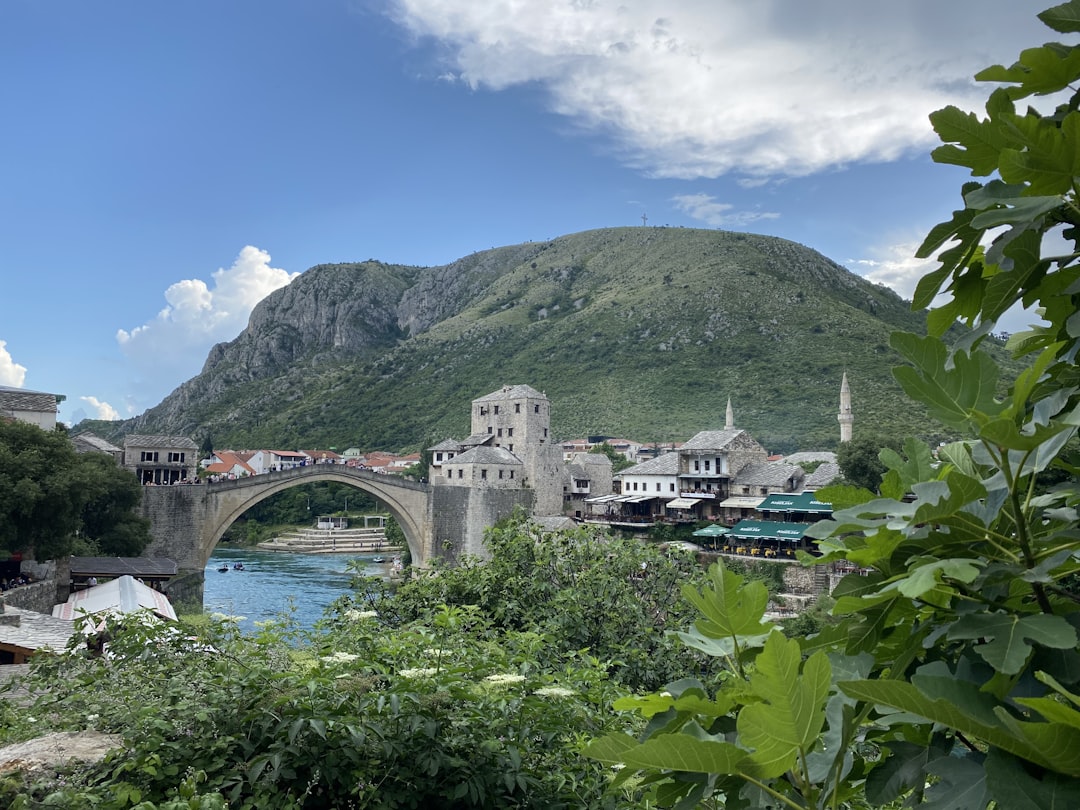
Mostar’s Stari Most (Old Bridge) is one of the most iconic structures in the Balkans, a single stone arch spanning the emerald Neretva River, originally built by the Ottomans in 1566 and painstakingly reconstructed after its destruction during the war in 1993. Watching local divers leap from its apex into the freezing water 24 meters below is a quintessential Mostar moment. The old town on either side of the bridge is a labyrinth of cobblestone lanes, coppersmith workshops, and small cafes where coffee is brewed in long-handled dzezvas. The Koski Mehmed Pasha Mosque has a minaret you can climb for the best view of the bridge. To escape the day-trip crowds, stay overnight. Mostar after dark, when the bridge is lit and the tour buses are gone, is magical.
Sarajevo: The Jerusalem of Europe
Sarajevo has been called the Jerusalem of Europe because of its extraordinary religious diversity: mosques, Catholic and Orthodox churches, and a synagogue all stand within a few hundred meters of each other in the old town. The Bascarsija, the Ottoman-era bazaar, is the beating heart of the city, a warren of workshops, cafes, and market stalls centered on the Sebilj fountain. Walking east to west through Sarajevo is like walking through time, from Ottoman architecture through the Austro-Hungarian district (which looks remarkably like Vienna) to the socialist-era boulevards beyond. The Latin Bridge, where Gavrilo Princip assassinated Archduke Franz Ferdinand in 1914, triggering World War I, is a modest but historically momentous landmark.
The war’s legacy is present throughout: the Tunnel of Hope, built under the airport runway during the 1992-1996 siege (the longest siege of a capital city in modern history), is now a museum where you can walk through the preserved section. The Srebrenica-Potocari Memorial, while further afield, is an essential and deeply affecting visit for anyone wanting to understand the full scope of the Bosnian War.
Natural Wonders
Bosnia’s natural landscape is where the country truly astonishes. The Kravice Waterfalls, a 25-meter-high semicircular cascade on the Trebizat River, feels like a miniature Niagara hidden in the Herzegovinian countryside, and in summer you can swim in the pool at its base. Una National Park, in the northwest, protects a river of such vivid emerald-green that it seems digitally enhanced, with waterfalls, rapids, and wooden walkways through pristine forest. The town of Jajce is built around a 17-meter waterfall that plunges right through the center of town where two rivers meet, one of the most unusual urban landscapes in Europe.
The Bosnian Coffee Ritual
Do not call it Turkish coffee (Bosnians are particular about this). Bosnian coffee is prepared in a dzezva (small copper pot), served on a tray with a fildzan (small handleless cup), sugar cubes, and often a piece of rahat lokum (Turkish delight). The ritual is not about caffeine. It is about slowing down, savoring conversation, and marking the time between activities. Sitting in a Sarajevo cafe with a tray of coffee and watching the world go by is one of Europe’s finest simple pleasures.
Important: Landmine Awareness
Bosnia still has areas contaminated by landmines from the 1990s conflict. This primarily affects rural and forested areas away from established paths. Stick to paved roads, marked trails, and populated areas. Do not walk through overgrown fields or unmarked forest. Mined areas are generally marked with red signs bearing a skull and crossbones. This should not deter you from visiting. The tourist areas and major hiking trails are thoroughly cleared and safe. But it is important to be aware and exercise common sense.




Leave a Reply