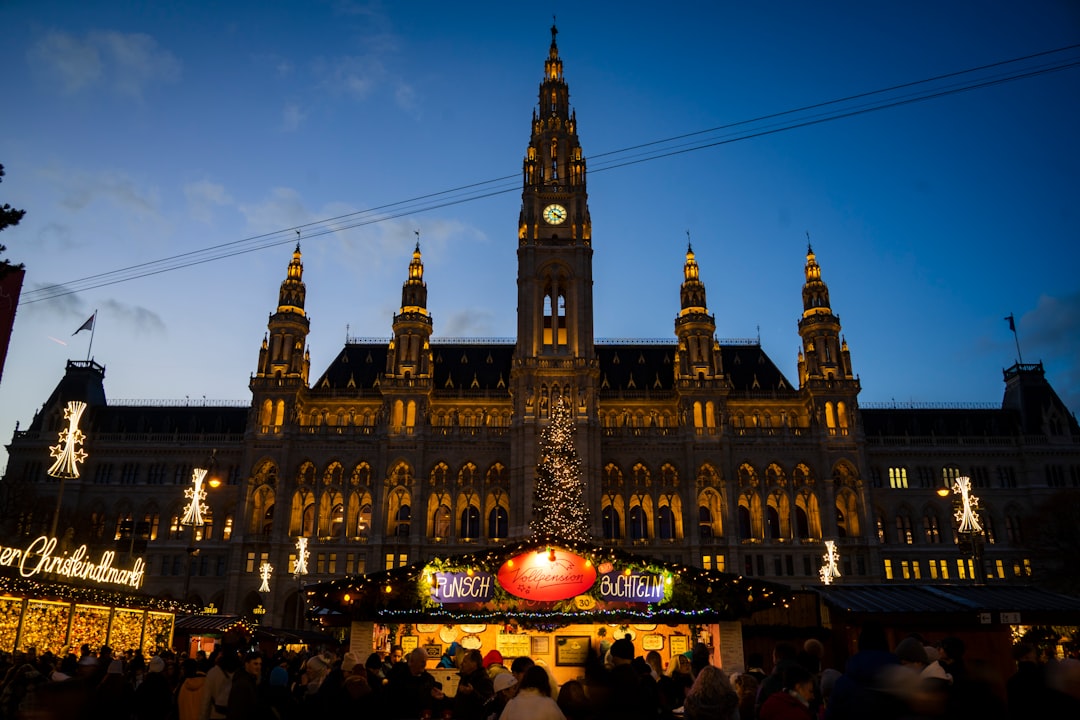
If you visit Germany during the winter season (late November through December), you absolutely must experience a German Christmas market (Weihnachtsmarkt). These aren’t commercialized tourist traps designed to extract money from visitors—though plenty exist. Real Weihnachtsmärkte are genuinely beloved by Germans as a fundamental part of their year, and they’ve been part of German culture for centuries.
The experience is specific: twinkling lights in the darkness, the smell of Glühwein (mulled wine), wood smoke from roasting nuts and chestnuts, wooden stalls selling handmade crafts, accordion music, and crowds of people bundled up and genuinely happy. It’s the closest thing to a secular Christmas magic that you’ll find anywhere.
The Deep History
Christmas markets in Germany date back to the 14th century, originally as markets where people bought goods needed for winter—food, firewood, fabric, etc. Over centuries, they evolved into the winter tradition they are today, but they’ve never entirely lost the sense of gathering before winter truly sets in.
This history means German Christmas markets aren’t invented traditions. They’re genuine continuity stretching back 600+ years. For Germans, visiting a Weihnachtsmarkt isn’t novelty—it’s participation in something their families have done for generations.
During the pandemic, when Christmas markets were cancelled, Germans grieved. This wasn’t an Instagram-able luxury. It was a genuinely beloved tradition being taken away.
That emotional weight tells you something: these markets are important in German culture.
The Staple: Glühwein and the Mug System
The heart of any Weihnachtsmarkt experience is Glühwein—mulled wine heated with spices. You’ll see it being served everywhere, in large mugs (usually ceramic, often decorated).
The Glühwein itself comes in varieties:
- Red wine Glühwein is the classic—red wine warmed with cinnamon, cloves, star anise, and other spices
- White wine Glühwein is lighter, usually made with white wine and different spice blends
- Feuerzangenbowle is a dramatic version where a loaf of sugar soaked in rum is set on fire over a bowl of mulled wine—the burning sugar drips into the wine below
The mugs are important. When you order Glühwein, you pay for the drink plus a deposit on the mug (usually €2-3 extra). You can return the mug at the end to get the deposit back, or keep it as a souvenir. Many Germans collect these mugs from different markets year after year.
Drinking Glühwein while walking through a Christmas market in December, surrounded by lights and crowds, is genuinely one of life’s great small pleasures. The warm drink in the cold air, the spiced flavor that’s comforting and slightly sweet, the whole sensory experience—it’s specifically designed by centuries of tradition to feel good.
There’s usually also Feuerzangenbowle (fire punch), which is the theatrical mulled wine version that people gather around to watch burn.
If you don’t drink alcohol, most markets have Punsch (punch)—hot, spiced, non-alcoholic versions, often with fruit.
The Foods Worth Seeking
Lebkuchen (gingerbread) is everywhere. These are elaborately decorated cookies, sometimes enormous, sometimes heart-shaped with messages written in icing (“Ich liebe dich”—I love you). They’re spiced, dense, and sweet. The best ones are genuinely delicious rather than tooth-achingly sweet.
Stollen is a Christmas bread filled with dried fruit, nuts, and sometimes marzipan. It’s particularly associated with Dresden and Saxony, though you’ll find it at most markets. It’s dense, fruit-heavy, and meant to be sliced and eaten over time, not all at once.
Nussbraten and Maronen are roasted nuts, usually served warm and salted. The aroma of roasting nuts is actually part of the Christmas market smell.
Schmalzgebäck are fried pastries—usually sweet, sometimes with powdered sugar. They’re basically funnel cakes or fried dough, and they’re delicious.
Roasted corn (Mais) and roasted potatoes are also common, less touristy options that are genuinely good.
Käsespätzle (cheese noodles) and Kartoffelpuffer (potato pancakes) are warm, savory options if you want something more substantial than sweets.
The Shopping and What to Buy
Christmas markets sell crafts, decorations, and gifts—mostly handmade or artisanal rather than mass-produced.
Räuchermännchen (smoking men) are small wooden figures that hold incense—when lit, they “smoke” from their mouths. They’re very specifically German and come in endless varieties (soldiers, miners, musicians, etc.). They’re kitsch but genuinely charming, and they’re specifically Christmas market items.
Christbaumkugeln (Christmas ornaments) are beautiful, often handpainted glass or ceramic. German ornaments are genuinely pretty.
Nutcrackers are traditional German crafts—detailed wooden soldiers or characters that crack nuts. The famous Nutcracker Ballet was inspired by German nutcracker tradition.
Handmade candles, soaps, and herbal goods are common and usually decent quality.
Toys for children—wooden toys, painted dolls, handmade items that are generally nicer than mass-produced alternatives.
Jewelry, scarves, and clothing from local artisans.
The key is that most items are actually made by the person selling them, or at least small-scale producers. This isn’t a chain store—it’s artisans and craftspeople.
The Major Markets Worth Visiting
Nuremberg Christkindlesmarkt is massive and famous—the largest in Germany, with 180+ stalls. It’s been running since 1628. It’s touristy and crowded, but the scale and history are worth experiencing. The opening ceremony includes a re-enactment of scenes from the Christchild nativity.
Dresden’s Striezelmarkt is older than Nuremberg (started 1434) and has a particular charm. It’s less overwhelming than Nuremberg while still being substantial. The name comes from Stollen bread, which originated in this region.
Cologne’s markets are seven different markets across the city, each with different themes. The market in front of the Cathedral is the most famous, but locals prefer some of the others for being less crowded.
Stuttgart’s Wilhelma-Weihnacht is known for being family-friendly and charming without being overly touristy.
Rothenburg ob der Tauber’s market is small but picturesque—the entire medieval town becomes a Christmas market.
Bad Wörishofen’s market is known for being less touristy and more genuinely local.
The Smaller Markets That Locals Prefer
Here’s the secret: the huge famous markets are worth experiencing for the scale and history, but many Germans prefer smaller, local markets.
Every German town has a Weihnachtsmarkt. The ones that aren’t famous are often more relaxed, less crowded, and reflect the specific character of the town. If you stay in a mid-sized town or city, the local market is often genuinely pleasant without being overwhelming.
The best strategy is often to visit one large, famous market for the experience and spectacle, then spend more time at smaller local markets where you can actually move around and chat with vendors.
The Advent Tradition and Timing
The Christmas season in Germany doesn’t start on December 1st—it starts on the first Sunday of Advent (usually late November). This four-week period before Christmas is marked by Advent calendars, candles, and the opening of Christmas markets.
Advent calendars (Adventskalender) are traditional and commercial versions exist everywhere. Germans might make them for family members, or give traditional chocolate versions.
Advent wreaths with four candles (one lit each Sunday before Christmas) are common in homes.
This extended season means Christmas markets run for about six weeks, and they’re an ongoing part of the season rather than a brief event. This isn’t a Black Friday-style shopping rush—it’s an extended, traditional season.
How to Pace Yourself
Christmas markets can become overwhelming. You’ll want multiple visits to fully experience them.
First visit: Go once to get the feel, try Glühwein, roast nuts, eat some Lebkuchen, look at the crafts. Don’t buy a lot on the first visit.
Subsequent visits: Come back for specific stalls you liked, deeper exploration, and more relaxed wandering.
Time your visits: Weekday afternoons are less crowded than weekend evenings. Sunday mornings can be pleasant.
Dress warmly: It’s December. You’ll be standing outside in cold temperatures for hours. Proper winter clothing is essential.
Budget for both food and crafts: Plan to spend money on drinks, food, and probably a few craft items. It’s not cheap—a evening at a Christmas market can easily cost €30-50 per person.
The Music and Atmosphere
Accordion players are everywhere. Choirs sing Christmas songs. The whole thing is deliberately nostalgic and atmospheric.
This isn’t background music—it’s part of the experience. The specific sound of accordion Christmas music, the smell of roasting nuts and spiced wine, the lights, the crowd—together these create something genuinely magical.
Don’t resist it. Let yourself enjoy the nostalgia and atmosphere.
Special Traditions
Punschrausch is a tradition where people go from stall to stall trying different Punsch varieties. It’s intentionally a bit silly and convivial.
Christkindle shopping refers to buying gifts at the market—many Germans actually do their Christmas shopping at Weihnachtsmärkte.
Market festivals are sometimes organized within larger markets—specifically themed evenings, food festivals, or events that draw crowds.
The Reality of Tourism
The major markets are genuinely touristy. You’ll see selfies. You’ll see people who are there for the Instagram moment rather than the experience. This is fine and inevitable.
But it doesn’t negate the genuineness of the tradition. Germans still attend these markets because they love them, even when they’re crowded with tourists. The tourism overlay exists on top of a real tradition, not instead of it.
Winter Comfort Culture
Christmas markets are part of a broader German winter tradition called Gemütlichkeit (rough translation: cozy comfort). This is deliberately creating warmth, comfort, and closeness against the cold outside.
The entire season is about this—hot drinks, warm foods, being inside with loved ones, or gathered outside around fires and lights. Christmas markets are one expression of this philosophy.
Photography Tips
Christmas markets are genuinely beautiful. If you’re into photography:
The Bottom Line
Christmas markets are worth planning a Germany trip around if you can. They’re genuinely part of German culture in a way that’s both accessible to tourists and authentically German.
The experience of standing in a winter market, drinking hot spiced wine, eating Lebkuchen, watching lights twinkle against the dark sky, and listening to accordion music is something genuinely special.
It’s one of those travel experiences that’s popular for a reason—because it actually is wonderful.
Go early in the season if you can (late November is less crowded than December). Visit at least one major market and at least one small local market. Embrace the warmth and coziness. Buy something handmade. Drink the Glühwein. Enjoy the atmosphere.
You’ll understand why Germans look forward to this season all year.




Leave a Reply