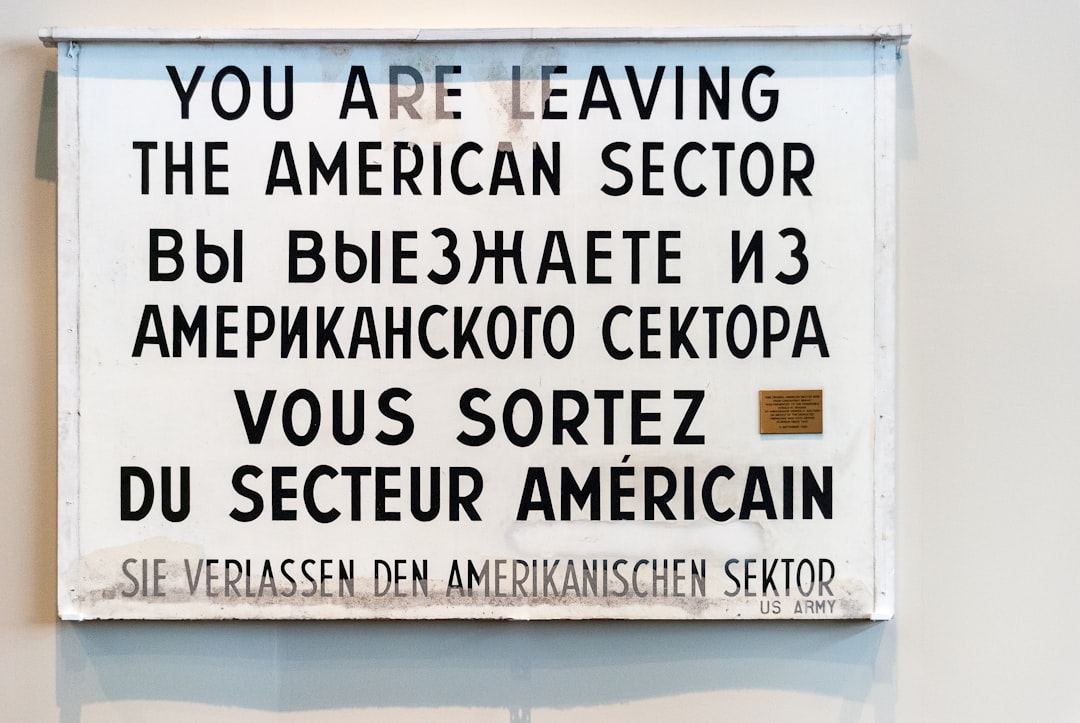
The Cold War lasted over four decades, from roughly 1947 to 1991, and during that time it shaped the physical landscape of Europe as profoundly as any medieval fortress or Roman aqueduct. Bunkers were buried beneath city centers, walls divided communities, surveillance networks infiltrated daily life, and the ever-present threat of nuclear annihilation drove nations to build underground shelters capable of housing entire governments. Today, many of these Cold War relics have been preserved as museums, memorials, and monuments — powerful reminders of a divided continent that existed within living memory.
Berlin: Ground Zero of the Cold War
Berlin is the essential Cold War destination. Beyond the Wall Trail and East Side Gallery, the city offers layers of Cold War history. The Stasi Museum, housed in the former headquarters of East Germany’s Ministry of State Security at Normannenstrasse, preserves Erich Mielke’s office exactly as it was — complete with his direct telephone line to Moscow and the hidden microphone systems used to monitor even fellow officers. The Berlin-Hohenschönhausen Memorial, a former Stasi remand prison, offers guided tours led by former inmates who describe their experiences of interrogation and psychological torture with devastating matter-of-factness.
Tempelhof Airport, one of the world’s largest buildings by floor area, was the endpoint of the Berlin Airlift — the extraordinary operation from June 1948 to May 1949 during which Western Allies flew over 2.3 million tons of supplies into West Berlin to circumvent the Soviet blockade. At its peak, planes were landing every 30 seconds. The airport closed to commercial traffic in 2008 and is now a vast public park, but the terminal building, with its curved colonnaded facade designed by Nazi architect Ernst Sagebiel, stands as a monument to one of the Cold War’s most dramatic early episodes.
Soviet Sculpture Parks
When communist regimes fell across Central and Eastern Europe, the monumental statues of Lenin, Marx, and various Soviet heroes that had dominated public spaces were torn down. Rather than destroying them, several countries collected them in outdoor sculpture parks that serve as both art installations and historical documents. Budapest’s Memento Park, on the city’s outskirts, displays over 40 statues including a towering pair of bronze boots — all that remains of a massive Stalin statue pulled down during the 1956 Hungarian Revolution. Lithuania’s Grūtas Park, sometimes irreverently called “Stalin World,” set its collection of Soviet statues in a forest clearing surrounded by watchtowers and barbed wire, recreating the atmosphere of the Gulag camps that the regime’s ideology produced.
Nuclear Bunkers and Secret Installations
Across Europe, governments prepared for nuclear war by constructing elaborate underground facilities. In Prague, Bunkr Parukářka is a former nuclear fallout shelter built into a hill in the Žižkov district, now occasionally open for tours that reveal its cramped corridors, ventilation systems, and decontamination chambers. In the English countryside, the Kelvedon Hatch Secret Nuclear Bunker in Essex — somewhat undermined by the brown tourist signs announcing its location — was designed to shelter up to 600 military and civilian personnel during a nuclear attack. In Albania, the Bunk’Art museums in Tirana occupy enormous bunkers built by the paranoid dictator Enver Hoxha, who constructed over 170,000 concrete bunkers across Albania during the Cold War — roughly one for every eleven citizens.
The Iron Curtain Trail
The European Green Belt follows the line of the former Iron Curtain from the Barents Sea to the Black Sea — over 12,500 kilometers. Because the border zone was heavily restricted for decades, the land along the former divide became an unintentional nature reserve, and it now hosts an extraordinary corridor of biodiversity. The EuroVelo 13, or Iron Curtain Trail, follows much of this route as a cycling path, passing through 20 countries and countless border museums, watchtower remnants, and memorial sites. In Germany, the former inner-German border between East and West is preserved at several points, including the Border Museum at Mödlareuth — a tiny village that was literally divided by a concrete wall, earning it the nickname “Little Berlin.”
Spy Museums and Checkpoint Charlie
For those drawn to the espionage dimension of the Cold War, the German Spy Museum in Berlin’s Potsdamer Platz provides an interactive exploration of intelligence operations on both sides. Visitors can try to navigate a laser-beam security corridor, learn about cipher machines, and examine gadgets used by real agents. The KGB Museum in Riga, Latvia, occupies the actual former KGB headquarters — a grim corner building where the basement interrogation cells and execution chamber have been preserved. In Tallinn, the Hotel Viru’s top floor housed a KGB listening station that monitored foreign guests; it is now a museum accessible by guided tour. These sites bring the Cold War’s shadowy intelligence war into sharp focus.
The Cold War ended over three decades ago, but its physical traces remain abundant across Europe. Visiting them is not merely an exercise in nostalgia or curiosity — it is a necessary act of historical memory, a reminder that the peace and openness of today’s Europe is not a natural state but an achievement, hard-won and worth protecting.




Leave a Reply