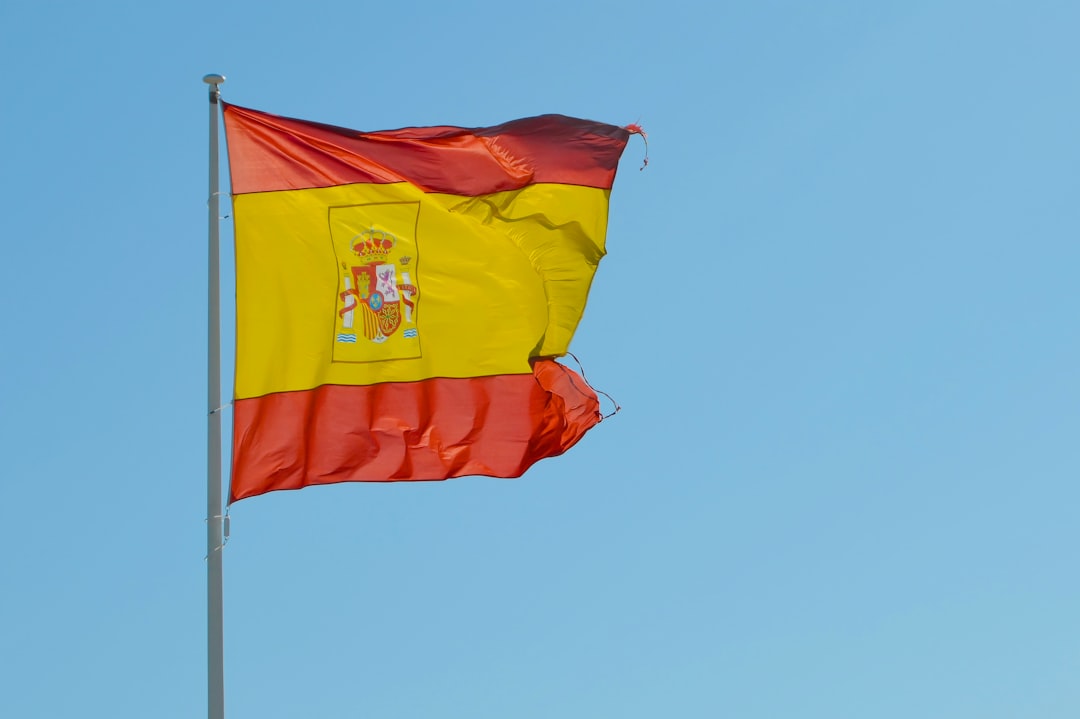
Imagine being Spanish in 1500. Ten years ago, your kingdom’s borders were consolidating, your military was strong, and then—suddenly—it became clear that your sailors had found an entirely new world full of gold and silver and land and indigenous people to exploit. What had been a regional European power was about to become something the world had never seen: a truly global empire where the sun literally never set.
Spain didn’t set out to build an empire that spanned continents and centuries. It sort of stumbled into it. But once it had that empire—once the gold started flowing from Mexico and Peru—Spain used it to build something remarkable and terrible: a global superpower that shaped the world we live in today.
1492: The Year Everything Changed
When Columbus sailed in 1492, he wasn’t really looking for the Americas. He was trying to find a faster route to Asia, to the spice markets and trade networks that already existed. The “discovery” was, from a European perspective, accidental. From the perspective of the millions of people already living in the Western Hemisphere, it was an invasion that would be catastrophic.
Columbus worked for Spanish monarchs Ferdinand and Isabella, who had just completed the Reconquista and unified Spain. They were wealthy, powerful, but eager for more—more territory, more resources, more influence. When Columbus came back with reports of islands, people, and potential wealth, they were very interested.
The thing that made Spanish colonization different from earlier European exploration was not that they found land (others had before; Norse settlers had been to North America centuries earlier). It was that they had the military technology, the political organization, and the ruthlessness to conquer and hold vast territories. They had cannons, steel weapons, horses, and a willingness to wage war. And crucially, the indigenous populations had no immunity to European diseases. Smallpox would kill millions.
Spain sent an expeditionary force to Hispaniola (modern Haiti and Dominican Republic) and began establishing colonies. They enslaved the local population and worked them to death in gold mines. Within decades, the indigenous population was nearly extinct. Spain then brought in African slaves to replace them—and that choice echoed for centuries, reshaping the Americas racially and socially.
The Conquest of Mexico and Peru: Unlikely Victories
The Spanish conquest of Mexico (1519-1521) and Peru (1532-1572) are some of history’s strangest stories. Small forces of Spanish soldiers—never more than a few hundred—defeated massive empires with millions of people. How?
The Aztec Empire under Montezuma II was one of the world’s great civilizations: sophisticated, wealthy, with engineering marvels and complex bureaucracies. When Hernán Cortés arrived with about 600 men, Montezuma should have easily repelled them. Instead, Montezuma hesitated—possibly because he thought Cortés might be a god, possibly because he was politically cautious, possibly because he misunderstood the threat. By the time Montezuma realized what was happening, Cortés had already allied with indigenous groups that resented Aztec rule.
Cortés also had luck. Disease started decimating the Aztec population even before the final siege of Tenochtitlan. When Spaniards finally took the capital, they were fighting a people already weakened by smallpox. The conquest was brutal, the siege was devastating, and hundreds of thousands of Aztecs died—most from disease, some from warfare.
The conquest of Peru followed a similar pattern. Francisco Pizarro, with even fewer men, defeated the Inca Empire. The Incas were already weakened by civil war and disease. Pizarro captured and then executed the Inca emperor, broke the religious and political power structure, and took control.
These weren’t victories of superior tactics or genius. They were victories of disease, timing, indigenous political divisions, and willingness to be absolutely ruthless. Spain got lucky, and then Spain consolidated its luck into an empire.
The Flow of Silver: How Spain Got Rich (and Unequal)
What made the Spanish Empire economically powerful was silver. Huge quantities of silver were discovered in Mexico (especially Potosí) and Peru. For a century, Spanish colonizers sent enormous amounts of silver back to Spain. This wealth funded Spanish military power, Spanish art, Spanish architecture—the Baroque explosion in Spanish culture in the 17th century was built on American silver.
The silver also destabilized the global economy. Suddenly, there was a lot more silver in circulation. It caused inflation. The silver flowed not just to Spain but throughout Europe as Spain spent it and other nations traded with Spain. This influx of bullion fundamentally altered European economics in the 16th and 17th centuries.
But here’s what’s crucial to understand: the Spanish themselves didn’t get sustainably rich. The silver enriched the Spanish crown and Spanish nobles and the Church, but it didn’t necessarily create a productive Spanish economy. Spain became wealthy from exploiting colonies, but it didn’t develop the kind of industrial and commercial infrastructure that would keep it powerful long-term. In a sense, the empire’s wealth became a problem: Spain had so much money that it didn’t need to innovate, didn’t need to build industry. It could just spend silver.
Meanwhile, other European nations—England, France, the Dutch—were building actual economic systems, manufacturing, trade networks. Those systems turned out to be more durable than hoarding stolen silver. By the 17th century, Spain’s star was already dimming.
Spain’s Global Reach: An Empire of Territories
At its height, the Spanish Empire controlled territory in the Americas (from what is now the southwestern United States through Central America and the Caribbean, and down into South America), colonies in Africa, the Philippines, parts of Italy, and the Netherlands. It was genuinely global—the first empire where you could genuinely claim the sun never set on it (that phrase would later be applied to the British Empire, but Spain said it first).
The Spanish had created a global infrastructure: trade routes, colonial administration, missionaries. The Spanish language spread across the Americas. Spanish culture, Spanish law, Spanish Catholicism all became the dominant systems in vast territories. That legacy is why most of Latin America speaks Spanish today, why Catholicism is the dominant religion, why Spanish legal and cultural traditions persist.
None of this was inevitable. It was the result of specific choices: to conquer, to exploit, to establish permanent colonial control rather than just trade. Those choices had enormous consequences that lasted centuries.
The Armada and the Beginning of Decline
The Spanish Armada of 1588 is often presented as the moment Spanish power peaked and began declining. King Philip II of Spain sent a massive fleet to invade England, overthrow the Protestant queen Elizabeth I, and restore Catholicism. It was the most ambitious naval operation of the age.
The Armada failed. English ships and English tactics—and weather—defeated it. The Spanish lost ships, lost men, lost prestige. For the first time, the supposedly invincible Spanish navy had been defeated.
The Armada didn’t instantly destroy Spanish power, but it was symbolic of problems that were already building: Spanish military spending was enormous and unsustainable. Other nations were catching up militarily. And Spain’s economy, though flush with silver, wasn’t generating the kind of innovation and growth that sustained military power long-term.
Over the next century, Spain lost territories, lost wars, lost relevance. By the 18th century, Spain was a second-rate power. By the 19th century, Spain was barely a power at all. The final collapse came in 1898 with the Spanish-American War, when Spain lost the last of its colonies (Cuba, the Philippines, Puerto Rico, Guam) to a rising United States.
What You Can See: The Legacy of Empire
Spain’s imperial legacy is visible throughout Spain itself, mostly in art and architecture.
The Archive of the Indies in Seville is essential. This is the archive where records of the Spanish Empire are kept—documents about conquests, explorations, colonial administration, trade. Walking through, you see the bureaucratic machinery of empire. There are Columbus’s documents, records of expeditions, accounts of indigenous peoples. It’s a physical reminder of how empires are made: through paperwork and administration and logistics, not just through dramatic military victories.
Seville’s Cathedral contains the tomb of Columbus. Columbus himself spent time in Seville organizing his expeditions. The cathedral shows the wealth that colonial empire brought to Spain—it’s massive, ornate, decorated with the best of 15th and 16th-century Spanish architecture. This is what Columbus money built.
The Alcázar of Seville is another palace that embodies Spanish wealth and power from the imperial era. It’s a stunning building, mixing Islamic (from Al-Andalus) and Christian and Renaissance elements. It shows Seville as the center of an empire.
Madrid’s museums—especially the Museo del Prado and the Museo de América—have artifacts, art, and documentation about the empire. Paintings by Velázquez depicting colonial subjects, artifacts from the Americas, records of exploration.
The Alhambra and Granada itself have connections to Columbus. Isabella and Ferdinand, who sponsored Columbus, are buried in the Royal Chapel in Granada. You can see their tomb and understand them not just as Spanish monarchs but as rulers who made the decision to sponsor an expedition that would reshape the world.
The Complicated Legacy
Spain’s empire was built on conquest, exploitation, and the deaths of millions of indigenous people. That’s uncomfortable to confront, but it’s true. The Spanish colonized the Americas and organized society in ways that extracted wealth and concentrated power. They brought disease. They enslaved people. They destroyed civilizations.
At the same time, Spain created a global Spanish-speaking world. Spanish language, Spanish culture, Spanish law became the foundation of vast regions. Some of this was destructive. Some of it created societies, institutions, and cultures that endure and that their inhabitants value.
The point isn’t to excuse Spanish colonialism or to celebrate it. The point is to understand it: Spain, almost by accident, became the first truly global empire. That empire reshaped the world. The wealth from that empire created Spain’s golden age in art and architecture. And the eventual loss of that empire meant Spain became a lesser power, which has shaped Spanish history ever since.
When you visit the sites of Spanish imperial legacy, you’re standing in the remnants of one of history’s great transformations. It’s worth understanding not with nostalgia, not with condemnation, but with clear eyes: this is what human power-seeking looks like when one group has military advantage over another. This is what empire means. And this is what lasts long after the empire itself is gone.




Leave a Reply