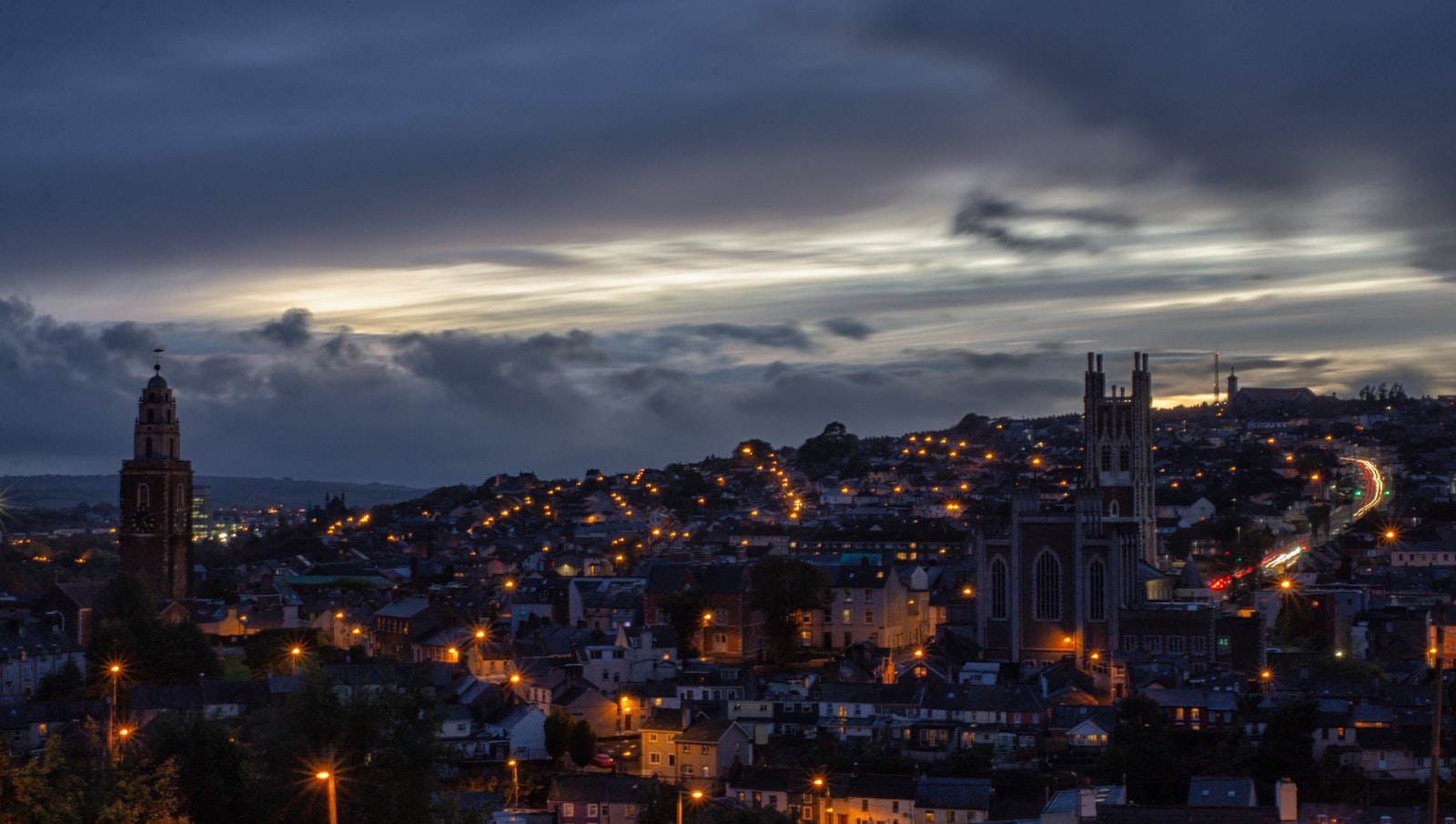
Introduction: The Real Capital
Cork is Ireland’s second-largest city (130,000 people) and southernmost major urban center. Unlike Dublin’s grandeur, Cork is intimate, walkable, and genuinely charming. The city has earned the nickname “Ireland’s Food Capital,” with exceptional restaurants, markets, and food culture that rival much larger European cities.
Corkians (people from Cork) are notoriously proud and frequently describe Cork as “the real capital of Ireland”—a friendly rivalry with Dublin that’s part of the city’s charm. For Americans, Cork offers authentic Irish city life without Dublin’s scale, better food culture, and convenient access to stunning southwest landscapes.
Cork City Center
Geography & Atmosphere
Cork city sits on an island in the River Lee, creating a unique geography. South Main Street and Grand Parade run parallel to the river, with residential areas spreading north and south. The city center is compact and easily walked in a few hours.
Cork’s character is distinctly bohemian and artistic. Murals cover buildings. Independent shops outnumber chains. The atmosphere is relaxed compared to Dublin’s intensity. The student population (University of Cork) keeps things youthful.
Essential Areas
The English Market: Cork’s covered market dating to 1788 is a culinary wonderland. The market sells produce, flowers, seafood, meat, prepared foods, and specialty items. For visitors, it’s a sensory experience—colorful displays, vendor calls, amazing smells.
The market fills with locals doing daily shopping, creating an authentic slice of Cork life. Many stalls sell prepared foods—fresh seafood, sandwiches, pastries—making it excellent for lunch or picnic supplies. Vendors are generally friendly to tourists and will offer recommendations.
The market’s most famous vendor is the Oyster Bar, selling fresh oysters and seafood. Plan 45-60 minutes browsing and eating. Visit morning (9-11 AM) when it’s busiest and most atmospheric.
St. Patrick’s Street: Cork’s main shopping street, a broad tree-lined avenue with department stores, boutiques, and cafés. It’s pleasant but less charming than markets and laneways.
The Laneways: South of St. Patrick’s are interconnected medieval streets (Tonge Lane, Academy Street, etc.) filled with independent shops, galleries, restaurants, and vintage boutiques. This is Cork’s most atmospheric area, worth 1-2 hours of wandering.
Cork Opera House: A major cultural venue hosting theater, opera, and concerts. The building itself is unremarkable, but performances are worth checking if timing aligns.
Shandon Church & Bells: A distinctive church with colorful tower visible throughout Cork. The Bells of Shandon are famous, and you can climb to ring them yourself (€5). The climb offers city views. Budget 30-45 minutes.
University of Cork (UCC): A beautiful campus featuring Victorian Gothic architecture surrounding a quadrangle. The college is part of Ireland’s “University of the South.” The campus is publicly accessible and pleasant for walking. The admissions building has a visitor center.
Food & Dining in Cork
Cork’s food scene is genuinely excellent. The city has more Michelin-starred restaurants per capita than most European cities.
Fine Dining:
- Orso (Italian, Michelin-starred, €50-70, reservation essential)
- Elbow Lane (gastropub, excellent, €16-28)
- Criterion (French-inspired, €18-30)
Casual & Excellent:
Markets & Casual:
Seafood:
Pubs (for traditional atmosphere):
Nightlife & Music
Cork has live music but less nightly sessions than Galway or Doolin. Pubs host occasional traditional music or contemporary music.
Notable Music Venues:
Bar Scene:
Accommodation in Cork
Budget (€50-80):
Mid-Range (€80-140):
Upscale (€140+):
Book ahead on weekends and in summer.
Around Cork County
Blarney Castle & “The Blarney Stone”
Blarney Castle is 10 km north of Cork city and one of Ireland’s most visited attractions. The castle dates to 1446 and is famous for “the Blarney Stone”—a stone built into the castle structure that supposedly grants “the gift of the gab” (eloquent speech) to those who kiss it.
Is it worth visiting?: Honest answer is mixed. The castle itself is legitimately historic and interesting. The grounds feature gardens and walking paths. The experience is fun if you approach it playfully rather than seriously.
The downside: Summer crowds are extreme (1000+ visitors daily). The queues to kiss the stone can exceed 2 hours. The experience becomes overly commercialized. The castle’s interior is interesting but not exceptional. Admission is €18.
Recommendation: Visit in early morning (arrive by 9 AM) to minimize crowds, or skip in favor of less-visited castles. If you do visit, spend time in the gardens and walking the grounds rather than rushing just to kiss the stone.
Cobh: Titanic Connection
Cobh (40 km south, 45 minutes by car) is a picturesque harbor town where the Titanic made its final stop before sinking. The town’s colorful townhouses cascade down to the harbor.
Cobh Titanic Experience (€10): Exhibition about the Titanic’s connection to Cobh. The ship took on passengers and mail here. Around 1,300 people boarded boats from Cobh heading to America. The museum tells this history. Budget 1 hour.
The Queenstown Story (€7): Museum about Irish emigration. Cobh was the departure point for 2.5 million Irish emigrants heading to America in the 1800s-1900s. This museum tells emigration stories, making it meaningful for Irish-American visitors.
Cobh itself is worth 2-3 hours for the harbor scenery, architecture, and pubs. It makes a good half-day trip from Cork city.
Kinsale: Food Town
Kinsale (25 km south, 30 minutes) is an upscale seaside village that’s become the food capital of the food capital. The harbor is picturesque with colorful boats and buildings. Restaurants here are notably good.
Restaurants:
Accommodation:
Kinsale is expensive but well worth visiting for a meal. The village is charming, walkable, and genuinely upscale without being pretentious.
West Cork: Less Touristy Treasures
West Cork (accessible via N71 from Kinsale) offers genuine adventure and less tourism:
Skibbereen: A working market town with local character. Food capital cafés here are cheaper than Kinsale. Worth stopping for coffee and local food.
Schull: A picturesque harbor village on the coast. The beach is accessible, and the village retains genuine character despite tourism.
Bantry: A larger market town serving the surrounding area. Less picturesque but authentically Irish without tourism orientation.
Mizen Head: The southwesternmost tip of Ireland, accessible via scenic drive through Crookhaven. The landscape is dramatic, the village tiny, and the experience genuine. A visitor center (€10) explains the geography and marine life. This feels like the “edge” of Ireland.
Beara Peninsula: While not technically in Cork, the peninsula connects to Cork County and offers dramatic mountain scenery, coastal drives, and hiking. It’s less touristy than the Ring of Kerry.
Blarney & Cork Accent
“Blarney” as a word means smooth talk or flattery. The Blarney Stone legend holds that kissing it grants eloquence. More importantly, “blarney” describes the Cork accent and speaking style—warm, colorful, somewhat exaggerated, and entertaining. Corkians are stereotyped as talkative and friendly, and the stereotype rings true.
The Cork accent is distinctive and somewhat difficult for outsiders to understand initially. Listening to locals chat in pubs and markets is part of experiencing Cork culture.
Food Culture Deep Dive
Cork has earned “Food Capital” status through several factors:
Local Producers: West Cork produces quality cheeses, sea vegetables (seaweed!), salmon, and organic produce. These products feed Cork’s restaurants and markets.
Restaurant Culture: Cork has proportionally more good restaurants than similar-sized cities, with a culture of chef-owners rather than chain restaurants.
Food Community: The local food community is collaborative—restaurants, producers, and food writers interact and promote quality.
Market Tradition: The English Market has operated for 200+ years, creating food consciousness in the community.
Slow Food Movement: Cork was an early adopter of Slow Food principles emphasizing local, quality, traditional cuisine.
For food lovers, Cork is worth 2-3 days simply for eating. Dining here is serious business, not just refueling.
A Cork Itinerary
Half-Day (4 hours):
Full Day:
2-3 Days:
Longer (4+ days):
Practical Information
Transportation
Cork is compact and walkable for city exploration. A rental car is useful for visiting Blarney, Kinsale, and West Cork.
Public transportation includes buses and taxis. Buses connect Cork to other major cities (Dublin, Galway, Belfast) at reasonable prices.
Weather
Cork weather is milder than higher-altitude regions but wetter than the east coast. Rain is frequent. May-June and September are ideal (mild weather, reduced crowds).
Cost
Cork is moderately priced:
Best Times
May-June: Mild, wildflowers, fewer crowds
September-October: Mild, dramatic light, reduced tourists
July-August: Warmest but touristy and expensive
Tips for Cork
- Skip the queue at Blarney: Visit early morning or skip entirely, prioritizing less-visited castles.
Cork offers the best of Ireland—authentic city life, excellent food, genuine culture, and friendly locals—without Dublin’s scale or commercialization. For many visitors, Cork is more enjoyable than Dublin and serves as the ideal base for exploring southwest Ireland.




Leave a Reply