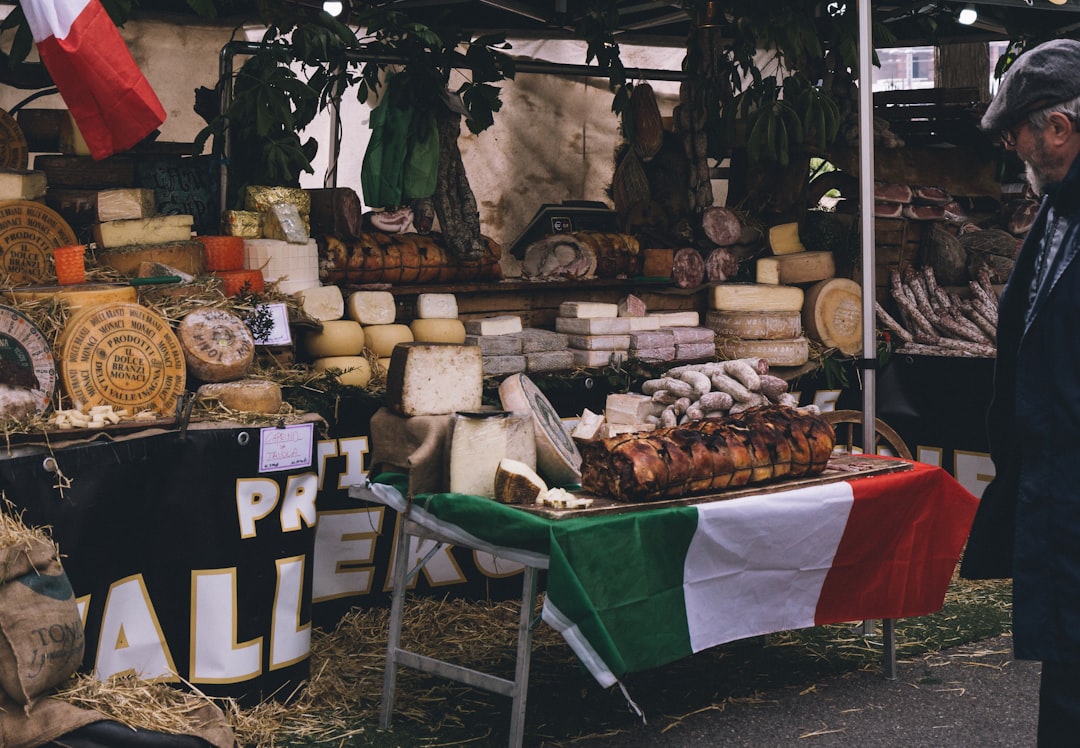
The Italians call it “La Grassa” — the Fat One. Bologna, capital of Emilia-Romagna, wears this nickname not as an insult but as a badge of honor. This is the city that gave the world ragu, tortellini, mortadella, and some of the most important foods in the Italian culinary canon. Every region in Italy claims food supremacy, but Bologna’s case is difficult to argue with. Walk its porticoed streets and you’ll pass more food shops, trattorias, and markets per block than anywhere else in the country.
Ragu alla Bolognese: Setting the Record Straight
Let’s begin with what Bologna is most famous for — and most misrepresented by. Spaghetti bolognese does not exist in Bologna. Never has. The official recipe for ragu alla bolognese, registered with the Bologna Chamber of Commerce in 1982, calls for tagliatelle — flat, egg-rich ribbons of pasta that cling to the meat sauce in a way that round spaghetti physically cannot. The ragu itself is a slow-cooked soffritto of onion, carrot, and celery with coarsely ground beef (and sometimes pork), a splash of white wine, a little tomato paste (not a tomato sauce), and milk or cream to add richness and smooth acidity. It simmers for hours, becoming a concentrated, velvety coating for the pasta rather than the chunky red sauce ladled over spaghetti in international “Italian” restaurants.
Where to eat it: Trattoria Anna Maria, near the Due Torri, serves a tagliatelle al ragu that is as close to the canonical version as you’ll find. The portions are enormous and the dining room is wallpapered with photos of celebrities who’ve eaten there. For a more modern take, Oltre in the university district makes a beautiful ragu with hand-pulled tagliatelle.
Tortellini in Brodo: The True Bolognese Icon
If ragu is Bologna’s most famous export, tortellini in brodo is its most beloved local dish. These tiny ring-shaped pasta, traditionally filled with a mixture of pork loin, prosciutto di Parma, mortadella, Parmigiano-Reggiano, egg, and nutmeg, are served floating in a clear, golden capon broth that takes hours to prepare. The combination is alchemical — the richness of the filling, the warmth of the broth, the silky texture of the hand-pinched pasta. Tortellini in brodo is the traditional Christmas dish but is served year-round. The size matters: proper Bolognese tortellini should be small enough to fit on a spoon, not the overstuffed pillows served elsewhere. Sfoglia Rina, a tiny shop run by sfogline (traditional pasta-makers), sells fresh tortellini by the kilo and serves them in brodo at a handful of tables.
Mortadella and the Salumi Trail
Mortadella Bologna IGP is the original and best version of what the world dismissively calls “bologna.” Made from finely ground pork studded with cubes of pork fat and sometimes pistachios, flavored with myrtle berries and spices, it’s a revelation — silky, perfumed, and nothing like the rubbery deli meat that stole its name. At Tamburini, Bologna’s legendary food shop operating since 1932, mortadella is sliced paper-thin and served in a panino with nothing else needed. The shop itself, with its hanging salami, wheels of Parmigiano, and displays of handmade pasta, is essentially a museum of Emilia-Romagna’s food culture that happens to sell lunch.
Parmigiano-Reggiano Factory Visits
Just outside Bologna, the plains of Emilia-Romagna are home to hundreds of Parmigiano-Reggiano dairies (caseifici) that welcome visitors. A morning tour of a caseificio is one of the great food experiences in Italy. You’ll arrive early (production begins at dawn) to watch cheesemakers separate curd in massive copper vats, mold the fresh wheels, and submerge them in brine baths. Then you’ll enter the aging rooms, where thousands of wheels sit on wooden shelves for twelve to thirty-six months, each one tapped with a small hammer by an expert who can tell its quality from the sound alone. The tasting at the end — chunks of cheese at different ages, from the mild, milky twelve-month to the crystalline, intensely savory thirty-six-month — is transformative.
Markets and Cooking Classes
Mercato di Mezzo, Bologna’s central food market, has been renovated into a vibrant food hall with stalls selling everything from fresh pasta to craft beer. It’s more upscale than a traditional market but far less touristy than similar ventures in other cities. For cooking, several schools offer half-day classes where you’ll learn to make pasta by hand — rolling sfoglia (the thin sheet of egg pasta) with a long wooden mattarello (rolling pin) is harder than it looks and immensely satisfying when you get it right. Le Cesarine and Bologna Welcome both offer excellent classes taught in English.
The Essential Bologna Food List
- Tagliatelle al ragu at a traditional trattoria
- Tortellini in brodo — in winter if possible
- A mortadella panino from Tamburini or Simoni
- Crescentina (fried bread) with salumi and squacquerone cheese
- Certosino, Bologna’s traditional spiced fruit cake, during the holidays
- A glass of Lambrusco — the local sparkling red that pairs perfectly with the region’s rich food
Bologna is not a city that tries to impress you with innovation or spectacle. It impresses you the old-fashioned way: with ingredients of extraordinary quality, recipes refined over centuries, and the unshakable conviction that eating well is not a luxury but a birthright. Come hungry. Stay as long as you can.




Leave a Reply