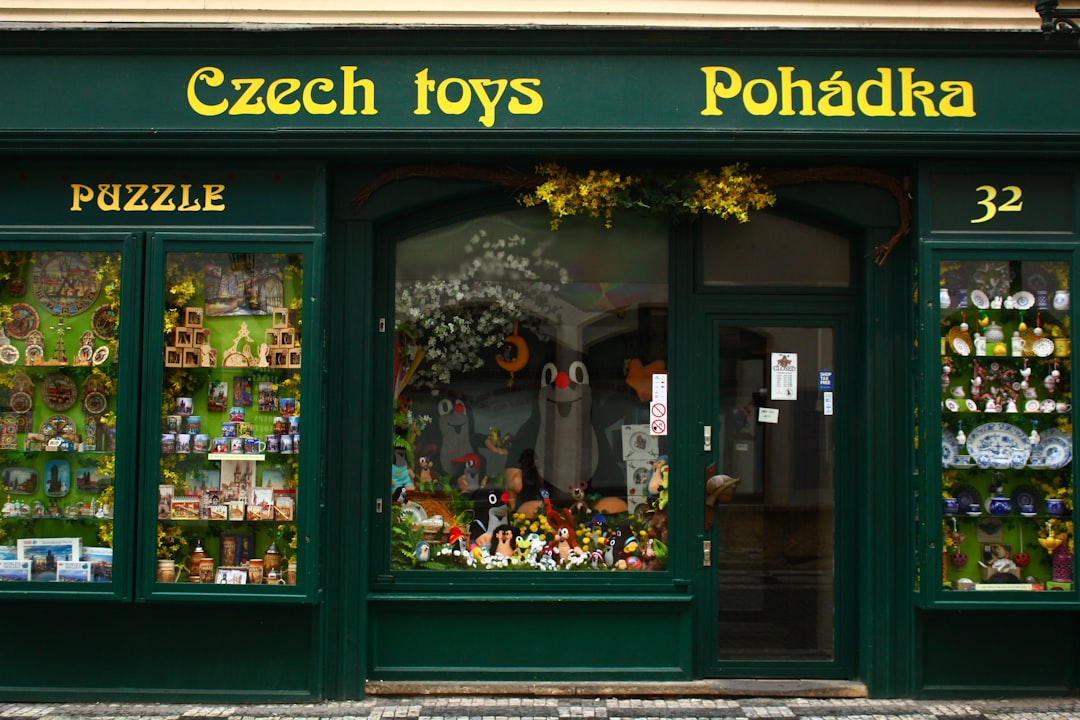
Czech toys and puzzles shop storefront display

Essential Czech Travel Phrases: Your Survival Guide to Getting By in the Czech Republic

Photo by Seval Torun on Unsplash

·

·

There’s something magical about trying to speak the local language, even if you only know a handful of phrases. In the Czech Republic, a country famous for its fairy-tale castles, beer culture, and warm hospitality, making an effort to speak Czech will open doors—literally and figuratively. While many Czechs speak English, especially in Prague, attempting their language shows respect and often results in warmer interactions and better experiences. This guide covers the essential phrases you’ll need to navigate daily situations during your Czech adventure.

Why Learn Czech Phrases?

Before diving into the phrases themselves, let’s talk about why this matters. The Czech language belongs to the West Slavic language family, and it’s known for being quite phonetic—if you learn the basic pronunciation rules, you can sound out most words correctly. Moreover, Czechs appreciate when visitors make an effort, even if they resort to English afterward. A simple “Ahoj” (hello) or “Děkuji” (thank you) can transform your interaction from transactional to genuinely human.

Czech does have some challenges, particularly with consonant clusters and the famous “ř” sound, but don’t let that intimidate you. This article focuses on practical, high-frequency phrases that any visitor can learn and use confidently.

Greetings and Basic Courtesy

Let’s start with the fundamentals. Czech has formal and informal registers, which is important to understand. Use the formal “Vy” (you) with strangers, shopkeepers, and service workers. Use the informal “ty” (you) only with friends, children, and people who invite you to do so.

Formal Greetings:

  • Dobrý den (DOH-bree den) – Good day/hello. This is the standard daytime greeting, appropriate for most situations.
  • Dobré ráno (DOH-bruh RAH-no) – Good morning. Use this before noon.
  • Dobrý večer (DOH-bree VEH-cher) – Good evening. Use this after sundown.
  • Ahoj (AH-hoy) – Hello/goodbye (informal, like “hi”). Used with friends.
  • Vítám vás (VEE-tam vas) – Welcome (formal). You’ll hear this in hotels and restaurants.

Goodbyes:

  • Na shledanou (nah SHHLEH-dah-no) – Goodbye (formal). This is the standard, polite way to say goodbye.
  • Zatím (ZAH-teem) – See you soon/bye for now (informal).
  • Nashledanou (nah-SHHLEH-dah-no) – Another formal goodbye variation.
  • Polite Expressions and Courtesies

    Politeness matters everywhere, and Czech is no exception. These phrases will help you navigate transactions smoothly.

    Essential Courtesies:

  • Prosím (PROH-seem) – Please. One of the most useful words you’ll learn.
  • Děkuji (DYEH-koo-yee) – Thank you (formal). Pronounced like “thank you” isn’t far off if you think “dyeh” for the first syllable.
  • Děkuji vám (DYEH-koo-yee vahm) – Thank you (very formal).
  • Díky (DEE-kee) – Thanks (informal, friendly).
  • Prosím (PROH-seem) – You’re welcome (when used in response to thanks; same as “please”).
  • Promiňte (PROH-mee-nyuh-teh) – Excuse me/sorry. Use this to get someone’s attention or apologize.
  • Lítostivě (LEE-tosh-tee-vuh) – Sorry (more emotional, apologetic).
  • Yes, No, and Asking for Help

    These simple words are absolutely crucial. Czech’s yes and no are straightforward, but context matters.

    Affirmative and Negative:

  • Ano (AH-no) – Yes.
  • Ne (neh) – No.
  • Okay/Dobře (DOH-bruh) – Okay/alright.
  • Nerozumím (neh-ROH-zoo-meem) – I don’t understand.
  • Rozumíte? (ROH-zoo-mee-teh) – Do you understand? (formal)
  • Mluvíte anglicky? (MLOO-vee-teh AHN-glits-kee) – Do you speak English? (This is your lifeline if Czech gets too complex!)
  • Asking for Help:

  • Pomůžete mi? (POH-moo-zheh-teh mee) – Can you help me? (formal)
  • Neví jste, kde…? (neh-vee-teh, kdeh) – Don’t you know where…? (formal way to ask for directions)
  • Potřebuji pomoc (POH-trzheh-boo-yee POH-mots) – I need help.
  • Ztrácím se (STRAH-tseem seh) – I’m lost.
  • Numbers 1–10 and Counting

    Whether you’re buying souvenirs, paying for beer, or checking the time, numbers are essential.

  • Jedna (YEH-dnah) – One
  • Dva (dvah) – Two
  • Tři (trzee) – Three
  • Čtyři (CHTEE-rzee) – Four
  • Pět (pyet) – Five
  • Šest (shest) – Six
  • Sedm (sed-um) – Seven
  • Osm (os-um) – Eight
  • Devět (DEH-vet) – Nine
  • Deset (DEH-set) – Ten
  • Quick tip: Czech prices are often quoted in “koruny” (crowns/CZK). When someone says “Sto korun, prosím” (one hundred crowns, please), knowing your numbers helps you know what you’re paying!

    Days of the Week

    Useful for making reservations, planning activities, and understanding schedules.

  • Pondělí (PON-dyeh-lee) – Monday
  • Úterý (OO-teh-ree) – Tuesday
  • Středa (STRZEH-dah) – Wednesday
  • Čtvrtek (CHTVRR-tek) – Thursday
  • Pátek (PAH-tek) – Friday
  • Sobota (SO-bo-tah) – Saturday
  • Neděle (NEH-dyeh-leh) – Sunday
  • Time-related phrases:

  • Kolik je hodin? (KO-lik yeh HO-dyin) – What time is it?
  • V kolik? (v KO-lik) – At what time?
  • Dnes (dnes) – Today
  • Zítra (ZEE-trah) – Tomorrow
  • Včera (VCHEH-rah) – Yesterday
  • Basic Questions

    These open-ended questions will help you navigate conversations and get information you need.

    Fundamental Questions:

  • Kolik to stojí? (KO-lik to STOY-ee) – How much does this cost? (Your budget’s best friend!)
  • Kde je…? (kdeh yeh) – Where is…?
  • Kde je záchod? (kdeh yeh ZAH-khot) – Where is the bathroom? (You’ll use this one!)
  • Máte…? (MAH-teh) – Do you have…?
  • Co to je? (tso to yeh) – What is this/that?
  • Kdy otevíráte? (kdee OT-eh-vee-rah-teh) – When do you open?
  • Kdy zavíráte? (kdee zah-VEE-rah-teh) – When do you close?
  • Jak dlouho? (yahk DLOO-ho) – How long?
  • Hotel and Accommodation Check-In

    Getting settled is crucial, so here are phrases specific to hotels and lodging.

    Hotel Phrases:

  • Mám rezervaci (mahm REH-zer-vat-see) – I have a reservation.
  • Máte volný pokoj? (MAH-teh VOL-nee POH-koy) – Do you have a vacant room?
  • Pokój na jednu noc (POH-koy nah YED-noo nots) – A room for one night.
  • Pokój pro dvě osoby (POH-koy pro DVEH OH-so-bee) – A room for two people.
  • Máte Wi-Fi? (MAH-teh WI-FI) – Do you have Wi-Fi? (The universal question!)
  • Jak se dostanu do…? (yahk seh DOS-tah-noo do) – How do I get to…?
  • Snídaně v kolik hodin? (SNEE-dah-nyeh v KO-lik HO-dyin) – What time is breakfast?
  • Buying Tickets and General Commerce

    Whether you’re buying a train ticket, museum entry, or a pastry, these phrases help.

    Shopping and Tickets:

  • Jeden lístek na… (YEH-den LEES-tek nah) – One ticket to…
  • Dva lístky prosím (dvah LEES-tee PROH-seem) – Two tickets, please.
  • Kolik stojí vstup? (KO-lik STOY-ee VSTOOP) – How much is admission?
  • Mám slevu pro studenty? (mahm SLEH-voo pro STU-den-tee) – Is there a student discount?
  • Bezkontaktní platba (BES-kon-tak-nee PLAT-bah) – Contactless payment (card payment).
  • Máte menu v češtině? (MAH-teh MEH-noo v CHESS-tyee-nyeh) – Do you have a menu in Czech?
  • The Formal vs. Informal Distinction

    This is important in Czech culture. Always start formal with strangers. Older Czechs, in particular, expect formal politeness. Here’s how it works:

    Formal (Vy): Used with strangers, elderly people, authority figures, and in professional settings.

  • Rozumíte? (ROH-zoo-mee-teh) – Do you understand? (formal)
  • Máte čas? (MAH-teh chahs) – Do you have time? (formal)
  • Informal (ty): Used with friends, family, children, and people who suggest it.

  • Rozumíš? (ROH-zoo-meesh) – Do you understand? (informal)
  • Máš čas? (mahsh chahs) – Do you have time? (informal)
  • The difference is subtle but matters culturally. Czechs won’t be offended if you use formal with everyone, but it’s nice to recognize the distinction.

    Pro Tips for Using These Phrases

    1. Pronounce clearly but don’t exaggerate. Czechs appreciate effort, not theatrical performances.
  • Smile. A smile transcends all languages and makes people more patient with your Czech attempts.
  • Combine phrases creatively. If you can say “Prosím, kde je záchod?” (Please, where is the bathroom?), you’ve created a complete, polite question.
  • Written Czech is harder than spoken Czech. If someone writes something down, don’t panic—focus on the spoken word.
  • Learn the intonation. Czech is a language of emphasis. “Kolik?” (HOW much?) with different stress can mean different things.
  • Don’t be afraid to ask for repetition. “Pomaleji, prosím” (slowly, please) is perfectly acceptable.
  • Final Thoughts

    The Czech language is deceptively charming. While it looks intimidating on paper with all those diacritical marks (háčeks and čárkas), it’s remarkably consistent and logical. By learning these essential phrases, you’ve equipped yourself not just with words, but with a passport to authentic Czech experiences.

    Czechs are famously reserved but warm once you break through that initial formality. Speaking even a little Czech will make your trip richer, your interactions more meaningful, and your memories more authentic. From ordering a Pilsner (the beer we’re talking about!) to navigating the winding streets of Prague’s Old Town Square, these phrases are your toolkit for adventure.

    Good luck, a hlavně se bavte (and most importantly, have fun)!

    Remember: Pronunciation in English is approximate. The best way to hear real Czech is through YouTube videos or language apps, but these guides will get you 90% of the way there.


    Free Newsletter!

    Join the Europetopia Newsletter for free tips on travel, history, and culture in Europe!

    We promise we’ll never spam! Take a look at our Privacy Policy for more info.


    Jonathan Avatar

    Written by

    Related Articles

    Comments

    Leave a Reply

    Your email address will not be published. Required fields are marked *

