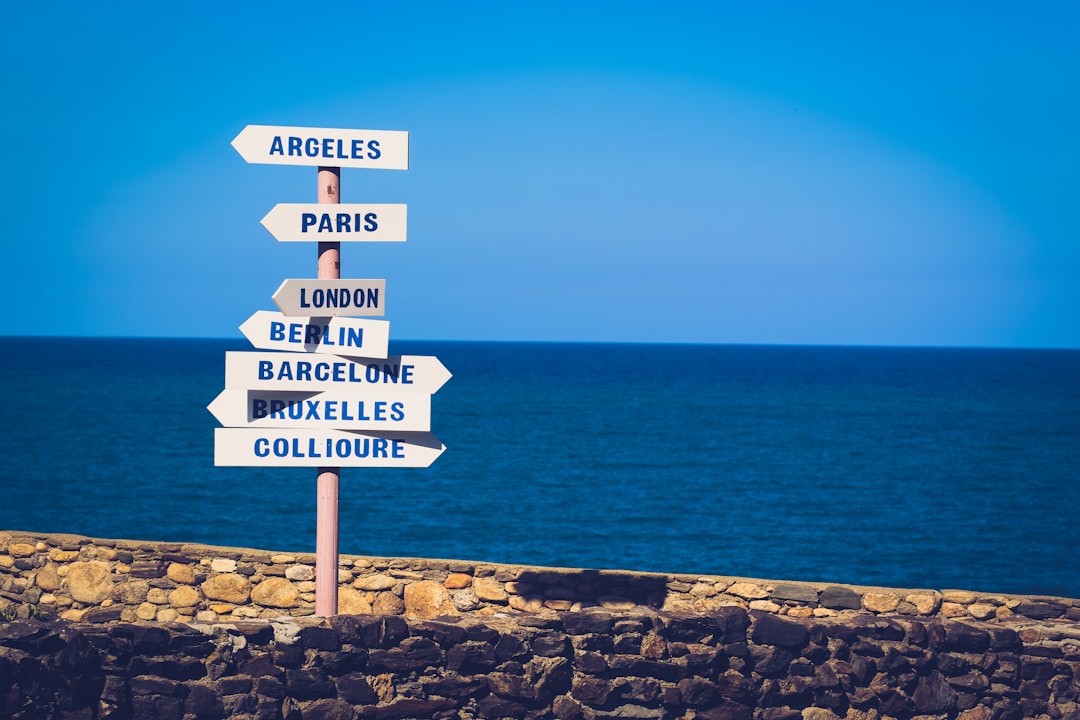
white and black wooden signage near body of water during daytime

Essential French Travel Phrases: Your Survival Guide to Getting By in France

Photo by Jametlene Reskp on Unsplash

·

·

If you’re planning a trip to France and your French vocabulary consists entirely of “oui” and “croissant,” don’t worry—you’re not alone. While many French people speak English, especially in Paris and other tourist areas, making an effort to speak French will earn you enormous goodwill and often much better treatment from locals. Plus, there’s something magical about successfully ordering a café au lait without gesturing wildly at the barista.

This guide covers the absolute essentials you’ll need to survive and thrive in France, from saying hello to checking into your hotel. The key to mastering travel French is not perfection—it’s genuine effort. French people appreciate when visitors try to speak their language, even if you stumble through it. So take a deep breath, embrace the accent, and let’s get started.

Greetings and Politeness: The Foundation of French Interaction

The French place enormous importance on politeness and proper greetings. Never jump straight into a transaction without at least acknowledging the person. A simple “Bonjour” goes remarkably far.

  • Bonjour (bun-ZHOOR) — Good morning/hello/good afternoon. Use this from morning until evening.
  • Bonsoir (bun-SWAHR) — Good evening. Use this after the sun starts setting (usually around 5-6 PM).
  • Bonne nuit (bun NWEE) — Good night. Only use when going to bed.
  • Salut (sah-LOO) — Hi/bye (informal, use with friends).
  • Au revoir (oh ruh-VWAHR) — Goodbye. The standard formal goodbye.
  • À bientôt (ah bee-en-TOH) — See you soon. A friendly goodbye.
  • S’il vous plaît (see voo PLEH) — Please (formal, used with strangers).
  • S’il te plaît (see tuh PLEH) — Please (informal, with friends).
  • Merci (mare-SEE) — Thank you.
  • Merci beaucoup (mare-SEE boh-KOO) — Thank you very much.
  • De rien (duh ree-en) — You’re welcome (literally “it’s nothing”).
  • Pardon (par-DOHN) — Excuse me/sorry. Use when you need to get past someone.
  • Désolé(e) (day-zoh-LAY) — I’m sorry. Use for more serious apologies.
  • Enchanté(e) (ohn-shahn-TAY) — Pleased to meet you. Add “e” sound if you’re female.
  • Ça va? (sah vah) — How are you? (informal)
  • Comment allez-vous? (kuh-mohn tah-lay-VOO) — How are you? (formal)
  • Ça va bien, merci (sah vah bee-en, mare-SEE) — I’m doing well, thank you.

Yes, No, and Basic Responses

  • Oui (wee) — Yes.
  • Non (nohn) — No.
  • Peut-être (puh-TEHR) — Maybe.
  • D’accord (dah-KOR) — Okay/agreed.
  • Oui, c’est ça (wee, seh sah) — Yes, that’s it/correct.
  • Je comprends (zhuh kohm-PROHN) — I understand.
  • Je ne comprends pas (zhuh nuh kohm-PROHN pah) — I don’t understand.
  • Asking for Help and Getting Around

    One of the most important phrases to master is asking for help politely. When you need assistance, always start with “Pardon, monsieur/madame” (par-DOHN muh-syuh/mah-DAM) or “Excusez-moi” (ex-KOO-zay-mwah).

  • Pouvez-vous m’aider? (poo-vay-VOO may-day) — Can you help me? (formal)
  • Parlez-vous anglais? (par-lay-VOO ahn-GLEH) — Do you speak English?
  • Je ne parle pas français (zhuh nuh parl pah frohn-SAY) — I don’t speak French.
  • Parlez plus lentement, s’il vous plaît (par-lay ply lohn-tuh-MOHN, see voo PLEH) — Please speak more slowly.
  • Où est… ? (oo EH) — Where is…?
  • Où est la gare? (oo EH lah gar) — Where is the train station?
  • Où est la toilette? (oo EH lah twah-LEHT) — Where is the bathroom?
  • Où est le musée? (oo EH luh moo-ZAY) — Where is the museum?
  • Combien ça coûte? (kohm-bee-en sah KOOT) — How much does this cost?
  • C’est trop cher (seh troh SHARE) — That’s too expensive.
  • Avez-vous une réduction? (ah-vay-VOO oon ray-DUK-see-ohn) — Do you have a discount?
  • Numbers: Essential for Everything

    Learning numbers is absolutely crucial for handling money, dates, and telling time.

    One through ten:

  • Un (uhn) — 1
  • Deux (duh) — 2
  • Trois (twah) — 3
  • Quatre (kaht) — 4
  • Cinq (sank) — 5
  • Six (sees) — 6
  • Sept (seht) — 7
  • Huit (weet) — 8
  • Neuf (nuhf) — 9
  • Dix (dees) — 10
  • Useful number phrases:

  • Zéro (zay-ROH) — 0
  • Onze (onz) — 11
  • Douze (dooz) — 12
  • Vingt (vahn) — 20
  • Trente (trahnт) — 30
  • Cinquante (sahn-KAHNT) — 50
  • Cent (sahn) — 100
  • Mille (meel) — 1,000
  • J’ai deux enfants (zhay duh ohn-FOHN) — I have two children
  • Ça coûte dix euros (sah KOOT dee-zuh-ROH) — That costs ten euros
  • Days of the Week and Time Phrases

  • Lundi (lun-DEE) — Monday
  • Mardi (mar-DEE) — Tuesday
  • Mercredi (mare-kruh-DEE) — Wednesday
  • Jeudi (zhuh-DEE) — Thursday
  • Vendredi (vohn-druh-DEE) — Friday
  • Samedi (sam-DEE) — Saturday
  • Dimanche (dee-MAHNSH) — Sunday
  • Aujourd’hui (oh-zhoor-D’WEE) — Today
  • Demain (duh-MEHN) — Tomorrow
  • Hier (ee-AIR) — Yesterday
  • Quelle heure est-il? (kel uhr EH-teel) — What time is it?
  • Il est trois heures (eel EH trwah-zuhr) — It’s 3 o’clock
  • Hotel Check-In and Accommodation

    When you arrive at your hotel, these phrases will be invaluable:

  • J’ai une réservation (zhay oon ray-zer-vah-SYOHN) — I have a reservation
  • Au nom de… (oh nohm duh) — Under the name of…
  • Quelle est la chambre? (kel EH lah SHAHM-bruh) — What is the room number?
  • Y a-t-il… ? (ee ah-teel) — Is there…?
  • Y a-t-il du wifi? (ee ah-teel doo WEE-FEE) — Is there wifi?
  • Où est l’ascenseur? (oo EH lah-suhn-SER) — Where is the elevator?
  • Le climatiseur ne fonctionne pas (luh klee-mah-tee-ZER nuh fonk-see-OHN pah) — The air conditioning doesn’t work
  • Pouvez-vous appeler un taxi? (poo-vay-VOO ah-play-ay uhn TAK-see) — Can you call a taxi for me?
  • À quelle heure est le petit déjeuner? (ah kel uhr EH luh puh-TEE day-zhuh-NAY) — What time is breakfast?
  • Basic Question Patterns

    Master these question structures and you can ask almost anything:

  • Où est…? (oo EH) — Where is…?
  • Combien…? (kohm-bee-en) — How much/many…?
  • Avez-vous…? (ah-vay-VOO) — Do you have…?
  • Parlez-vous…? (par-lay-VOO) — Do you speak…?
  • Quelle heure…? (kel uhr) — What time…?
  • Quand…? (kohn) — When…?
  • Pourquoi…? (poor-KWAH) — Why…?
  • Shopping and Purchasing Tickets

  • Combien ça coûte? (kohm-bee-en sah KOOT) — How much does it cost?
  • Je voudrais… (zhuh voo-DREH) — I would like…
  • Un ticket, s’il vous plaît (uhn tee-KAY, see voo PLEH) — One ticket, please
  • Deux tickets (duh tee-KAY) — Two tickets
  • Aller-retour (ah-lay ruh-TOUR) — Round trip
  • Simple (SAHM-pluh) — One way
  • Carte de crédit ou espèces? (kart duh CRAY-dee oo es-PEHS) — Credit card or cash?
  • Acceptez-vous les cartes de crédit? (ahk-sep-tay-VOO lay kart duh CRAY-dee) — Do you accept credit cards?
  • Je peux essayer? (zhuh puh eh-say-YAY) — Can I try it on?
  • Emergency Basics

  • Au secours! (oh seh-KOOR) — Help!
  • Appelez la police! (ah-play-ay lah puh-LEES) — Call the police!
  • J’ai besoin d’aide (zhay buh-ZWAHN dayd) — I need help
  • Je suis perdu(e) (zhuh swee pehr-DOO) — I’m lost
  • Où est l’hôpital? (oo EH loh-pee-TAL) — Where is the hospital?
  • Je suis malade (zhuh swee mah-LAD) — I’m sick
  • Pro Tips for Maximum Success

    1. Always start with a greeting: Never launch into what you want without first saying “Bonjour.” It’s considered rude.

    2. Use formal register with strangers: Use “vous” (formal you) instead of “tu” (informal you) with people you don’t know.

    3. A smile goes a long way: French people appreciate warmth and genuine effort. They’ll forgive your pronunciation if you’re friendly.

    4. Keep a phrase book or notebook: Write down common phrases you’ll need for your specific trip and practice them beforehand.

    5. Point if necessary: There’s no shame in pointing to something on a menu or in a store when words fail you.

    6. Learn to conjugate “to have” and “to be”: Understanding “je suis” (I am) and “j’ai” (I have) will help you construct many sentences independently.

    7. Practice pronunciation out loud: The French language has sounds that don’t exist in English. Practicing aloud will help your brain make sense of them.

    Final Thoughts

    Mastering these essential phrases gives you the confidence to navigate France with ease and respect. French people genuinely appreciate when visitors make an effort to speak their language, even imperfectly. You’ll find that locals are typically patient and helpful to those who are trying.

    Don’t stress about perfect pronunciation or grammar—communication is about connection, not perfection. Start with these fundamentals, practice a bit before your trip, and you’ll be amazed at how far a little French can take you. Bon voyage et bonne chance (bon vwah-YAZH ay bon SHAHNCE)—have a good trip and good luck!


    Free Newsletter!

    Join the Europetopia Newsletter for free tips on travel, history, and culture in Europe!

    We promise we’ll never spam! Take a look at our Privacy Policy for more info.


    Jonathan Avatar

    Written by

    Related Articles

    Comments

    Leave a Reply

    Your email address will not be published. Required fields are marked *

