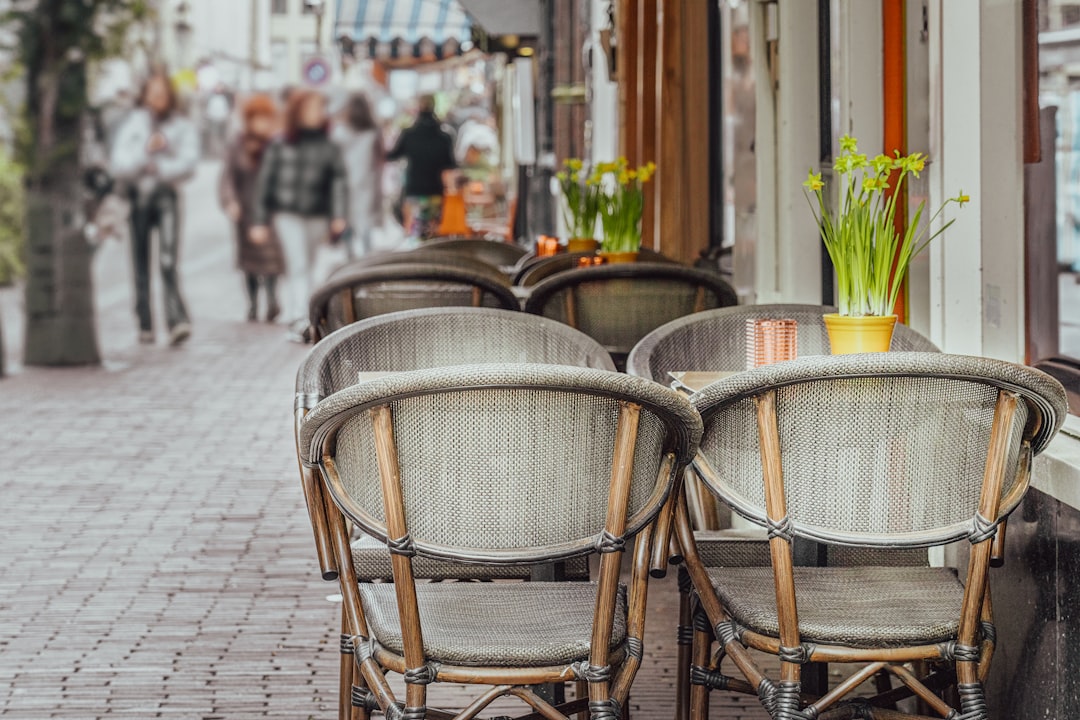
There is a moment, usually within the first day or two of an American’s first trip to Europe, when it happens. You walk into a restaurant, stand near the entrance waiting to be greeted, and nobody comes. Or you sit at a café table for ten minutes and no server appears. Or you ask a shop assistant for help and receive what feels like a curt, disinterested response. The American brain immediately files this under “rude.” But it is not rude. It is a fundamentally different set of cultural assumptions about what service means, and understanding those differences will transform your experience.
Why Your Server Is Not Smiling
In the United States, customer service is built on the principle that the customer should feel attended to at all times. Servers introduce themselves by name, check on you repeatedly, refill your water unprompted, and deliver the bill with practiced warmth. This model exists largely because American servers depend on tips for their income — typically 15-20% of the bill — creating a direct financial incentive for attentive, friendly service.
In most of Europe, servers are paid a living wage. Tips are appreciated but typically modest — rounding up or leaving 5-10% in countries where tipping exists at all. Without the financial pressure to perform friendliness, European service operates on a different frequency. Your French waiter is not being rude by not introducing himself and asking how your day is going. He is being professional. He will take your order efficiently, bring your food promptly, and leave you alone to enjoy it. He assumes you are an adult who will signal when you need something, rather than someone who requires constant monitoring.
The Pace of Dining
One of the biggest adjustments for Americans is the pace of restaurant service in Europe. In the US, efficiency is king: you are seated, served, and presented with the bill in under an hour. Many European cultures view this as rushing. In France, Italy, and Spain, a meal is an event, not a transaction. Your table is yours for the evening. No one will hurry you. And critically, the bill will not arrive until you ask for it.
This last point causes enormous confusion. Americans sit for twenty minutes after finishing their meal, growing increasingly frustrated that the server “forgot” about them, while the server is deliberately leaving them in peace. The European assumption is that bringing the check unbidden is rude — it implies you want the customer to leave. When you are ready, catch the server’s eye and ask: “L’addition, s’il vous plait” in France, “Il conto, per favore” in Italy, “Die Rechnung, bitte” in Germany, or simply make a writing-in-the-air gesture, which is universally understood.
Water, Refills, and Other Surprises
In the United States, water appears on the table automatically, bread baskets materialize unbidden, and soft drink refills are often free. In Europe, none of this is standard. Water must be ordered, and in many countries, you will be asked whether you want still or sparkling — both of which typically cost money. In France, you can request a carafe d’eau (a pitcher of tap water) for free, but you need to know to ask. In Italy and Germany, free tap water at a restaurant is uncommon, and asking for it may receive a puzzled response.
Free refills on beverages are essentially nonexistent in European restaurants and cafés. Your Coca-Cola costs 3 euros, and that is for one glass. Coffee refills are not free. When you order a coffee in Italy, you get one espresso — not a bottomless mug. Adjusting to this requires recalibrating your expectations: you are paying not just for the beverage but for the time and space to enjoy it.
Shops and Pharmacies
Retail culture differs significantly as well. In many European shops, particularly in France and Germany, you are expected to greet the staff when you enter (“Bonjour,” “Guten Tag”) and say goodbye when you leave. Failing to do so is considered rude and will get you frostier service. Browsing is welcomed, but the aggressive “Can I help you find anything?” that accompanies every American retail experience is less common. European shop assistants tend to wait until you approach them.
European pharmacies deserve special mention. Pharmacists are highly trained healthcare consultants who can advise on minor ailments, recommend treatments, and in many countries dispense medications that would require a prescription in the US. Describe your symptoms, and the pharmacist will suggest an appropriate remedy. This personal consultation is a genuine benefit that many American visitors overlook.
Adjusting Your Mindset
The key insight is that European service is not worse than American service — it is based on different values. American service prioritizes attentiveness and the feeling of being cared for. European service prioritizes autonomy and the assumption of competence. Neither is objectively superior. But if you arrive in Europe expecting American-style service and interpreting its absence as hostility, you will spend your trip frustrated and missing the point.
Instead, embrace the differences. Enjoy having a table for the whole evening without being rushed. Appreciate a server who respects your privacy. Learn the local greeting and use it. Ask for the bill when you are ready. And leave the 20% tip calculation behind — your server is already being paid fairly, and that changes the entire dynamic for the better.




Leave a Reply