Albania
Your complete guide to Albania
Quick Facts
Capital
Tirana (Tirane)
Population
3,074,579
Languages
Albanian 98.8% (official – derived from Tosk dialect), Greek 0.5%, other 0.6% (including Macedonian, Romani, Vlach, Turk…
Currency
leke (ALL)
Area
28,748 sq km
Government
Parliamentary republic
About Albania
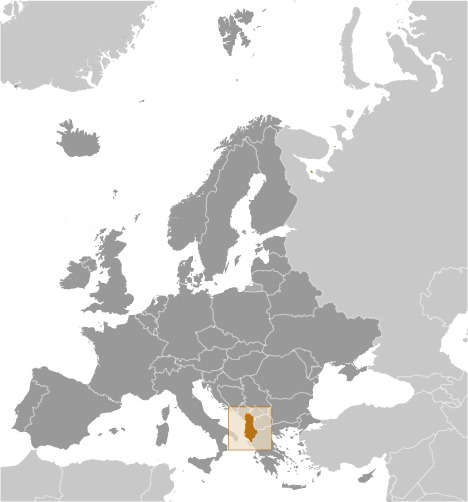
Albania sits along the southwestern Balkan Peninsula, where the Adriatic and Ionian seas meet beneath rugged mountain ranges. For decades closed off from the world under one of Europe's most isolationist communist regimes, the country has undergone a remarkable transformation since the early 1990s, rebuilding itself as an open, westward-looking society eager to join the European Union.
Today Albania captivates visitors with its dramatic contrasts: pristine beaches on the Albanian Riviera give way to remote highland villages where stone kulla towers still dot the landscape. The capital, Tirana, is a vibrant canvas of colorful communist-era apartment blocks, buzzing cafés, and ambitious new architecture.
Albanian culture blends Mediterranean warmth with Balkan resilience. The ancient code of hospitality, besa, remains central to daily life, and the country's UNESCO-listed towns of Berat and Gjirokastër showcase centuries of Ottoman and Byzantine heritage side by side.
History
Albania's history stretches back to the ancient Illyrians, whose territory was absorbed into the Roman Empire in the second century BC. After Rome's fall the region passed through Byzantine, Bulgarian, and Serbian hands before the Ottoman Empire established control in the fifteenth century — a rule that lasted nearly five hundred years and left an enduring mark on Albanian language, architecture, and cuisine.
Independence came in 1912, but the twentieth century brought repeated upheaval: a brief monarchy, Italian and German occupation during World War II, and then four decades of Stalinist dictatorship under Enver Hoxha, who dotted the landscape with some 170,000 concrete bunkers. The collapse of communism in 1991 triggered economic chaos and mass emigration, yet Albania has since stabilized, joined NATO in 2009, and continues its path toward EU accession.
Albania declared its independence from the Ottoman Empire in 1912, but was conquered by Italy in 1939 and occupied by Germany in 1943. Communist partisans took over the country in 1944. Albania allied itself first with the USSR (until 1960), and then with China (to 1978). In the early 1990s, Albania ended 46 years of isolated communist rule and established a multiparty democracy. The transition has proven challenging as successive governments have tried to deal with high unemployment, widespread corruption, dilapidated infrastructure, powerful organized crime networks, and combative political opponents. Albania has made progress in its democratic development since it first held multiparty elections in 1991, but deficiencies remain. Most of Albania's post-communist elections were marred by…
CIA World Factbook
Culture & Society
Albanian culture is shaped by its position at the crossroads of East and West. Polyphonic folk singing, inscribed on UNESCO's Intangible Heritage list, echoes through southern mountain valleys, while the north preserves the Kanun, an ancient code of customary law. Coffee culture rivals that of Italy — every town square has its parade of espresso bars — and the cuisine mingles Ottoman-influenced pastries like byrek with fresh Adriatic seafood and mountain lamb dishes.
Languages: Albanian 98.8% (official – derived from Tosk dialect), Greek 0.5%, other 0.6% (including Macedonian, Romani, Vlach, Turkish, Italian, and Serbo-Croatian), unspecified 0.1% (2011 est.)
Religions: Muslim 56.7%, Roman Catholic 10%, Orthodox 6.8%, atheist 2.5%, Bektashi (a Sufi order) 2.1%, other 5.7%, unspecified 16.2% (2011 est.)
Ethnic Groups: Albanian 82.6%, Greek 0.9%, other 1% (including Vlach, Romani, Macedonian, Montenegrin, and Egyptian), unspecified 15.5% (2011 est.)
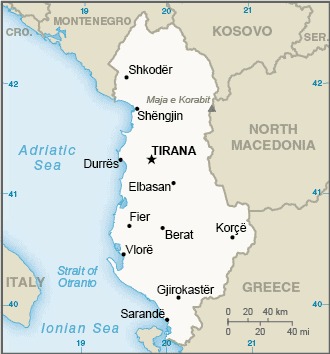
Maps
Articles About Albania
Destinations
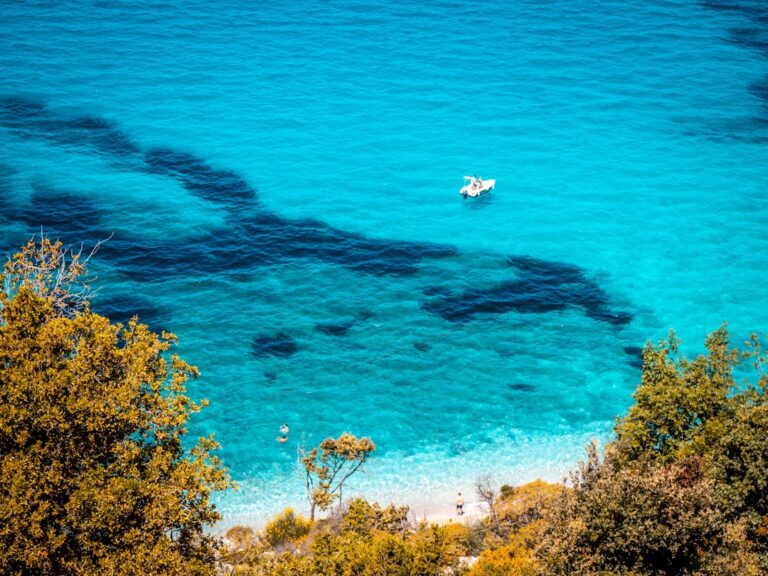
Albania's Riviera: Mediterranean Beaches at Balkan Prices
While the Greek islands heave under the weight of summer tourists and Amalfi Coast hotel prices climb ever higher, just…
Travel
Albania's Riviera: Mediterranean Beaches at Balkan Prices
While the Greek islands heave under the weight of summer tourists and Amalfi Coast hotel prices climb ever higher, just…