Armenia
Your complete guide to Armenia
Quick Facts
Capital
Yerevan
Population
3,021,324
Languages
Armenian (official) 97.9%, Kurdish (spoken by Yezidi minority) 1%, other 1% (2011 est.)
Currency
drams (AMD)
Area
29,743 sq km
Government
Parliamentary democracy; note – constitutional changes adopted in December 2015 transformed the government to a parliamentary system
About Armenia
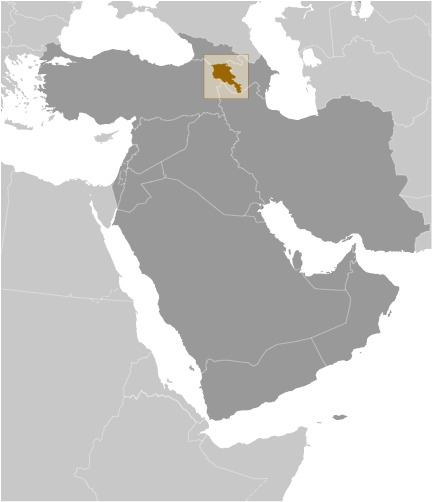
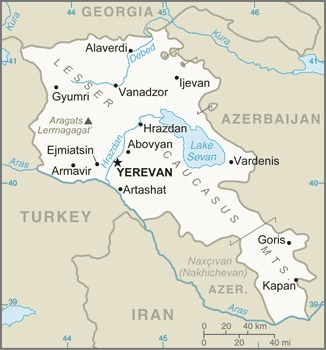
Armenia occupies a landlocked corner of the South Caucasus, where the snowy peak of Mount Ararat — visible from the capital but lying across the Turkish border — looms as the nation's most potent symbol. As the first country to adopt Christianity as a state religion in 301 AD, Armenia possesses one of the world's oldest and most distinctive Christian cultures.
The modern Republic of Armenia declared independence from the Soviet Union in 1991 and has since navigated a challenging geopolitical landscape, including a long-running conflict over the Nagorno-Karabakh region. Despite these pressures, the country has cultivated a dynamic tech sector centered on Yerevan, whose lively café culture and pink-tufa architecture belie its turbulent past.
From the ancient temple of Garni to the medieval manuscript treasury at Matenadaran, Armenia's cultural heritage punches far above the weight of its small territory — a testament to the creativity and resilience of one of the world's oldest civilizations.
History
Armenia's recorded history reaches back to the Kingdom of Urartu in the ninth century BC. The region saw periods of independence and foreign domination under Persians, Romans, Arabs, Mongols, and Ottomans. The catastrophic genocide of 1915, in which an estimated 1.5 million Armenians perished under Ottoman rule, remains a defining trauma and a cornerstone of national identity.
After a brief period of independence from 1918 to 1920, Armenia was absorbed into the Soviet Union. Seven decades of Soviet rule brought industrialization and literacy but also political repression. Independence in 1991 was followed by war with Azerbaijan over Nagorno-Karabakh, economic hardship, and a gradual democratic opening that continues to evolve.
Armenia prides itself on being the first nation to formally adopt Christianity (early 4th century). Despite periods of autonomy, over the centuries Armenia came under the sway of various empires including the Roman, Byzantine, Arab, Persian, and Ottoman. During World War I in the western portion of Armenia, the Ottoman Empire instituted a policy of forced resettlement coupled with other harsh practices that resulted in at least 1 million Armenian deaths. The eastern area of Armenia was ceded by the Ottomans to Russia in 1828; this portion declared its independence in 1918, but was conquered by the Soviet Red Army in 1920. Armenia remains involved in the protracted Nagorno-Karabakh conflict with Azerbaijan. Nagorno-Karabakh was a primarily ethnic Armenian region that Moscow recognized in 1…
CIA World Factbook
Culture & Society
Armenian culture is anchored in its Apostolic Christian faith, its unique alphabet invented by Mesrop Mashtots in 405 AD, and a literary tradition stretching back over 1,600 years. The haunting sounds of the duduk, a double-reed woodwind instrument recognized by UNESCO, accompany celebrations and ceremonies alike. Cuisine revolves around lavash flatbread, grilled meats, stuffed grape leaves (dolma), and dried fruit, while brandy distilled in the Ararat Valley has been prized since the nineteenth century.
Languages: Armenian (official) 97.9%, Kurdish (spoken by Yezidi minority) 1%, other 1% (2011 est.)
Religions: Armenian Apostolic 92.6%, Evangelical 1%, other 2.4%, none 1.1%, unspecified 2.9% (2011 est.)
Ethnic Groups: Armenian 98.1%, Yezidi (Kurd) 1.2%, other 0.7% (2011 est.)
Maps
Articles About Armenia
Destinations
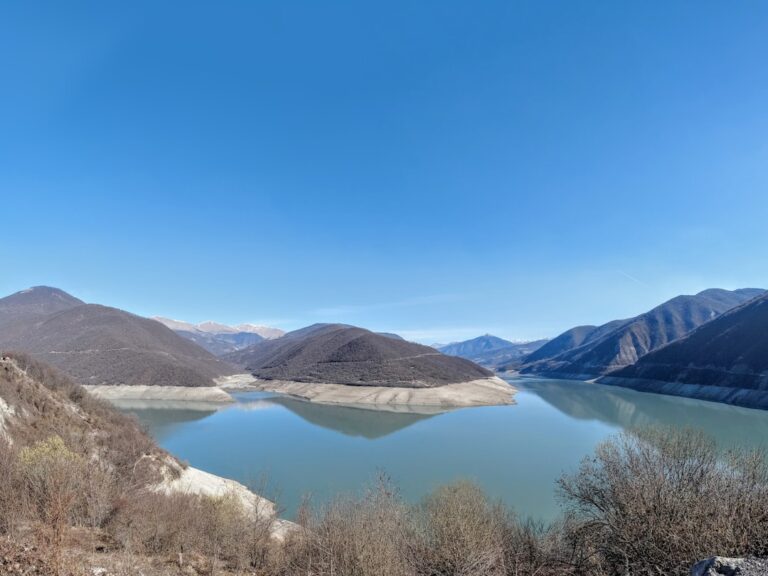
Georgia and Armenia: Where Europe Meets Asia
At the crossroads of Europe and Asia, wedged between the Greater Caucasus mountains and the borders of Turkey, Iran, and…
Travel
Georgia and Armenia: Where Europe Meets Asia
At the crossroads of Europe and Asia, wedged between the Greater Caucasus mountains and the borders of Turkey, Iran, and…