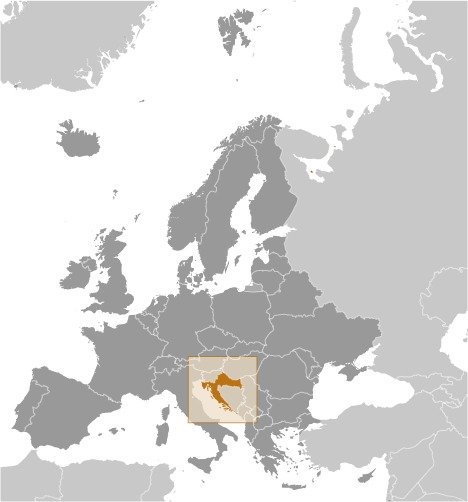
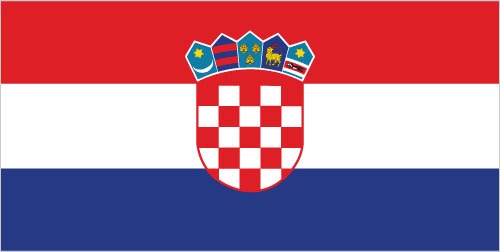
Croatia
Your complete guide to Croatia
Quick Facts
Capital
Zagreb
Population
4,227,746
Languages
Croatian (official) 95.6%, Serbian 1.2%, other 3% (including Hungarian, Czech, Slovak, and Albanian), unspecified 0.2% (…
Currency
kuna (HRK)
Area
56,594 sq km
Government
Parliamentary republic
About Croatia
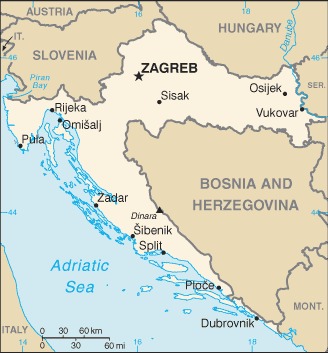
Croatia sweeps along the eastern Adriatic in a dramatic crescent, from the Pannonian plains of Slavonia through the mountainous interior to one of Europe's most stunning coastlines. Over a thousand islands fringe the shore, and the medieval walled city of Dubrovnik — the 'Pearl of the Adriatic' — is only the most famous of countless historic towns lining the coast.
Since joining the European Union in 2013 and the euro zone and Schengen area in 2023, Croatia has cemented its place as a modern European nation. Tourism is a major economic driver, but the country also boasts a growing IT sector and a proud tradition of sport, particularly football and water polo.
Croatian culture reflects its position between Central Europe and the Mediterranean. Inland towns exude an Austro-Hungarian elegance, while coastal villages pulse with Italian-inflected warmth — a duality that makes the country endlessly varied despite its relatively compact size.
History
Croats settled in the region during the seventh century and established a kingdom that persisted until a personal union with Hungary in 1102. For the next eight centuries, Croatia's fate was tied to larger powers — Hungary, the Ottoman Empire, the Habsburg Monarchy, and eventually Yugoslavia after World War I.
Croatia declared independence from Yugoslavia in 1991, triggering a war that lasted until 1995 and left deep scars, particularly in the eastern city of Vukovar. Postwar reconstruction and democratic consolidation followed, culminating in EU accession in 2013 — a milestone that confirmed Croatia's Euro-Atlantic trajectory.
The lands that today comprise Croatia were part of the Austro-Hungarian Empire until the close of World War I. In 1918, the Croats, Serbs, and Slovenes formed a kingdom known after 1929 as Yugoslavia. Following World War II, Yugoslavia became a federal independent communist state consisting of six socialist republics under the strong hand of Marshal Josip Broz, aka TITO. Although Croatia declared its independence from Yugoslavia in 1991, it took four years of sporadic, but often bitter, fighting before occupying Yugoslav forces, dominated by Serb officers, were mostly cleared from Croatian lands, along with a majority of Croatia's ethnic Serb population. Under UN supervision, the last Serb-held enclave in eastern Slavonia was returned to Croatia in 1998. The country joined NATO in April 20…
CIA World Factbook
Culture & Society
Croatian culture blends Mediterranean and Central European influences. The country boasts UNESCO-listed intangible traditions including the festive Sinjska Alka tilting tournament and intricate Hvar lace-making. Dalmatian klapa singing — a cappella harmonies performed in coastal towns — captures the Adriatic spirit, while inland Slavonia contributes hearty stews, paprika-spiced sausages, and a robust wine culture.
Languages: Croatian (official) 95.6%, Serbian 1.2%, other 3% (including Hungarian, Czech, Slovak, and Albanian), unspecified 0.2% (2011 est.)
Religions: Roman Catholic 86.3%, Orthodox 4.4%, Muslim 1.5%, other 1.5%, unspecified 2.5%, not religious or atheist 3.8% (2011 est.)
Ethnic Groups: Croat 90.4%, Serb 4.4%, other 4.4% (including Bosniak, Hungarian, Slovene, Czech, and Romani), unspecified 0.8% (2011 est.)
Maps
Articles About Croatia
History
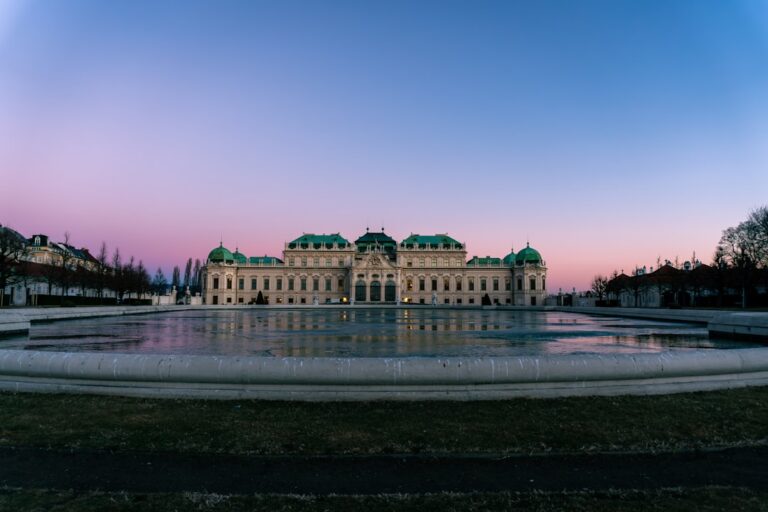
The Habsburg Empire’s Architectural Legacy from Vienna to Zagreb
For over six centuries, the House of Habsburg ruled an empire that at various times encompassed Austria, Hungary, Bohemia, Croatia,…
Destinations
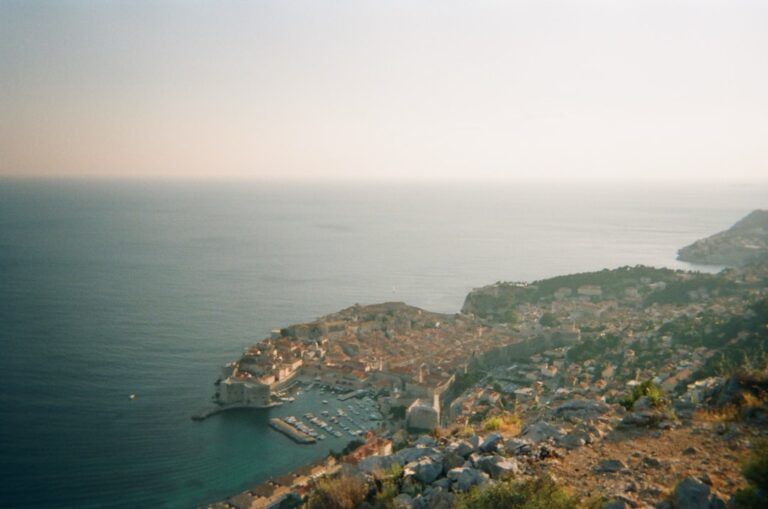
The Dalmatian Coast Without the Cruise Ship Crowds
Croatia’s Dalmatian coast is one of the Mediterranean’s most beautiful stretches of shoreline—a thousand-kilometre ribbon of limestone cliffs, walled…
Travel
The Dalmatian Coast Without the Cruise Ship Crowds
Croatia’s Dalmatian coast is one of the Mediterranean’s most beautiful stretches of shoreline—a thousand-kilometre ribbon of limestone cliffs, walled…