Czech Republic
Your complete guide to Czech Republic
Quick Facts
Capital
Prague
Population
10,702,498
Languages
Czech (official) 95.4%, Slovak 1.6%, other 3% (2011 census)
Currency
koruny (CZK)
Area
78,867 sq km
Government
Parliamentary republic
About Czech Republic
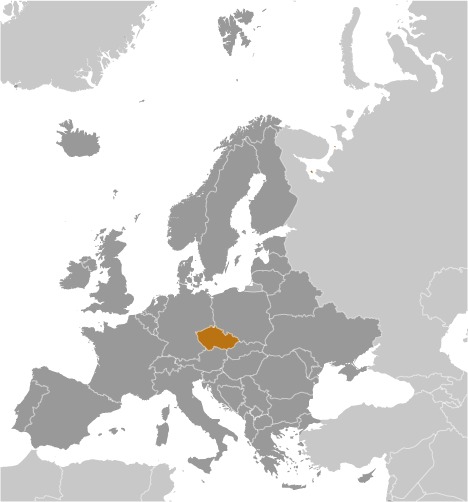
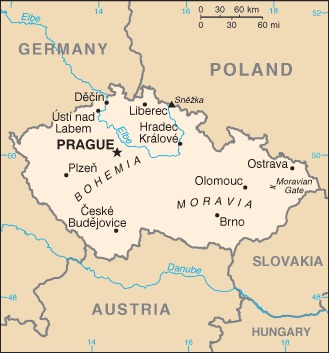
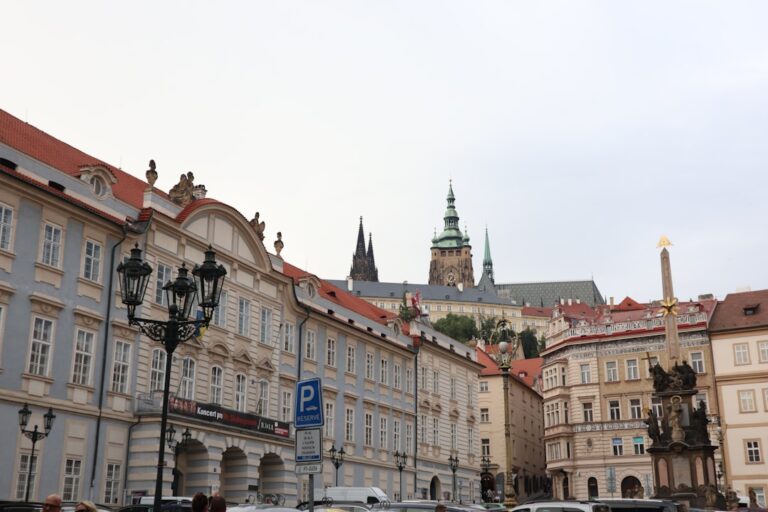
The Czech Republic — often called Czechia — occupies the historic lands of Bohemia and Moravia in the heart of Central Europe. Prague, its capital, is one of the continent's most visited cities, famed for its Gothic spires, Baroque palaces, and Art Nouveau facades reflected in the Vltava River.
Beyond Prague, the country rewards exploration with Renaissance-era towns like Český Krumlov, the Moravian wine country, and spa towns such as Karlovy Vary that have attracted visitors since the days of Goethe. A strong industrial tradition — Škoda, Pilsner Urquell, and Bohemian crystal are household names — underpins one of Central Europe's most prosperous economies.
Czech culture combines a love of beer (the highest per-capita consumption in the world), a rich literary tradition running from Kafka to Kundera, and a dry, self-deprecating humor that pervades everything from folk customs to contemporary art.
History
The Bohemian crown was one of the most powerful in medieval Europe, and Prague served as the seat of Holy Roman Emperors. Habsburg rule from 1526 brought Counter-Reformation pressures, and Czech national identity was revived during the nineteenth-century Romantic movement. Czechoslovakia was founded in 1918, only to be dismembered by Nazi Germany in 1938–39.
After World War II, a communist coup in 1948 placed the country firmly in the Soviet bloc. The Prague Spring of 1968, crushed by Warsaw Pact tanks, became a symbol of reformist hope. The Velvet Revolution of 1989 restored democracy, and the peaceful Velvet Divorce of 1993 split Czechoslovakia into the Czech Republic and Slovakia. EU membership followed in 2004.
At the close of World War I, the Czechs and Slovaks of the former Austro-Hungarian Empire merged to form Czechoslovakia. During the interwar years, having rejected a federal system, the new country's predominantly Czech leaders were frequently preoccupied with meeting the increasingly strident demands of other ethnic minorities within the republic, most notably the Slovaks, the Sudeten Germans, and the Ruthenians (Ukrainians). On the eve of World War II, Nazi Germany occupied the territory that today comprises Czechia, and Slovakia became an independent state allied with Germany. After the war, a reunited but truncated Czechoslovakia (less Ruthenia) fell within the Soviet sphere of influence. In 1968, an invasion by Warsaw Pact troops ended the efforts of the country's leaders to liberaliz…
CIA World Factbook
Culture & Society
Czech culture is steeped in music, literature, and a passion for beer. Dvořák and Smetana rank among the great Romantic composers, while writers like Kafka, Hašek, and Kundera have shaped world literature. The pub is the social institution par excellence, and traditional cuisine — svíčková (marinated beef with cream sauce), knedlíky (dumplings), and trdelník — reflects hearty Central European tastes.
Languages: Czech (official) 95.4%, Slovak 1.6%, other 3% (2011 census)
Religions: Roman Catholic 10.4%, Protestant (includes Czech Brethren and Hussite) 1.1%, other and unspecified 54%, none 34.5% (2011 est.)
Ethnic Groups: Czech 64.3%, Moravian 5%, Slovak 1.4%, other 1.8%, unspecified 27.5% (2011 est.)
Maps
Articles About Czech Republic
Destinations
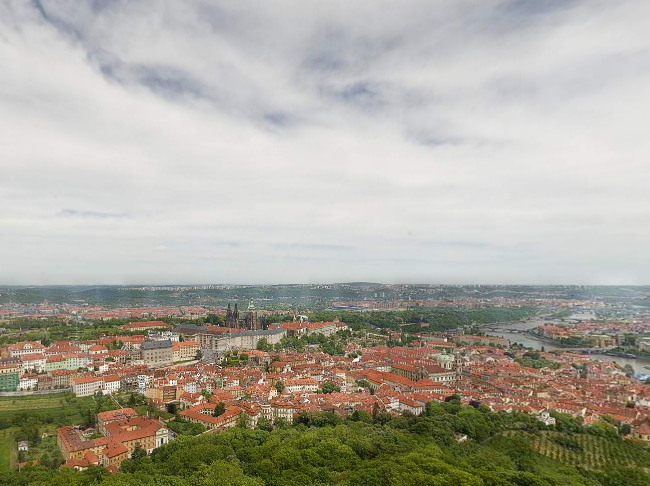
Amazing Gigapixel 360 Degree Image of Prague
I love a good 360 Degree Panorama and I recently came across this great one of Prague. Click to Check…
8 Things Every Visitor Should Know About Prague Now
Not so long ago, intrepid travelers talked of a charming, “undiscovered” city in Central Europe.