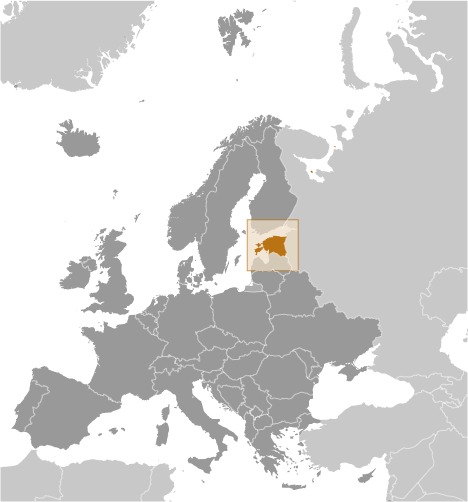
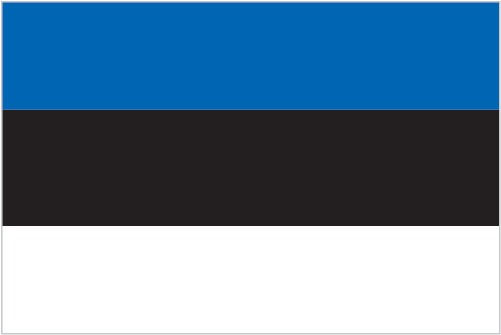
Estonia
Your complete guide to Estonia
Quick Facts
Capital
Tallinn
Population
1,228,624
Languages
Estonian (official) 68.5%, Russian 29.6%, Ukrainian 0.6%, other 1.2%, unspecified 0.1% (2011 est.)
Currency
euros (EUR)
Area
45,228 sq km
Government
Parliamentary republic
About Estonia
Estonia is the northernmost and smallest of the three Baltic states, a flat, forested land where medieval Hanseatic heritage meets one of the world's most advanced digital societies. Tallinn's remarkably preserved Old Town, a UNESCO World Heritage Site, is ringed by walls and watchtowers yet powered by e-government systems that let citizens vote, pay taxes, and sign documents online.
With a population of just over a million, Estonia has built a startup ecosystem that produced Skype, Wise, and Bolt, earning it the nickname 'the Silicon Valley of the Baltics.' The country's digital ID card, e-residency program, and paperless government are studied worldwide as models of innovation.
Nature is never far away: Estonia's territory is over 50% forest, and more than 2,000 islands dot its Baltic coast. Vast bogs, coastal meadows, and quiet seaside villages offer a contemplative counterpoint to Tallinn's tech buzz.
History
Estonia's early history was shaped by Crusader conquests in the thirteenth century, when German knights and the Teutonic Order brought Christianity and feudal rule. The region passed through Swedish and Russian hands before a brief period of independence from 1918 to 1940. Soviet occupation, followed by Nazi German occupation and then Soviet reoccupation, lasted until 1991.
Estonia regained independence through the peaceful 'Singing Revolution' of 1988–1991, when mass choral gatherings became acts of political defiance. Since then, the country has pursued rapid Westernization, joining both NATO and the EU in 2004 and adopting the euro in 2011. A 2007 cyberattack attributed to Russia galvanized Estonia's focus on cybersecurity and digital defense.
After centuries of Danish, Swedish, German, and Russian rule, Estonia attained independence in 1918. Forcibly incorporated into the USSR in 1940 – an action never recognized by the US and many other countries – it regained its freedom in 1991 with the collapse of the Soviet Union. Since the last Russian troops left in 1994, Estonia has been free to promote economic and political ties with the West. It joined both NATO and the EU in the spring of 2004, formally joined the OECD in late 2010, and adopted the euro as its official currency on 1 January 2011.
CIA World Factbook
Culture & Society
Estonian culture is deeply connected to song. The Estonian Song Festival, held every five years since 1869, brings tens of thousands of singers together and played a pivotal role in the independence movement. The sauna tradition is central to social life, the cuisine features dark rye bread, smoked fish, and wild berries, and the country's design scene draws on Scandinavian minimalism filtered through a distinctly Baltic sensibility.
Languages: Estonian (official) 68.5%, Russian 29.6%, Ukrainian 0.6%, other 1.2%, unspecified 0.1% (2011 est.)
Religions: Orthodox 16.2%, Lutheran 9.9%, other Christian (including Methodist, Seventh-Day Adventist, Roman Catholic, Pentecostal) 2.2%, other 0.9%, none 54.1%, unspecified 16.7% (2011 est.)
Ethnic Groups: Estonian 68.7%, Russian 24.8%, Ukrainian 1.7%, Belarusian 1%, Finn 0.6%, other 1.6%, unspecified 1.6% (2011 est.)
Maps
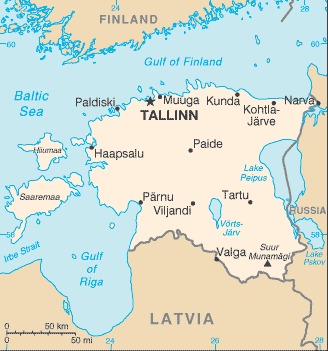
Articles About Estonia
Destinations
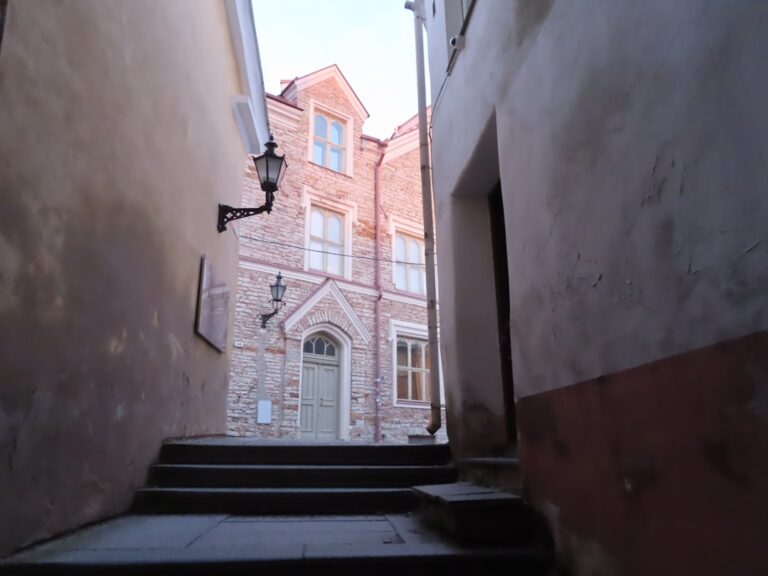
Tallinn, Estonia: Europe’s Best-Kept Medieval Secret
There is a moment, walking through the arched gateway of the Viru Gate into Tallinn’s Old Town, when the twenty-first…
Travel
Tallinn, Estonia: Europe’s Best-Kept Medieval Secret
There is a moment, walking through the arched gateway of the Viru Gate into Tallinn’s Old Town, when the twenty-first…