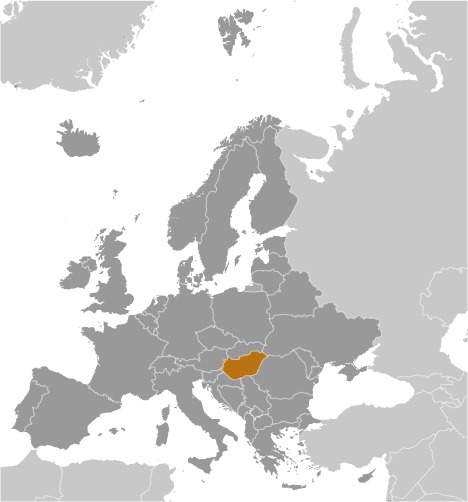
Hungary
Your complete guide to Hungary
Quick Facts
Capital
Budapest
Population
9,771,827
Languages
Hungarian (official) 99.6%, English 16%, German 11.2%, Russian 1.6%, Romanian 1.3%, French 1.2%, other 4.2% (2011 est.)
Currency
forints (HUF)
Area
93,028 sq km
Government
Parliamentary republic
About Hungary
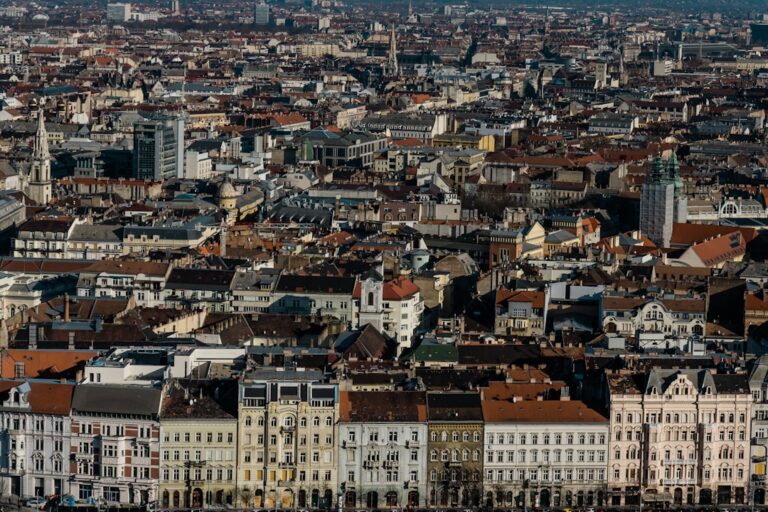
Hungary sits in the Carpathian Basin, a landlocked nation whose thermal springs, paprika-spiced cuisine, and Magyar cultural traditions set it apart from its Slavic and Germanic neighbors. Budapest, the capital, is one of Europe's most dramatic cities, straddling the Danube with Buda's medieval castle district on one bank and Pest's grand boulevards on the other.
The country's thermal bath culture is unmatched in Europe — Budapest alone has over 120 natural hot springs, and the ornate Gellért and Széchenyi baths are architectural treasures. Beyond the capital, the Great Hungarian Plain (puszta), Lake Balaton, and the Tokaj wine region offer distinctly Hungarian landscapes.
Hungary's contributions to science, music, and cuisine are considerable. The country has produced thirteen Nobel laureates, composers Liszt and Bartók, and a culinary tradition — goulash, chicken paprikash, chimney cake — that has influenced Central European cooking for centuries.
History
The Magyars arrived in the Carpathian Basin in 896, establishing a kingdom that became one of medieval Europe's most powerful states. The 1526 Battle of Mohács brought Ottoman occupation of central Hungary, while the Habsburgs controlled the west. Reunification under Habsburg rule after the Ottomans' retreat led to the Austro-Hungarian Compromise of 1867, creating the dual monarchy.
The 1920 Treaty of Trianon, which stripped Hungary of two-thirds of its territory after World War I, remains a deep national wound. World War II, the 1956 uprising against Soviet rule, and four decades of communist government shaped the modern nation. The transition to democracy in 1989 and EU accession in 2004 marked a new chapter, though Hungarian politics have remained contentious.
Hungary became a Christian kingdom in A.D. 1000 and for many centuries served as a bulwark against Ottoman Turkish expansion in Europe. The kingdom eventually became part of the polyglot Austro-Hungarian Empire, which collapsed during World War I. The country fell under communist rule following World War II. In 1956, a revolt and an announced withdrawal from the Warsaw Pact were met with a massive military intervention by Moscow. Under the leadership of Janos KADAR in 1968, Hungary began liberalizing its economy, introducing so-called "Goulash Communism." Hungary held its first multiparty elections in 1990 and initiated a free market economy. It joined NATO in 1999 and the EU five years later.
CIA World Factbook
Culture & Society
Hungarian culture is fiercely distinct. The Magyar language, unrelated to any neighboring tongue, is central to national identity. Music ranges from the Romani-influenced verbunkos tradition to Liszt's rhapsodies and Bartók's modernist folk collections. The cuisine — built on paprika, lard, sour cream, and slow-cooked stews — is Central Europe's most flavorful, and the ruin bars of Budapest's Jewish Quarter have become symbols of creative urban renewal.
Languages: Hungarian (official) 99.6%, English 16%, German 11.2%, Russian 1.6%, Romanian 1.3%, French 1.2%, other 4.2% (2011 est.)
Religions: Roman Catholic 37.2%, Calvinist 11.6%, Lutheran 2.2%, Greek Catholic 1.8%, other 1.9%, none 18.2%, no response 27.2% (2011 est.)
Ethnic Groups: Hungarian 85.6%, Romani 3.2%, German 1.9%, other 2.6%, unspecified 14.1% (2011 est.)
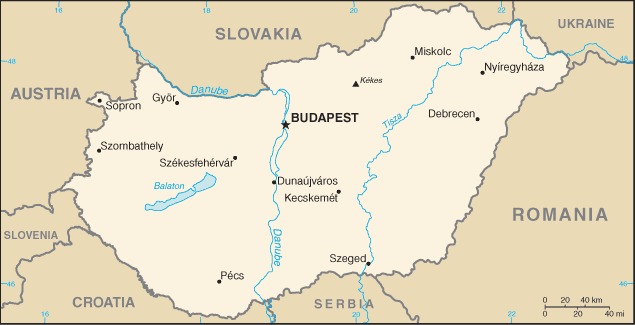
Maps
Articles About Hungary
Destinations
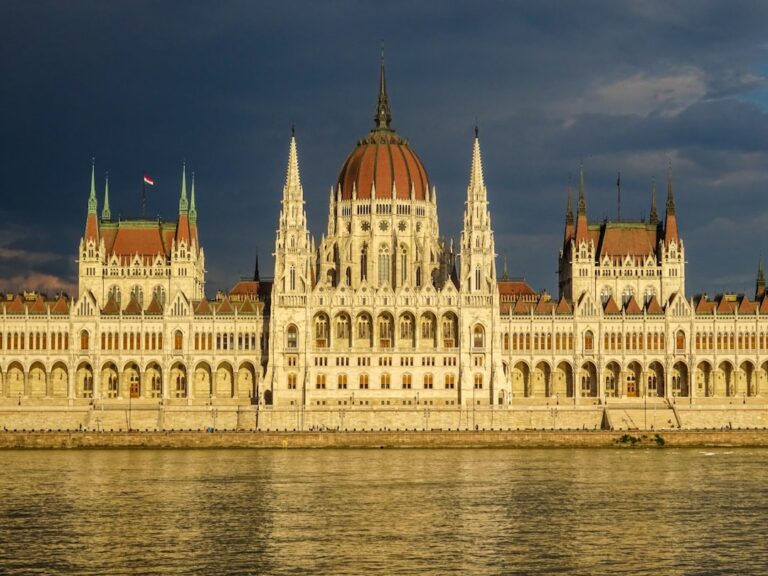
10 Things to Do in Budapest from Europe A La Carte
Europe a la Carte has a great post on ten things to see and do in the Hungarian city of…
Food & Drink
Why Hungarian Cuisine Deserves More Respect
Ask most people to name a Hungarian dish and they'll say goulash. Ask them to name a second and you'll…