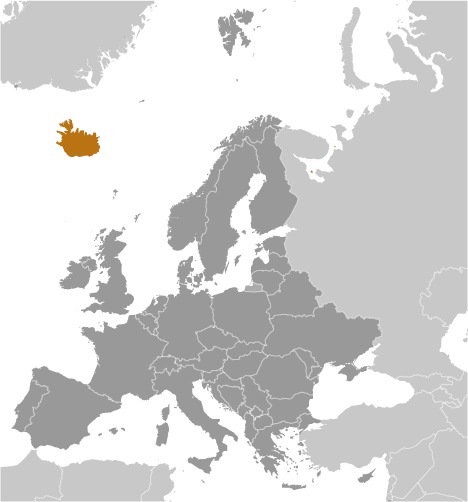
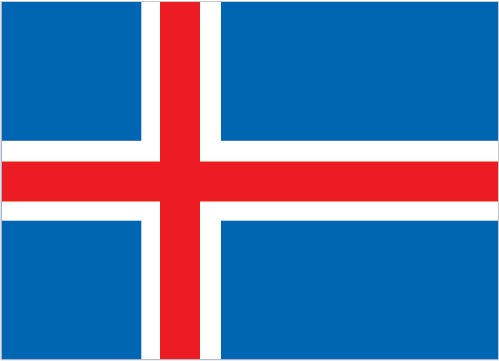
Iceland
Your complete guide to Iceland
Quick Facts
Capital
Reykjavik
Population
350,734
Languages
Icelandic, English, Nordic languages, German
Currency
Icelandic kronur (ISK)
Area
103,000 sq km
Government
Unitary parliamentary republic
About Iceland
Iceland is a volcanic island nation perched on the Mid-Atlantic Ridge, where the North American and Eurasian tectonic plates visibly pull apart. Its otherworldly landscape — geysers, glaciers, lava fields, and thundering waterfalls — makes it one of Europe's most extraordinary natural destinations.
Reykjavík, the world's northernmost capital, is a colorful, creative city of barely 130,000 people that punches far above its weight in music, literature, and design. The country's tiny population (under 400,000) enjoys one of the world's highest standards of living, powered by abundant geothermal and hydroelectric energy.
Iceland's isolation bred a unique society: the medieval sagas, written in Old Norse, rank among world literature's great achievements, and the Icelandic language has changed remarkably little since Viking times. A tradition of gender equality, direct democracy, and environmental stewardship makes Iceland a model of progressive governance.
History
Iceland was settled by Norse Vikings beginning around 870 AD, and the Althingi, established in 930 at Thingvellir, is often cited as the world's oldest parliament. The island converted to Christianity around 1000 and came under Norwegian, then Danish, rule from the thirteenth century onward.
Independence was achieved incrementally — home rule in 1904, sovereignty in 1918, and a full republic declared in 1944 while Denmark was under German occupation. Postwar Iceland prospered through fishing and, later, tourism and renewable energy, though the 2008 banking collapse dealt a severe blow from which the country has since recovered.
Settled by Norwegian and Celtic (Scottish and Irish) immigrants during the late 9th and 10th centuries A.D., Iceland boasts the world's oldest functioning legislative assembly, the Althingi, established in 930. Independent for over 300 years, Iceland was subsequently ruled by Norway and Denmark. Fallout from the Askja volcano of 1875 devastated the Icelandic economy and caused widespread famine. Over the next quarter century, 20% of the island's population emigrated, mostly to Canada and the US. Denmark granted limited home rule in 1874 and complete independence in 1944. The second half of the 20th century saw substantial economic growth driven primarily by the fishing industry. The economy diversified greatly after the country joined the European Economic Area in 1994, but Iceland was esp…
CIA World Factbook
Culture & Society
Icelandic culture revolves around storytelling, music, and a deep connection to the natural world. The medieval sagas remain a living literary tradition, and modern Icelandic writers like Halldór Laxness (Nobel Prize, 1955) and Sjón carry the torch. The music scene — from Björk and Sigur Rós to a thriving indie underground — is remarkably prolific for such a small nation. Cuisine has evolved from survival staples (fermented shark, dried fish) to a celebrated New Nordic scene featuring lamb, Arctic char, and wild herbs.
Languages: Icelandic, English, Nordic languages, German
Religions: Evangelical Lutheran Church of Iceland (official) 67.2%, Roman Catholic 3.9%, Reykjavik Free Church 2.8%, Hafnarfjordur Free Church 2%, Asatru Association 1.2%, The Independent Congregation .9%, other religions 4% (includes Zuist and Pentecostal), none 6.7%, other or unspecified 11.3% (2018 est.)
Ethnic Groups: homogeneous mixture of descendants of Norse and Celts 81%, population with foreign background 19% (2018 est.)
Maps
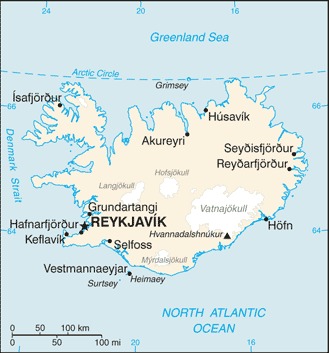
Articles About Iceland
Articles
We're still writing about Iceland. Check back soon or browse the category archive.