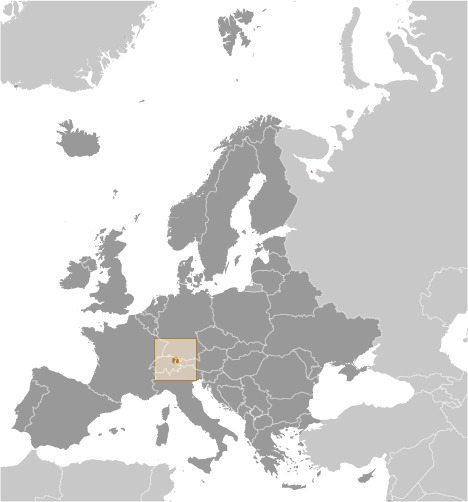
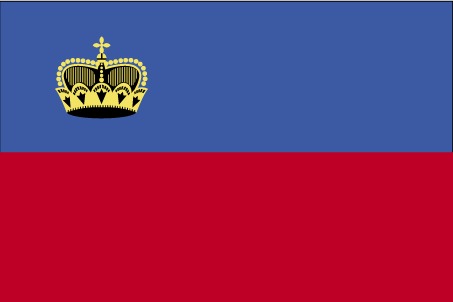
Liechtenstein
Your complete guide to Liechtenstein
Quick Facts
Capital
Vaduz
Population
39,137
Languages
German 91.5% (official) (Alemannic is the main dialect), Italian 1.5%, Turkish 1.3%, Portuguese 1.1%, other 4.6% (2015 e…
Currency
Swiss francs (CHF)
Area
160 sq km
Government
Constitutional monarchy
About Liechtenstein
Liechtenstein is a doubly landlocked microstate wedged between Switzerland and Austria in the upper Rhine valley, with a population of barely 40,000. Despite its diminutive size — just 160 square kilometers — it is one of the world's wealthiest countries per capita, with a thriving financial services sector and precision manufacturing industry.
Vaduz, the capital, is dominated by the medieval Vaduz Castle, the residence of the reigning Prince of Liechtenstein, perched on a forested hillside above the town. The Kunstmuseum Liechtenstein houses an impressive modern art collection, while the surrounding Alpine landscape offers excellent hiking and skiing.
Liechtenstein's combination of Alpine scenery, monarchical tradition, and economic prosperity creates a unique character — a village-scale country with a global financial footprint.
History
The Principality of Liechtenstein was established in 1719 when the Holy Roman Emperor Charles VI united the lordships of Schellenberg and Vaduz into a principality for the Liechtenstein family. The country gained sovereignty in 1806 and has maintained its independence ever since, forming a customs union with Switzerland in 1923.
Liechtenstein remained neutral in both World Wars and was one of the few European states never occupied. Postwar industrialization and the development of financial services transformed it from a rural backwater into one of the world's highest-income nations. Women gained the right to vote only in 1984, one of the last European countries to enact female suffrage.
The Principality of Liechtenstein was established within the Holy Roman Empire in 1719. Occupied by both French and Russian troops during the Napoleonic Wars, it became a sovereign state in 1806 and joined the German Confederation in 1815. Liechtenstein became fully independent in 1866 when the Confederation dissolved. Until the end of World War I, it was closely tied to Austria, but the economic devastation caused by that conflict forced Liechtenstein to enter into a customs and monetary union with Switzerland. Since World War II (in which Liechtenstein remained neutral), the country's low taxes have spurred outstanding economic growth. In 2000, shortcomings in banking regulatory oversight resulted in concerns about the use of financial institutions for money laundering. However, Liechten…
CIA World Factbook
Culture & Society
Liechtenstein's culture is closely tied to its Alemannic German-speaking Alpine heritage, sharing many customs with neighboring Swiss and Austrian regions. The Staatsfeiertag (National Day) on August 15 features a reception at Vaduz Castle, fireworks, and folk festivities. Traditional cuisine includes Käsknöpfle (cheese dumplings) and Ribel (cornmeal porridge), while the royal family's extensive art collection — one of the world's finest private collections — lends the tiny state an unexpectedly rich cultural dimension.
Languages: German 91.5% (official) (Alemannic is the main dialect), Italian 1.5%, Turkish 1.3%, Portuguese 1.1%, other 4.6% (2015 est.)
Religions: Roman Catholic (official) 73.4%, Protestant Reformed 6.3%, Muslim 5.9%, Christian Orthodox 1.3%, Lutheran 1.2%, other Protestant .7%, other Christian .3%, other .8%, none 7%, unspecified 3.3% (2015 est.)
Ethnic Groups: Liechtensteiner 66%, Swiss 9.6%, Austrian 5.8%, German 4.3%, Italian 3.1%, other 11.2% (2017 est.)
Maps
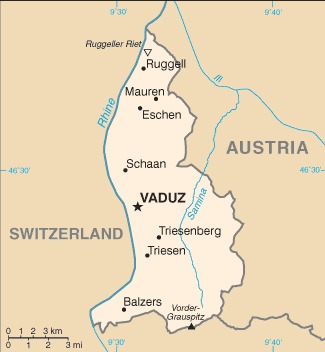
Articles About Liechtenstein
Destinations
Europe's Forgotten Microstates: Andorra, San Marino, and Liechtenstein
Tucked between Europe's larger nations lie a handful of tiny sovereign states that most travelers overlook entirely.
Travel
Europe's Forgotten Microstates: Andorra, San Marino, and Liechtenstein
Tucked between Europe's larger nations lie a handful of tiny sovereign states that most travelers overlook entirely.