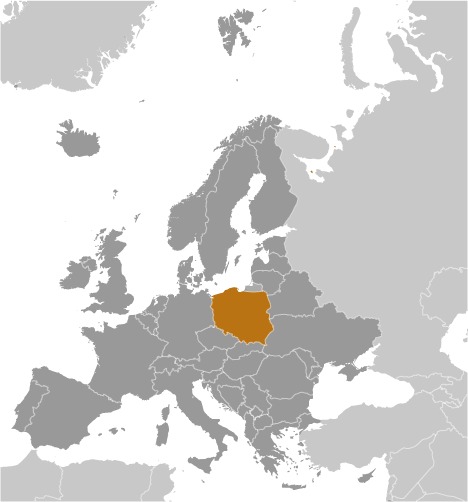
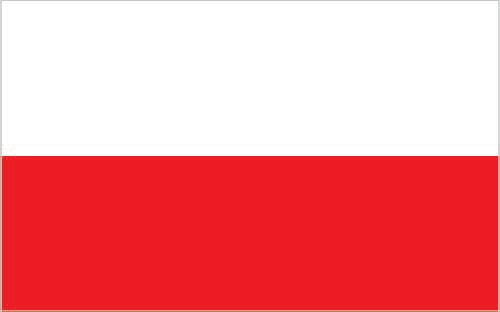
Poland
Your complete guide to Poland
Quick Facts
Capital
Warsaw
Population
38,282,325
Languages
Polish (official) 98.2%, Silesian 1.4%, other 1.1%, unspecified 1.3% (2011 est.)
Currency
zlotych (PLN)
Area
312,685 sq km
Government
Parliamentary republic
About Poland
Poland is Central Europe's largest nation, a vast plain stretching from the Baltic Sea to the Tatra Mountains, whose turbulent history has forged a resilient and deeply patriotic culture. Once partitioned out of existence for 123 years, Poland re-emerged in the twentieth century and has since become one of Europe's fastest-growing economies.
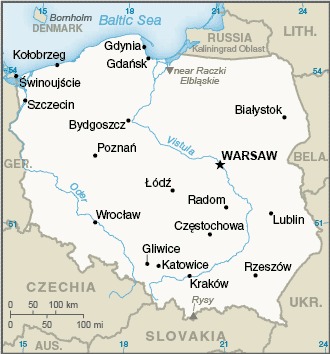
Warsaw, the capital, was virtually destroyed in World War II and painstakingly rebuilt — its Old Town reconstruction is itself a UNESCO World Heritage Site. Kraków, the medieval royal capital, is one of Europe's most beautiful and best-preserved cities, while Gdańsk, Wrocław, and Poznań each pulse with their own distinct energy.
Poland's EU membership since 2004 has accelerated modernization, and the country's young, educated population is driving innovation across technology, gaming, and creative industries. Traditional values and Catholic faith remain strong, creating a dynamic tension with the forces of globalization.
History
Poland's history is a saga of grandeur and suffering. The medieval Piast and Jagiellon dynasties built one of Europe's largest states, and the Polish-Lithuanian Commonwealth (1569–1795) was a remarkable experiment in elective monarchy and religious tolerance. Successive partitions by Russia, Prussia, and Austria erased Poland from the map for over a century.
Reconstituted in 1918, Poland was devastated by World War II — six million Polish citizens perished, including three million Jews in the Holocaust. The communist era (1945–1989) saw the Solidarity movement, led by Lech Wałęsa, pioneer the peaceful overthrow of Soviet-backed rule. EU and NATO membership have anchored Poland firmly in the Western alliance.
Poland's history as a state began near the middle of the 10th century. By the mid-16th century, the Polish-Lithuanian Commonwealth ruled a vast tract of land in Central and Eastern Europe. During the 18th century, internal disorders weakened the nation, and in a series of agreements between 1772 and 1795, Russia, Prussia, and Austria partitioned Poland among themselves. Poland regained its independence in 1918 only to be overrun by Germany and the Soviet Union in World War II. It became a Soviet satellite state following the war. Labor turmoil in 1980 led to the formation of the independent trade union "Solidarity" that over time became a political force with over 10 million members. Free elections in 1989 and 1990 won Solidarity control of the parliament and the presidency, bringing the c…
CIA World Factbook
Culture & Society
Polish culture is rich, romantic, and deeply literary. Chopin's piano compositions, the poetry of Wisława Szymborska and Czesław Miłosz, and the cinema of Andrzej Wajda and Krzysztof Kieślowski represent a tradition of artistic excellence forged under adversity. The cuisine is hearty and comforting — pierogi, bigos (hunter's stew), żurek (sour rye soup) — and the tradition of hospitality rivals any in Europe.
Languages: Polish (official) 98.2%, Silesian 1.4%, other 1.1%, unspecified 1.3% (2011 est.)
Religions: Catholic 85.9% (includes Roman Catholic 85.6% and Greek Catholic, Armenian Catholic, and Byzantine-Slavic Catholic .3%), Orthodox 1.3% (almost all are Polish Autocephalous Orthodox), Protestant 0.4% (mainly Augsburg Evangelical and Pentacostal), other 0.4% (includes Jehovah's Witness, Buddhist, Hare Krishna, Gaudiya Vaishnavism, Muslim, Jewish, Mormon), unspecified 12.1% (2017 est.)
Ethnic Groups: Polish 96.9%, Silesian 1.1%, German 0.2%, Ukrainian 0.1%, other and unspecified 1.7% (2011 est.)
Maps
Articles About Poland
Culture
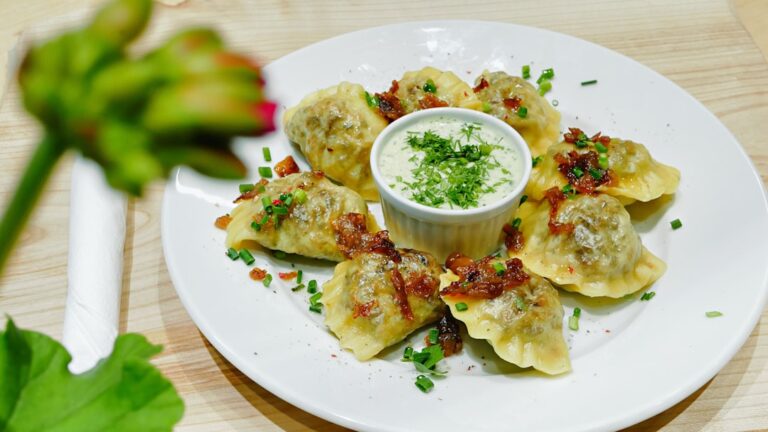
Polish Pierogi: A Regional Guide to Fillings and Styles
Pierogi are the soul of Polish cooking — half-moon dumplings stuffed, sealed, and either boiled, fried, or both, then served…
Travel
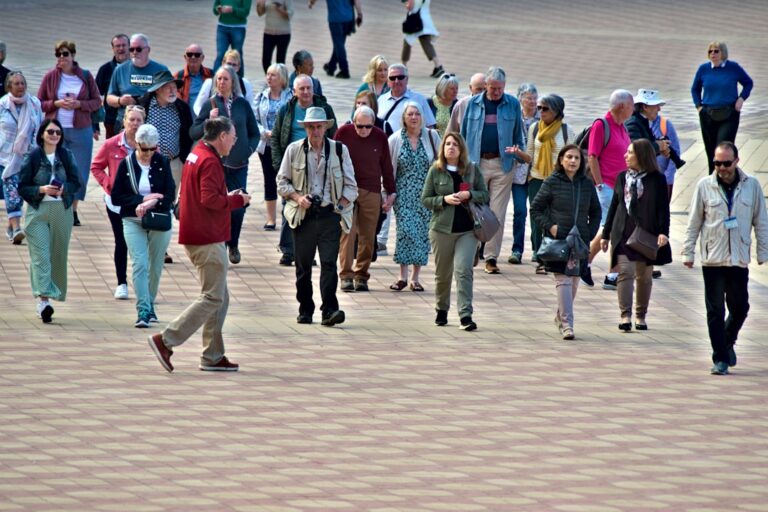
A Walking Tour of Kraków's Old Town
Kraków is one of those rare European cities that survived the Second World War largely intact, and walking its Old…
Food & Drink
Polish Pierogi: A Regional Guide to Fillings and Styles
Pierogi are the soul of Polish cooking — half-moon dumplings stuffed, sealed, and either boiled, fried, or both, then served…