Serbia
Your complete guide to Serbia
Quick Facts
Capital
Belgrade (Beograd)
Population
7,012,165
Languages
Serbian (official) 88.1%, Hungarian 3.4%, Bosnian 1.9%, Romani 1.4%, other 3.4%, undeclared or unknown 1.8% (2011 est.)
Currency
Serbian dinars (RSD)
Area
77,474 sq km
Government
Parliamentary republic
About Serbia
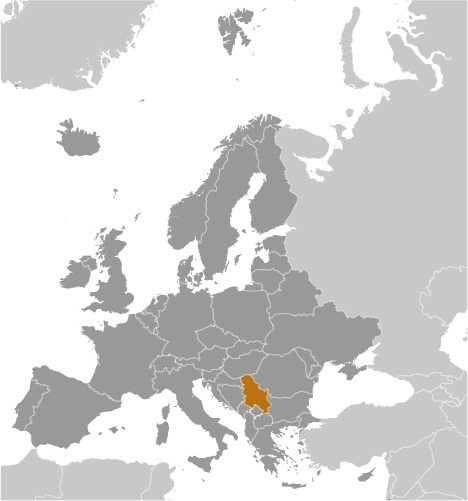
Serbia is a landlocked Balkan nation at the crossroads of Central and Southeast Europe, where the Danube and Sava rivers meet at Belgrade, one of Europe's oldest continuously inhabited cities. Its history as the core of medieval and modern Serbian states, and as the political center of Yugoslavia, gives it a weight and complexity that belies its modest size.
Belgrade, the capital, is a gritty, vibrant city whose fortress overlooks the confluence of two great rivers. A thriving nightlife, creative arts scene, and growing cafe culture have made it an increasingly popular destination. Beyond the capital, Novi Sad hosts the EXIT music festival, Niš preserves Roman and Ottoman heritage, and the monasteries of Studenica and Žiča safeguard medieval Serbian art.
Serbia is a candidate for EU membership and has been navigating the difficult path of reform and reconciliation with its neighbors, particularly regarding the status of Kosovo.
History
The medieval Serbian kingdom reached its zenith under Stefan Dušan in the fourteenth century before falling to the Ottoman Empire after the pivotal Battle of Kosovo in 1389. Five centuries of Ottoman rule ended with the Serbian uprisings of the early nineteenth century, and the Kingdom of Serbia emerged as a significant Balkan power.
Serbia's role in the assassination of Archduke Franz Ferdinand in 1914 triggered World War I. After both World Wars, Serbia was the dominant republic in Yugoslavia. The breakup of Yugoslavia in the 1990s led to devastating wars, NATO bombing in 1999, and the loss of Kosovo. Since the fall of Milošević in 2000, Serbia has pursued democratic reform and European integration.
The Kingdom of Serbs, Croats, and Slovenes was formed in 1918; its name was changed to Yugoslavia in 1929. Communist Partisans resisted the Axis occupation and division of Yugoslavia from 1941 to 1945 and fought nationalist opponents and collaborators as well. The military and political movement headed by Josip Broz "TITO" (Partisans) took full control of Yugoslavia when their domestic rivals and the occupiers were defeated in 1945. Although communists, TITO and his successors (Tito died in 1980) managed to steer their own path between the Warsaw Pact nations and the West for the next four and a half decades. In 1989, Slobodan MILOSEVIC became president of the Republic of Serbia and his ultranationalist calls for Serbian domination led to the violent breakup of Yugoslavia along ethnic line…
CIA World Factbook
Culture & Society
Serbian culture is deeply rooted in Orthodox Christianity and a rich folk tradition. The medieval monasteries of the Raška and Morava schools contain some of Europe's finest Byzantine frescoes. Music ranges from epic folk ballads accompanied by the gusle (a single-stringed fiddle) to the brass-band mania of the Guča Trumpet Festival. Serbian cuisine — ćevapi, pljeskavica, kajmak, ajvar — is robustly flavored, and the tradition of slava (family patron saint day) is unique to Serbian Orthodox culture.
Languages: Serbian (official) 88.1%, Hungarian 3.4%, Bosnian 1.9%, Romani 1.4%, other 3.4%, undeclared or unknown 1.8% (2011 est.)
Religions: Orthodox 84.6%, Catholic 5%, Muslim 3.1%, Protestant 1%, atheist 1.1%, other 0.8% (includes agnostics, other Christians, Eastern, Jewish), undeclared or unknown 4.5% (2011 est.)
Ethnic Groups: Serb 83.3%, Hungarian 3.5%, Romani 2.1%, Bosniak 2%, other 5.7%, undeclared or unknown 3.4% (2011 est.)
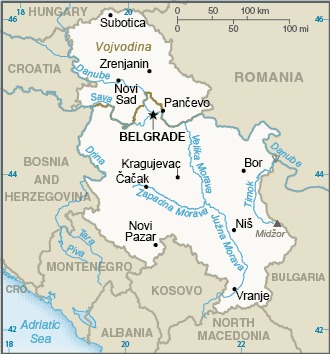
Maps
Articles About Serbia
Articles
We're still writing about Serbia. Check back soon or browse the category archive.