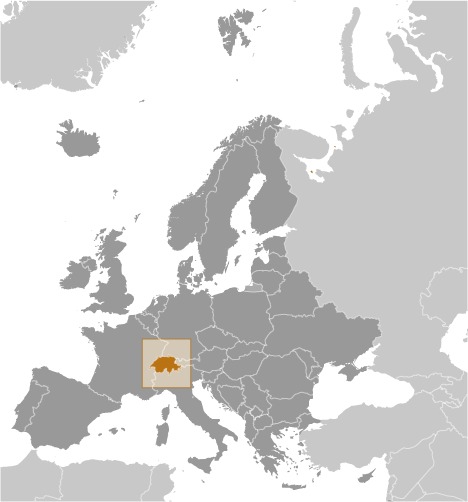
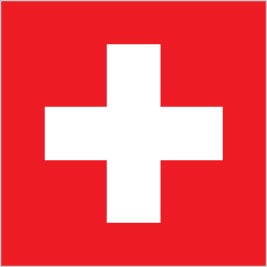
Switzerland
Your complete guide to Switzerland
Quick Facts
Capital
Bern
Population
8,403,994
Languages
German (or Swiss German) (official) 62.6%, French (official) 22.9%, Italian (official) 8.2%, English 5.4%, Portuguese 3.…
Currency
Swiss francs (CHF)
Area
41,277 sq km
Government
Federal republic (formally a confederation)
About Switzerland
Switzerland is a landlocked Alpine republic at the heart of Europe, renowned for its mountains, watches, chocolate, banking secrecy, and political neutrality. Four national languages — German, French, Italian, and Romansh — reflect a federal system that has held together one of the world's most diverse small nations for over seven centuries.
Zurich, Geneva, Basel, and Bern each serve as centers of finance, diplomacy, culture, and government, while the Alpine landscapes — the Matterhorn, the Jungfrau, Lake Lucerne — draw millions of visitors year-round for skiing, hiking, and sheer scenic wonder.
Switzerland's direct democracy, with its frequent referendums and initiatives, gives citizens an unusually active role in governance. The country hosts numerous international organizations (the UN, WHO, Red Cross, WTO) and, despite not being an EU member, is deeply integrated into the European economy.
History
Switzerland's founding myth dates to the 1291 alliance of three forest cantons against Habsburg control, commemorated every August 1. The Swiss Confederation grew gradually, and its reputation for military prowess — especially the feared Swiss pikemen — gave way to a tradition of armed neutrality after defeat by France in 1515.
The Napoleonic era briefly imposed a centralized republic, but the 1848 Federal Constitution established the modern Swiss state as a confederation of cantons. Switzerland maintained neutrality in both World Wars (though its wartime banking practices remain controversial) and has since built one of the world's most prosperous and stable societies.
The Swiss Confederation was founded in 1291 as a defensive alliance among three cantons. In succeeding years, other localities joined the original three. The Swiss Confederation secured its independence from the Holy Roman Empire in 1499. A constitution of 1848, subsequently modified in 1874 to allow voters to introduce referenda on proposed laws, replaced the confederation with a centralized federal government. Switzerland's sovereignty and neutrality have long been honored by the major European powers, and the country was not involved in either of the two world wars. The political and economic integration of Europe over the past half century, as well as Switzerland's role in many UN and international organizations, has strengthened Switzerland's ties with its neighbors. However, the coun…
CIA World Factbook
Culture & Society
Swiss culture is shaped by its linguistic diversity and Alpine geography. Each language region — German-speaking, French-speaking, Italian-speaking, and Romansh — maintains distinct cultural traditions, cuisine, and media. Cheese (Gruyère, Emmental, raclette, fondue) and chocolate are national icons, Alpine traditions like yodeling, Alphorn playing, and cow parades persist, and the country's precision engineering heritage (watches, machinery) embodies a cultural commitment to quality and craftsmanship.
Languages: German (or Swiss German) (official) 62.6%, French (official) 22.9%, Italian (official) 8.2%, English 5.4%, Portuguese 3.7%, Albanian 3.2%, Serbo-Croatian 2.5%, Spanish 2.4%, Romansh (official) 0.5%, other 7.7% (2017 est.)
Religions: Roman Catholic 35.9%, Protestant 23.8%, other Christian 5.9%, Muslim 5.4%, Jewish 0.3%, other 1.4%, none 26%, unspecified 1.4% (2017 est.)
Ethnic Groups: Swiss 69.5%, German 4.2%, Italian 3.2%, Portuguese 2.6%, French 2%, Kosovo 1.1%, other 17.3%, unspecified .1% (2018 est.)
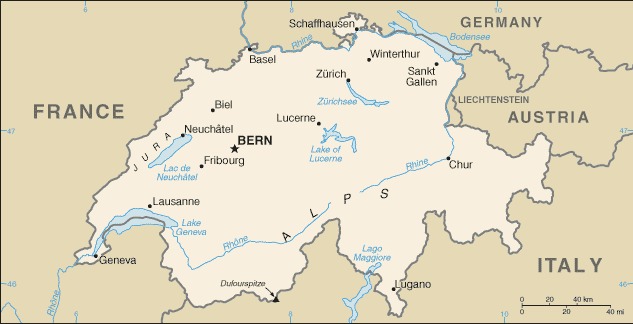
Maps
Articles About Switzerland
Destinations
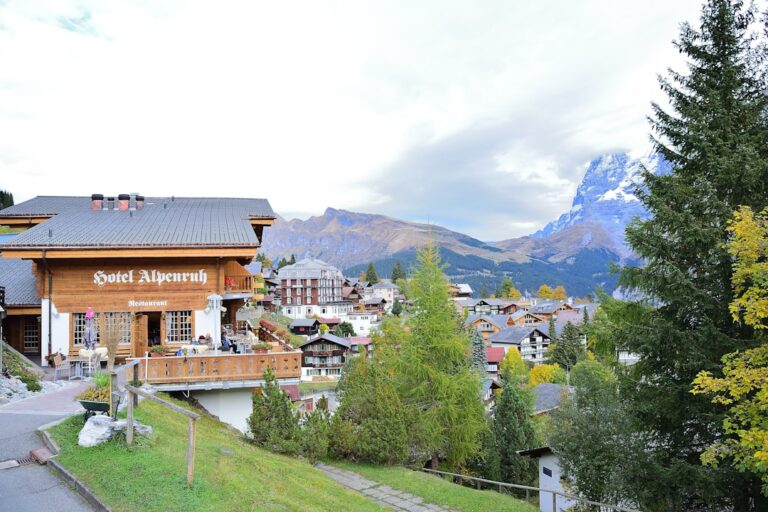
The Swiss Alps Without Breaking the Bank
Switzerland has a reputation problem.
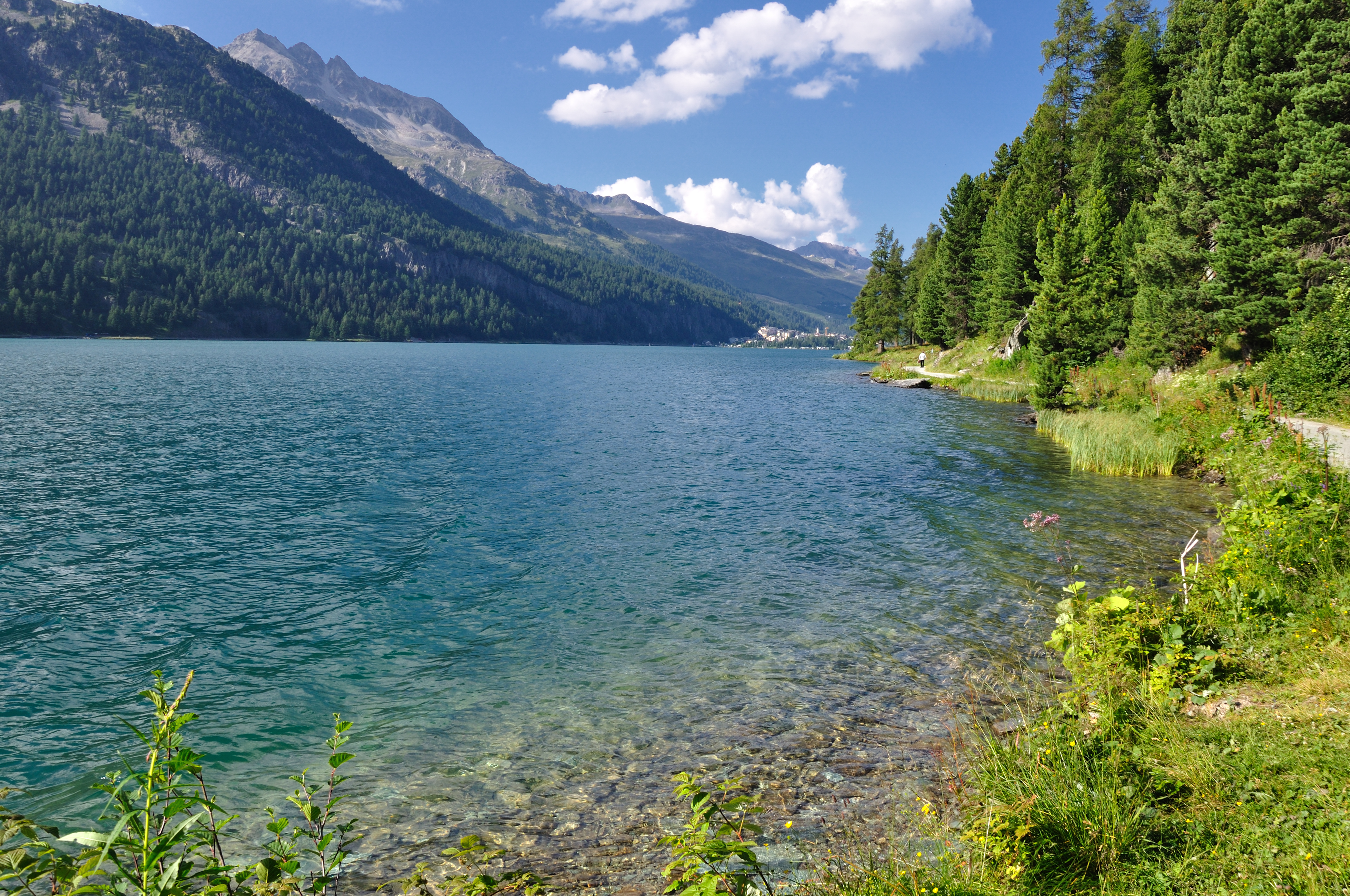
Guest Post: Discovering Switzerland - Things to See and Do in Switzerland
Switzerland in Western Europe is a destination sometimes overlooked by tourists who automatically think of France, Germany and the UK…
Travel
The Swiss Alps Without Breaking the Bank
Switzerland has a reputation problem.