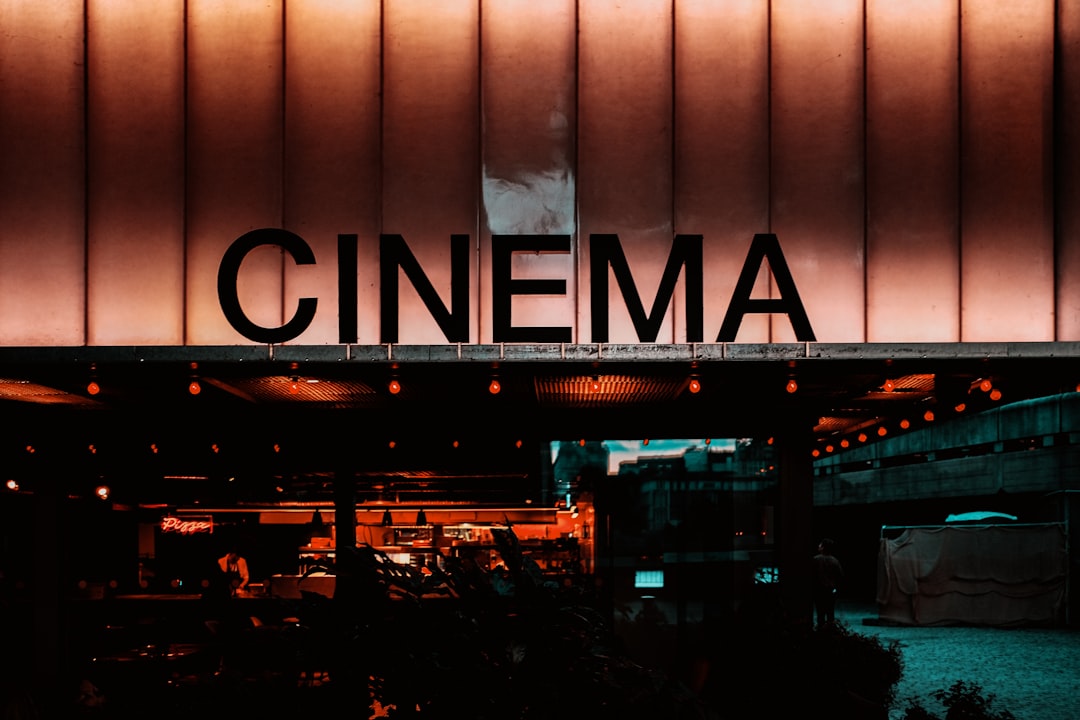
France didn’t just invent movies—it invented the idea that cinema could be art. The Lumière brothers shot the first motion picture in Lyon in 1895, and from that moment, the French have taken cinema with a seriousness that shaped global film culture. Understanding French cinema is not just about watching movies; it’s about understanding how the French think about art, truth, and the human experience.
This matters for travelers because cinema is deeply woven into French life. There are art-house cinemas on almost every corner, film criticism is treated as legitimate intellectual discourse, and watching a movie in France is a different experience than watching a movie elsewhere. Learning about French cinema will deepen your understanding of French culture and make your film experiences in France more meaningful.
The Lumière Brothers and Cinema’s Birth
On December 28, 1895, Auguste and Louis Lumière screened the first motion picture at Café de l’Inde in Paris. It was called “L’Arrivée d’un train en gare de La Ciotat” (Arrival of a Train at La Ciotat Station), and it was about 50 seconds long. It showed a train arriving at a station, and according to legend, audiences gasped and shrieked, convinced the train was about to burst through the screen.
The Lumière brothers were inventors and businessmen. They filmed short sequences of daily life—people leaving their factory, babies being fed breakfast, people playing cards. These weren’t stories; they were just moments of life captured mechanically. The brothers called their invention the “cinématographe,” and they sent cameras around the world, inventing not just cinema but cinema as a global medium.
From this moment, French culture developed a particular relationship with cinema. It wasn’t entertainment—it was a new way of seeing the world. This fundamental idea, that cinema is a serious medium capable of truth and beauty, has never left French culture.
The Nouvelle Vague: When Cinema Became Philosophy
The Nouvelle Vague (New Wave) emerged in the late 1950s and revolutionized not just French cinema but cinema globally. Directors like Jean-Luc Godard, François Truffaut, Claude Chabrol, Jacques Rivette, and Agnès Varda rejected the polished, studio-bound films that had dominated French cinema. They made films with low budgets, unconventional narratives, natural lighting, and philosophical depth.
Truffaut’s “The 400 Blows” (Les Quatre Cents Coups) is the essential Nouvelle Vague film—it’s about a troubled teenager navigating Paris, it has almost no plot, and it’s about the texture of life rather than dramatic resolution. Godard’s “Breathless” (À bout de souffle) invented jump cuts and other techniques that became standard. Varda’s “La Pointe Courte” predated many of the movement’s supposed innovations.
What made the Nouvelle Vague revolutionary wasn’t just style—it was the idea that film could be a personal expression in the way novels were. Directors were auteurs (authors), and their films were singular artistic visions, not products manufactured by a studio system.
This philosophy changed global cinema. Directors in America, Europe, and elsewhere suddenly saw cinema as a valid medium for personal, experimental work. The Nouvelle Vague wasn’t just a French movement—it was a moment when French cinema influenced global cinema culture so profoundly that it’s still echoing.
Why the French Take Cinema Seriously
France takes cinema seriously in a way that’s almost impossible to explain to Americans who grew up thinking of movies as entertainment or commodities. In France, cinema is “the seventh art” (after sculpture, painting, music, architecture, dance, and poetry). It’s treated as legitimate high art worthy of serious critical discourse.
This is reflected in everything. Film criticism in French newspapers and magazines is serious intellectual work. Universities teach cinema as you would teach literature. Museums show films in galleries. Film festivals are national events. The Cannes Film Festival is culturally important in France in a way that the Oscars simply aren’t in America.
This seriousness also means that French cinema isn’t required to be commercially successful to be considered valuable. A film that’s difficult, experimental, or philosophical can be celebrated as an important artistic statement even if most people don’t want to watch it. This creates space for genuine artistic risk-taking that commercial cinema elsewhere can’t accommodate.
The Cannes Film Festival and French Film Culture
The Festival de Cannes (Cannes Film Festival) happens every May in the city of Cannes on the Côte d’Azur. It’s the world’s most prestigious film festival, and it’s a genuinely big deal in France. The Palme d’Or (Golden Palm) award is the highest honor a film can receive globally.
For travelers, Cannes in May is either a wonderful experience or a frustrating one. The city is full, hotels are expensive, and unless you have accreditation or serious connections, you won’t be watching the official festival films. But the city itself is full of cinema culture, and just walking around Cannes during the festival, seeing the red carpet, seeing the cinema brought to a city, is actually cool.
Outside of Cannes, there are numerous film festivals throughout France. Avignon has a theater festival that includes film. Most cities have film festivals. These are generally accessible to regular tourists and genuinely good experiences if you’re interested in cinema.
Modern French Cinema: Directors Worth Knowing
Modern French cinema continues the tradition of personal, artistic filmmaking. Some contemporary French directors have achieved global recognition.
Jacques Audiard makes films about damaged characters navigating difficult circumstances. “Dardenne Frères” (The Dardenne Brothers, Belgian but close cousins spiritually) influenced him. His films “Prophet” and “Paris, Texas” are about marginal figures with dignity.
Céline Sciamma is a younger director making films about bodies, identity, and desire. “Tomboy” is about a girl passing as a boy in a new neighborhood. “Portrait of a Lady on Fire” is about the relationship between a painter and her subject. Her work is visually gorgeous and thematically complex.
Julia Ducournau makes visceral, body-horror inflected films. “Titane” is about a woman who becomes pregnant after having sex with a car and is genuinely difficult to categorize. It won the Palme d’Or at Cannes. Her work is challenging and deliberately provocative.
Michel Gondry makes whimsical, imaginative films about memory and emotion. “Eternal Sunshine of the Spotless Mind” is about a couple erasing each other from their memories. His films have a distinctive visual style and dreamlike quality.
Xavier Dolan is a younger Québécois-French director making stylized, emotional films. “Laurence Anyways” is about a trans woman’s life and her relationship. His films are visually rich and emotionally intense.
None of these directors make popcorn films. They make films that require attention and openness. They’re successful because French cinema values exactly this kind of work. Watching one of these films helps you understand what French cinema values—complexity, beauty, emotional truth, and artistic risk.
The Art-House Cinema Tradition
In Paris and other French cities, there are cinemas showing experimental films, old films, foreign films, and films that commercial cinemas won’t touch. These are called “salles de cinéma d’art et d’essai” (art-house cinemas), and going to one is a genuinely different experience from a commercial multiplex.
The Cinémathèque Française in Paris is the most famous—it’s an archive and screening space, and you can watch films from their collection. There are smaller art-house cinemas throughout French cities, often run as cultural institutions rather than profit centers. They show things like classic cinema, restored prints, experimental work, and films in original languages with subtitles.
Going to an art-house cinema in France is part of understanding French culture. You’re participating in a tradition of cinema as public good rather than consumer product. The ticket prices are reasonable, the audiences are genuinely there to watch and think about film, and you’re often seeing something you couldn’t see anywhere else.
Watching a Film in a French Cinema
The experience of watching a film in a French cinema is worth understanding. There’s no talking during the film—this is universal, but French cinemas are particularly quiet and respectful. The pre-film advertising is often minimal. The film starts roughly when it’s supposed to.
If the film is in French, there are no English subtitles. If it’s in English, there are French subtitles. This is how cinema works in France. If you want to watch an English-language film with French subtitles, that’s what’s available. Your choice is to read French subtitles or try to follow along in English while French people around you reference them.
The program notes or descriptions are often in French only, which might be challenging if your French is basic. But French cinemas are generally welcoming to foreigners. Buying a ticket, finding your seat, settling in—it’s the same as anywhere.
The César Awards: France’s Oscars
France has its own film awards called the César Awards (or sometimes just Césars), created in 1976. While the Oscars are broadcast live and watched by millions globally, the Césars are a more intimate affair, broadcast on French television and genuinely important to French film culture.
There’s something wonderful about the Césars because they’re genuinely about honoring French cinema. They’re not about spectacle or commercialism. They’re about recognizing work that matters.
Why French Cinema Matters
French cinema matters because it represents a different way of thinking about film. Instead of cinema as commercial entertainment, it’s cinema as artistic expression. Instead of film as profit center, it’s film as cultural contribution. Instead of the director serving the studio, the studio (or funding body) serves the director’s vision.
This approach to cinema has influenced global filmmaking profoundly. When directors around the world reject commercial pressure to make personal films, they’re working in a tradition that the French invented and continue to champion.
How to Experience French Cinema as a Traveler
Watch French films before you go. Get familiar with the names, styles, and what French cinema values. “The 400 Blows,” “Breathless,” “Contempt,” “Paris, Texas,” “The Passion of Joan of Arc”—these are foundational.
Go to a cinema while you’re in France. Find an art-house cinema and watch something. Even if it’s in French and you can’t follow, you’re experiencing how French people watch film. The atmosphere, the respect for the medium, the seriousness people bring—it’s different.
Read about Cannes if you’re there in May. Even if you’re not attending, the city is full of cinema culture and it’s worth understanding what’s happening and why it matters.
Talk to French people about film. This is a topic where French people will genuinely engage. They love discussing film, meaning, art, what cinema should do. Asking a French person what film they’d recommend is asking for an intellectual conversation.
Understanding that France treats cinema as art worth taking seriously, that the country prioritizes artistic expression over commercial success, and that cinema was invented here and shaped by French philosophy about beauty and truth—this context makes watching films in France a different experience. You’re not just watching entertainment. You’re participating in a culture that has, for over a century, believed that cinema can reveal truth and beauty in ways that other art forms cannot.




Leave a Reply