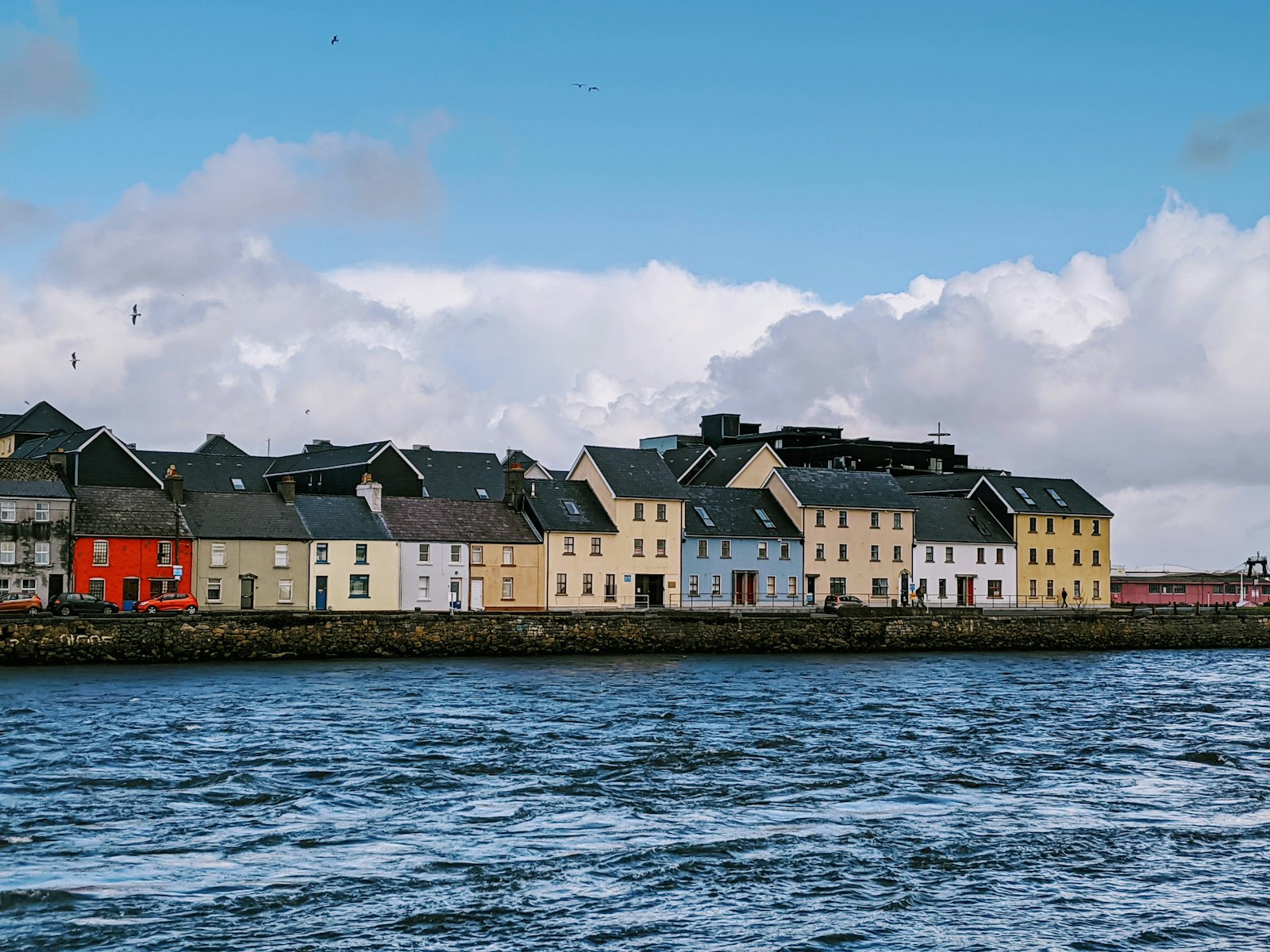
Introduction: Gateway to Ireland’s Wild West
Galway is Ireland’s cultural heart—a bohemian, artistic harbor city on the Atlantic coast that feels fundamentally different from Dublin. With 80,000 people, it’s small enough to remain charming but large enough to offer excellent restaurants, nightlife, and cultural events. For Americans, Galway offers accessibility to the raw beauty of western Ireland: Connemara’s mountains, the Aran Islands’ isolated culture, and the Burren’s otherworldly landscape.
The west of Ireland is where you experience Ireland at its most authentic, untamed, and culturally distinct. Gaelic language is spoken here, traditional music permeates everything, and the landscape feels genuinely wild. A week in Galway and surrounding areas should be on every Ireland visitor’s itinerary.
Galway City
Layout & Atmosphere
Galway city center is wonderfully compact and pedestrian-friendly. The Spanish Arch waterfront is the heart of the city, with restaurants, bars, and street performers creating a lively atmosphere. The city fans out into medieval laneways (called “quays”) filled with bohemian shops, vintage boutiques, galleries, and pubs.
The dominant characteristic is artistry and creativity. Street buskers are genuinely talented. Murals and street art appear everywhere. Independent shops outnumber chains. The student population (University of Ireland, Galway) keeps things youthful and progressive.
Weather in Galway is notoriously changeable—locals joke it can be all four seasons in one day. Bring waterproof layers.
Must-See Areas
The Spanish Arch & Waterfront
The Spanish Arch is a semi-fortified structure built in the 1600s, originally part of the city’s fortifications. Today it’s a tourist landmark and backdrop for countless photos. The small museum inside (€4 admission) has minimal content, so skip it unless you want a quick shelter from rain.
The waterfront extends east and west from here. The Galway Hookers (traditional fishing boats) are often anchored nearby—picturesque and iconic to Irish maritime culture. Walk along the quays at sunset; the light is magical.
The Latin Quarter
The interconnected medieval streets southeast of the Spanish Arch form what locals call the Latin Quarter (also called the Bohemian Quarter). This is Galway’s most charming area, with narrow winding laneways, independent shops, galleries, and cafés. Street art is prolific. You could spend hours just wandering, ducking into shops, and discovering hidden courtyards.
Key streets include Shop Street (the main shopping street), High Street, and the various quays (Quay Street, Long Walk, etc.). This is where bohemian Galway thrives.
Eyre Square
The city’s main public square, surrounded by historic buildings and shops. It’s pleasant but less charming than the Latin Quarter. The railway station borders the square. This is more utilitarian than picturesque but worth a quick walk-through.
Food & Dining
Galway punches well above its weight for dining. The food scene is excellent and surprisingly affordable.
Seafood:
- Cote (casual seafood spot, €14-20)
- Aniar (upscale, Michelin-starred, €50-70, reservation essential)
- McDonagh’s (fish and chips, iconic, €8-12)
Irish & Comfort Food:
International:
Markets & Casual:
Dinner reservations are essential at weekends and in summer. Many restaurants are small (30-40 seats) and fill quickly.
Nightlife & Pubs
Galway’s nightlife is the liveliest outside Dublin. Traditional music sessions happen nightly in dozens of pubs—unlike Dublin where they’re occasional, in Galway they’re everywhere.
Music Pubs:
Local Character:
A typical evening: Have dinner, head to a pub for a few drinks and a music session, then move to another pub or a club if you’re staying late. Live music continues until midnight or later. There’s no cover charge for pub sessions; you pay for drinks.
A pint of Guinness costs €5.50-6. Most pints are €5-5.50. Spirits and wine are comparable to US prices.
Accommodation
Galway has options at all price points.
Budget (€40-80 per night):
Mid-range (€80-140):
Upscale (€140+):
Book ahead, especially weekends and June-August. Galway fills up quickly given its small size.
Day Activities in Galway City
Connemara
Connemara is a mountainous, wild region north of Galway characterized by bogs, lakes, mountains, and sparse settlement. Entire valleys contain just a handful of houses. It’s one of Ireland’s most beautiful and least populated regions.
Scenic Driving
The Connemara Loop is a scenic drive (60 km) circling the region, taking 3-4 hours including stops. Leave Galway north on the N59 toward Maam Cross, then head west toward Clifden, the region’s main town.
Stops include:
Why Connemara Matters
Connemara represents “unspoiled Ireland.” It’s the region where tourism hasn’t overly commercialized the landscape. Sheep outnumber people. Gaelic is spoken natively. Traditional culture remains authentic. Visiting Connemara feels like driving through 19th-century Ireland, with only occasional modern interruptions.
Stay overnight in Clifden to truly experience the region. The town is small but authentic. Dining is good. The surrounding landscape dominates the experience.
The Aran Islands
The Aran Islands (Oileáin Árann in Irish) are three small rocky islands 40 kilometers off the coast. Inis Mór (the largest), Inis Meáin, and Inis Oírr are the main islands. The islands are remote, windswept, and home to strong Irish language and culture.
Getting There
From Doolin (Clare): Ferry takes 40 minutes, costs €15. Departs 10 AM, returning at 4 PM (check schedules—they vary seasonally). This is the most accessible ferry.
From Rossaveal (Connemara): Ferry takes 40 minutes, costs €13-15. Departs 10:30 AM, returning at 5 PM. More dramatic drive to the ferry port.
From Connemara Airport: Small 6-seater planes fly to the islands daily (€35 each way, 10 minutes flight time). This is expensive but exhilarating—you get aerial views of the islands and Connemara.
Inis Mór (the Biggest Island)
The largest island has 800 residents and the most tourism infrastructure. Attractions include:
Dún Aonghasa: An Iron Age cliff fort perched on 100-meter cliffs. The setting is dramatic—stone walls overlooking the Atlantic. The short walk from the village is steep but manageable. Admission is €5. This is the islands’ main attraction.
Bike rental: The island is best explored by bike (€10-15 per day). Bikes let you access remote areas and move faster than walking. The road goes around the island’s perimeter.
Beaches: Killeany beach is a substantial sand beach on the north side.
Pubs & restaurants: Tigh Fitz (traditional music most nights), various cafés and restaurants in the village.
Inis Mór can be done as a day trip, but staying overnight is better. Accommodation includes guesthouses (€70-120) and hostels (€30-50).
Inis Meáin (the Quietest)
Smaller and more remote than Inis Mór, Inis Meáin has 200 residents and minimal tourism. Irish writer John Millington Synge spent time here and wrote about the islands. The island has quiet beaches, walking trails, and a genuinely isolated feeling.
Accommodation is basic (guesthouses, limited options). Ferries are less frequent. This is for travelers seeking solitude and authenticity rather than tourist attractions.
Inis Oírr (the Smallest)
The smallest island has less tourism than Inis Mór but more than Inis Meáin. Key sites include the Plassey wreck (a ship that wrecked in 1960, now a landmark), a lighthouse, and quiet beaches.
Planning Island Time
1-day option: Ferry from Doolin, spend 6-7 hours on Inis Mór, explore Dún Aonghasa and surroundings, ferry back to Doolin.
2-day option: Ferry from Doolin or Rossaveal, overnight on Inis Mór, explore fully, return next day.
3-day option: Visit Inis Mór (1 night), then Inis Meáin or Inis Oírr (1 night), returning on day 3.
The islands are expensive (food costs 20-30% more than mainland), windy, and can be foggy. The boat rides can be rough in bad weather. But the islands remain one of Ireland’s most authentic experiences—ancient landscape, native Irish speakers, and a sense of genuine remoteness.
The Burren
The Burren is a strange, beautiful landscape of limestone pavement that looks lunar. It covers 300 square kilometers and is characterized by distinctive geology—little soil, sparse vegetation, and exposed limestone creating a distinctive appearance.
What Makes the Burren Special
The landscape is unique. Compared to rolling green Ireland, the Burren’s grey stone, sparse vegetation, and rocky terrain feel alien. Spring wildflowers (April-June) make it spectacular—rare orchids and alpine flowers bloom. The Burren supports Mediterranean plants despite its northern location.
Key Stops
Ailwee Cave: An underground river within a limestone cave system. Tours (€12) last 30 minutes and descend into the cave. The cave remains cool year-round (9°C). This is more of an activity than a scenic stop.
Poulnabrone Dolmen: A 6,000-year-old portal tomb now a major tourist photo stop. It’s literally a pile of stones—not much to see, but historically significant. The setting in the Burren landscape is nice.
Doolin: A small village on the Burren’s edge, famous for traditional music. Multiple pubs have music sessions nightly. The village is tiny but has good pubs, restaurants, and accommodation. It’s an excellent base.
Liscannor: A village with a beach and less tourism than Doolin.
Exploring the Burren
Rent a car and drive scenic roads through the Burren (N67 and R480 are scenic routes). Or hike—numerous trails cross the landscape. The Burren Way is a long-distance hiking trail.
The Burren is less about specific attractions and more about the landscape itself. Drive slowly, stop frequently, and appreciate the moonlike terrain.
A Week in the West: Suggested Itinerary
Day 1: Arrive Galway, explore city center, nightlife.
Day 2: Connemara day trip (Kylemore Abbey, Clifden, scenic drives), return to Galway.
Day 3: Overnight in Clifden (stay in Connemara).
Day 4: Aran Islands day trip from Doolin or Rossaveal, stay in Doolin afterward.
Day 5: Explore the Burren from Doolin base.
Day 6: Cliffs of Moher day trip, return to Galway.
Day 7: Rest day in Galway, shopping, museums, final evening out.
This itinerary touches the west’s highlights without feeling rushed.
Practical Information
Transportation: Rent a car for exploring Connemara, the Burren, and getting to ferry points. Galway has good bus connections, but having a car increases flexibility.
Accommodation: Book ahead in Galway, Clifden, and Doolin, especially June-September.
Weather: West Ireland weather is notoriously changeable. Bring waterproof layers. May-June and September are ideal (good weather, fewer crowds). July-August is warmest but busiest.
Cost: The west is more expensive than much of Ireland. Galway, Clifden, and Doolin all have tourist-driven pricing. Food and accommodation are 15-25% more than rural areas.
Language: While English is universal, Irish language signage and fluent Irish speakers are common—particularly on the Aran Islands. This adds cultural richness.
The west of Ireland represents the country’s cultural soul. Galway is the perfect base for exploring this region, and a week here will feel far more authentically Irish than the same time spent in Dublin.




Leave a Reply