No one plans for emergencies while traveling. But emergencies don’t care about your plans. Whether it’s a medical issue, a car breakdown on the Autobahn, a lost passport, or a legal question, knowing key emergency and safety phrases can transform a crisis from terrifying to manageable. This guide covers the language you hope never to need but absolutely must have if disaster strikes.
Germany’s emergency services are excellent—ambulances, police, and rescue services respond quickly and professionally. However, being able to communicate your situation clearly and urgently in German can mean the difference between getting help immediately or waiting while explaining your problem in English.
Emergency Services: When to Call and How
Germany has unified emergency numbers that connect to all services. Knowing how to explain your situation is critical.
The Emergency Numbers
- 112 — Fire, medical emergencies, and rescue (the main universal emergency number)
- 110 — Police (non-emergency situations should use this)
- 116000 — Missing children and endangered persons (EU number, works in Germany)
- 112 in cases of severe threat to life or limb
Calling Emergency Services
Ich brauche Hilfe! (ikh BROW-khuh HIL-fuh) — I need help!
Rufen Sie einen Krankenwagen! (ROO-fen zee eye-nen KRAHN-ken-vah-gen) — Call an ambulance!
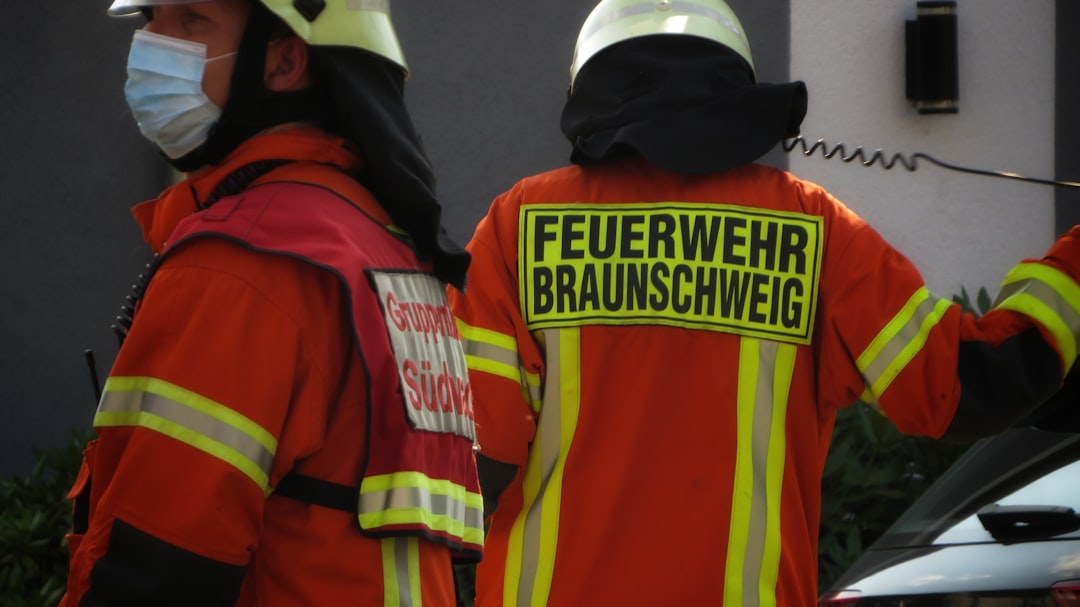
Rufen Sie die Feuerwehr! (ROO-fen zee dee FOY-er-vair) — Call the fire department!
Rufen Sie die Polizei! (ROO-fen zee dee poh-lee-TSY) — Call the police!
Das ist ein Notfall! (dahs ist ine NOHT-fahl) — This is an emergency!
Ich habe einen Unfall gesehen (ikh HAH-buh eye-nen OON-fahl guh-ZAY-en) — I’ve witnessed an accident
Es gibt einen Brand (es gibt eye-nen BRAHNT) — There’s a fire
Jemand ist verletzt (YAY-mahnt ist fer-LETST) — Someone is injured
Bitte, schicken Sie schnell einen Krankenwagen (BIT-uh, SHIK-ken zee SHNELL eye-nen KRAHN-ken-vah-gen) — Please, send an ambulance quickly
Speaking to Dispatch
Ich bin in Berlin-Kreuzberg (ikh BIN in berlin-KROITS-burg) — I’m in Berlin-Kreuzberg (providing location)
Die Adresse ist Hauptstraße 42 (dee AH-dres-uh ist HOWPT-shrah-suh fear-tsy) — The address is Hauptstraße 42
Wir sind in der Nähe der Gedächtniskirche (veer zind in dare NAY-uh dare guh-DEKH-niss-kir-khuh) — We’re near the Kaiser Wilhelm Memorial Church (giving landmarks)
Der Patient/Die Patientin ist bei Bewusstsein (dare pah-tsee-ENT / dee pah-tsee-EN-tin ist by buh-VOOST-zine) — The patient is conscious
Der Patient/Die Patientin ist nicht bei Bewusstsein (dare pah-tsee-ENT / dee pah-tsee-EN-tin ist nikht by buh-VOOST-zine) — The patient is unconscious
Der Patient/Die Patientin atmet (dare pah-tsee-ENT / dee pah-tsee-EN-tin AHT-met) — The patient is breathing
Wie lange dauert es, bis ihr da seid? (vee LAHNG-uh DOW-ert es, bis eer dah ZITE) — How long until you arrive?
Medical Emergencies
If you’re seriously ill or injured while traveling, quick communication is essential.
Describing the Problem
Mir ist nicht gut (meer ist nikht GOOT) — I don’t feel well
Ich habe Schmerzen (ikh HAH-buh SHMER-tsen) — I have pain
Mein Herz schmerzt (mine HERTS SHMERST) — My heart hurts / I have chest pain (serious)
Ich kann nicht atmen (ikh KAHN nikht AHT-men) — I can’t breathe (call 112 immediately)
Ich habe hohes Fieber (ikh HAH-buh HOH-es FEE-ber) — I have a high fever
Ich habe Übelkeit (ikh HAH-buh OO-bul-kite) — I’m nauseous / I feel sick
Ich muss mich übergeben (ikh MOOS mikh OO-ber-gay-ben) — I need to vomit / I’m going to be sick
Ich bin ohnmächtig geworden (ikh BIN OHN-mek-tig guh-VOR-den) — I fainted / I became unconscious
Ich bin gestürzt (ikh BIN guh-SHTUR-tst) — I fell
Ich wurde verletzt (ikh VOOR-duh fer-LETST) — I was injured
Ich habe eine allergische Reaktion (ikh HAH-buh eye-nuh ahl-LER-gish-uh ray-AHK-tsee-OHN) — I’m having an allergic reaction
Ich bin diabetisch (ikh BIN dee-ah-BAY-tish) — I’m diabetic
Mein Blutzucker ist niedrig (mine BLOOT-tsoo-ker ist NEED-rig) — My blood sugar is low
Ich bin schwanger (ikh BIN SHVAHNG-er) — I’m pregnant
Severity Indicators
Das ist lebensbedrohlich (dahs ist LAY-bens-buh-DROH-likh) — This is life-threatening
Es ist ernst (es ist ERNST) — It’s serious
Es tut sehr weh (es TOOT zair VAY) — It hurts a lot
Es schmerzt an meiner Seite (es SHMERST ahn MY-ner ZY-tuh) — It hurts on my side
Ich habe Blutungen (ikh HAH-buh BLOOT-oong-en) — I’m bleeding
Die Blutung will nicht aufhören (dee BLOOT-oong vil nikht OWF-hur-en) — The bleeding won’t stop
Ich kann mein Bein nicht bewegen (ikh KAHN mine BINE nikht buh-VAY-gen) — I can’t move my leg
Hospital and Doctor Visits
Even for non-emergencies, hospitals (Krankenhäuser) and doctors are essential to navigate:
At the Hospital
Das Krankenhaus (dahs KRAHN-ken-hows) — Hospital
Die Notaufnahme (dee NOHT-owf-nah-muh) — Emergency room
Ich muss ins Krankenhaus (ikh MOOS ins KRAHN-ken-hows) — I need to go to the hospital
Wo ist die Notaufnahme? (vo ist dee NOHT-owf-nah-muh) — Where’s the emergency room?
Ich brauche einen Arzt (ikh BROW-khuh eye-nen ARTST) — I need a doctor
Können Sie mir einen Arzt rufen? (KUN-en zee meer eye-nen ARTST ROO-fen) — Can you call a doctor for me?
Wann kann ich einen Arzt sehen? (vahn KAHN ikh eye-nen ARTST ZAY-en) — When can I see a doctor?
Das Wartezimmer (dahs VAR-tuh-tsim-mer) — Waiting room
Der Termin (dare TER-min) — Appointment
Ich möchte einen Termin machen (ikh MUKH-tuh eye-nen TER-min MAH-khen) — I’d like to make an appointment
Medical History Questions
Haben Sie Allergien? (HAH-ben zee ahl-LER-ghee-en) — Do you have allergies?
Nehmen Sie Medikamente? (NAY-men zee may-dee-kah-MEN-tuh) — Are you taking medications?
Haben Sie eine chronische Erkrankung? (HAH-ben zee eye-nuh KROHN-ish-uh air-KRAHN-koong) — Do you have a chronic illness?
Wie lange haben Sie diese Symptome? (vee LAHNG-uh HAH-ben zee DEE-zuh ZIM-toh-muh) — How long have you had these symptoms?
Hat das vorher schon mal vorgekommen? (haht dahs FOR-hair SHOHN mahl FOR-guh-kuh-men) — Has this happened before?
Haben Sie Fieber gemessen? (HAH-ben zee FEE-ber guh-MESS-en) — Have you taken your temperature?
Wo genau tut es weh? (vo guh-NOW toot es VAY) — Where exactly does it hurt?
Tut es nur hier weh, oder auch anderswo? (toot es noor heer VAY, OH-der owk AHN-ders-vo) — Does it only hurt here, or elsewhere too?
Medical Procedures and Explanations
Sie brauchen eine Blutuntersuchung (zee BROW-khen eye-nuh BLOOT-oon-ter-zoo-khung) — You need a blood test
Wir müssen ein Röntgen machen (veer MOOS-en ine RUNT-gen MAH-khen) — We need to take an X-ray
Sie müssen zum Ultraschall (zee MOOS-en tsoom OOL-trah-shahl) — You need an ultrasound
Das ist ein Bruch (dahs ist ine BROOK) — It’s a fracture / Break
Das ist eine Verstauchung (dahs ist eye-nuh fer-SHTOW-khung) — It’s a sprain
Wir müssen es nähen (veer MOOS-en es NAY-en) — We need to stitch it
Sie brauchen einen Verband (zee BROW-khen eye-nen fer-BAHNT) — You need a bandage
Hier ist eine Creme (heer ist eye-nuh KRAYM) — Here’s a cream / Ointment
Sie müssen sich ausruhen (zee MOOS-en zikh OWS-roo-hen) — You need to rest
Pharmacy (Apotheke) and Medications
German pharmacies are efficient and well-stocked. Knowing medication language matters:
At the Pharmacy
Die Apotheke (dee ah-poh-TAY-kuh) — Pharmacy
Ich brauche eine Apotheke (ikh BROW-khuh eye-nuh ah-poh-TAY-kuh) — I need a pharmacy
Ich habe ein Rezept (ikh HAH-buh ine ray-TSEPT) — I have a prescription
Können Sie dieses Medikament zubereiten? (KUN-en zee DEE-zes may-dee-kah-MENT tsoo-buh-RY-ten) — Can you prepare this medication?
Wie lange dauert das? (vee LAHNG-uh DOW-ert dahs) — How long will that take?
Das ist zu teuer (dahs ist tsoo TOY-er) — That’s too expensive
Haben Sie etwas Billigeres? (HAH-ben zee ET-vahs BIL-li-ger-es) — Do you have something cheaper?
Ich brauche Schmerzmittel (ikh BROW-khuh SHMERTZ-mit-ul) — I need painkillers
Ich brauche etwas gegen Fieber (ikh BROW-khuh ET-vahs GAY-gen FEE-ber) — I need something for fever
Ich brauche etwas gegen Husten (ikh BROW-khuh ET-vahs GAY-gen HOOS-ten) — I need something for cough
Ich brauche etwas gegen Durchfall (ikh BROW-khuh ET-vahs GAY-gen DOORKH-fahl) — I need something for diarrhea
Ich brauche Magentabletten (ikh BROW-khuh mah-GEN-tah-blet-en) — I need antacid/stomach tablets
Medication Instructions
Wie viel soll ich nehmen? (vee FEEL zol ikh NAY-men) — How much should I take?
Wie oft soll ich es nehmen? (vee OFT zol ikh es NAY-men) — How often should I take it?
Mit oder ohne Essen? (mit OH-der OH-nuh ES-sen) — With or without food?
Vor oder nach dem Essen? (for OH-der nahk dem ES-sen) — Before or after eating?
Gibt es Nebenwirkungen? (gibt es NAY-ben-vir-koong-en) — Are there side effects?
Kann ich das mit anderen Medikamenten nehmen? (KAHN ikh dahs mit AHN-der-en may-dee-kah-MEN-ten NAY-men) — Can I take this with other medications?
Ich bin allergisch gegen… (ikh BIN ahl-LER-gish GAY-gen) — I’m allergic to…
Halten Sie das kühl (HAHL-ten zee dahs KOOL) — Keep it cool / Keep it refrigerated
Police Interactions
You hope you never need this, but being able to communicate with police is important:
When You Need Police
Ich muss die Polizei anrufen (ikh MOOS dee poh-lee-TSY AHN-roo-fen) — I need to call the police
Wo ist die nächste Polizeistation? (vo ist dee NEKH-stuh poh-lee-TSY-shtah-tsee-OHN) — Where’s the nearest police station?
Ich wurde bestohlen (ikh VOOR-duh buh-SHTOHL-en) — I was robbed
Ich wurde überfallen (ikh VOOR-duh OO-ber-fahl-en) — I was assaulted
Mein Portemonnaie wurde gestohlen (mine PORT-mon-nay VOOR-duh guh-SHTOHL-en) — My wallet was stolen
Meine Brieftasche wurde geklaut (MINE-uh BRIEF-tash-uh VOOR-duh guh-KLOWT) — My briefcase/wallet was stolen (casual)
Ich habe ein Anzeige erstatten (ikh HAH-buh ine AHN-tsy-guh air-SHT-aht-en) — I want to file a report
Ich wurde ausgeraubt (ikh VOOR-duh OWS-ger-rowbt) — I was robbed
Jemand hat mir einen Schlag gegeben (YAY-mahnt haht meer eye-nen SHLAHG guh-GAY-ben) — Someone hit me
Ich habe eine Verletzung (ikh HAH-buh eye-nuh fer-LET-soong) — I have an injury (to show police)
Information Police May Ask
Wann ist das passiert? (vahn ist dahs pah-SEERT) — When did it happen?
Wo ist es passiert? (vo ist es pah-SEERT) — Where did it happen?
Können Sie den Täter beschreiben? (KUN-en zee den TAY-ter buh-SHRY-ben) — Can you describe the perpetrator?
War jemand bei Ihnen Zeuge? (vahr YAY-mahnt by EE-nen TSOYT-uh) — Was anyone a witness?
Können Sie den Wagen beschreiben? (KUN-en zee den VAH-gen buh-SHRY-ben) — Can you describe the vehicle?
Das ist ein ernster Fall (dahs ist ine ERN-ster FAHL) — This is a serious matter
Wir werden eine Untersuchung durchführen (veer VER-den eye-nuh OON-ter-zoo-khung DOORKH-fuh-ren) — We will conduct an investigation
Your Rights
Ich möchte einen Anwalt (ikh MUKH-tuh eye-nen AHN-vahlt) — I want a lawyer
Ich möchte einen Dolmetscher (ikh MUKH-tuh eye-nen DOHL-met-sher) — I want an interpreter
Kann ich die deutsche Botschaft anrufen? (KAHN ikh dee DOYTSH-uh BOHT-shoft AHN-roo-fen) — Can I call the German embassy?
Kann ich meine Botschaft anrufen? (KAHN ikh MINE-uh BOHT-shoft AHN-roo-fen) — Can I call my embassy?
Was sind meine Rechte? (vahs zint MINE-uh REKHTS-uh) — What are my rights?
Bin ich unter Arrest? (bin ikh OON-ter ah-REST) — Am I under arrest?
Kann ich gehen? (KAHN ikh GAY-en) — Can I go / Am I free to leave?
Lost or Stolen Documents
This is a common traveler nightmare. Knowing how to handle it is essential:
Reporting Lost/Stolen Items
Ich habe meinen Pass verloren (ikh HAH-buh MINE-en PAHSS fer-LOH-ren) — I’ve lost my passport
Mein Pass wurde gestohlen (mine PAHSS VOOR-duh guh-SHTOHL-en) — My passport was stolen
Ich habe meine Geldbörse verloren (ikh HAH-buh MINE-uh GELT-bur-suh fer-LOH-ren) — I’ve lost my wallet
Meine Kreditkarte wurde gestohlen (MINE-uh KRAY-dit-kar-tuh VOOR-duh guh-SHTOHL-en) — My credit card was stolen
Mein Ausweis wurde gestohlen (mine OWS-vise VOOR-duh guh-SHTOHL-en) — My ID card was stolen
Ich muss eine Anzeige erstatten (ikh MOOS eye-nuh AHN-tsy-guh air-SHAT-en) — I need to file a police report
Wo kann ich eine Anzeige erstatten? (vo KAHN ikh eye-nuh AHN-tsy-guh air-SHAT-en) — Where can I file a police report?
Ich brauche eine Kopie der Anzeige (ikh BROW-khuh eye-nuh KOH-pee der AHN-tsy-guh) — I need a copy of the police report
Können Sie mir eine Bescheinigung geben? (KUN-en zee meer eye-nuh buh-SHINE-i-goong GAY-ben) — Can you give me a certificate/confirmation?
Contacting Your Embassy
Ich bin [Nationality] (ikh BIN American / British / Australian, etc.) — I am [nationality]
Die Botschaft meines Landes (dee BOHT-shoft MINE-es LAHNT-es) — My country’s embassy
Die Amerikanische Botschaft (dee ah-mair-ee-KAH-nish-uh BOHT-shoft) — The American Embassy
Wo ist die Botschaft? (vo ist dee BOHT-shoft) — Where’s the embassy?
Wie kann ich die Botschaft kontaktieren? (vee KAHN ikh dee BOHT-shoft kon-tahk-TEER-en) — How can I contact the embassy?
Ich brauche einen vorläufigen Pass (ikh BROW-khuh eye-nen FOR-loy-fi-gen PAHSS) — I need a temporary passport
Car Breakdown and Accidents
Germany’s Autobahn demands specific emergency language:
Breakdown Situations
Mein Auto ist kaputt (mine OW-toh ist kah-PUTT) — My car is broken down
Mein Auto ist überhitzt (mine OW-toh ist OO-ber-hit-tst) — My car is overheating
Mein Auto springt nicht an (mine OW-toh SHPRINGT nikht ahn) — My car won’t start
Ich habe einen Platten (ikh HAH-buh eye-nen PLAH-ten) — I have a flat tire
Das Benzin ist leer (dahs ben-TSEEN ist LAIR) — I’m out of gas
Das Motor läuft nicht (dahs MOH-tor LOYFT nikht) — The engine won’t run
Können Sie mir helfen? (KUN-en zee meer HEL-fen) — Can you help me?
Ich brauche einen Pannendienst (ikh BROW-khuh eye-nen PAHN-en-deenst) — I need roadside assistance
Wo ist die nächste Tankstelle? (vo ist dee NEKH-stuh TAHNK-shtel-uh) — Where’s the nearest gas station?
Wo ist die nächste Werkstatt? (vo ist dee NEKH-stuh VERK-shtat) — Where’s the nearest auto shop?
Accident Reporting
Ich bin in einen Unfall verwickelt (ikh BIN in eye-nen OON-fahl fer-VIK-ult) — I’m in an accident
Rufen Sie den ADAC! (ROO-fen zee den AH-dahk) — Call ADAC! (German auto club roadside assistance)
Rufen Sie die Polizei! (ROO-fen zee dee poh-lee-TSY) — Call the police!
Ist jemand verletzt? (ist YAY-mahnt fer-LETST) — Is anyone injured?
Rufen Sie einen Krankenwagen! (ROO-fen zee eye-nen KRAHN-ken-vah-gen) — Call an ambulance!
Können Sie Zeuge sein? (KUN-en zee TSOYT-uh ZINE) — Can you be a witness?
Können Sie meine Daten aufschreiben? (KUN-en zee MINE-uh DAH-ten OWF-shry-ben) — Can you write down my information?
Geben Sie mir Ihre Versicherungsinformation (GAY-ben zee meer EE-ruh fer-ZIKH-er-oongs-in-for-mah-tsee-OHN) — Give me your insurance information
Die Telefonnummer meines Versicherers (dee tay-lay-FOHN-noo-mer MINE-es fer-ZIKH-er-ers) — My insurance company’s phone number
Safety in Public and Personal Security
Beyond emergencies, knowing safety language is important:
Feeling Unsafe
Ich fühle mich nicht sicher (ikh FOO-luh mikh nikht ZIKH-er) — I don’t feel safe
Das ist gefährlich (dahs ist guh-FER-likh) — That’s dangerous
Ich habe Angst (ikh HAH-buh AHNKST) — I’m scared / I’m afraid
Ich bin verängstigt (ikh BIN fer-ENGK-sti-tst) — I’m frightened
Jemand folgt mir (YAY-mahnt FOLKT meer) — Someone is following me
Dieser Ort ist nicht sicher (DEE-zer ORT ist nikht ZIKH-er) — This place isn’t safe
Es ist zu dunkel hier (es ist tsoo DOON-kul heer) — It’s too dark here
Requesting Security Help
Können Sie mit mir gehen? (KUN-en zee mit meer GAY-en) — Can you walk with me? (asking for accompaniment for safety)
Wo kann ich eine sichere Unterkunft finden? (vo KAHN ikh eye-nuh ZIKH-er-uh OON-ter-koonft FIN-den) — Where can I find safe accommodation?
Ist die Gegend sicher? (ist dee GAY-gent ZIKH-er) — Is this neighborhood safe?
Sollte ich ein Taxi nehmen? (ZOL-tuh ikh ine TAHK-see NAY-men) — Should I take a taxi?
Können Sie mir einen sicheren Weg zeigen? (KUN-en zee meer eye-nen ZIKH-er-en VEK TSY-gen) — Can you show me a safe route?
Important Contact Numbers to Remember
Write these down before you travel:
112 — Emergency (fire, ambulance, police)
110 — Police (non-emergency)
Your embassy — Research this before traveling
Your travel insurance company — Get their 24-hour number
Your bank — For lost/stolen credit cards
ADAC (German auto club) — For car problems: 0 18 02 / 22 22 22 or +49 89 76 76 76
Final Safety Reminders
- Keep documents safe: Photocopy important documents and store separately
- Trust your instincts: If something feels wrong, it probably is
- Stay aware: Petty theft happens in major cities—watch bags in crowded areas
- Use registered taxis: Avoid unmarked taxis, especially late at night
- Share your itinerary: Tell someone trusted where you’re going
- Register with your embassy: Many countries have optional registration for travelers
- Keep emergency numbers handy: Write them down or save in your phone
- Travel insurance is essential: Covers medical emergencies and other crises
- Learn key phrases: Even if you don’t need them, knowing these phrases reduces panic if you do
- Ask locals: Germans are generally helpful and will direct you to safe areas
Germany is generally very safe, with excellent emergency services and helpful people. By learning this vocabulary, you’re not being pessimistic—you’re being prepared. The goal is to enjoy your travels safely and confidently. Now go forth and have an amazing time in Deutschland, knowing you can handle whatever comes your way. Bleiben Sie sicher (Stay safe)!




Leave a Reply