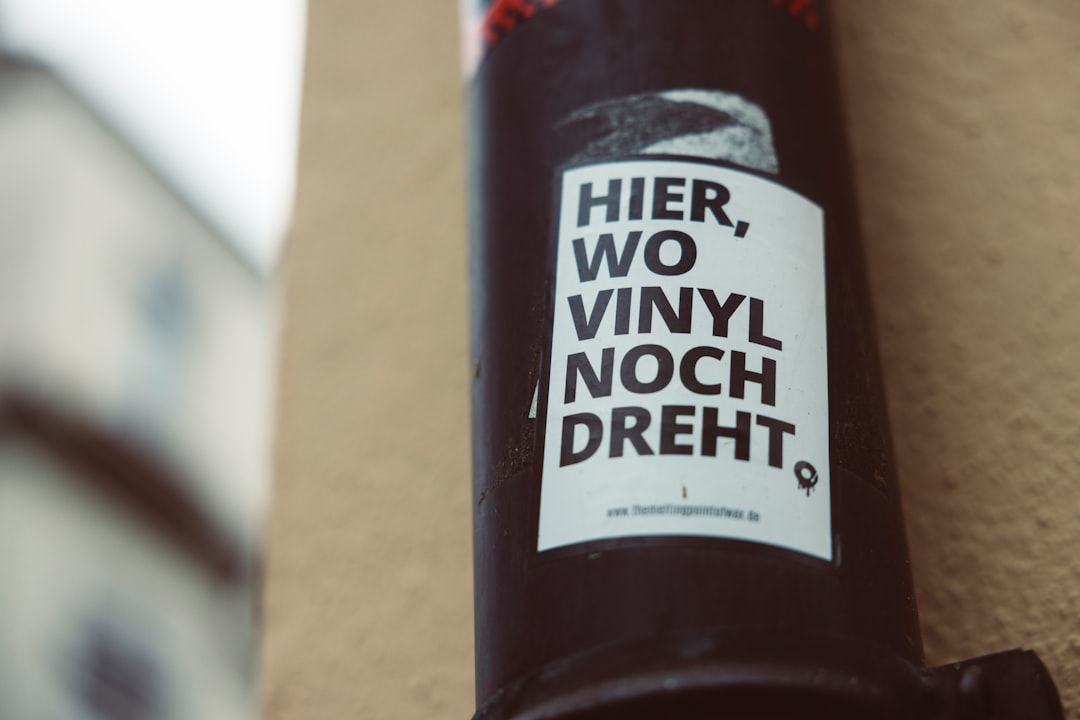
HERE WHERE VINYL STILL TURNS – Urban street art sticker for loving analog record player turntable music

German Insults & Swear Words: When Efficiency Meets Profanity

Photo by Markus Spiske on Unsplash

·

·

Disclaimer: This article contains strong language and insults for educational purposes. These words should be used cautiously and only in appropriate casual contexts. Using them with strangers, in professional settings, or with people you’ve just met can damage relationships and get you in serious trouble. This is a guide to understanding what you might hear, not a recommendation to use these words freely. Learn them to avoid offense and to understand German directness—not to become a profanity expert.

Why German Swearing Is Unique

Germans are famous for two things: engineering precision and blunt directness. Their swearing combines both. German insults aren’t typically mean-spirited in the way American insults can be—they’re delivered with efficiency and a sense of dark humor. The language features creative compound insults that are grammatically precise while being hilariously rude.

German swearing also has a particular cultural context. Germans use profanity more casually than English speakers in many situations. A German might say Fuck! (Scheißdreck!) when they drop something, whereas an English speaker might just say “Damn.” At the same time, Germans maintain formality in professional contexts in ways that English speakers often don’t.

Mild Insults and Expressions of Annoyance

These won’t get you thrown out of anywhere, but they show frustration:

  • Blödsinn (BLURD-zin) — Nonsense / That’s stupid
  • Schwachsinn (SHVAHK-zin) — Stupid / Bullshit (literally “weak sense”)
  • Das ist mir egal (dahs ist meer ay-GAHL) — I don’t care (not technically an insult, but dismissive)
  • Ätzend (ETZ-ent) — Annoying / Lame (literally “caustic”)
  • Blöd (BLURT) — Stupid (basic, mild)
  • Doof (DOOF) — Dumb / Stupid (very common, mild)
  • Idiot (ee-dee-OHT) — Idiot (direct German equivalent)
  • Trottel (TROT-ul) — Blockhead / Dummy (old-fashioned but still used)
  • Esel (AY-zel) — Donkey / Ass (literally donkey, used as insult)
  • Einfaltspinsel (INE-fahts-pin-zel) — Simpleton / Fool (old-fashioned, compound word)
  • Das ist ja Wahnsinn (dahs ist yah VAHN-zin) — That’s insane / That’s crazy (expressing disbelief)

Moderate Swear Words

These words express anger or strong emotion. They’re acceptable among friends but not in formal settings:

  • Scheiße (SHITE-uh) — Shit / Damn
  • Mist (MIST) — Damn / Crap (milder version of Scheiße)
  • Verdammt (fer-DAHMT) — Damned / Damn it
  • Verflucht (fer-FLOOKT) — Goddamned / Cursed
  • Arsch (ARSH) — Ass (anatomical, but used casually)
  • Arschloch (ARSH-lokh) — Asshole (very common, moderately offensive)
  • Pisser (PIS-ser) — Fucker / Prick (from pissen, to piss)
  • Sau (ZOW) — Pig / Bitch (animal-based insult, context-dependent)
  • Sauhund (ZOW-hoont) — Son of a bitch (literally “pig dog”)
  • Teufel (TOY-ful) — Devil / The Devil (mild, often used casually: “Was zum Teufel?” = What the hell?)
  • Zum Teufel (tsoom TOY-ful) — Go to hell / To hell with it
  • Verdammter Mist (fer-DAHM-ter MIST) — Fucking crap
  • Fuck (FOOK) — Fuck (English word, used by Germans in strong emotion)
  • Fick dich (FIK dikh) — Fuck yourself (crude but not the strongest)
  • Strong Expletives and Serious Insults

    These are genuinely offensive and can escalate situations. Use these only in understanding that you’re being seriously provocative:

  • Hurensonn (HOO-ren-zohn) — Son of a bitch (literally “son of a whore,” quite harsh)
  • Bastard (BAHS-tahrt) — Bastard
  • Spasti (SPAHS-tee) — Spastic / Disabled person (deeply offensive slur, never use)
  • Behinderte (beh-HIN-der-tuh) — Disabled person (used as insult, very offensive)
  • Neger (NAY-ger) — N-word in German (extremely offensive racial slur, absolutely never use)
  • Drecksau (DREKS-zow) — Dirty pig (serious insult)
  • Schwein (SHVINE) — Pig / Swine (stronger than mild insult, implies moral corruption)
  • Wichser (VIK-ser) — Asshole / Jerk (from wichsen, to masturbate; quite crude)
  • Scheißkerl (SHITE-kurl) — Shitty guy / Asshole
  • Gottverdammte Scheißdreck (got-fer-DAHM-tuh SHITE-dreck) — God-damned fucking crap (combining multiple profanities for maximum impact)
  • Creative German Compound Insults

    This is where German shines. Germans create absurdly specific and grammatically perfect insults that are both insulting and oddly impressive:

  • Vollpfosten (FOLL-PFOS-ten) — Complete asshole (literally “full post,” Berlin origin)
  • Giftzwerg (GIFT-tsverg) — Poisonous dwarf (an old insult meaning toxic person)
  • Blödmann (BLURT-mahn) — Stupid man / Dumbass
  • Depp (DEP) — Idiot / Dope (Austrian influence)
  • Hosenscheißer (HOH-zen-shite-er) — Pants-shitter (crude, means coward or weak person)
  • Ohrfeigenschädel (OHR-fye-gen-shay-dul) — Face that deserves slapping (literally “slappable skull”)
  • Schweinerei (SHVINE-er-eye) — Pigsty / Filthy situation (can refer to behavior or place)
  • Sauerei (ZOW-er-eye) — Similar to above, pigsty-like behavior
  • Mistvieh (MIST-fee) — Fucking beast (combines Mist and vieh, animal)
  • Schafskopf (SHAFS-kopf) — Sheephead / Stupid person
  • Ochse (OCKS-uh) — Ox / Idiot (comparing person to stupid animal)
  • Tölpel (TUL-pul) — Clumsy oaf / Klutz
  • Flachwichser (FLAHK-vik-ser) — Shallow asshole (flatness + masturbator)
  • Gigatroll (GIG-ah-troll) — Mega-troll (internet age compound)
  • Hirnloser Hampelmann (HIRN-lo-zer HAM-pul-mahn) — Brainless puppet / Complete idiot
  • Insults About Attractiveness (Be Very Careful)

    These can be deeply hurtful and are generally considered below-the-belt attacks:

  • Hässlich (HES-likh) — Ugly
  • Scheißaussehen (SHITE-ow-zay-hen) — Fucking ugly (literally “shitty looking”)
  • Fett (FET) — Fat (direct, can be hurtful)
  • Magersüchtig (MAH-ger-ZOOK-tig) — Anorexic (implying someone looks skeletal)
  • Pickelgesicht (PIK-ul-guh-zikt) — Pimple face (juvenile, mocking acne)
  • These are not recommended for use. They damage relationships and reflect badly on you.

    Austrian vs. German Swearing Differences

    Austrians have their own flavor of swearing. They tend to be slightly more colorful and less efficient than Germans:

  • Oasch (OASH) — Ass (Bavarian/Austrian variant of “Arsch”)
  • Blunzn (BLOONTZN) — Blood sausage (but used as insult in Austrian dialect)
  • Saustall (ZOW-shtahl) — Pigsty (both German and Austrian, but Austrians use it more)
  • Grantl (GRAHNT-ul) — Grumpy person (specifically Austrian)
  • Schmalzgebilde (SHMAHLTS-guh-BIL-duh) — Lard product (creative Austrian insult)
  • Fetzenschädel (FET-zen-shay-dul) — Rags head (Austrian insult)
  • Austrian swearing also tends to include more religious references, reflecting the Catholic tradition in Austria:

  • Heilige Scheiße (HY-li-guh SHITE-uh) — Holy shit
  • Gottverdammte Scheißkerl (got-fer-DAHM-tuh SHITE-kurl) — God-damned shitty guy
  • Kruzifix (kroo-tsi-FIX) — Crucifix (used as mild expletive, very Austrian)
  • When Germans Actually Use These Words

    Context is crucial. You might hear strong swearing in these situations:

  • In traffic accidents — Germans swear extensively at bad drivers (“Verdammter Schwachsinn!”)
  • When things break — Dropping something valuable triggers immediate profanity
  • In sports — Watching football/soccer with Germans gets profane
  • In bars late at night — After beers, swearing increases significantly
  • Among close friends — Casual swearing bonds groups together
  • In jokes and dark humor — Germans love dark comedy involving profanity
  • In arguments — When emotions run high, swearing escalates naturally
  • You will NOT hear strong swearing in these situations:

  • Professional workplaces (especially formal companies)
  • With people you just met
  • With authority figures (police, bosses, teachers)
  • In restaurants or cafés during the day
  • With elderly people
  • In formal settings or official institutions
  • With people’s family members
  • Cultural Context: German Directness

    Germans don’t consider swearing as inherently offensive as English speakers sometimes do. A German might say Scheiße! (Shit!) when frustrated without intending deep offense. The word is blunt, efficient, and expresses emotion clearly.

    However, Germans are extremely formal in professional and unfamiliar contexts. The same person who swears freely with friends will be perfectly proper with strangers or at work. This isn’t hypocrisy—it’s understanding context.

    The famous German efficiency applies even to profanity. Germans don’t ramble with colorful metaphors; they get straight to the point. “Das ist Scheißdreck” (That’s shit garbage) is more German than any elaborate English curse.

    What NOT to Do

  • Don’t use these words casually with strangers — It will make you seem aggressive or unstable
  • Don’t use them to try to fit in — Non-natives who overuse profanity sound trying-too-hard
  • Don’t direct them at people — There’s a huge difference between saying “Scheiße!” at a situation vs. “Du bist ein Arschloch!” (You’re an asshole) at a person
  • Don’t assume that Germans using these words with you means you should use them back — It’s a sign of group bonding, not necessarily permission
  • Don’t confuse understanding these words with permission to use them — This guide is for comprehension, not license
  • Why This Matters for Travelers

    Understanding German insults and swearing serves three purposes:

    1. Comprehension — You’ll understand arguments, jokes, and casual conversation without being shocked
    2. Avoiding offense — You’ll recognize when you’ve crossed a line
    3. Cultural appreciation — German directness and humor becomes clearer

    The best approach is to learn these words passively (understand them when you hear them) while actively using only mild expressions. Use Scheißdreck (shit garbage) when you’re frustrated, but don’t call someone an Arschloch (asshole) unless you’re prepared for serious consequences.

    Germans will forgive accents, grammatical errors, and mispronunciation. They will not forgive deliberate insults or aggressive language from someone who should know better. Respect their directness, but maintain your own politeness until social signals indicate otherwise.

    Learn these words, understand the culture they come from, but use them wisely. In German culture, as in life, efficiency and directness matter—but so does respect and context.


    Free Newsletter!

    Join the Europetopia Newsletter for free tips on travel, history, and culture in Europe!

    We promise we’ll never spam! Take a look at our Privacy Policy for more info.


    Jonathan Avatar

    Written by

    Related Articles

    Comments

    Leave a Reply

    Your email address will not be published. Required fields are marked *

