Getting around a country is essential for any traveler, and Denmark offers an excellent public transportation system that will take you from Copenhagen’s urban core to the windmills of Jutland and the island paradises beyond. Whether you’re navigating the efficient DSB trains, cycling through Copenhagen’s legendary bike lanes, or hopping on a ferry to reach one of Denmark’s many islands, you’ll need to know the right words and phrases. This guide covers everything from train travel to the beloved Danish bicycle culture.
Train Travel: The Danish Railway System (DSB)
Danish State Railways, or DSB (pronounced “day-ess-beh”) is the primary rail operator in Denmark. The system is clean, efficient, and generally on time.
Basic Train Vocabulary
- Tog (tawg) – Train. The general term.
- Station (stah-SHUN) – Train station. Major stations are called “togstation.”
- Togstation (tawg-stah-SHUN) – Train station (specifically).
- Købeninavia Station (KØ-bun-havn stah-SHUN) – Copenhagen Central Station. The main hub.
- Tog til… (tawg til) – Train to… “Tog til Aarhus” = train to Aarhus.
- Når kommer det næste tog? (nahr KOM-ur day NAIS-tuh tawg) – When does the next train come?
- Hvad tid afgår toget? (vad tid AHF-gawr TOH-ut) – What time does the train depart?
- Hvor langt tid varer rejsen? (voor LAHNT tid VAH-rur RAI-sun) – How long does the journey take?
Ticket and Reservation Phrases
En enkeltbillet (en EN-kul-bih-LET) – A single ticket.
En tur-retur (en TOOR roo-TOOR) – A round-trip ticket.
Rejsekort (RAI-suh-kort) – Travel card. This is the rechargeable card system used for most Danish public transport.
En rejsekort til København-Aarhus (en RAI-suh-kort til KØ-bun-havn – ah-HOO-soo) – A travel card for Copenhagen to Aarhus.
Jeg vil gerne booke en sæde (yi vil GAIR-nuh BOO-kuh en SAI-duh) – I’d like to book a seat.
Jeg har en reservation (yi har en res-er-VAH-shun) – I have a reservation.
Hvilken classe? (VEEL-kun KLAHSS-uh) – Which class? (1st or 2nd class)
Anden klasse (AHN-un KLAHSS-uh) – Second class. Usually sufficient for most travelers.
Første klasse (FØR-stuh KLAHSS-uh) – First class. More spacious and quieter.
Hvor skal jeg stille min cykel? (voor skahl yi STIL min SEW-kul) – Where should I put my bike? (Many trains have bike spaces)
Important Train Information
Perronen (per-OH-nun) – The platform.
Spor (spor) – Track. “Spor 5” = Track 5.
Afgår (AHF-gawr) – Departs. “Toget afgår kl. 14:30” = The train departs at 2:30 PM.
Ankomst (AHN-komst) – Arrival.
Forsinkelse (for-SING-ul-suh) – Delay.
Aflyst (AHF-lewst) – Cancelled.
Skifte tog (SKIF-tuh tawg) – Change trains/transfer.
Hvor skal jeg skifte? (voor skahl yi SKIF-tuh) – Where do I change?
Jeg skal skifte i Odense (yi skahl SKIF-tuh ee OH-dun-suh) – I need to change in Odense.
Første vagon (FØR-stuh VAH-gon) – First car.
Sidste vagon (LAHST-uh VAH-gon) – Last car.
Copenhagen Metro System
The Copenhagen Metro (called Metroem or just Metro) is a modern rapid transit system with several lines.
Metro (MEH-troh) – The Metro. System wide.
Metrostation (MEH-troh-stah-SHUN) – Metro station.
Linje (LIN-yuh) – Line. “Linje M1” = Line M1 (Red Line).
Retning mod… (RET-ning mod) – Direction toward… “Retning mod Vanløse” = heading toward Vanløse.
Næste station (NAIS-tuh stah-SHUN) – Next station.
Udgang (OOD-gahng) – Exit.
Indgang (IN-gahng) – Entrance.
Kort (kort) – Card. Metro cards are electronic.
Billetautomat (bih-LET-ow-toh-maht) – Ticket machine.
Hvor går denne linje? (voor gawr DEN-uh LIN-yuh) – Where does this line go?
Asking for Directions
Navigation is essential when getting around:
Hvor er…? (voor air) – Where is…?
Hvor er togstationen? (voor air tawg-stah-SHUN-un) – Where is the train station?
Hvor er cykelstien? (voor air SEW-kul-STEEN) – Where is the bike path? (Important in Copenhagen!)
Hvordan kommer jeg til…? (VOOR-dahn KOM-ur yi til) – How do I get to…?
Til venstre (til VEN-stuh) – To the left/Turn left.
Til højre (til HØI-ruh) – To the right/Turn right.
Lige frem (LEE-uh frem) – Straight ahead.
Tilbage (til-BAH-guh) – Go back.
Hvor er nærmeste buskur? (voor air NAIR-muh-stuh BUS-koor) – Where is the nearest bus stop? (“Bus station”)
Hvor er cykellejestation? (voor air SEW-kul-LY-uh-stah-SHUN) – Where is the bike rental station? (Popular throughout Denmark)
Taxi and Ride-Share Phrases
Taxi (TAHK-see) – Taxi.
Jeg skal have en taxa (yi skahl hah en TAHK-sah) – I need a taxi.
Til flyvepladsen, tak (til FLEW-uh-plahs-un, tahk) – To the airport, please. (Kastrup Airport serves Copenhagen)
Hvor meget koster det? (voor MENG-ut KOS-tur day) – How much does it cost?
Kan du tage kort? (kahn doo TAH-uh kort) – Can you take a card? (Most Danish taxis do)
Uber – Used in English in Copenhagen, just like in other countries.
Hvad koster det til…? (vad KOS-tur day til) – What’s the cost to…?
Cycling: The Danish Way
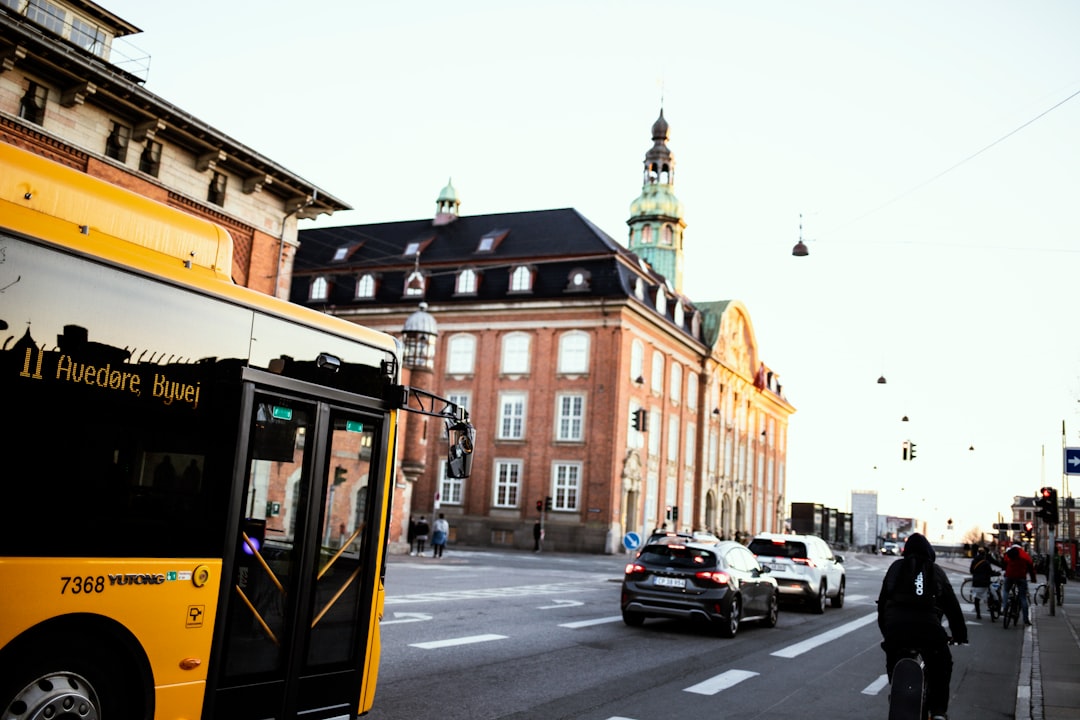
Cycling is a way of life in Denmark, especially Copenhagen. About 60% of Copenhageners cycle daily.
Cykel (SEW-kul) – Bicycle/Bike.
Cykelsti (SEW-kul-STEE) – Bike lane/bike path. These are everywhere in Copenhagen.
Cykellejedstation (SEW-kul-LY-uh-stah-SHUN) – Bike rental shop/station.
Jeg vil gerne leje en cykel (yi vil GAIR-nuh LY-uh en SEW-kul) – I’d like to rent a bike.
Hvor meget koster det at leje en cykel? (voor MENG-ut KOS-tur day aht LY-uh en SEW-kul) – How much does it cost to rent a bike?
Hvor er nærmeste cykellejer? (voor air NAIR-muh-stuh SEW-kul-LY-ur) – Where is the nearest bike rental?
Jeg har fået en punktering (yi har FAHT en punk-TER-ring) – I have a flat tire. (Literally: I got a puncture)
Hvor er værksted? (voor air VAIR-sted) – Where is a repair shop?
Bybicykler (bue-BEE-sew-klur) – City bikes. Copenhagen’s famous bike-share system with stations throughout the city.
Har du en cykelkæde? (har doo en SEW-kul-KAI-duh) – Do you have a bike lock? (Security is important for bike parking)
Safe Cycling Phrases
Pas på (pahs paw) – Watch out/Be careful. Cyclists say this when warning pedestrians or other cyclists.
Ring (ring) – Ring. Many Danish bikes have bells for communication.
Jeg er på cykelstien (yi air paw SEW-kul-STEEN) – I’m on the bike path. (Spoken to pedestrians who might wander into the lane)
Ferry and Water Transport
Denmark is an archipelago, so ferries are essential for island-hopping:
Færge (FAIR-guh) – Ferry.
Færgelejet (FAIR-guh-ly-ut) – Ferry terminal.
Hvornår går færgen til Bornholm? (vor-NOR gawr FAIR-gun til BOR-holm) – When does the ferry to Bornholm leave?
En billett til… (en bih-LET til) – A ticket to…
Bil (beel) – Car. If taking your car on a ferry: “Jeg skal have en billet til en bil”
Cykel (SEW-kul) – Bike. “Jeg skal have en cykel også” = I also need a bike ticket.
Hvor er landgangen? (voor air LAHND-gahng-un) – Where is the gangway?
Når ankommer vi til…? (nahr AHNG-kom-ur vi til) – When do we arrive at…?
Jeg bliver søsyg (yi BLI-vur SØ-sueg) – I get seasick. (Useful information for ferry staff)
Airport Phrases (Kastrup)
Copenhagen’s airport is called Kastrup Lufthavn or just Københavns Lufthavn:
Lufthavn (LOFT-havn) – Airport.
Hvor er indcheckningen? (voor air IN-chek-ning-un) – Where is check-in?
Hvor er sikkerhedskontrol? (voor air SIK-ur-hades-kon-TROHL) – Where is security?
Hvornår skal jeg være på flyvepladsen? (vor-NOR skahl yi VAIR-uh paw FLEW-uh-plahs-un) – What time should I be at the airport?
Jeg skal til… (yi skahl til) – I’m flying to…
Hvor er bagageudlevering? (voor air bah-GAH-uh-OOD-li-ver-ring) – Where is baggage claim?
Mit bagage er ikke kommet (mit bah-GAH-uh air IH-kuh KOM-ut) – My baggage didn’t arrive.
Bus Travel
While trains are more common, buses serve many routes:
Bus (boos) – Bus.
Buskur (BUS-koor) – Bus stop/station.
Busrute (BUS-roo-tuh) – Bus route.
Hvor går bussen hen? (voor gawr BOOS-un hen) – Where does this bus go?
Jeg skal til… (yi skahl til) – I’m going to…
Hvor skal jeg stige ud? (voor skahl yi STI-uh ood) – Where should I get off?
Næste stop (NAIS-tuh stop) – Next stop.
Jeg skal af her (yi skahl ahf hair) – I’m getting off here.
Hvor er nærmeste buskur? (voor air NAIR-muh-stuh BUS-koor) – Where is the nearest bus stop?
Major Bridge and Strait Crossings
Denmark has several important bridge crossings:
Øresundboen (ØR-uh-sund-bron) – The Øresund Bridge, connecting Copenhagen to Malmö, Sweden. One of Europe’s longest bridges.
Storebælt (STOR-uh-belt) – The Great Belt Bridge, connecting Zealand and Funen.
Lillebælt (LIL-uh-belt) – The Little Belt, connecting Funen and Jutland.
When traveling by car or train, you might hear about these or see signs indicating them.
Car Rental and Driving
Biluthyring (BEEL-oo-HEW-ring) – Car rental.
Jeg vil gerne leje en bil (yi vil GAIR-nuh LY-uh en beel) – I’d like to rent a car.
Automatisk (ow-toh-MAH-tisk) – Automatic (transmission).
Manuel (mah-NEW-el) – Manual (transmission).
Hvor skal jeg køre hen? (voor skahl yi KØ-ruh hen) – Which way should I drive?
Jeg er kørt galt (yi air KØRT gahlt) – I’ve gotten lost. (Literally: I’ve driven wrong)
Hvor er nærmeste benzinstation? (voor air NAIR-muh-stuh ben-ZIN-stah-SHUN) – Where is the nearest gas station?
Benzin (ben-ZIN) – Gasoline.
Diesel (DEE-sul) – Diesel.
Final Thoughts: Getting Around with Confidence
Denmark’s transportation infrastructure is excellent, and most Danish people speak English. However, learning these phrases will enhance your experience, show respect for Danish culture, and make your journey smoother. Whether you’re speeding through the Danish countryside on a high-speed train, pedaling through Copenhagen’s famous bike lanes, or hopping between islands by ferry, these words will serve you well.
One final tip: Download the DSB App or Rejseplanen app for real-time train and public transport information—they’re invaluable and available in English. And remember, Danes are generally helpful and patient with travelers who make an effort to speak their language.
God tur! (good TOOR) – Have a good trip!




Leave a Reply