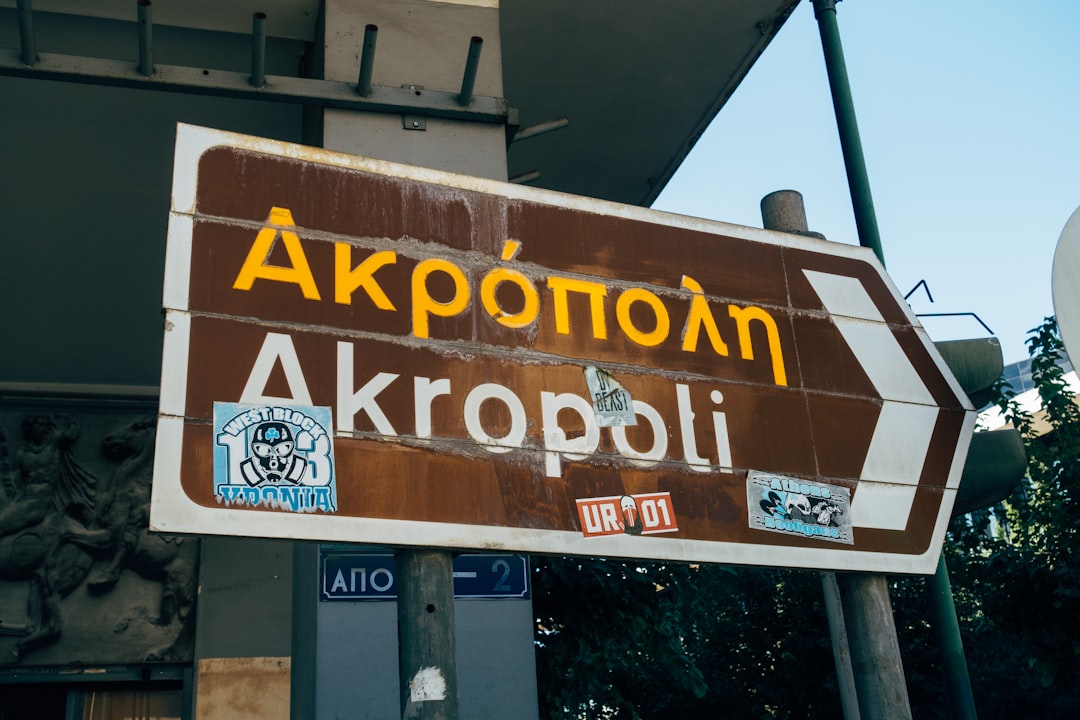
One of the most intimidating aspects of traveling to Greece is confronting the Greek alphabet on street signs, restaurant menus, and shop windows. Many travelers think they’ll need to memorize the entire Greek writing system, but the good news is that Greek is actually quite phonetic once you understand the basic rules. This guide will help you decode Greek text, pronounce Greek words correctly, and feel confident reading signs and menus even if you don’t understand every word. By the end of this guide, you’ll be able to sound out Greek words and understand how the language is structured.
The Greek Alphabet: Letters and Sounds
The Greek alphabet has 24 letters. Here they are with their names, sounds, and how they compare to English letters:
Α, α – Alpha
(AHL-fah) – Sounds like the “a” in “father”
Example: “Agora” (marketplace) – ah-GOR-ah
Β, β – Beta
(BEH-tah) – Sounds like “b” in “book”
Example: “Valtá” (suitcase) – but pronounced “val-TAH” (more like a “v” sound)
Γ, γ – Gamma
(GAHM-mah) – Sounds like “g” in “go”
Example: “Glíssa” (sweet) – GHLEE-sah
Δ, δ – Delta
(THEL-tah) – Sounds like “th” in “this” (voiced)
Example: “Théatro” (theater) – THEH-ah-tro
Ε, ε – Epsilon
(EP-see-lon) – Sounds like “e” in “pet”
Example: “Éna” (one) – EH-nah
Ζ, ζ – Zeta
(ZEH-tah) – Sounds like “z” in “zebra”
Example: “Zésti” (warm) – ZEHS-tee
Η, η – Eta
(EH-tah) – Sounds like “ee” in “bee”
Example: “Théatro” (theater) – THEH-ah-tro
Θ, θ – Theta
(THEH-tah) – Sounds like “th” in “think” (unvoiced)
Example: “Théle” (I want) – THEH-leh
Ι, ι – Iota
(ee-OH-tah) – Sounds like “ee” in “bee”
Example: “Isitírio” (ticket) – ee-see-TEE-ree-o
Κ, κ – Kappa
(KAH-pah) – Sounds like “k” in “kite”
Example: “Kalí” (good) – kah-LEE
Λ, λ – Lambda
(LAHM-dah) – Sounds like “l” in “light”
Example: “Lipí” (sadness) – lee-PEE
Μ, μ – Mu
(MOO) – Sounds like “m” in “mother”
Example: “Mathí” (to learn) – mah-THEE
Ν, ν – Nu
(NOO) – Sounds like “n” in “nest”
Example: “Noto” (south) – NOH-to
Ξ, ξ – Xi
(KSEE) – Sounds like “x” in “box” (the “ks” combination)
Example: “Xéno” (foreign) – KSHE-no
Ο, ο – Omicron
(OH-mee-kron) – Sounds like “o” in “not”
Example: “Óhti” (whatever) – OH-tee
Π, π – Pi
(PEE) – Sounds like “p” in “pot”
Example: “Pitra” (stone) – PEE-trah
Ρ, ρ – Rho
(RHO) – Sounds like “r” in “red” (but rolled slightly)
Example: “Rúpino” (dirty) – ROO-pee-no
Σ, σ/ς – Sigma
(SIG-mah) – Sounds like “s” in “sun”
(Note: σ is used at the beginning and middle of words, ς is used at the end)
Example: “Síta” (wheat) – SEE-tah, “Otós” (this) – AH-tos
Τ, τ – Tau
(TAH-oo) – Sounds like “t” in “ten”
Example: “Tálíra” (money) – tah-LEE-rah
Υ, υ – Upsilon
(OOP-see-lon) – Sounds like “ee” in “bee” (same as iota and eta in modern Greek)
Example: “Ýmnos” (hymn) – EEM-nos
Φ, φ – Phi
(FEE) – Sounds like “f” in “fun”
Example: “Fília” (friendship) – fee-LEE-ah
Χ, χ – Chi
(KHEE) – Sounds like “ch” in Scottish “loch” (guttural, not like “ch” in “cheese”)
Example: “Chara” (joy) – HAH-rah
Ψ, ψ – Psi
(PSEE) – Sounds like “ps” in “psychology”
Example: “Psáli” (sings) – PSAH-lee
Ω, ω – Omega
(OH-MEH-gah) – Sounds like “o” in “not” (same as omicron in modern Greek)
Example: “Óra” (hour) – OH-rah
Letter Combinations and Diphthongs
Greek has several letter combinations that produce different sounds than you might expect:
ΑΙ – AI
(eh) – Sounds like “e” in “pet”
Example: “Aír” (air) – EH-rah
ΕΙ – EI
(ee) – Sounds like “ee” in “bee”
Example: “Eis” (one) – EES
ΟΙ – OI
(ee) – Sounds like “ee” in “bee”
Example: “Oikía” (house) – ee-KEE-ah
ΟΥ – OU
(oo) – Sounds like “oo” in “moon”
Example: “Oútó” (this) – OO-to
ΑΥ – AU
(av/af) – Sounds like “av” before vowels, “af” before certain consonants
Example: “Auto” (this) – AHF-to
ΕΥ – EU
(ev/ef) – Sounds like “ev” before vowels, “ef” before certain consonants
Example: “Efkarístó” (thank you) – ef-hah-ree-STOH
ΜΠ – MP
(b) – Sounds like “b” at the beginning of a word
Example: “Mpiráki” (boy) – bee-RAH-kee
ΝΤ – NT
(d) – Sounds like “d” at the beginning of a word
Example: “Ntómata” (tomatoes) – do-MAH-tah
ΓΓ – GG
(ng) – Sounds like “ng” in “ring”
Example: “Ággila” (vessels) – AHN-yee-lah
ΓΚ – GK
(g) – Sounds like “g” in “go” at the beginning of a word
Example: “Gkópa” (shrimp) – GO-pah
Stress Marks and Their Importance
Modern Greek uses an accent mark (/) over a vowel to indicate which syllable receives stress. This is crucial because changing where you stress a word can change its meaning entirely. Always look for the accent mark.
“Thélo” / Θέλω (THEH-lo)
Stress on the first syllable = “I want”
“Thelia” / Θέλια (theh-LEE-ah)
Stress on the second syllable = (hypothetically, a different word)
Words are generally stressed on the last three syllables. If there’s an accent mark, stress that syllable. If there’s no accent, stress the first syllable.
The Greek R: Softer Than English
One difference between English and Greek is the R sound. While English speakers roll their Rs from the back of the throat, Greek uses a softer R sound that’s created more in the middle of the mouth. Try to make your R sound like a softer version of the English R—less of a roll, more of a tap.
“Rethúmno” / Ρέθυμνο
(reh-THEEM-no) – A city in Crete
Notice how the R is softer than an English R.
Common Mistakes English Speakers Make
Mistake 1: Pronouncing “Μ” like “M” and “Β” like “B”
Both “Μ” (mu) and “Β” (beta) can sound like “m” and “b,” but “Β” actually sounds more like a “v” in modern Greek due to a historical sound shift. So “Véta” (beta) sounds like “VEH-tah,” not “BEH-tah.”
Mistake 2: Not pronouncing the Greek “CH” like the Scottish “loch”
The letter “Χ” (chi) is genuinely difficult for English speakers because we don’t have this sound. It’s not like “ch” in “cheese.” It’s a guttural sound from the back of the throat, like the German “ach” or the Scottish “loch.” Practice saying it like you’re trying to clear your throat gently.
Mistake 3: Pronouncing Greek vowels differently than spelled
Greek is fairly phonetic. If you see “Α,” it’s always “ah.” Don’t fall into the English trap of vowels having multiple sounds depending on context.
Mistake 4: Stressing the wrong syllable
English speakers tend to stress words at the beginning, but Greek follows different rules. Always look for the accent mark and stress that syllable.
Mistake 5: Trying to pronounce “DT” like you would in English
The combination “ΝΤ” at the beginning of a word sounds like “d,” not “nd.” “Ntómata” (tomatoes) is “do-MAH-tah,” not “in-do-MAH-tah.”
Practice Words: Reading Greek Signs
Let’s practice reading some common words you’ll see on signs:
ΤΑΒΕΡΝΑ
T-Α-V-E-R-N-A = TAH-ver-nah = Taverna
ΚΑΦΕ
K-Α-Φ-Ε = KAH-feh = Cafe
ΔΡΟΜΟΛΟΓΙΟ
D-RO-MO-LO-GI-O = dro-mo-LO-yee-o = Schedule/Route
ΕΙΣΟΔΟΣ
E-I-SO-DO-S = ee-SO-dos = Entrance
ΕΞΟΔΟΣ
E-KSO-DO-S = ek-SO-dos = Exit
ΔΕΥΤΕΡΟΛΕ
DE-U-TE-RO-LE = thef-TEH-rah = Monday
ΑΓΟΡΑ
A-GO-RA = ah-GO-rah = Market/Agora
ΘΑΛΑΣΣΑ
THA-LA-SSA = tha-LAHS-sah = Sea
Reading Greek Signs: Real-World Application
Now let’s apply this to actual Greek signs you’ll encounter:
“ΚΑΛΗΣΠΕΡΑ” (Good evening sign)
KAH-LEE-SPEH-rah = Kalispéra
“ΕΛΛΗΝΙΚΑ” (Greek, as in Greek language)
el-lee-nee-KAH = Ellinika
“ΑΠΟΧΗ ΑΠΑΓΟΡΕΥΕΤΑΙ” (Parking forbidden sign)
ah-PO-hee ah-pah-GO-ref-EH-teh = Apochi apagorefeteh
When you’re reading signs, sound out each letter or combination, remember that most Greek words end in vowels, and don’t panic if you don’t understand the meaning—just sounding it out is an achievement!
The Relationship Between Ancient and Modern Greek Pronunciation
If you’re interested in the history of Greek, it’s worth knowing that Modern Greek pronunciation is quite different from Ancient Greek. For example:
- Ancient Greeks would have pronounced “Χ” (chi) like a hard “k” sound
- Ancient Greeks would have pronounced “Η” (eta) like “eh,” while moderns pronounce it “ee”
- The diphthongs in Ancient Greek had different pronunciations than in modern Greek
This can be confusing if you encounter Ancient Greek texts (like on monuments or in academic contexts), but for Modern Greek—which is what you’ll hear and see spoken—the rules in this guide apply.
Practice Sentences: Putting It All Together
Let’s practice some complete sentences:
“Kalispéra, thélo éna néro.”
(kah-lee-SPEH-rah, THEH-lo EH-nah NEH-ro)
Good evening, I want a water.
“Púnda ine i stathmo metro?”
(POO EE-neh ee STAH-thmo meh-TRO)
Where is the metro station?
“Efharisto polí.”
(ef-hah-ree-STOH po-LEE)
Thank you very much.
Stress Practice Exercises
Here are words to practice with stress marks:
“Áthínà” / Αθήνα – Athens (stress on first syllable: AH-thee-nah)
“Kalíméra” / Καλημέρα – Good morning (stress on second syllable: kah-lee-MEH-rah)
“Ísitírio” / Εισιτήριο – Ticket (stress on second syllable: ee-see-TEE-ree-o)
“Restauránt” / Εστιατόριο – Restaurant (stress on third syllable: es-tee-ah-TOH-ree-o)
Audio Resources and Practice
While written guides help, the best way to learn Greek pronunciation is to listen to native speakers. YouTube has many Greek language channels where you can hear proper pronunciation. Listen to Greek music, watch Greek movies with subtitles, and pay attention to how words are pronounced. Your ear will gradually learn the patterns, and your brain will internalize the sounds.
Tips for Reading Menu and Signs in Real Time
When you encounter Greek text while traveling:
- Sound it out letter by letter if necessary—Greeks will understand what you’re doing
- Use your phone’s camera to take a photo and use Google Translate’s camera feature
- Don’t be afraid to ask “Pos levete afto?” (How do you pronounce this?)
- Remember that even if you can’t understand the word, you can probably sound it out
Conclusion
The Greek alphabet and pronunciation system are learnable, and you don’t need to memorize everything before traveling. The key is understanding the basic patterns and being confident enough to attempt pronunciation. Greeks are incredibly patient with travelers trying to read Greek, and your effort to sound out signs and menus—even imperfectly—will be met with encouragement and often helpful corrections.
By practicing the alphabet and common combinations, you’ll find that street signs become readable, menu items become pronounceable, and you’ll feel far more confident navigating Greece. And remember, even if your pronunciation isn’t perfect, Greeks value the attempt far more than perfect silence. Every word you attempt to speak or read is a small victory and a connection to the Greek language and culture. Kalí óri! (Have a good journey!)




Leave a Reply