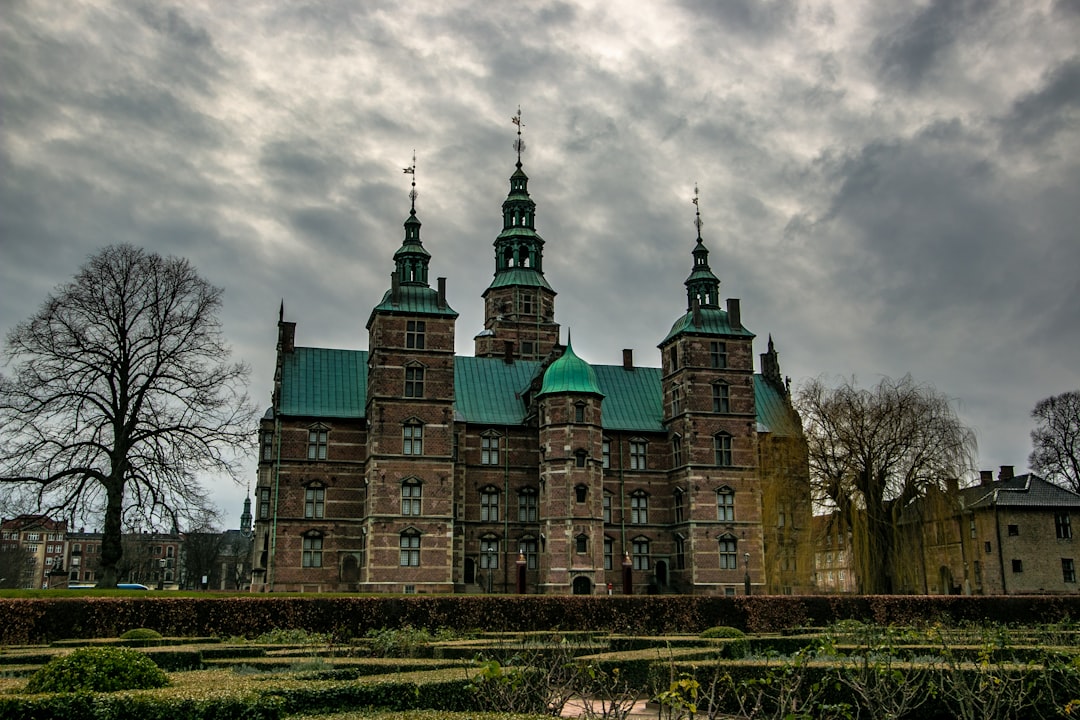
Kronborg Castle in Helsingør, perched on the Danish coast overlooking the Øresund Strait, is one of Europe’s most famous palaces. Every visitor who walks through its courtyards and chambers is walking through a literary legend—the setting of Shakespeare’s “Hamlet.” But few realize they’re also walking through centuries of actual Danish political history, royal intrigue, and the strategic geography that made Denmark wealthy and powerful.
The relationship between Shakespeare’s imagination and historical reality at Kronborg is complicated, fascinating, and entirely worth understanding. Because this castle, and the history it witnessed, is a window into how literature and history intertwine, and how a real place accumulates meaning through both its actual events and the stories told about it.
The Real Amleth: Legend, History, and Saxo Grammaticus
Shakespeare didn’t invent the Hamlet story. He adapted it from “The Danish History,” written by Saxo Grammaticus in the 12th century. Saxo recorded an ancient legend about a Danish prince named Amleth whose father, the king, was murdered by his uncle who then married the queen.
This legend has roots in Viking-era Danish history, though identifying the exact historical figure that inspired it is impossible. Saxo was recording oral traditions that had been circulating for centuries. By the time he wrote them down, they’d been refracted through multiple retellings, mixed with folklore, and shaped by medieval narrative conventions.
But here’s what matters: Saxo was writing about Danish history, in a Danish context, for Danish readers. His Amleth wasn’t a generalized tragic prince. He was specifically located in Danish royal lineage, Danish courts, Danish politics.
Shakespeare, working roughly 400 years after Saxo, transformed this Danish prince into an English play. He set the story in a vaguely Scandinavian context but removed most specific Danish details. “Hamlet” became universal—it could be about any court, any succession conflict, any moral tragedy. But by doing so, Shakespeare slightly erased the story’s Danishness.
Returning to Kronborg today, you’re reattaching that history. You’re remembering that this isn’t just the stage of a famous play. It’s a real castle in a real kingdom with its own distinct history.
Kronborg the Fortress: Strategy, Taxes, and the Øresund
Kronborg wasn’t built as a royal palace. It was built as a fortress and toll station. The castle controls the Øresund Strait—the narrow passage between Denmark and Sweden where the North Sea connects to the Baltic.
For Denmark, this geography meant power. Every ship traveling from the Atlantic to the Baltic had to pass through this strait. Denmark could tax them, monitor them, control them. King Eric of Pomerania established the first toll in 1429, and Kronborg became the enforcement mechanism.
Picture this: a merchant ship from the Netherlands or the Hanseatic League, laden with cargo, traveling east toward trade with Russian merchants in the Baltic. At Kronborg, Danish officials would board, inspect the cargo, and collect a tax—the Sound Toll, as it was called. Most ships complied. Some tried to sneak through; occasionally Danish galleys pursued and captured them.
This system worked for over 400 years. It made Denmark extraordinarily wealthy. The toll revenues funded military expansion, royal luxury, and the building and maintaining of fortresses like Kronborg. An entire economy developed around the strait: pilots who knew the currents, brokers who helped merchants navigate the toll system, officials who administered the tax.
When the King, Frederick II, rebuilt Kronborg into the spectacular castle tourists see today (the original fortress was destroyed and rebuilt in the 1570s-1580s), he was building from wealth generated by strategic geography and naval control. The castle itself is a monument to taxation and maritime power.
The Castle as Royal Residence and Stage
Despite its origins as a fortress, Kronborg evolved into a magnificent royal residence. The courtyard is breathtakingly proportioned—Renaissance architecture at its finest, with intricate red-brick construction and elegant details. The interiors feature royal chambers, great halls, and the kind of architectural magnificence that makes clear: this was a space where monarchy performed itself.
Here’s where Shakespeare matters. By the late 16th century, when Frederick II was expanding Kronborg into its most splendid form, Danish courts had become centers of European cultural sophistication. Troupe of actors, musicians, and poets traveled between courts. Theatrical performances were common entertainment for nobility.
Shakespeare’s “Hamlet” debuted around 1601. By the early 17th century, it had circulated throughout Europe. When European actors performed it, they often mentioned its Danish setting. When sophisticated Europeans thought about Denmark, they increasingly thought about Kronborg and this tragic prince.
There’s no evidence Shakespeare had visited Kronborg or had detailed knowledge of it. But he wrote a play set in Denmark, with a castle setting, that would become so famous that centuries later, tourists would visit the actual castle expecting to see the literary setting.
The Actual Danish History of Kronborg
While Shakespeare was writing about fictional regicide in Denmark, actual Danish history was unfolding around real centers of power. But Kronborg itself witnessed several significant historical moments:
In 1585, King Frederick II held a lavish banquet at Kronborg to celebrate his son’s entrance into adulthood. Hundreds of nobles, ambassadors, and dignitaries attended. The event lasted weeks. The expense was enormous. It demonstrated Danish royal power and wealth to all of Europe.
The castle housed the Danish royal family, hosted diplomatic functions, and served as a symbol of Danish sovereignty. When foreign dignitaries visited Denmark, Kronborg was often their destination. The castle itself was political messaging: this is Denmark’s power, wealth, and cultivation.
The Legend of Holger Danske
But the castle acquired another legend, equally important to Danish cultural identity. Beneath Kronborg, according to Danish folklore, sleeps Holger Danske—a legendary Danish hero from the Charlemagne cycle of medieval romances.
The legend says that Holger Danske, having performed great deeds for Christianity and Denmark, didn’t die. Instead, he fell into an enchanted sleep beneath the castle. He’ll remain asleep until Denmark faces its greatest peril. Then he’ll wake, rise to defend the nation, and save it from destruction.
During World War II, when German occupation seemed to threaten Danish existence, the legend of Holger Danske gained new resonance. Resistance fighters invoked his name. The story circulated that he would wake and save Denmark. It was a form of hope in dark times, a connection to an imagined national continuity.
After the war, when Denmark emerged free from occupation, some Danes felt that Holger Danske had indeed awakened—not literally from beneath the castle, but spiritually. The legend provided a narrative frame for understanding resistance and survival.
You can actually visit the basement area of Kronborg where the legend places Holger Danske’s tomb. It’s a simple stone chamber, bare and atmospheric. Most visitors who descend there report a strange feeling—not quite supernatural, but an awareness of history, legend, and the power of story to shape how we understand places.
The Strait and the Toll: Geography as Destiny
One of the most fascinating aspects of Kronborg is what it reveals about medieval and early modern power. Kronborg’s wealth and significance derived entirely from geography. A castle controlling a narrow strait could become fantastically powerful without ever engaging in major military campaigns.
The castle’s prosperity endured as long as the toll system did. In 1857, after international pressure (including from the newly founded United States, which wanted free shipping access to Baltic trade), Denmark agreed to abolish the Sound Toll. In exchange, Denmark received international financial compensation.
When the toll ended, Kronborg’s strategic importance declined. It remained a royal residence and a symbol of Danish power, but no longer the enforcer of an economic system that enriched the nation.
Today, this history of the toll is almost invisible to casual visitors. But it explains why Kronborg exists in its current form and why Denmark has been historically wealthy. Geography and strategic positioning created the castle.
Shakespeare’s Ghost
When you visit Kronborg today, you encounter this layering of history and literature. Official tours mention Shakespeare. Gift shops sell editions of Hamlet. Visitors come expecting the castle to feel like the set of a play.
In reality, the castle predates Shakespeare’s use of it by decades. It’s built on centuries of earlier Danish power and fortification. Shakespeare borrowed the name “Elsinore” (the Anglicized version of Helsingør, the nearby town) for his castle setting, but his Hamlet isn’t really about Kronborg at all—it’s a universal tragedy that could be set anywhere.
Yet Shakespeare’s enormous fame meant that when tourists finally did visit Kronborg, they came with literary expectations. They expected to see the ghost’s battlements, the stage where Hamlet confronted his uncle, the spaces of the play made physical.
This is the interesting paradox: Shakespeare made Kronborg famous to the English-speaking world, but in doing so, he slightly obscured the castle’s actual historical significance. People visit expecting to find Hamlet, and they need to work a bit to understand the real history of Danish maritime power, strategic geography, and royal magnificence.
Visiting Kronborg Today
When you visit Kronborg, approach it with layers. Yes, enjoy the literary connection—it’s real and meaningful, even if the play wasn’t written about this specific place. Shakespeare’s genius has genuinely shaped how we understand this castle.
But then learn the actual history. Walk the ramparts and understand they were built to enforce a toll on Baltic trade. Visit the royal chambers and appreciate the wealth that geography generated. Stand in the courtyard and imagine the diplomatic functions, the demonstrations of Danish power.
Descend to the lower levels and visit the spaces associated with Holger Danske. Whether you believe in the legend or not, understand that it represents Danish hopes for continuity and survival across centuries.
The strait below the castle still flows with traffic. Ships still pass through the narrow water between Denmark and Sweden. The geography that made Kronborg powerful hasn’t changed, even if the systems of power have.
The Lesson
Kronborg teaches a valuable lesson about how places accumulate meaning. A fortress becomes a royal palace becomes a literary monument becomes a historical memory. The castle itself doesn’t change fundamentally, but its meaning deepens and multiplies.
When you visit, you’re not seeing just one thing. You’re seeing the material evidence of Danish maritime power, the architectural ambitions of a Renaissance monarchy, the setting that inspired a literary genius, the repository of a national legend, and the place where actual Danish history unfolded.
That complexity is what makes Kronborg so compelling. It’s not just a castle. It’s history made physical, literature made real, and the intersection of both in a place where geography shaped the destiny of a nation.




Leave a Reply