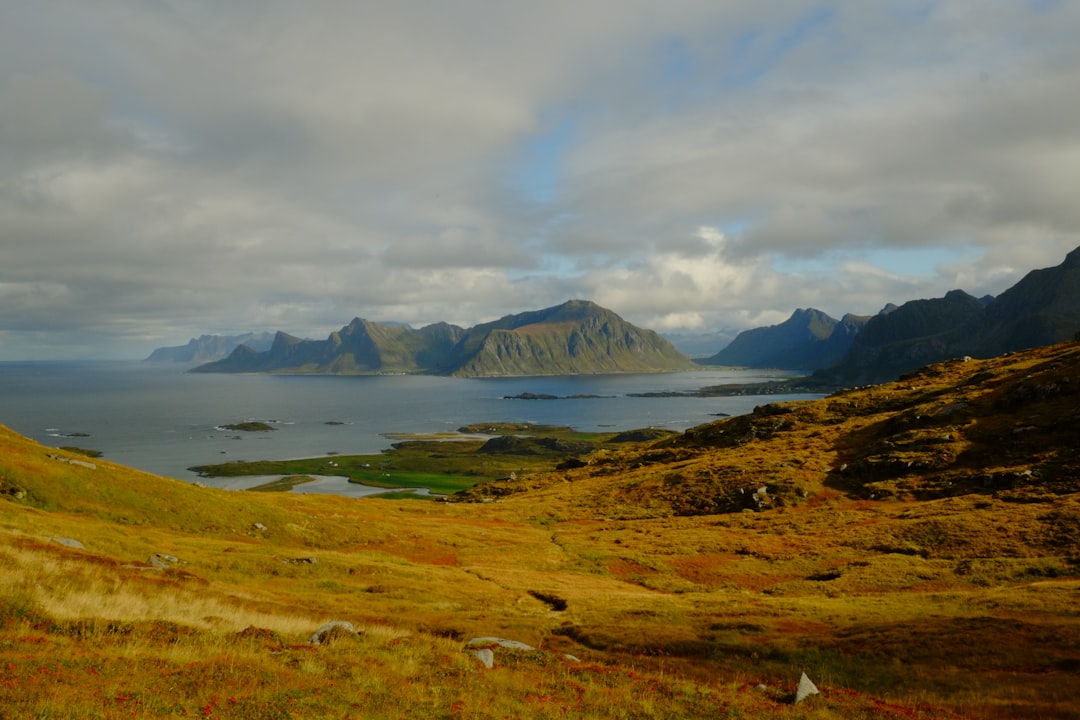
Imagine a country that began as a raiding empire, commanded other nations for centuries, then voluntarily became smaller, more equal, and vastly happier. That’s Denmark’s story—a one-thousand-year arc from Viking dominance to contentment, from territorial expansion to the deliberate construction of a welfare state that makes its citizens smile.
This isn’t a simple trajectory of decline. It’s a more interesting journey: how a nation learned that power and happiness aren’t the same thing, and that sometimes losing an empire teaches you more than winning one.
From Canute the Great to Gradual Decline
Let’s start at the peak. Canute (or Cnut) the Great ruled in the early 11th century and controlled not just Denmark, but England, Norway, and parts of Sweden. He was, briefly, one of the most powerful rulers in medieval Europe. His North Sea empire was the apex of Danish territorial ambition.
But empires are hard to hold. When Canute died in 1035, his vast realm fragmented. His sons divided it; later rulers fought to reclaim it. By the 12th century, Denmark had settled into a different pattern: a significant regional power, yes, but no longer commanding empires across multiple nations.
This wasn’t necessarily terrible. Medieval Denmark became deeply integrated into European Christendom. Danish kings participated in the Crusades. Danish bishops wielded real ecclesiastical power. The kingdom was prosperous, its Baltic trade networks humming with commerce. But it was also becoming something else: more local, more focused on its own territory and people.
The Kalmar Union and the Seductive Dream of Scandinavia
In 1397, a remarkable political figure named Margaret I (often called “Margaret the First”) achieved what no male king had managed: she united Denmark, Sweden, and Norway under a single crown. The Kalmar Union would last nearly 400 years.
This was an extraordinary political accomplishment. Margaret, ruling through her sons and never formally crowned queen, orchestrated the merger through careful negotiation, strategic marriages, and calculated diplomacy. She proved that power could be wielded through intelligence as effectively as through military force.
But the Kalmar Union was always unstable. Swedes resented Danish dominance. Norwegians felt subjugated. The union worked best when the Danish crown was strong and wise; it collapsed into conflict when rulers were weak or arrogant.
In 1520, Christian II ordered the Stockholm Bloodbath—a massacre of Swedish noblemen who’d resisted Danish rule. It was meant to terrify them into submission. Instead, it triggered a rebellion that nearly destroyed the union. The massacre became a symbol of Danish tyranny, poisoning Danish-Swedish relations for centuries.
The Long Reformation and the Reshaping of Danish Identity
The 16th century brought religious reformation to Denmark. King Christian III established Lutheran Protestantism as the state religion, seizing church lands and wealth. This wasn’t unique to Denmark—much of northern Europe reformed—but the Danish response was distinctive. The nation integrated its new religion into its national identity with unusual completeness.
The Reformation shifted Danish culture. The Catholic Church’s vast lands became royal property, then distributed among the nobility, creating a powerful class of landholding aristocrats. The Bible was translated into Danish, meaning even peasants could encounter scripture in their own language. This democratization of religious knowledge would, centuries later, help create a Danish culture that valued universal literacy and access to information.
Theologically, Danish Lutheranism emphasized personal faith and conscience over institutional hierarchy. This subtle shift in values—trusting individuals, emphasizing personal judgment—would ripple through Danish history, eventually becoming part of the cultural foundation for democracy and egalitarianism.
The Slow Dissolution of Empire
Over the 17th and 18th centuries, Denmark lost its territorial ambitions. Norway, still in union with Denmark, remained economically subordinate but increasingly restless. Iceland, Greenland, and the Faroe Islands remained Danish (they still are), but as distant possessions rather than integrated territories.
More importantly, Denmark stopped trying to be a major European power. Wars with Sweden (multiple conflicts across 200 years) forced Denmark to recognize that regional dominance was beyond its capacity. The Great Northern War (1700-1721) essentially ended Danish imperial pretensions. Denmark emerged bloodied and financially exhausted.
This might sound like decline. And it was, economically and militarily. But it represented a subtle psychological shift: Denmark began accepting its actual scale and focusing on what it could genuinely develop—its own society, its own people.
Building a Nation Within Borders
The 18th and 19th centuries saw something remarkable. Rather than seeking external empire, Denmark turned inward and built an internal culture of remarkable sophistication.
The agricultural revolution transformed Danish farming. The nobility, no longer focused on military conquest, invested in improving their estates. New farming techniques increased productivity. Denmark became known for agricultural excellence—a reputation it maintains today.
More significantly, a movement emerged focused on Danish culture, education, and national identity. Nikolai Grundtvig, a theologian and cultural figure, advocated for folk education and the development of a Danish spirit that transcended class. His ideas—that education should serve all people, that culture belonged to everyone, not just elites—became foundational to Danish thought.
These ideas gained traction. Denmark developed a robust system of folk schools teaching not just literacy and numeracy, but citizenship, culture, and critical thinking. The concept was radical: ordinary people, farmers and workers, should have access to the best intellectual and cultural traditions.
The Democratic Awakening
The 19th century brought constitutional development. The 1849 Danish Constitution established the Folketing—the Danish parliament—and the framework for representative government. This wasn’t unique (most European nations were moving toward some form of representative democracy), but the Danish version was distinctive in its emphasis on consent and broad participation.
The Danish word “folket” means “the people.” The “Folketing” literally means “the gathering of the people.” Even the naming of the parliament reflected a democratic philosophy: it was the people’s house, not the king’s.
Throughout the 19th century, Denmark gradually expanded voting rights, integrated working-class movements, and created political space for competing ideologies. It wasn’t frictionless—there were strikes, conflicts, and bitter arguments. But the violence remained comparatively limited. Danes seemed culturally inclined toward negotiation.
The 20th Century: Creating the Welfare State
After World War II, Denmark faced a choice. Like much of Europe, it had been devastated. Unlike much of Europe, it had survived relatively intact (though occupied by Nazis for five years). The postwar period became a moment of national definition.
A broad political consensus emerged: Denmark would become a welfare state. Not through revolution or radical ideology, but through democratic agreement. Conservative parties, social democrats, and labor unions negotiated a basic settlement: the state would provide universal education, healthcare, unemployment insurance, and pensions. In exchange, workers would accept labor discipline and tax contributions.
This wasn’t communism. Private enterprise continued. Markets functioned. But the state guaranteed a baseline of security and dignity for all citizens. No one would be destitute. Education was free. Healthcare was universal. Work was valued but not required to starve.
The Janteloven (Law of Jante), a famous piece of Danish social philosophy, captures the cultural values underpinning this system. Roughly, it says: “You’re not to think you’re better than us” and “You’re not to think your work is better than ours.” It sounds oppressive to American ears—a leveling doctrine. But Danish culture interprets it differently: as a statement that all work has dignity, that hierarchies should be flat, that cooperation matters more than individual glorification.
This cultural value, plus careful democratic institutions, created something remarkable. By the 1970s, Denmark was developing indicators that would later become famous: high GDP per capita, universal healthcare, free university education, strong labor protections, and—measured in studies across decades—genuinely high levels of reported happiness and life satisfaction.
From Empire to Contentment
Here’s the paradox: Denmark is happiest when it stopped trying to be great in the sense of imperial greatness. By accepting its actual scale—a small nation of 5-6 million people—it freed itself to develop what it could actually be excellent at: a cohesive society where most people felt secure, represented, and valued.
The Nordic Model, as it’s now called, became something other nations studied and attempted to replicate. Denmark wasn’t unique—Sweden, Norway, and Finland developed similar systems. But Denmark’s particular flavor emphasized consensus, negotiation, and the integration of working-class political movements into democratic structures.
The Values Beneath the System
Why did this work in Denmark specifically? Historians point to several factors: the legacy of folk education and cultural democracy from Grundtvig; the geographic and cultural cohesion of a small nation; a political culture that valued negotiation; and perhaps a certain Danish temperament—pragmatic, cooperative, skeptical of extremes.
The Folketing still functions as a genuinely deliberative body where consensus matters. Even when one party has a majority, it usually governs in coalition with others. Compromise is built into the system. The phrase “Danish compromise” has become shorthand for political settlements that make most people reasonably satisfied, if not ecstatic.
Visiting the Evidence
If you want to see this history, visit Copenhagen’s Thorvaldsen Museum, where neoclassical sculpture celebrates humanistic values. The National Museum documents the transition from medieval kingdom to modern nation-state. But most importantly, simply walk through Copenhagen, ride the efficient public transit, visit the free or subsidized museums, notice that even service workers are treated with dignity and respect, and observe that people seem, on average, content.
You’re seeing the result of a thousand-year journey from raiding empires to the deliberate construction of a good society.
The Contemporary Moment
Modern Denmark faces challenges like any nation: immigration, climate change, economic competition. Some Danes worry that the welfare state isn’t sustainable. But the fundamental values endure. Denmark consistently ranks among the world’s happiest countries in international surveys. Life satisfaction remains high. Social trust remains high.
This didn’t happen by accident. It emerged from a specific historical trajectory: the humbling of empire teaching the value of equality, the cultural movement toward folk education creating broad intellectual participation, the democratic revolution enabling popular representation, and the postwar consensus that security and dignity mattered more than imperial grandeur.
From Canute commanding England to ordinary Danes in 2025 living secure, happy lives—that’s the arc of Danish history. It’s the story of a nation learning what actually matters.




Leave a Reply