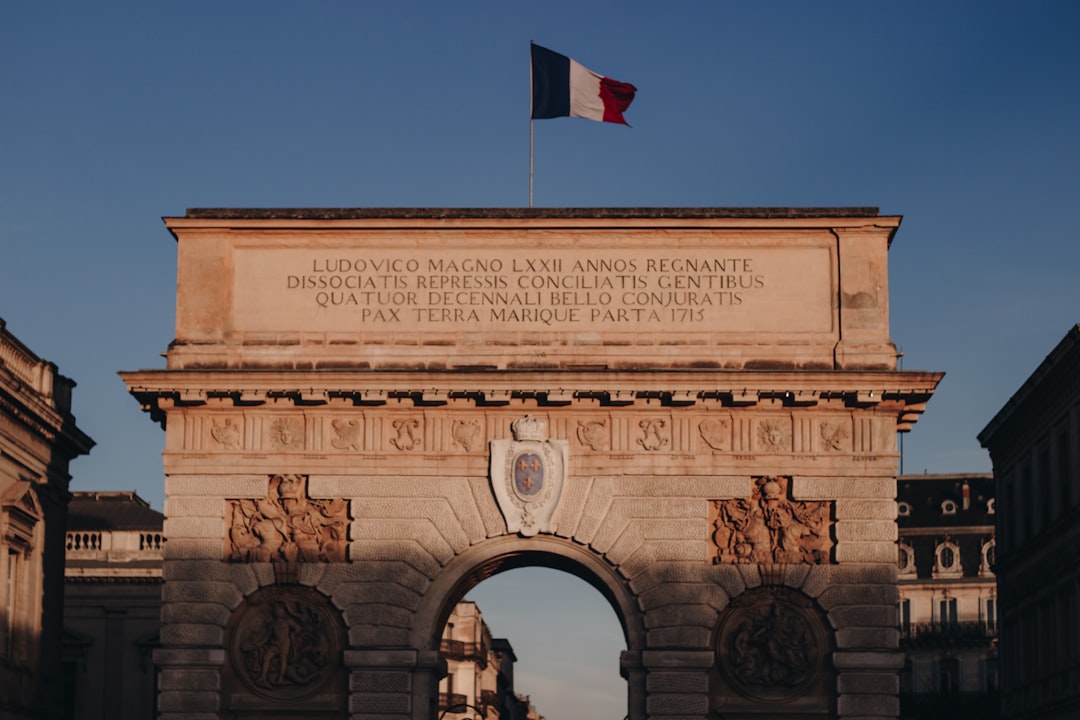
Walk through the streets of Paris today, and you’ll encounter neighborhoods and museums that document a history most Parisians would rather not discuss too openly: the history of French colonialism. France built one of history’s largest empires, controlling territories across Africa, Asia, the Caribbean, and the Pacific. At its height in the 1930s, the French Empire encompassed about 8.5 percent of the world’s land surface and included colonies and territories on every inhabited continent.
Today, France is no longer a colonial power, but the legacy of colonialism shapes modern France profoundly—its demographics, its international relationships, its ongoing cultural influence, and many of the social tensions that define contemporary French politics and society. Understanding modern France requires understanding its imperial past, how French people justified colonialism, how colonized people resisted, and how decolonization unfolded in ways that were often violent and traumatic.
The Dream of New France: Early Colonial Ambitions
French colonialism didn’t begin in the 19th century. It began much earlier, when France competed with Spain and Portugal for control of newly “discovered” territories. In the 17th century, France established New France—vast territories in North America that stretched from the St. Lawrence River to the Mississippi River. New France included what is now Canada, the Great Lakes region, and the Mississippi Valley.
French colonists in North America built a different kind of empire than the Spanish. Rather than massive extraction of mineral wealth and enslaved labor (though slavery existed in French colonies too), the French fur trade was based on negotiation and alliance with indigenous peoples. French traders learned indigenous languages, sometimes married indigenous women, and created a hybrid colonial society. New France, despite its obvious injustices and exploitation, was less focused on total conquest and replacement than Spanish colonialism.
But New France didn’t last. Through wars (particularly the Seven Years’ War, 1756-1763) with Britain, France lost most of its North American territories. By the end of the 18th century, French colonial possessions in North America were minimal. The French turned their attention elsewhere.
Louisiana and the Caribbean
Remnants of French colonial power persisted in the Caribbean and other regions. French colonies in the Caribbean—Guadeloupe, Martinique, St. Lucia, Dominica—produced enormous wealth through sugar plantations worked by enslaved African people. The slave trade was brutal. Millions of Africans were forcibly transported across the Atlantic. The mortality rates on slave ships and in tropical plantations were catastrophic.
Louisiana, that vast territory stretching from the Mississippi to the Rockies, was briefly French but was sold to the United States in the Louisiana Purchase of 1803. This was a pragmatic decision by Napoleon—France couldn’t defend Louisiana against the Americans, so he sold it. The sale doubled the size of the United States and removed France from control of North America.
But France’s Caribbean colonies remained important. The wealth generated by Caribbean plantations was enormous, built entirely on enslaved labor. This wealth flowed back to France, enriching merchants, ship captains, and the state itself. France became wealthy, in significant part, because of this colonial slave economy.
This wealth created a paradox: the France that proclaimed universal rights and liberty during the Revolution was simultaneously a major slave-trading, slave-owning power. It took repeated uprisings by enslaved people, the most famous being the Haitian Revolution of 1791-1804, to force France to end slavery. Even then, France abolished slavery in 1794, then briefly restored it under Napoleon, then abolished it again in 1848.
The Scramble for Africa and the Mission Civilisatrice
If France’s early empire was somewhat limited and gradually contracted, the 19th-century French empire exploded. Starting in the 1830s, France began its conquest of Algeria, a process that took decades and involved enormous violence. By the 1880s, as other European powers scrambled for territory in Africa, France grabbed vast territories across North Africa and West Africa.
The justification for colonialism, particularly in the 19th century, was the concept of the “mission civilisatrice”—the civilizing mission. The idea was that Europeans (and particularly the French, who considered themselves the height of civilization) had a moral obligation to bring civilization, Christianity, education, and development to “backward” peoples around the world. This ideology masked the brutal reality: colonialism was about extracting wealth and resources, establishing political control, and establishing hierarchies where Europeans dominated colonized peoples.
The mission civilisatrice also had a specific French character. Unlike the British, who (in theory) governed colonies with light-handed indirect rule, the French believed in assimilation. The idea was that colonized people should be educated in French, adopt French culture, and eventually become French. Paris was the center of the civilized world, and everyone should aspire to be like Parisians.
This assimilationist ideology created a specific kind of colonial relationship. Colonial subjects were not simply oppressed from a distance—they were told they were inferior because they weren’t French enough, that they needed to become French to be civilized, that French culture was superior. For many colonized people, this was psychologically and culturally violent in particular ways.
The Algerian War: When Colonialism Became Openly Brutal
For much of the 19th and early 20th centuries, French colonial rule was largely accepted by French public opinion. Colonies were profitable, they provided resources and markets, and colonialism seemed like the natural order of the world. But by the mid-20th century, colonialism was becoming unsustainable.
The Algerian War of Independence (1954-1962) was the moment when French colonialism revealed its brutal nature to the French public itself. Algeria was unlike other French colonies. Over a million European French settlers (called pieds-noirs, or black feet) had lived there for generations, owning land, businesses, and political power. Algeria had been French territory for over a century. The French government and French settlers considered Algeria part of France itself, not a colony.
When the Algerian independence movement, led by the FLN (National Liberation Front), launched an armed rebellion in 1954, the French government responded with overwhelming military force. Hundreds of thousands of troops were deployed. The war became brutal—torture, massacres, villages destroyed. The French military used systematic torture against suspected rebels. Entire communities were forcibly relocated. Estimates suggest that between 300,000 and 1.5 million Algerians died during the war (the higher estimates include deaths from famine and disease caused by the war).
The French public was horrified and divided. Photos and testimonies of torture by French soldiers circulated. Intellectuals like Jean-Paul Sartre spoke out against the war. Protests erupted in Paris. The war became increasingly unpopular. But the government, committed to maintaining Algeria as French territory, kept fighting.
By 1962, the war had become unwinnable. The cost in lives and money was unsustainable. A new government under Charles de Gaulle, paradoxically the man who had defied Nazi occupation, decided that Algeria could not be held. Peace negotiations led to Algerian independence in 1962. Over a million pieds-noirs fled Algeria, returning to mainland France. Algerians who had fought alongside the French were largely abandoned and left to the mercy of the new Algerian government.
Decolonization Across Africa and Asia
The Algerian War was the most traumatic, but France was losing colonies everywhere. In Indochina (Vietnam, Laos, Cambodia), the French had fought from 1946 to 1954 to maintain colonial control against nationalist movements. They were defeated decisively at Dien Bien Phu in 1954. Vietnam became independent under Ho Chi Minh’s communist government.
Across Africa, in the late 1950s and 1960s, French colonies began demanding independence. Guinea, Mali, Senegal, Côte d’Ivoire, Cameroon—one by one, they became independent. For the most part, these transitions were peaceful, or at least less violent than the Algerian War. France withdrew, sometimes leaving behind infrastructure and institutions that maintained French influence.
France also lost colonies and territories in the Caribbean and Pacific. By the 1980s, France’s empire had shrunk dramatically. What remained were scattered territories that are technically overseas regions and dependencies of France: French Guiana, Guadeloupe, Martinique, Réunion, French Polynesia, and others. These weren’t colonies that France conquered but are now French people living in distant territories.
The Francophone World: Cultural Influence Without Political Control
One of the most important legacies of French colonialism is the Francophone world—the network of countries where French is spoken, either as a primary language or as a secondary language because of French colonial influence. Today, French is spoken by over 300 million people worldwide, and in 29 countries it is an official language.
This linguistic legacy is complex. In some cases, French is truly a language of prestige and opportunity—people learn French to access education and economic possibilities. In other cases, French is a remnant of colonial imposition, a language forced on colonized people and still associated with colonial hierarchy and power. For many French-speakers in Africa and Asia, French is inextricably tied to memories of colonialism and exploitation.
France uses Francophonie—the community of French-speaking peoples—as a form of cultural and soft power. The Francophonie Organization represents French-speaking nations and promotes French language and culture. France exports television, music, and cultural products to the Francophone world. French schools and universities attract students from around the world. The implicit message is that French culture remains superior and influential—the mission civilisatrice continues, just without the political control.
Modern France and the Colonial Legacy
In contemporary France, colonialism is a complicated and often uncomfortable topic. Many French people are aware of the colonial past, but there’s a tendency to minimize it or to see it as no longer relevant. This attitude has changed somewhat in recent years, as postcolonial scholarship and immigrant voices have challenged earlier narratives.
The immigration debate in modern France is deeply connected to colonialism. Many immigrants to France come from former colonies—Algeria, West Africa, the Caribbean. They encounter a society that claims to offer liberty and equality but where racism and discrimination are persistent. Former colonized people and their descendants find themselves in the former colonizer’s country, often treated as outsiders, even when they are French citizens.
These tensions exploded most visibly in the riots of 2005, when neighborhoods (many with large immigrant populations) erupted in violence after police killed two young men of North African descent. The riots were a symptom of deeper issues: economic inequality, housing discrimination, police violence, and the unresolved legacy of colonialism. Immigrants and their descendants were experiencing France, but not as full equals—they were treated as outsiders, as people who didn’t quite belong.
The rise of far-right political movements in France (like Marine Le Pen’s National Front) has also been connected to anxieties about immigration and France’s changing demographics. These movements explicitly mobilize nostalgic memories of France as a white, Christian nation—erasing the reality that France has always been multicultural and that much of modern France’s wealth came from colonial exploitation and imperial power.
Understanding Colonialism’s Ongoing Effects
For travelers interested in understanding modern France, the colonial legacy is crucial. The museums of Paris, for instance, have extensive collections acquired through colonialism. The Musée du Quai Branly exhibits art and artifacts from colonized peoples around the world. The Louvre contains Egyptian mummies and Mesopotamian artifacts taken or purchased during colonial era—objects that were extracted from their original contexts and brought to Paris as symbols of European superiority and cosmopolitan sophistication.
These museums are beginning to reckon with their colonial origins. There are debates about returning artifacts to their countries of origin. These debates are often contentious because they involve questions about cultural ownership, repatriation, and how we understand colonialism’s ongoing effects.
French cities are also shaped by colonialism. The wealth that built Paris’s grand boulevards, monuments, and institutions came partly from colonial exploitation. The coffee, sugar, and other goods traded in Paris’s markets came from colonies worked by enslaved and colonized labor. Even the aesthetic values that made Paris culturally dominant—the idea that Parisian culture, fashion, and taste were superior—were built on the ideology that French culture was civilized and other cultures were not.
The Broader Lessons
For modern travelers and students of history, the French Empire illustrates universal truths about colonialism. First, that colonialism was justified through ideologies (the civilizing mission, racial hierarchies, the superiority of European culture) that the colonizers genuinely believed. Second, that colonialism was extraordinarily profitable for the colonizers and devastating for the colonized. Third, that colonialism’s effects don’t end when political independence is achieved—the cultural, psychological, economic, and political consequences persist for generations.
Fourth, that colonialism involved the agency and resistance of colonized people, not just the imposition of power by colonizers. Colonized people resisted, rebelled, and eventually won their independence, often after long and bloody struggles. The Algerian War and the Vietnamese War weren’t defeats for the colonized—they were victories against overwhelming odds.
Fifth, that decolonization is complex and incomplete. Political independence doesn’t immediately translate into economic independence or equality. Former colonizers often maintain influence through economic relationships, cultural dominance, and the simple fact that colonizers built infrastructure and institutions that served their interests. These structures persist and continue to advantage the former colonizers.
Walking through Paris, knowing this history, changes how you see the city. It’s not just a place of beauty and culture—it’s a place built substantially on colonial wealth and power. The same is true of other European cities. This isn’t meant as guilt or blame, but as understanding—as recognizing that the beautiful world we inhabit was created through hierarchies and violences that we might not immediately see but that remain real and consequential.




Leave a Reply