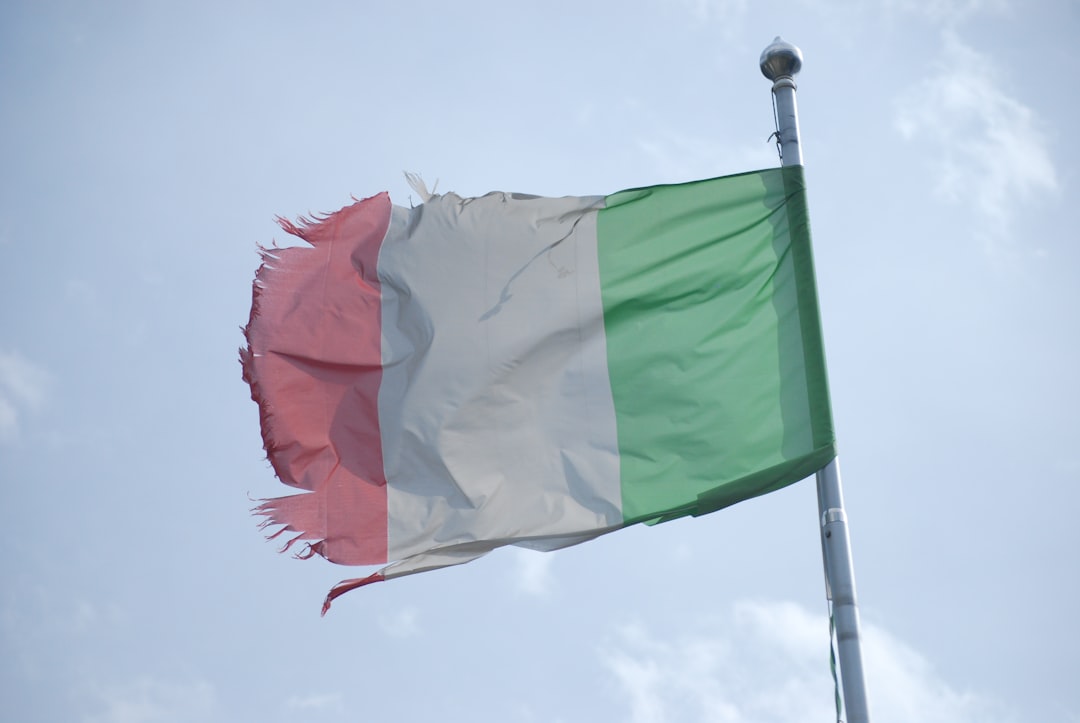
You’re standing in a piazza in Naples, and someone asks you where you’re from. You say “Italy.” They nod. Seems normal, right? But for most of human history, there was no “Italy.” There was the Papal States (ruled by the Pope), the Kingdom of Naples, the Kingdom of Sicily, the Grand Duchy of Tuscany, the Duchies of Parma and Modena, the Kingdom of Sardinia-Piedmont, the Kingdom of the Two Sicilies, and various other entities. There were Italian-speaking people, but no Italian nation-state.
Creating Italy out of these scattered kingdoms and territories was one of the most dramatic, unlikely, and consequential political achievements of the 19th century. And it happened in just 60 years, driven by idealists, pragmatists, generals, and a lot of luck.
The Situation: A Divided Peninsula
In 1815, after the Napoleonic Wars, the Congress of Vienna redrew Europe’s map. The peninsula that is now Italy was divided into multiple states. Most were small and weak. Many were controlled by foreign powers.
The Papal States controlled a belt of territory across central Italy, including Rome. These weren’t governed like modern city-states—they were medieval theocracies. The Pope was an absolute monarch ruling through bishops and cardinals. The Papal States were notoriously corrupt, economically backward, and opposed to any kind of modernization.
The Kingdom of the Two Sicilies (Naples and Sicily combined) was run by the Bourbon family out of Naples. It was one of the largest and most powerful of the Italian states, but it was also economically stagnant, feudal, and ruled with an iron fist.
The Grand Duchy of Tuscany, the Duchies of Parma and Modena, and other smaller territories were basically client states of Austria. They paid lip service to being independent but were really puppet governments.
The Kingdom of Sardinia-Piedmont, in the northwest, was different. It was a real kingdom, reasonably well-governed, and genuinely independent. It would be the engine of unification.
And then there was Austria itself, which didn’t technically control all of northern Italy but had such overwhelming military superiority that northern Italy was essentially an Austrian sphere of influence. Austrian armies could defeat any Italian army easily.
This situation—a divided peninsula, no unifying force, weak individual kingdoms, foreign dominance—seemed permanent. But it wasn’t.
The Idealists: Mazzini and the Dream of a United Italy
Giuseppe Mazzini was a revolutionary idealist who believed Italy should be unified into a modern, democratic nation-state. In the 1830s, he founded Young Italy, a secret society dedicated to promoting Italian unity through revolution.
Mazzini wasn’t a military guy. He was a writer, a thinker, and a propagandist. He wrote compelling arguments about why Italy should be unified. He reached out to intellectuals, students, and idealistic young people. He inspired conspiracies and attempted revolutions. Most of his efforts failed—he spent much of his life in exile—but he was invaluable in creating the political culture and language around unification. He made “Italy” a thing people could imagine and desire.
The 1848 revolutions across Europe (the “Year of Revolutions”) partly reflected Mazzini’s influence. Revolts broke out in Venice, Milan, Rome, and other cities. Mazzini actually got to lead a short-lived Roman Republic in 1849. But these revolutions were crushed—Austria sent armies to put them down, the Papal States couldn’t be captured, and the various local rulers retained power.
Mazzini’s failures are important because they show that unification through revolution wasn’t going to work. You couldn’t inspire enough popular revolution to overcome the military might of Austria and the entrenched power of the various rulers. Unification would need something else: pragmatic politics, military strategy, and luck.
The Pragmatist: Cavour and Realpolitik
Camillo Benso, Count of Cavour, was Mazzini’s opposite in every way. Where Mazzini was an idealist, Cavour was a pragmatist. Where Mazzini believed in revolutionary fervor, Cavour believed in diplomacy, strategy, and using whatever tools available to achieve goals.
Cavour was the Prime Minister of Sardinia-Piedmont starting in 1852. And Cavour understood something crucial: Sardinia-Piedmont couldn’t defeat Austria militarily. But Sardinia-Piedmont could make alliances. It could play European powers against each other. It could use other people’s armies to fight Austria.
Cavour’s strategy was brilliant and cynical: align Sardinia-Piedmont with France against Austria. France, under Napoleon III, had its own reasons to want to weaken Austria’s power in Europe. A war between France and Austria, with Sardinia-Piedmont on France’s side, could defeat Austria and give Sardinia-Piedmont control of northern Italy.
In 1859, Cavour orchestrated exactly this. He provoked Austria into declaring war. France sent armies. The Austria-Piedmont-France war resulted in Austrian defeat. Sardinia-Piedmont didn’t conquer all of northern Italy—that wasn’t possible—but they took Lombardy, and French forces added Tuscany and the Papal States (minus Rome itself) to the territory Cavour could influence.
Cavour then did something clever: he held plebiscites—popular votes—in the newly conquered territories asking if they wanted to join Sardinia-Piedmont. And they voted yes. This gave Cavour a claim that he was unifying Italy through the will of the people, not through military conquest. It was propaganda, sure, but it was effective propaganda.
By 1860, much of northern and central Italy was under Sardinia-Piedmont control or influence. But southern Italy—the Kingdom of the Two Sicilies—remained independent and out of reach.
The Action Hero: Garibaldi and the Thousand
Now enters Giuseppe Garibaldi, who was equal parts general, idealist, and adventurer. Garibaldi was a military guy who’d fought in South America and all over Europe. He believed in Italian unification like Mazzini did, but he was willing to actually fight for it.
In 1860, Garibaldi did something crazy. He assembled about 1,000 volunteers—mostly young idealists and adventurers, not professional soldiers. He called his force the “Thousand” (the “Mille” in Italian). He sailed to Sicily with these volunteers and, astonishingly, defeated the Bourbon forces occupying the island.
This success seems improbable because it was. Garibaldi was a brilliant general, but his volunteers were not a professional army. The Bourbon forces were larger. But Garibaldi used speed, deception, and ruthlessness to win. More importantly, many Sicilians rose up against Bourbon rule and joined Garibaldi’s forces. What started as 1,000 volunteers became 30,000 soldiers.
Garibaldi then crossed to mainland southern Italy and defeated the Bourbon forces there too. The Kingdom of the Two Sicilies, which had seemed impregnable, fell in a matter of months.
Then Garibaldi did something unexpected: he handed his conquests over to Cavour and Sardinia-Piedmont. He didn’t try to set himself up as the ruler of southern Italy. He wanted Italian unification, not personal power. This was genuinely noble, and it made unification possible.
Cavour then held plebiscites in the newly conquered territories, and they voted to join the Sardinia-Piedmont-controlled areas. By the end of 1860, most of Italy was united under Sardinia-Piedmont. King Victor Emmanuel II of Sardinia-Piedmont became King of Italy.
The Roman Question: The Pope’s Resistance
But there was one major problem: Rome itself remained under Papal control. The Pope was opposed to Italian unification—he didn’t want to lose temporal power. And Rome was important. You couldn’t call yourself the unifier of Italy if you didn’t control Rome, the historic capital.
For a decade, this was a stalemate. The Italian state wanted Rome. The Pope refused to give it up. French troops were garrisoned in Rome to protect the Pope from Italian forces.
Then, in 1870, France withdrew its troops to focus on the Franco-Prussian War. Italy saw its opportunity. Italian forces marched on Rome, and the Pope’s small military force (the Swiss Guard and papal troops) couldn’t resist. Rome was captured.
The Pope was furious. He refused to accept Italian unification. He declared himself a “prisoner in the Vatican.” For 59 years (until 1929), the Popes claimed they were not free—trapped in the Vatican by the Italian state. This was partly genuine anger, partly theatrical. The Pope had sovereignty over the Vatican and could leave if he wanted. But the symbolism was important: the Pope opposed the Italian state.
This standoff was finally resolved in 1929 through the Lateran Treaty, which recognized Vatican City as an independent city-state within Rome, gave the Pope sovereignty over it, and resolved the dispute. Only then did the Pope accept the loss of the Papal States.
The Result: Italy, But Fractured
By 1871, Italy was unified. Victor Emmanuel II was king. The Italian flag flew over Rome. Politically, it was a triumph—multiple kingdoms and territories had been merged into a single nation-state.
But unification created as many problems as it solved. Southern Italy and northern Italy had very different economies, cultures, and political traditions. The north was more industrialized and more progressive. The south was more feudal and more conservative. These differences created tensions that would persist for generations.
Unification was also incomplete. The territories that make up modern Italy (the mainland and Sicily, Sardinia, and some islands) were unified, but tens of millions of Italian speakers lived in territories that weren’t part of Italy—in Austria (South Tyrol), in Switzerland (Ticino), in France (Nice and Savoy), in the Balkans. Many Italians felt that these territories should be part of Italy, leading to decades of irredentism (the desire to recover “lost” territory).
Additionally, unification didn’t solve Italy’s underlying political and economic problems. Italy was still economically backward compared to Britain and France. The government was unstable, with frequent changes. The Catholic Church, despite the Lateran Treaty, remained suspicious of the Italian state.
The Legacy: A Nation That Almost Didn’t Happen
Looking back, Italian unification seems almost miraculous. A peninsula divided into a dozen different states, none of them particularly powerful, united into a single nation-state in 60 years. It required genius (Cavour), idealism (Mazzini), military skill (Garibaldi), and a lot of luck (the Franco-Prussian War, for instance, which distracted France and allowed Rome to be captured).
It also required something less obvious: the willing participation of millions of Italians who’d never thought of themselves as “Italians” before. They had to imagine themselves as part of a single nation. The plebiscites worked because enough people voted to join the unified Italian state. The volunteers who joined Garibaldi had to believe in an Italy that didn’t yet exist.
Unification was messy and incomplete, creating new problems even as it solved old ones. But it was also genuinely transformative. It created the nation of Italy, which would play an enormous role in European and world history for the next 150 years.
What to See
When you visit Italy, you can see the physical traces of this history:
- In Rome, you can visit the spot where Italian forces entered the city in 1870. The monument to Victor Emmanuel II dominates Piazza Venezia—a massive, imposing structure celebrating Italian unification and national power.
- In Turin (Torino), capital of Sardinia-Piedmont, you can visit the royal palaces and understand the power base from which unification was orchestrated.
- The Papal Palace in Rome reminds you that the Pope was genuinely a temporal ruler until 1870.
- In Sicily and Naples, you can see the monuments to Garibaldi and the Thousand.
But more importantly, when you travel across Italy, you’ll notice how regional identities remain strong even 150 years after unification. Sicilians, Venetians, Romans, and Milanese all have distinct identities. Italian unification happened, but it created a nation where regional and local loyalties never fully disappeared. This is what it looks like when very different territories are brought together: unity and division coexisting.




Leave a Reply